
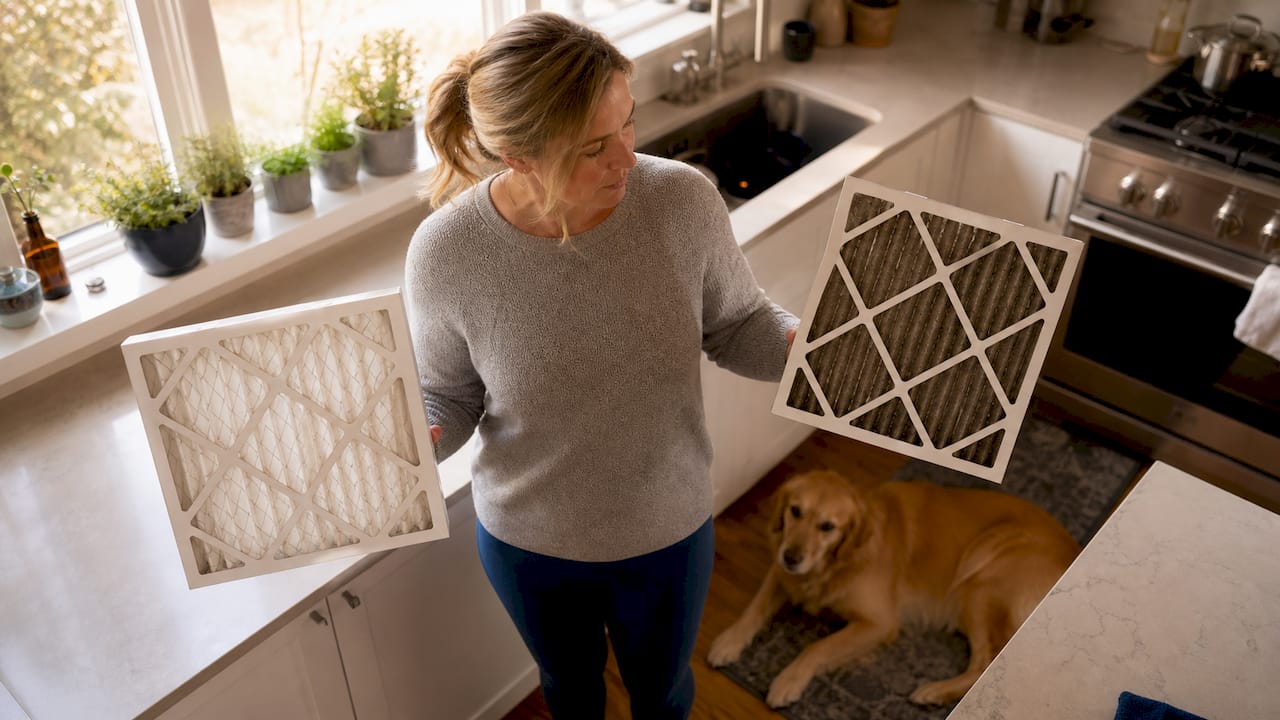
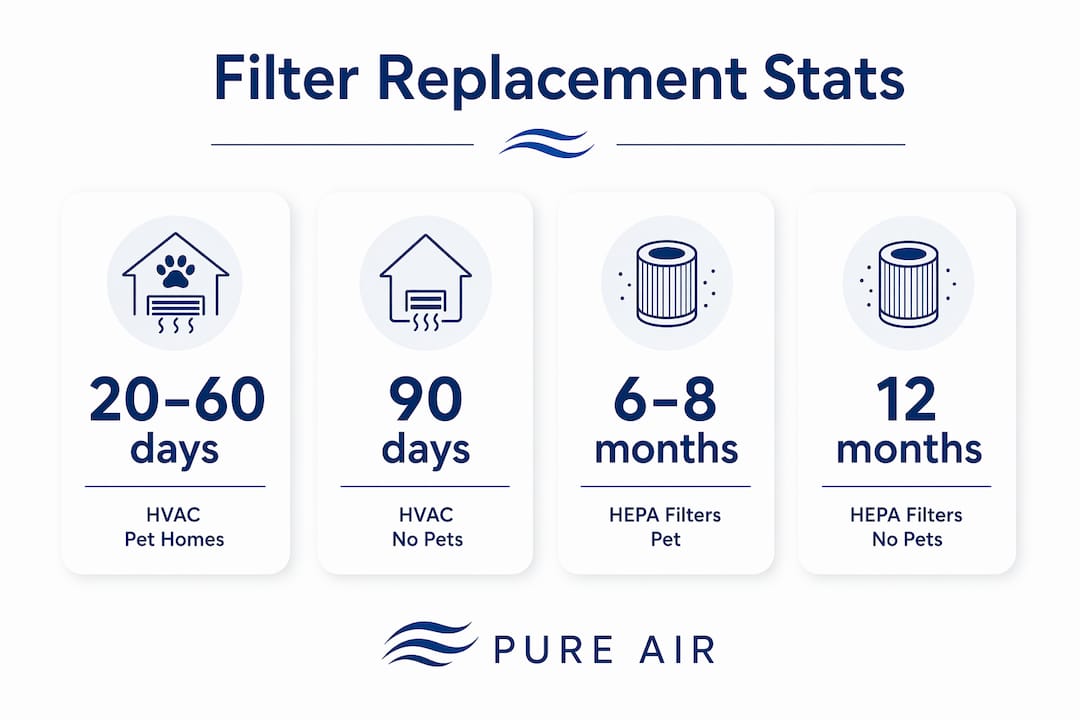
Pet homes require air filter replacement every 20–60 days, compared to the standard 90-day cycle for pet-free households. That single fact changes everything about how you should approach filter maintenance. Whether you run an HVAC system, a Levoit air purifier, or both, the presence of pets accelerates filter saturation faster than most owners realise. This guide covers the correct pet filter replacement schedule for every household type, explains why pet dander is so hard on filters, and gives you practical steps to stay ahead of the problem.
How often should you replace filters in pet homes?
The standard HVAC filter replacement interval of 90 days applies only to homes without pets. Once you add animals, that schedule shortens significantly. Single-pet homes need filter changes every 45–60 days, while households with multiple pets or allergy sufferers require changes every 20–30 days. That is a reduction of 33–75% from the standard cycle.
The type of filter also matters. Basic fibreglass filters clog faster than high-quality pleated filters rated MERV 8 or above. HEPA-grade filters capture more particles but also fill up more quickly in heavy-shedding homes. Choosing the right filter type is the first decision; setting the right schedule is the second.
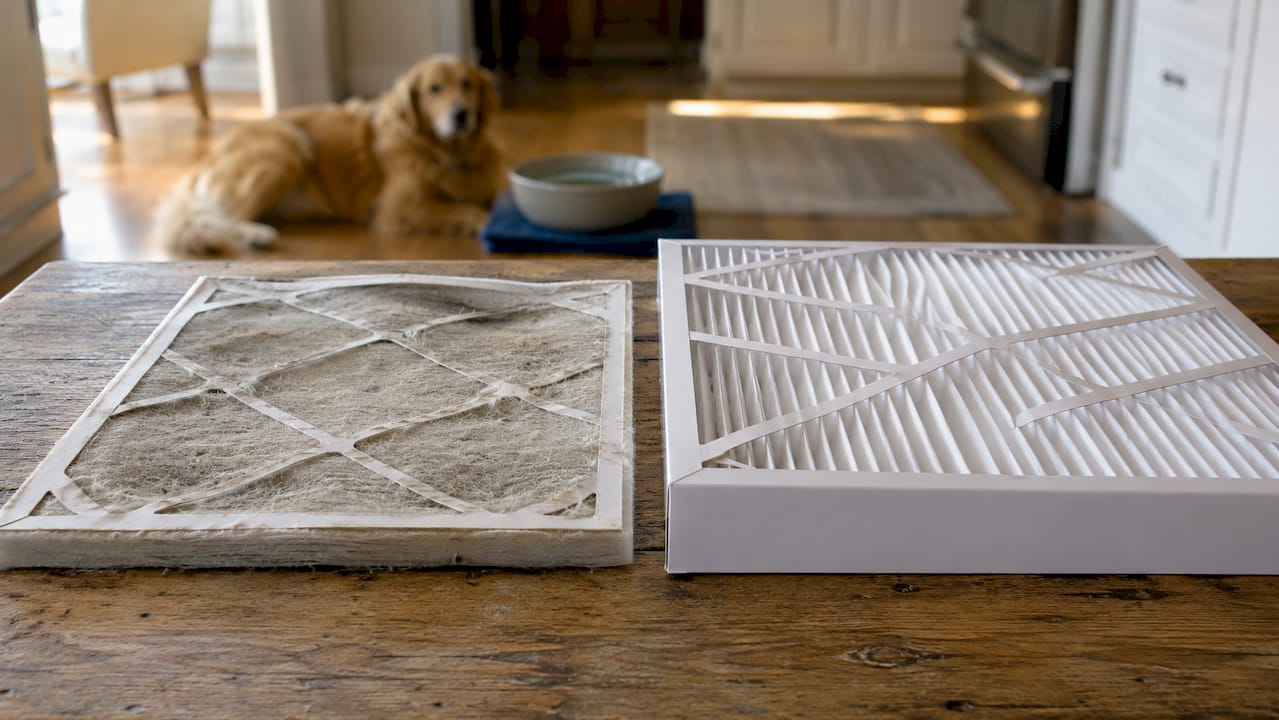
Seasonal shedding adds another layer of complexity. During spring and autumn, dogs and cats shed significantly more. Pet dander can cause airflow restrictions as early as three weeks into a filter cycle that would normally last 90 days. During peak shedding seasons, even a 30-day replacement cycle may not be enough.
Pro Tip: Set a recurring phone reminder every 20 days during shedding seasons. Check the filter visually at that point and replace it if the surface looks grey or matted, regardless of what the calendar says.
| Household Type | Recommended Replacement Interval |
|---|---|
| No pets | Every 90 days |
| Single pet, no allergies | Every 45–60 days |
| Multiple pets, no allergies | Every 30–45 days |
| Single pet, allergy sufferers | Every 30 days |
| Multiple pets, allergy sufferers | Every 20–30 days |
Air purifier filter replacement: what pet owners need to know
Air purifiers use a layered filtration system, and each layer has a different lifespan. Understanding the difference between HEPA filters, carbon filters, and pre-filters is the key to a reliable pet filter replacement schedule.
HEPA filters in standalone air purifiers typically last 6–8 months. In homes with heavy shedders like Huskies, Golden Retrievers, or Maine Coon cats, that lifespan drops to 4–5 months. Carbon filters require replacement every 3–4 months because pet odours saturate the activated carbon media well before the HEPA layer shows visible wear. The smell test is your most reliable indicator here.
Pre-filters are the unsung heroes of the system. They catch large particles like pet hair before those particles reach the HEPA and carbon layers. Cleaning pre-filters every two weeks is the single most impactful maintenance task in a pet home. It extends the life of your more expensive downstream filters and keeps airflow strong.
Pro Tip: Rinse washable pre-filters under cold water every fortnight and let them dry fully before reinserting. Never run a damp pre-filter. Moisture inside an air purifier creates conditions for mould growth.
Here is a quick reference for air purifier filter maintenance in pet homes:
- Pre-filter: Clean every 2 weeks; replace if damaged
- Carbon filter: Replace every 3–4 months, or sooner if pet odours return
- HEPA filter: Replace every 4–8 months depending on pet load and shedding frequency
- Indicator lights: Use as a secondary check only. Device indicator lights are often timer-based, not performance-based, and frequently lag behind actual filter saturation in pet homes
Products like the Levoit Core P350 are designed specifically for pet households, with filter configurations that account for higher dander and hair loads.
How do pet allergens affect filter performance?
Pet dander is not just hair. It is microscopic flakes of skin, dried saliva, and urine proteins that remain airborne for hours. Pet dander increases indoor particle load by over 40%, which explains why a filter that lasts 90 days in a pet-free home can be fully saturated in under three weeks in a home with two dogs.
When a filter clogs, the consequences go beyond reduced air quality. Restricted airflow forces your HVAC system to work harder, increasing energy consumption and accelerating wear on the motor. Timely filter replacement reduces allergy symptoms and protects the HVAC system from damage caused by sustained airflow restriction.
Key insight: Seasonal shedding can triple the hair and dander load entering your filters for weeks at a time. A filter that was adequate in winter may be completely overwhelmed by late spring. Adjust your replacement cycle before shedding season starts, not after you notice the air quality drop.
HEPA filtration addresses this problem directly. HEPA filters trap airborne allergens including pet dander particles as small as 0.3 microns, which is far below what standard HVAC filters capture. Running a dedicated air purifier alongside your HVAC system gives you a second line of defence and reduces the load on your main system filters.
What are the best filter maintenance practices for pet owners?
The best filter maintenance for pets combines a consistent schedule with real-world observation. Relying solely on a calendar or an indicator light will leave you behind in heavy-shedding periods. Visual inspection and smell tests are more reliable triggers for carbon filter replacement than any timer-based alert.
Here are the five maintenance practices that make the biggest difference:
- Inspect filters visually every 20 days. Hold the filter up to light. If the surface is grey, matted, or visibly clogged, replace it regardless of schedule.
- Clean pre-filters every two weeks. This single habit extends HEPA and carbon filter life more than any other action.
- Adjust your schedule before shedding seasons. Shorten your replacement interval by two weeks heading into spring and autumn.
- Choose MERV 8 or higher pleated filters for HVAC systems. Basic fibreglass filters miss fine dander particles and need replacing even more frequently.
- Use the smell test for carbon filters. If pet odours are returning to a room your purifier covers, the carbon layer is saturated. Replace it now, not at the next scheduled date.
Pro Tip: Keep a small stock of replacement filters at home. Running out means running a clogged filter for days while you wait for delivery. For pet owners, that gap matters.
The Levoit Vital 100S includes smart scheduling features that allow you to set custom maintenance reminders, which is particularly useful for households with multiple pets and varying shedding patterns.
For HEPA filter options specifically designed for pet allergens, the Levoit Core 300/300S pet allergy filter is worth considering as a direct replacement upgrade.
Key takeaways
Pet homes need filter changes two to four times more frequently than pet-free homes, and combining regular pre-filter cleaning with timely HEPA and carbon replacements is the most effective way to maintain clean indoor air year-round.
| Point | Details |
|---|---|
| HVAC replacement frequency | Replace every 20–60 days in pet homes, not the standard 90 days. |
| Air purifier carbon filters | Change every 3–4 months or when pet odours return to the room. |
| Pre-filter cleaning | Clean every two weeks to extend HEPA and carbon filter lifespan. |
| Shedding season adjustment | Shorten your replacement cycle before spring and autumn shedding peaks. |
| Indicator lights are unreliable | Use visual inspection and smell tests as your primary replacement triggers. |
Why i think most pet owners are changing filters too late
From what I see working in air quality every day, the most common mistake pet owners make is treating filter replacement as a set-and-forget task. They follow the 90-day rule printed on the filter packaging, which was written for homes without animals. By the time they swap the filter, it has been restricting airflow and recirculating allergens for weeks.
The other mistake is ignoring the carbon layer. Pet owners focus on the HEPA filter because it is the one that looks dirty. Carbon filters look clean even when they are fully saturated. If your home smells like your dog within an hour of running your purifier, the carbon is gone. No amount of running time will fix that.
The good news is that prevention is cheap. Cleaning a pre-filter takes two minutes. Buying an extra set of replacement filters costs less than one vet visit for an allergy-related respiratory issue. The HEPA filter benefits for allergy sufferers are well documented, and the maintenance required to keep those benefits active is genuinely minimal if you stay consistent.
My honest recommendation is to run both an HVAC filter and a dedicated air purifier in the rooms where your pets spend the most time. The HVAC handles whole-home circulation. The purifier handles the concentrated dander load in living areas and bedrooms. Together, they cover what neither can do alone.
— Lucas
Find the right filters for your pet home at Pureair-au
If you have been running your filters longer than you should, now is the right time to restock.
Pureair-au carries a full range of air purifiers and replacement filters designed for Australian pet homes, including HEPA and carbon filter combinations built to handle heavy dander loads. All products are AHAM verified, so the performance ratings you see are the performance you get. Whether you need a replacement filter for an existing unit or a new purifier for a high-traffic pet room, Pureair-au’s Smart Finder tool helps you match the right product to your specific situation. Browse the full catalogue and get your filter maintenance back on track today.
FAQ
How often should i change my air filter with one pet?
Replace your HVAC air filter every 45–60 days with a single pet. During heavy shedding seasons, check it at 30 days and replace it early if it looks visibly clogged.
Do air purifier filters need changing more often in pet homes?
Yes. HEPA filters in air purifiers last 4–8 months in pet homes rather than the standard 12 months. Carbon filters need replacement every 3–4 months due to odour saturation from pet dander and organic compounds.
Can i clean my HEPA filter instead of replacing it?
Most HEPA filters are not washable and lose their filtration efficiency if cleaned with water. Clean the pre-filter regularly instead, and replace the HEPA filter on schedule to maintain full allergen capture.
Why does my home still smell like pets after running my air purifier?
Persistent pet odours after running an air purifier almost always indicate a saturated carbon filter. Carbon media loses adsorption capacity with organic load buildup and needs replacing, not just cleaning.
Does having multiple pets mean i need a better filter or just more frequent changes?
Both. High-shedding multi-pet homes benefit from upgrading to a MERV 10 or higher pleated filter for HVAC systems and shortening the replacement cycle to every 20–30 days to keep airflow and air quality at acceptable levels.