Air purifiers depend entirely on clean filters to remove pollutants from your home. Without regular filter changes, the filter media becomes saturated with trapped particles, airflow drops, and the unit stops cleaning your air effectively. High-efficiency air filtration reduces indoor fine particle concentrations by 50–80%, with measurable health improvements in as little as 48 hours. That performance only holds when filters are maintained. This guide explains why air purifiers need filters changed, what happens when you skip it, and how to build a replacement schedule that actually works for your home.
Why air purifiers need filters changed to keep working
Air purifiers use two main filter types: HEPA and activated carbon. Each degrades differently, and understanding both is the foundation of good maintenance.
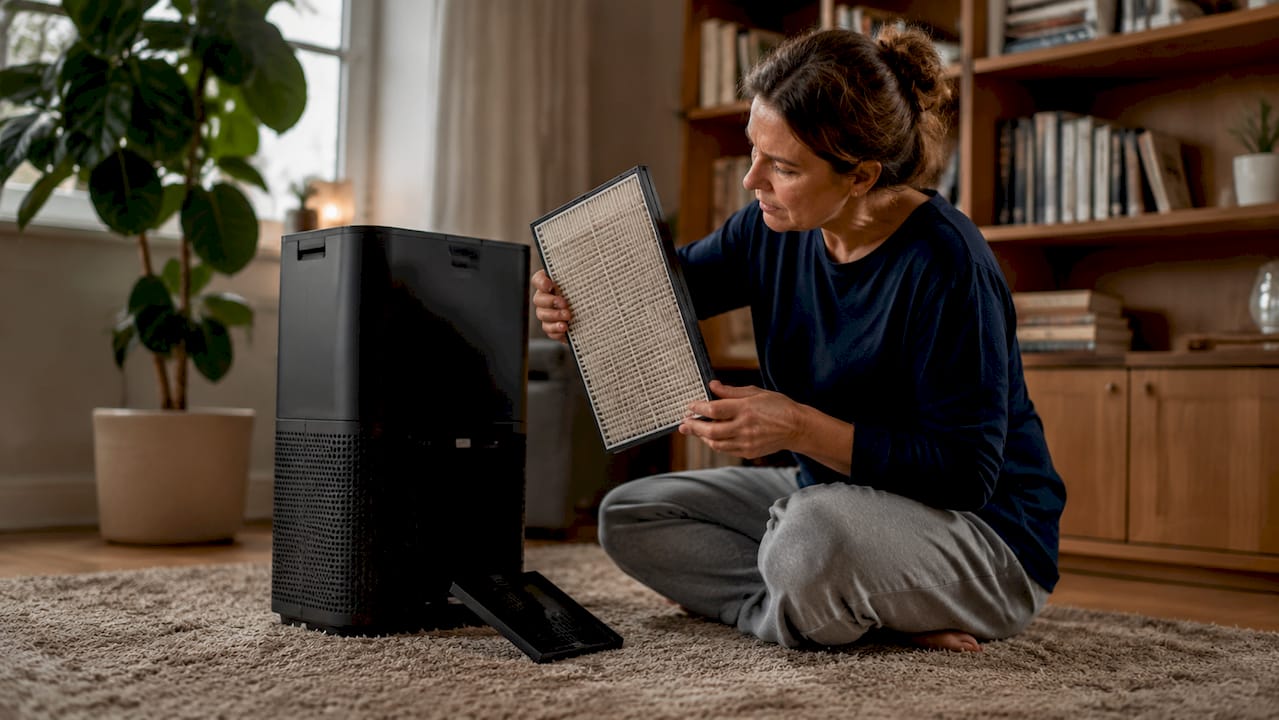
HEPA filters are made from densely packed fibres that physically trap particles as small as 0.3 microns. This includes dust mites, pollen, pet dander, mould spores, and fine smoke particles from bushfires. Over time, those fibres fill with captured material. The filter does not become less sticky. It becomes physically blocked.
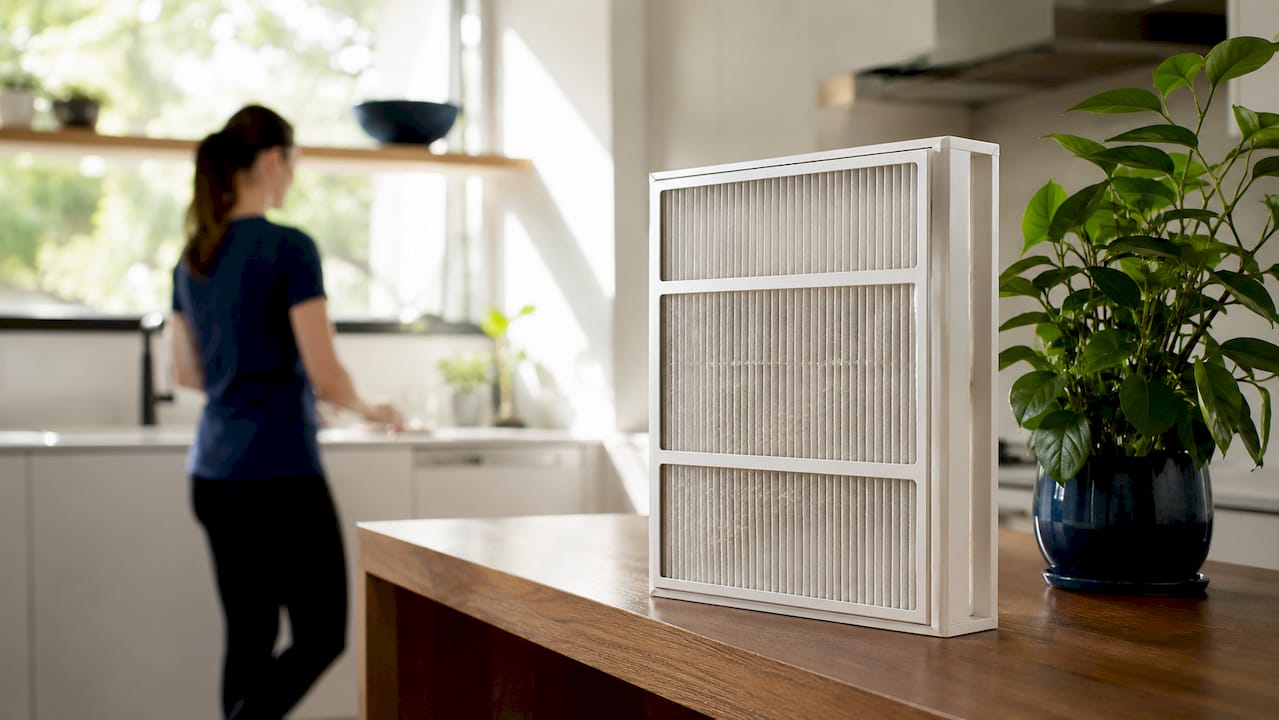
Activated carbon filters work differently. They adsorb gases, volatile organic compounds (VOCs), and odours by binding them to a porous carbon surface. That surface has a finite capacity. Once it is full, gases pass straight through. Carbon filters exhaust in 3–6 months typically, while HEPA filters degrade more slowly and silently.
Here is what makes HEPA degradation particularly tricky:
- Visible darkening is a late indicator, not an early warning
- Allergy symptom flare-ups often signal HEPA failure before any visual sign appears
- Increased dust on surfaces means particles are breaking through the filter media
- Carbon failure shows as returning odours, usually cooking smells, pet odours, or chemical scents
HEPA filters need replacement rather than reuse because washing or vacuuming does not restore the fibre structure. Attempting to clean them damages the media and creates gaps that particles pass through freely.
Pro Tip: Check your filter under a bright light every two months. If the surface looks uniformly grey or dark brown rather than off-white, it is past its prime regardless of what the indicator light says.
What happens if you don’t change your air purifier filters?
Skipping filter changes does not just reduce air quality. It actively damages your purifier and costs you more money over time.
A clogged filter creates back-pressure on the motor. The motor works harder to pull air through the blocked media. An overloaded filter can reduce CADR by up to 60%. CADR stands for Clean Air Delivery Rate, the standard measure of how much clean air a purifier produces per minute. A 60% reduction means your unit is doing barely a third of the job you bought it for.
The consequences compound in a predictable sequence:
- Airflow drops as filter media becomes clogged with particles
- Motor strain increases, raising electricity consumption and generating more heat
- Noise levels rise as the motor works against increased resistance
- Air quality worsens, with fine particles and odours returning to your living space
- Motor burnout risk grows, potentially requiring a full unit replacement
Using filters beyond their effective lifespan increases energy use and risks purifier motor failure, costing far more than the price of a replacement filter. A Philips HEPA NanoProtect filter costs around $52–$82. A new purifier costs hundreds. The maths is straightforward.
Worsening allergy symptoms are one of the clearest signals that your HEPA filter has degraded. HEPA filter degradation is often silent and invisible, with the first signs being allergy flare-ups or visible dust on surfaces caused by particle breakthrough. If your household members are sneezing more or waking with congested sinuses, check the filter before assuming the season is to blame.
How do you know when your air purifier filter needs changing?
Recognising filter wear early saves you from both health impacts and mechanical damage. The signs fall into two categories: what you can see and what you can feel.
Visual and sensory indicators
Darkened filters and stale odours are practical signs that replacement is overdue, but visual inspection is only a minimum standard for HEPA layers. Carbon failure is more obvious: if cooking smells, pet odours, or musty scents linger after the purifier has been running for an hour, the carbon is saturated.
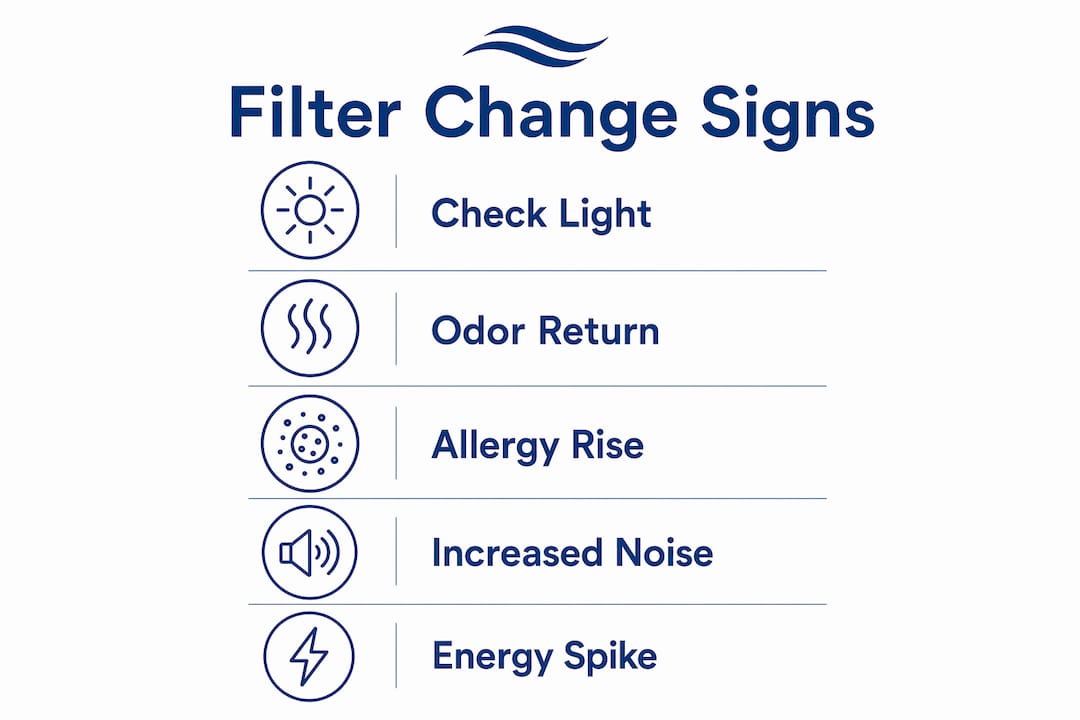
- Grey or brown HEPA surface: filter is loaded with particles
- Persistent household odours: carbon layer is exhausted
- Increased sneezing or itchy eyes: HEPA may be allowing particle breakthrough
- Louder than usual motor noise: airflow restriction is straining the unit
- Visible dust on furniture near the purifier: particles are bypassing the filter
Why indicator lights are unreliable
Most purifier indicator lights are timer-based, not sensor-based. Timer-based filter replacement indicators often do not reflect actual filter condition, which varies by environment and usage. A filter in a low-pollution bedroom may last 14–16 months. The same filter in a home with two dogs and a smoker may need replacing every 2–3 months. The indicator light does not know the difference.
Experts recommend treating filter replacement as a flexible schedule that responds to your home’s actual air quality demands. Factors that accelerate filter wear include pets, cigarette smoke, cooking frequency, proximity to bushfire smoke, and recent renovations or construction nearby.
Pro Tip: Set a calendar reminder to physically inspect your filter every 6–8 weeks. Do not rely on the indicator light alone. A quick visual check takes 30 seconds and can save you from running a degraded filter for months.
How often should you replace air purifier filters?
Filter lifespan varies significantly by filter type, usage intensity, and the specific pollutants in your home. The table below gives a practical reference for Australian households.
| Filter Type | Low Pollution Home | Average Home | High Pollution (Pets, Smoke, Bushfire) |
|---|---|---|---|
| HEPA filter | 12–16 months | 6–12 months | 2–4 months |
| Activated carbon filter | 4–6 months | 2–4 months | 1–3 months |
| Combined HEPA and carbon | 6–10 months | 4–6 months | 2–3 months |
Pet or smoker households may need to replace filters every 2–3 months compared to 6–12 months for average homes. Australian conditions add another layer of complexity. During bushfire season, a purifier running continuously in a smoke-affected home can exhaust a HEPA filter in weeks rather than months. The Levoit EverestAir, for example, is designed for high-pollution environments, but even purpose-built units require more frequent filter changes during smoke events.
One underappreciated issue involves combined filter units. Filters with bonded carbon and HEPA layers often force users to discard still-effective HEPA media when only the carbon saturates first. If your purifier uses separate filter layers, you can replace the carbon more frequently without touching the HEPA. This saves money and reduces waste. If your unit uses a bonded filter, factor the carbon lifespan into your replacement schedule rather than waiting for HEPA failure.
Pro Tip: Buy replacement filters in pairs when they go on sale. You will always need them, and having a spare on hand means you replace the filter the day it needs changing rather than running a degraded unit while you wait for delivery.
What are the benefits of changing filters on time?
Timely filter replacement delivers benefits well beyond cleaner air. The mechanical and financial case is just as strong as the health case.
- Lower electricity bills: A clean filter allows the motor to run at its designed efficiency. A clogged filter forces the motor to work harder, drawing more power continuously.
- Extended purifier lifespan: Regularly changing filters prevents expensive repairs due to premature motor burnout. A purifier that lasts eight years instead of four is a significant saving.
- Consistent air quality: A fresh filter maintains the CADR your unit was rated for, so you get the clean air you paid for rather than a gradual decline you might not notice.
- Reduced allergy and asthma triggers: Microvascular health improves by over 8% with short-term air filtration. That benefit disappears when the filter is no longer performing.
- Better value per dollar: A $75 replacement filter is cheap compared to a $400 repair bill or a $300 replacement unit.
Many users fail to realise that a filter’s primary role for health is capturing fine particulates, not just protecting the machine. The filter is the product. The purifier is just the housing and the motor. Treat the filter accordingly.
Key takeaways
Timely filter changes are the single most important maintenance task for air purifier performance, health outcomes, and device longevity.
| Point | Details |
|---|---|
| Filters degrade silently | HEPA failure shows as allergy flare-ups and dust on surfaces before any visual sign appears. |
| CADR drops sharply | A clogged filter can cut Clean Air Delivery Rate by up to 60%, leaving your home poorly protected. |
| Replacement schedules vary | Pet and smoke households need changes every 2–3 months; low-pollution homes can stretch to 12–16 months. |
| Indicator lights mislead | Timer-based lights do not reflect actual filter condition; physical inspection every 6–8 weeks is more reliable. |
| Cost savings are real | Replacing filters on time lowers electricity bills and prevents motor burnout that can destroy the unit. |
The habit most homeowners skip
I have spoken with dozens of families who bought quality air purifiers, ran them for 18 months, and then wondered why their allergy symptoms came back. Almost every time, the filter had not been changed once.
The frustrating part is that the purifier still turns on. The fan still runs. Nothing obvious tells you it has stopped working. That invisibility is what makes filter maintenance so easy to neglect. You do not get the same feedback you would from, say, a smoke alarm with a dead battery.
What I have found works best is treating filter checks like smoke alarm tests: pick a date twice a year, put it in the calendar, and do it regardless of whether anything seems wrong. For households with pets or anyone with asthma, I would make that quarterly. The Pureair-au HEPA filter buyer’s guide has a useful breakdown of filter types by use case if you want to go deeper on what your specific unit needs.
The other thing worth saying: do not cheap out on replacement filters. Off-brand filters for Honeywell, Philips, or Blueair units often do not meet the original HEPA specification. You end up with a filter that looks right but passes particles that the genuine media would have caught. For a device whose entire purpose is filtration, that is a false economy.
Filter maintenance is not glamorous. But it is the difference between an air purifier that protects your family and one that just hums in the corner.
— Lucas
Keep your air purifier performing at its best
If your filter is overdue for a change, or you are not sure which replacement fits your unit, Pureair-au has you covered.
Pureair-au stocks a broad range of replacement filters and air purifiers suited to Australian homes, including Philips HEPA NanoProtect filters, Honeywell Air Touch units, and Blueair models built for local conditions. Every product is AHAM verified, so you know the performance ratings are real. The team also offers expert support to help you match the right filter to your specific purifier model. Whether you are replacing a single carbon filter or upgrading to a unit better suited to bushfire season, Pureair-au makes it straightforward. Browse the full catalogue and get your purifier back to full performance today.
FAQ
How often should you change an air purifier filter?
Most HEPA filters last 6–12 months in an average home, while carbon filters need replacing every 2–4 months. Households with pets, smokers, or regular bushfire smoke exposure should replace filters every 2–3 months.
Can you clean an air purifier filter instead of replacing it?
No. Washing or vacuuming a HEPA filter does not restore its effectiveness and can damage the fibre structure, creating gaps that allow particles through. HEPA filters must be replaced, not cleaned.
What are the signs an air purifier filter needs changing?
Key signs include returning household odours, worsening allergy symptoms, visible dust on surfaces near the unit, louder motor noise, and a visibly darkened filter surface. Odour return is the clearest sign of carbon saturation.
Does a dirty filter damage the air purifier?
Yes. A clogged filter forces the motor to work harder, increasing electricity use and heat. Neglected filters create airflow resistance that shortens equipment life and can cause premature motor burnout, requiring a full unit replacement.
Are indicator lights on air purifiers accurate for filter changes?
Not reliably. Most indicator lights are timer-based rather than sensor-based, so they do not account for your home’s actual pollution levels. Physical inspection every 6–8 weeks gives a far more accurate picture of filter condition than any built-in light.