A child-safe air purifier is defined as a device that combines True HEPA filtration, quiet operation under 50 dB, and physical safety features such as child locks and rounded edges. These three criteria separate genuinely safe models from units that simply look appealing in a nursery. Australian parents face added pressure from bushfire smoke and high pollen seasons, making indoor air quality a year-round concern rather than a seasonal one. The examples of child-safe air purifiers covered here meet verified safety standards and are suited to nurseries, toddler rooms, and shared family spaces.
Examples of child-safe air purifiers: top models for nurseries and kids’ rooms
The models below represent the clearest examples of what a child-safe air purifier should deliver. Each one is assessed on filtration performance, noise output, physical safety design, and suitability for the room sizes typical in Australian homes.
1. PureEnrichment Kids Bear HEPA air purifier
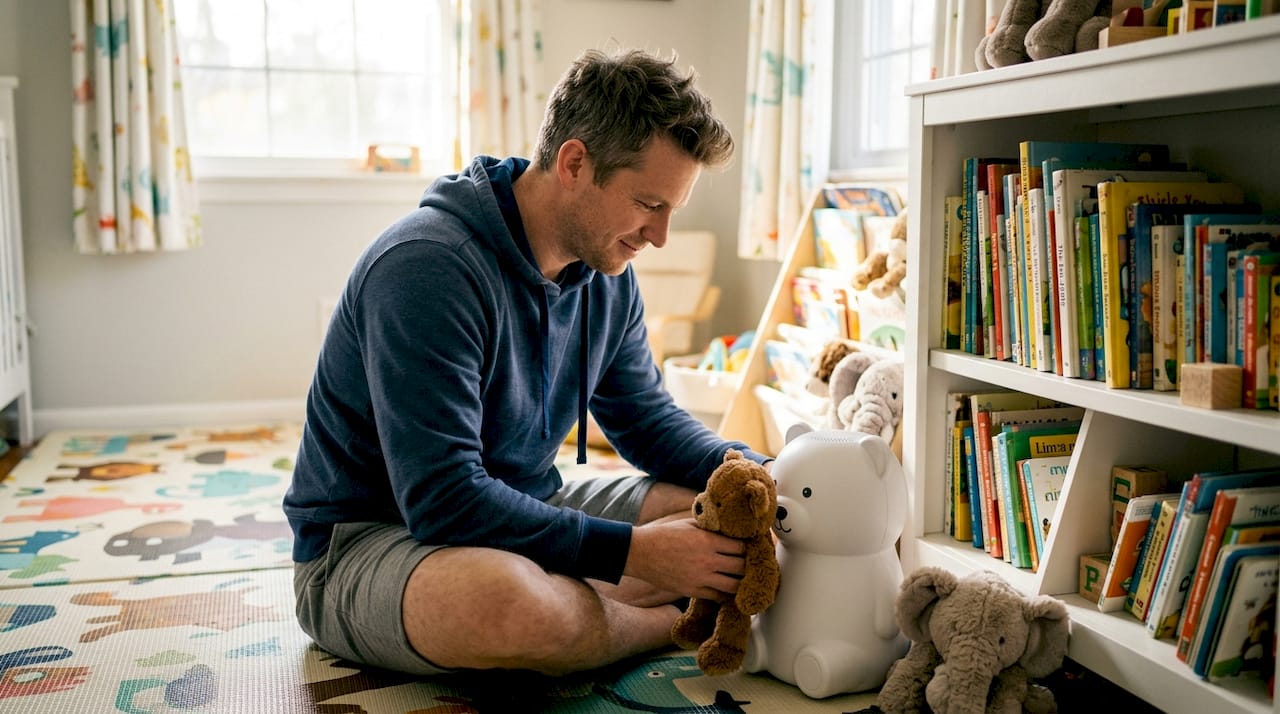
The PureEnrichment Kids Bear is purpose-built for children’s rooms. It cleans a 263 sq ft room within 30 minutes, capturing 99.97% of dust and allergens. That performance level meets the True HEPA standard, which is the filtration benchmark recommended for children with allergies or asthma. The bear-shaped housing is deliberately non-threatening, and the unit includes a child lock to prevent toddlers from adjusting settings.
2. Frida Baby 3-in-1 air purifier
The Frida Baby 3-in-1 combines HEPA filtration with a built-in white noise function and a soft nightlight. It covers up to 150 sq ft and is priced at around $60, making it one of the most accessible options for parents on a tighter budget. The compact footprint suits smaller nurseries where floor space is limited. White noise at a safe volume also doubles as a sleep aid, which makes this unit genuinely multi-functional rather than just a marketing claim.
3. Levoit Core 300S
The Levoit Core 300S suits rooms larger than a standard nursery, making it a strong choice for toddler bedrooms or shared spaces. It uses True HEPA filtration and operates with a dedicated child lock mode. Noise output on the lowest fan setting sits well within the 24–30 dB ideal range for sleep environments. The cylindrical design has no sharp protrusions, and the unit is stable enough to resist tipping from a curious toddler.
4. Blueair Mini Restful Sunrise Clock air purifier
The Blueair Mini Restful Sunrise Clock integrates a sunrise alarm clock with HEPA filtration in a single compact unit. This makes it particularly well suited to school-age children’s rooms where a separate alarm clock would otherwise occupy bench space. The low-noise operation and soft design make it a practical choice for parents who want clean air without additional clutter.
5. Honeywell Air Touch P1
The Honeywell Air Touch P1 is a reliable mid-range option with a child lock and quiet operation suited to family bedrooms. It handles a larger coverage area than most compact nursery models, which gives parents flexibility as children grow and move into bigger rooms. The controls are panel-mounted rather than knob-based, which reduces the risk of accidental adjustment by small hands.
6. Entry-level compact purifiers with HEPA filtration
Smaller, budget-friendly units from the compact purifier category suit parents who need a secondary unit for travel cots or holiday stays. The key requirement for any unit in this category is a genuine True HEPA filter, not a “HEPA-type” or “HEPA-style” filter. Those marketing terms have no regulated standard behind them. Always verify the filter specification before purchasing.
Pro Tip: Check the product specification sheet for the exact filter grade. “True HEPA” or “H13 HEPA” indicates genuine 99.97% particle capture. “HEPA-type” does not.
Why True HEPA filtration matters and what to avoid
True HEPA filters capture 99.97% of airborne particles as small as 0.3 microns, including dust mite allergens, pollen, mould spores, and fine particles from bushfire smoke. That particle size range covers the pollutants most likely to trigger respiratory responses in children. Mechanical filtration physically traps particles rather than releasing byproducts, which is what makes it the safest technology for enclosed children’s rooms.
The technology to avoid is equally clear. Ozone generators, ionisers, and plasma-based purifiers all produce ozone as a byproduct. The EPA classifies ozone as a chemical lung irritant. Children’s airways are narrower and more sensitive than adults’, which means even low-level ozone exposure carries a disproportionate risk for them.
Avoid any air purifier that lists “ionisation,” “plasma,” or “ozone generator” as a feature. The EPA warns that ozone irritates the lungs and is particularly harmful to children’s developing respiratory systems. No filtration benefit justifies that risk in a child’s room.
Certifications provide a reliable shortcut when evaluating unfamiliar models. Look for:
- CARB certification (California Air Resources Board): confirms the unit produces ozone below 0.050 parts per million
- AHAM verification: confirms the Clean Air Delivery Rate (CADR) matches the manufacturer’s stated coverage area
- AAFA certification (Asthma and Allergy Foundation of America): confirms the product is tested as suitable for people with asthma and allergies
Pureair-au stocks only AHAM-verified units, which removes the guesswork for parents who do not want to cross-reference certification databases themselves. A complete HEPA buyer’s guide is available on the Pureair-au website for parents who want to go deeper on filter grades.
Safe setup and placement tips for air purifiers around children
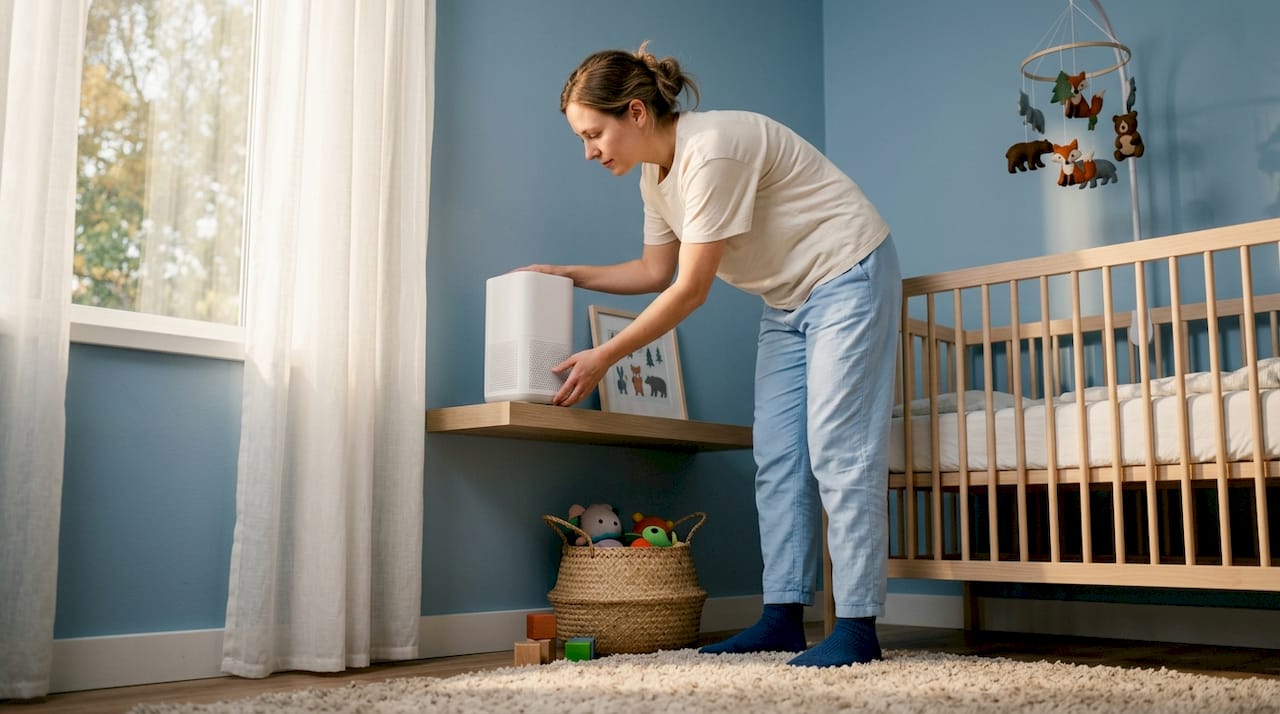
Correct placement produces better results than a more powerful unit placed in the wrong spot. Positioning a purifier near the pollutant source or the child’s breathing zone creates a cleaner air pocket around the child rather than simply cycling air through the centre of the room. For a cot or toddler bed, that means placing the unit on a stable surface at the same height as the sleeping child, not on the floor across the room.
Physical safety during setup matters as much as placement logic. Follow these steps before switching the unit on:
- Remove all plastic packaging from the filter. Leaving plastic on filters during setup is the most common first-use error. It blocks airflow entirely and can cause the motor to overheat.
- Position the unit 3–5 feet from the cot or bed. Closer than 3 feet creates a direct airflow draft onto a sleeping infant. Cords must be secured and kept out of reach of mobile toddlers.
- Activate the child lock before leaving the room. Child locks prevent tampering and stop toddlers from switching the unit off or increasing fan speed to unsafe noise levels.
- Set the fan to the lowest effective speed for sleep hours. Nursery noise should stay within the 24–30 dB range to avoid disturbing sleep or causing hearing discomfort.
- Check and replace filters on the manufacturer’s schedule. A clogged filter reduces air throughput and can cause the unit to work harder, raising both noise and energy use.
Pro Tip: Buy a unit rated for at least twice your room’s actual size. Running a larger unit at a lower fan speed keeps noise down while maintaining the same air cleaning performance.
For a room-by-room setup walkthrough, the Pureair-au guide on setting up an air purifier covers placement logic in detail.
How to choose the right child-safe air purifier for your family
Matching a purifier to your specific situation requires looking beyond the headline filtration claim. The table below compares the key feature categories parents should evaluate.
| Feature category | What to look for | Why it matters for children |
|---|---|---|
| Filtration type | True HEPA (H13 grade or higher) | Captures 99.97% of particles including allergens and bushfire smoke |
| Noise level | Under 50 dB; 24–30 dB on sleep mode | Protects sleep quality and avoids hearing discomfort |
| Child lock | Physical or panel lock | Prevents toddlers from adjusting or disabling the unit |
| Coverage area | Rated for at least twice the room size | Allows quieter operation at lower fan speeds |
| Additional features | Nightlight, white noise, air quality indicator | Reduces need for multiple devices in a small room |
| Certifications | CARB, AHAM, AAFA | Confirms ozone safety and verified performance claims |
Parents dealing with pet dander or severe allergies should prioritise units with higher CADR ratings for particulate matter, as these cycle room air more frequently per hour. A unit rated for a 30 sq metre room placed in a 15 sq metre nursery will cycle the air roughly twice as often as a correctly sized unit. That extra throughput matters during high-pollen days or after a bushfire smoke event.
Budget is a real constraint for most families. The Frida Baby 3-in-1 at around $60 covers the basics for a small nursery. Mid-range units like the Honeywell Air Touch P1 add larger coverage and more durable build quality. For parents who want a long-term investment with whisper-quiet operation, the Levoit Core 600S represents the upper tier of quiet, high-performance filtration for family bedrooms.
Key takeaways
Child-safe air purifiers must combine True HEPA filtration, noise levels under 50 dB, and physical safety features like child locks to be genuinely suitable for nurseries and children’s rooms.
| Point | Details |
|---|---|
| True HEPA is non-negotiable | Only True HEPA captures 99.97% of particles; “HEPA-type” labels carry no regulated standard. |
| Avoid ozone-producing devices | Ionisers and plasma purifiers produce ozone, which the EPA classifies as a lung irritant harmful to children. |
| Noise below 50 dB for sleep | The ideal nursery range is 24–30 dB; exceeding 50 dB risks sleep disruption and hearing discomfort. |
| Oversize the unit for quieter running | A purifier rated for twice the room size runs at lower fan speeds, reducing noise while maintaining performance. |
| Placement beats power | Positioning near the child’s breathing zone or pollutant source is more effective than centre-room placement. |
What I’ve learned about child-safe air purifiers that specs don’t tell you
Parents tend to fixate on filtration numbers, and the 99.97% True HEPA figure is genuinely important. But in my experience, the features that make the biggest practical difference in a child’s room are the ones that get skipped in the headline specs.
Child locks are the clearest example. A toddler who discovers a glowing button will press it. Without a lock, that means the fan runs at full speed at 2 AM, the unit gets switched off entirely, or the child pulls the unit off its surface. None of those outcomes are acceptable in a nursery. I always check for a physical or panel-mounted lock before anything else.
Placement is the second thing most parents get wrong. Putting a purifier in the corner of a room because it looks tidy there is a waste of money. Positioning it near the cot at breathing height, pointed away from the child’s face, produces a measurably cleaner air pocket. The unit does not need to be more powerful. It needs to be in the right place.
Filter maintenance is the third overlooked factor. A filter that is six months overdue for replacement is not just less effective. It forces the motor to work harder, which raises noise levels and shortens the unit’s lifespan. Set a calendar reminder when you install a new filter. It takes thirty seconds and it keeps the unit performing as tested.
The child bedroom air quality checklist on the Pureair-au website is the most practical resource I have seen for parents who want a structured approach to this rather than a list of products to browse.
— Lucas
Pureair-au’s range of child-friendly air purifiers for Australian families
Pureair-au stocks a curated selection of air purifiers built for Australian conditions, including bushfire smoke, coastal humidity, and high-pollen environments. Every unit in the range is AHAM verified, which means the stated coverage area and CADR ratings are independently confirmed rather than self-reported.
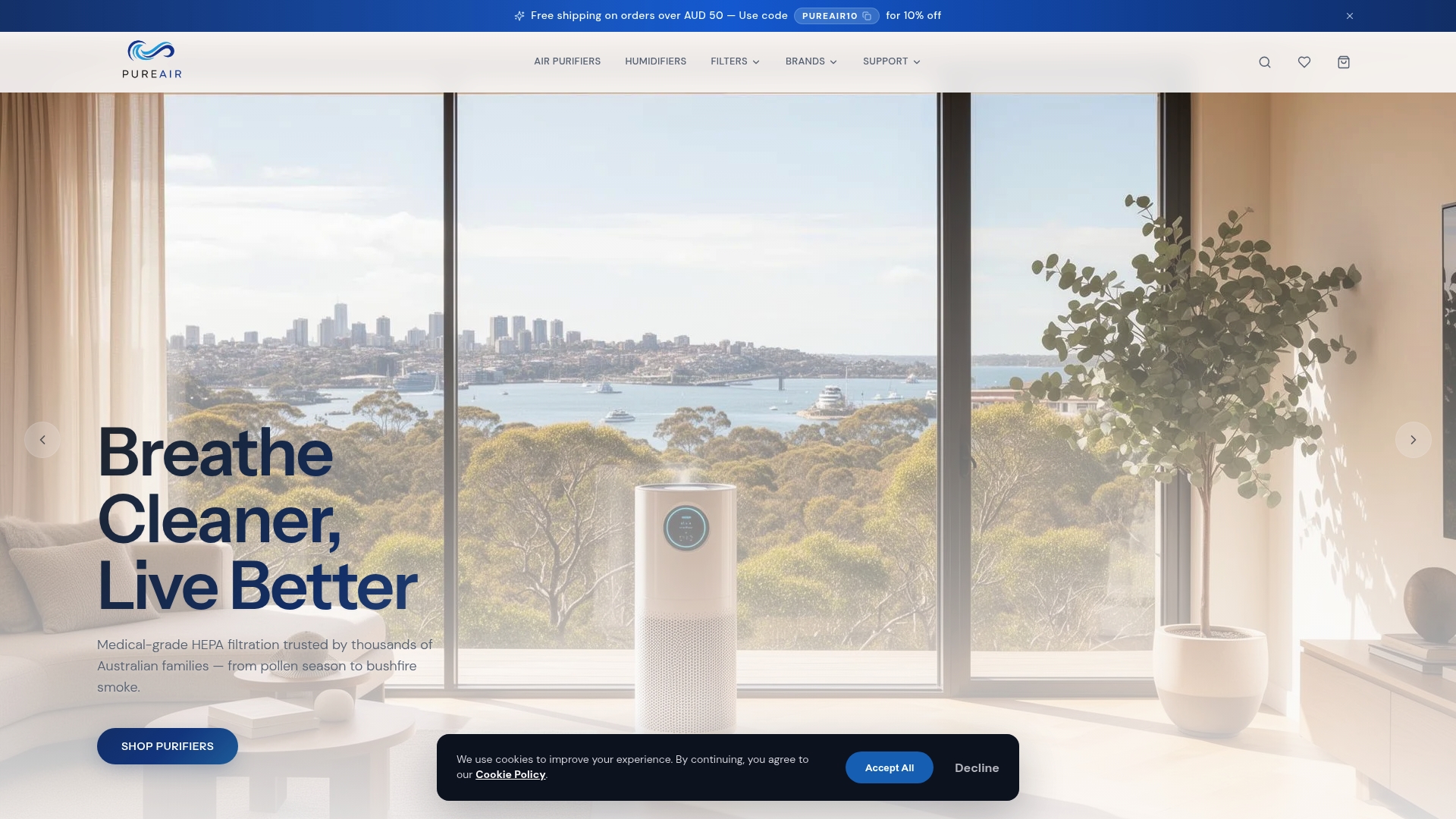
Parents looking for a child-safe model can browse the full catalogue and filter by room size, noise level, and safety features. The Pureair-au Smart Finder tool matches your specific concerns, whether that is allergies, mould, or smoke, to the right unit without requiring you to compare spec sheets manually. For parents who want a direct recommendation, the Pureair-au team is available to advise on the best fit for your child’s room size and your family’s air quality priorities.
FAQ
What makes an air purifier child-safe?
A child-safe air purifier uses True HEPA filtration, operates under 50 dB, and includes physical safety features such as a child lock and rounded edges. It must not produce ozone as a byproduct.
Are ionisers safe to use in a child’s room?
Ionisers are not safe for children’s rooms. The EPA classifies ozone, which ionisers produce, as a lung irritant that is particularly harmful to children’s developing respiratory systems.
What noise level is safe for a nursery air purifier?
Nursery air purifiers should operate below 50 dB, with the ideal range being 24–30 dB during sleep hours to avoid disturbing rest or causing hearing discomfort.
How far should an air purifier be from a cot?
Place the unit 3–5 feet from the cot to avoid directing airflow directly onto a sleeping infant while still maintaining effective air cleaning in the child’s breathing zone.
How often should I replace the filter in a child’s room purifier?
Follow the manufacturer’s replacement schedule, typically every 6–12 months. A clogged filter reduces performance and increases motor noise, both of which reduce the unit’s effectiveness in a child’s room.