Humidity is one of the most underestimated forces shaping the air you breathe. Water vapour concentration in the atmosphere directly alters how pollutants form, grow, disperse, and ultimately reach your lungs. At high relative humidity (RH), fine particles absorb moisture and swell through a process called hygroscopic growth, changing both their behaviour in the air and where they deposit in your respiratory tract. At low RH, dry air strips moisture from mucous membranes, leaving airways more vulnerable to irritants. The role of humidity in air quality is not a single effect but a cascade of physical, chemical, and biological interactions that play out differently across Australia’s wildly varied climates.
Here is a quick summary of those interactions:
- Humidity drives hygroscopic growth in fine particles, increasing their size and altering deposition patterns in the lungs
- High moisture promotes secondary aerosol formation, including sulphates and nitrates, worsening outdoor pollution episodes
- Humidity interferes with air quality sensor readings, causing over- or under-estimation of pollutant concentrations
- Indoor humidity above certain thresholds accelerates mould growth and dust mite proliferation
- Both very low and very high RH levels create distinct respiratory health risks
- Outdoor humidity-related events such as storms and heat waves directly alter indoor air quality through air exchange
Table of Contents
- How humidity shapes pollutant behaviour and air chemistry
- Why humidity throws off your air quality sensor readings
- How indoor and outdoor humidity interact to affect your air
- What humidity does to your respiratory health
- Best practices for monitoring and managing humidity at home
- How Pureair-au addresses humidity-related air quality challenges in Australia
- Key takeaways
- Pureair-au: medical-grade air quality solutions for Australian homes
How humidity shapes pollutant behaviour and air chemistry
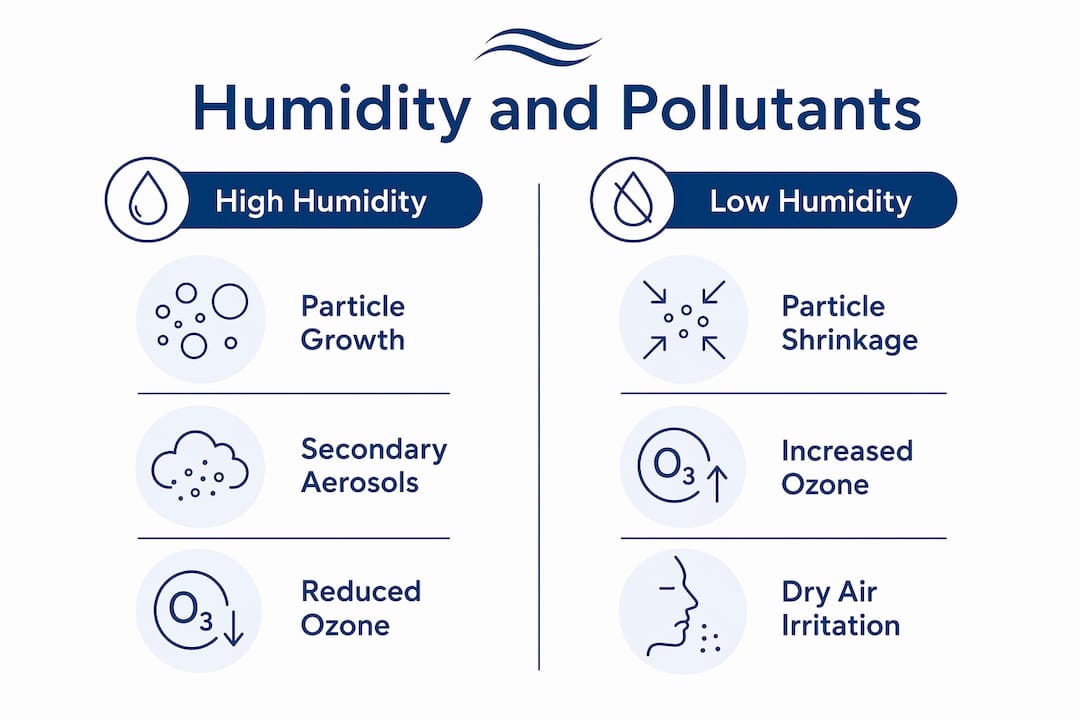
High relative humidity fundamentally changes what pollutants do once they are airborne. Fine particulate matter (PM2.5) absorbs water vapour and grows hygroscopically, forming larger, heavier droplets that scatter light differently and deposit deeper in the bronchial tree. This hygroscopic particle growth also alters the optical properties sensors rely on to estimate particle concentrations, which is why humid days often look hazier even when the actual particle count has not changed.
Secondary aerosol formation accelerates in moist conditions. Water vapour catalyses gas-phase reactions that convert sulphur dioxide and nitrogen oxides into sulphate and nitrate particles, adding to the total particulate load. Stagnant, humid air also traps these pollutants near ground level by suppressing the vertical mixing that normally disperses them upward.
Ozone behaves differently. Storm events can actually reduce ozone by blocking the sunlight needed for its photochemical formation and by introducing moisture that chemically destroys ozone already present. But that same storm can spike allergen and particulate levels in ways that worsen respiratory symptoms, particularly for people with asthma.
Australian summers add another layer. Heat waves with stagnant air drive up both ozone and particulate matter, and when high humidity accompanies that heat, the combined effect on air quality is worse than either factor alone. Coastal cities like Brisbane and Darwin regularly experience this combination during the wet season.
| Humidity condition | Effect on pollutant behaviour | Australian relevance |
|---|---|---|
| High RH (above 60%) | Hygroscopic particle growth, secondary aerosol formation, ground-level trapping | Wet season in northern Australia, coastal humidity |
| Low RH (below 30%) | Dry particle suspension, increased dust and bushfire smoke dispersion | Inland regions, summer drought conditions |
| Storm events | Ozone reduction, allergen spike, rapid pressure and humidity changes | East coast thunderstorm season |
| Heat wave with humidity | Elevated ozone and PM2.5, reduced air mixing | Southern Australian summers |
Why humidity throws off your air quality sensor readings
Air quality sensors are more sensitive to moisture than most people realise. Optical particle counters, which are the technology inside most consumer-grade monitors, use light scattering to estimate particle size and count. When humidity is high, hygroscopically grown particles scatter more light than their dry equivalents, causing the sensor to report inflated particle concentrations. The reading looks alarming, but part of what it is measuring is water.
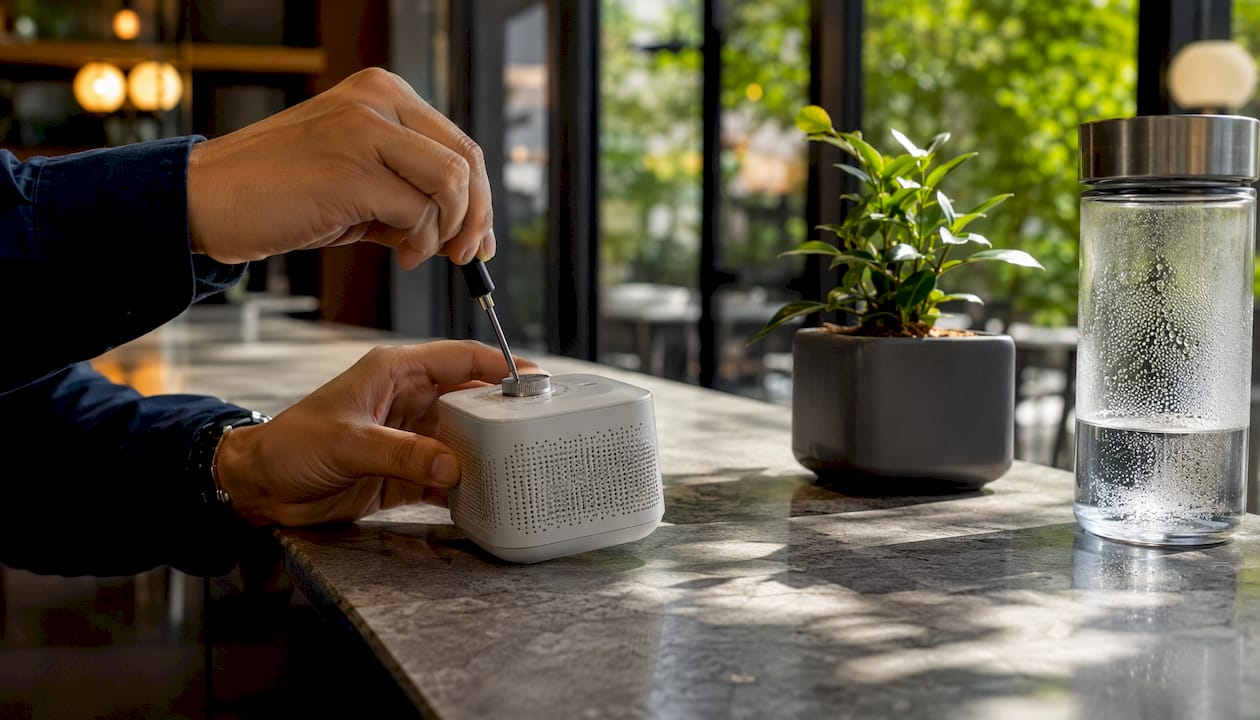
Electrochemical gas sensors face a different problem. Condensation on sensor membranes can block gas diffusion or create spurious electrical signals, leading to readings that drift unpredictably. Calibration data collected at one humidity level becomes unreliable when conditions shift, which is a genuine challenge in Australian homes where RH can swing from 40% in the morning to 80% by afternoon during summer.
Filter-based reference monitors are less susceptible but not immune. Filters absorb moisture, adding mass that gets attributed to particulate matter rather than water. Gravimetric measurements taken in high-humidity conditions therefore tend to overestimate the true particle load.
- Check whether your monitor specifies a humidity correction algorithm or a validated operating RH range
- Avoid placing sensors near kitchens, bathrooms, or open windows during rain
- Cross-reference readings with a co-located hygrometer to flag suspect data
- For research-grade accuracy, look for monitors that apply real-time RH compensation
Pro Tip: If your air quality monitor spikes during a humid evening but you cannot smell or see any obvious pollution source, check the RH reading first. A jump above 70% RH is often the culprit behind inflated particle counts, not an actual change in air pollution. Advanced monitoring in humid climates requires awareness of exactly this sensor vulnerability.
How indoor and outdoor humidity interact to affect your air
Your home is not a sealed box. Air exchanges constantly through gaps, windows, and ventilation systems, carrying outdoor humidity and its associated pollutants inside. When outdoor RH is high, as it is across much of northern and coastal Australia for months at a time, indoor humidity rises unless active dehumidification or air conditioning keeps it in check.
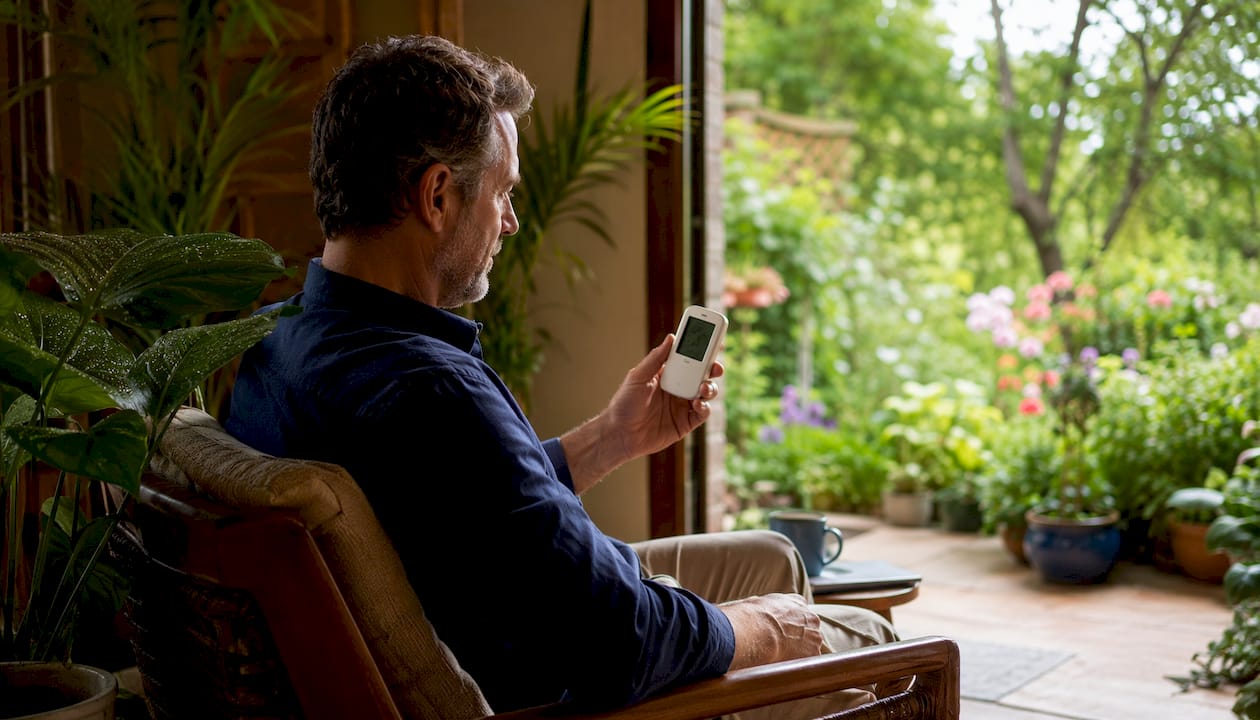
Indoor sources compound the problem. Cooking, showering, and even breathing add moisture to indoor air. In a poorly ventilated home during a humid summer, these sources can push RH well above the threshold where mould begins to colonise surfaces. The seasonal transition between dry and humid air masses, particularly in Queensland, the Northern Territory, and coastal New South Wales, creates dynamic challenges for indoor humidity stability that shift from week to week.
Common indoor-outdoor humidity interaction scenarios and their air quality implications:
- Opening windows on a humid day draws in moist outdoor air, raising indoor RH and promoting mould growth on cool surfaces
- Running air conditioning without ventilation lowers RH but can concentrate indoor pollutants like VOCs and CO2
- Bushfire smoke events often coincide with dry, low-humidity conditions that keep fine particles suspended longer indoors
- Tropical wet season brings sustained high outdoor RH that overwhelms passive ventilation strategies
- Winter heating in southern states dries indoor air sharply, dropping RH below 30% and irritating mucous membranes
Balancing these competing pressures requires monitoring both indoor and outdoor conditions simultaneously, not just reacting to one or the other.
What humidity does to your respiratory health
Humid air is a direct airway irritant in people with asthma. It activates lung nerve endings, triggering airway constriction independently of any pollutant in the air. This is not a secondary effect of mould or dust mites. The water vapour itself is the stressor, which is why asthma symptoms can worsen on a humid day even when measured pollution levels are low.
The biological consequences of sustained high humidity are well documented. Dust mites thrive when RH consistently exceeds 50%, and mould colonies establish rapidly on surfaces once RH climbs above 60%. Both are potent allergen sources that drive chronic respiratory inflammation. A PubMed review of indoor humidity and health found that virus transmission dynamics are also non-linearly tied to humidity and temperature, with influenza risk spiking at both low and high RH extremes combined with cold temperatures.
Research from the Korea National Health and Nutrition Examination Survey, which included 10,396 participants, found that long-term higher RH exposure was associated with a lower risk of restrictive lung disease, while mid-term exposure reduced the risk of chronic cough. The same study found that higher RH negatively affected the FEV1/FVC ratio, suggesting obstructive patterns worsen with prolonged high humidity. The relationship is genuinely bidirectional.
Key health threshold: The US EPA recommends keeping indoor RH between 30% and 50% to minimise mould growth and indoor pollutant concentrations. This range is the standard adopted for Australian residential environments.
One more layer worth knowing: humans have no dedicated sensory organ for humidity. The perception of “dry” or “humid” air in offices and homes often reflects other factors such as dust, odours, or ventilation quality rather than the actual moisture level. Symptoms get misattributed to humidity when the real driver is something else entirely, which makes objective measurement with a hygrometer far more useful than relying on how the air feels.
Best practices for monitoring and managing humidity at home
The foundation of good humidity management is measurement. A basic hygrometer, available at most hardware stores, gives you the RH reading you need to make informed decisions. Place one in the main living area and another in the bedroom, since these rooms often differ by 10–15% RH depending on ventilation and occupancy.
Once you know your baseline, the tools for adjustment are straightforward. Air conditioners and mechanical ventilation systems lower indoor RH effectively. Dehumidifiers are the right choice when you need targeted moisture removal without cooling the space, particularly in bathrooms, laundries, and bedrooms during the wet season. For dry conditions, evaporative or ultrasonic humidifiers add moisture back, but device choice matters.
Pro Tip: Avoid using ultrasonic humidifiers with unfiltered tap water. They aerosolise dissolved minerals such as iron and aluminium, creating fine particulate contaminants that can worsen indoor air quality. Use distilled water, or choose an evaporative humidifier that filters the water before dispersing it.
Practical steps for maintaining the 30%–50% RH target:
- Run exhaust fans during cooking and showering to remove moisture at the source
- Check HVAC system efficiency regularly, since a poorly maintained system loses its dehumidification capacity
- Seal gaps around windows and doors in humid climates to reduce uncontrolled air infiltration
- Use a dehumidifier with a built-in humidistat so it cycles off automatically at your target RH
- Pair any humidification device with a HEPA-rated air purifier to capture any aerosolised contaminants
Keeping RH in the 30%–50% band does not just protect against mould. It also reduces dust mite populations, keeps mucous membranes hydrated enough to filter particles effectively, and improves the accuracy of any air quality sensor running in the same space.
How Pureair-au addresses humidity-related air quality challenges in Australia
Australia’s air quality challenges are not generic. Bushfire smoke, tropical wet seasons, dry inland heat, and coastal humidity create conditions that off-the-shelf solutions from overseas markets are not calibrated for. Pureair-au builds its product range specifically around these local realities, offering medical-grade air purifiers, humidifiers, and dehumidifiers verified to AHAM standards for performance and reliability.
The HEPA filtration in Pureair-au’s purifiers captures 99.97% of airborne particles, including the biological contaminants that humidity accelerates: mould spores, dust mite allergens, and fine particles that have grown hygroscopically in humid air. That filtration standard matters most during the conditions where humidity and pollution interact worst, such as a humid summer day following a bushfire event.
Pureair-au’s Smart Finder tool takes the guesswork out of device selection. You enter your specific concern, whether that is mould, allergies, bushfire smoke, or general humidity control, and it matches you to the right unit for your room size and climate zone. For households navigating the allergen control challenges that come with high indoor humidity, this kind of targeted matching is more useful than a generic product catalogue.
Pro Tip: Pairing a dehumidifier with a HEPA air purifier gives you the most complete protection in humid Australian conditions. The dehumidifier removes the moisture that drives mould and dust mite growth; the purifier captures the allergens already circulating. Neither device alone covers both problems.
- Medical-grade HEPA purifiers suited to bushfire smoke and pollen seasons
- Humidifiers and dehumidifiers calibrated for Australian climate zones
- AHAM-verified performance across the full product range
- Smart Finder tool for personalised device matching based on your specific air quality concern
- Ongoing education resources covering humidity, filtration, and indoor air management
Key takeaways
Humidity’s role in air quality is bidirectional: both extremes create distinct health and pollution risks, and the 30%–50% RH band is the practical target for Australian homes.
| Point | Details |
|---|---|
| Humidity alters pollutant chemistry | High RH drives hygroscopic particle growth and secondary aerosol formation, worsening outdoor and indoor pollution. |
| Sensor accuracy depends on RH | Optical particle counters overestimate concentrations in humid conditions; always check RH alongside air quality readings. |
| Health risks run in both directions | High RH promotes mould and dust mites; low RH dries airways and raises virus transmission risk. |
| Target 30%–50% RH indoors | The US EPA standard adopted for Australian homes minimises both biological growth and respiratory irritation. |
| Pureair-au matches devices to local conditions | AHAM-verified purifiers, humidifiers, and dehumidifiers with a Smart Finder tool tailored to Australian climate zones. |
Pureair-au: medical-grade air quality solutions for Australian homes
If this article has made one thing clear, it is that managing humidity and air quality together requires the right equipment for your specific climate, not a generic device picked off a shelf. Pureair-au offers exactly that: a curated range of air purifiers, humidifiers, and dehumidifiers built around the conditions Australian families actually face, from tropical wet seasons in Queensland to dry bushfire summers in Victoria and South Australia.
Every product in the Pureair-au range is AHAM verified, so the performance figures on the box reflect real-world conditions, not laboratory ideals. The HEPA filtration captures 99.97% of airborne particles, including mould spores and hygroscopically grown PM2.5 that humid air produces. The Smart Finder tool on the website matches you to the right unit based on your room size, climate zone, and primary concern, whether that is mould, allergens, bushfire smoke, or general humidity control. Head to pureair-au.com to find the right solution for your home and start breathing air that is actually measured and managed.