
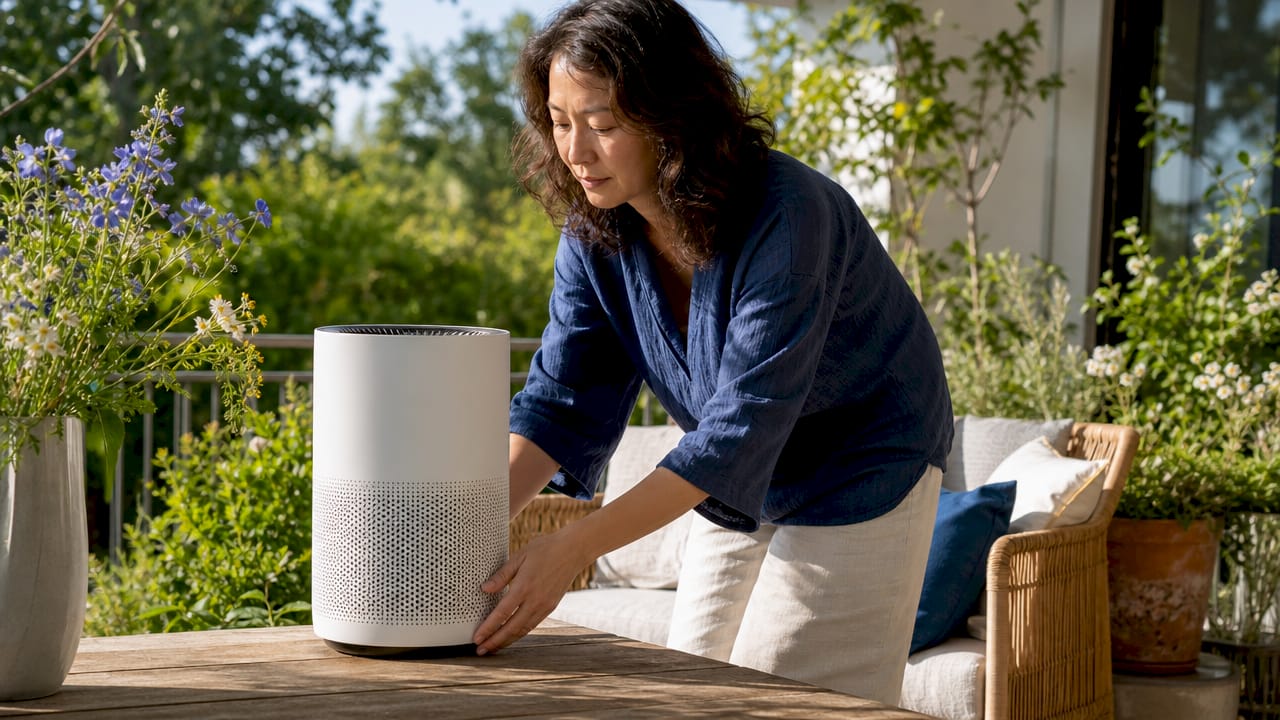
Where you put your air purifier matters more than which model you buy. Correct air purifier placement in your home can mean the difference between a unit running at full capacity and one struggling at a fraction of its rated performance. Industry standards recommend at least 15–30 cm of clearance on all sides for proper airflow. Bedroom placement is prioritised because you spend 7–9 hours there each night, making it the highest-value location for clean air. This guide covers the core principles, room-by-room positioning, and the most common mistakes Australian homeowners make.
What are the key placement principles for air purifiers at home?
The single most important rule in any air purifier placement guide is airflow. A unit pressed against a wall or tucked into a corner can lose 40–50% of its efficiency. That loss is not a minor inconvenience. Poor placement can drop airflow to as low as 5% of the unit’s rated capacity.
These principles apply in every room, regardless of size or purifier model:
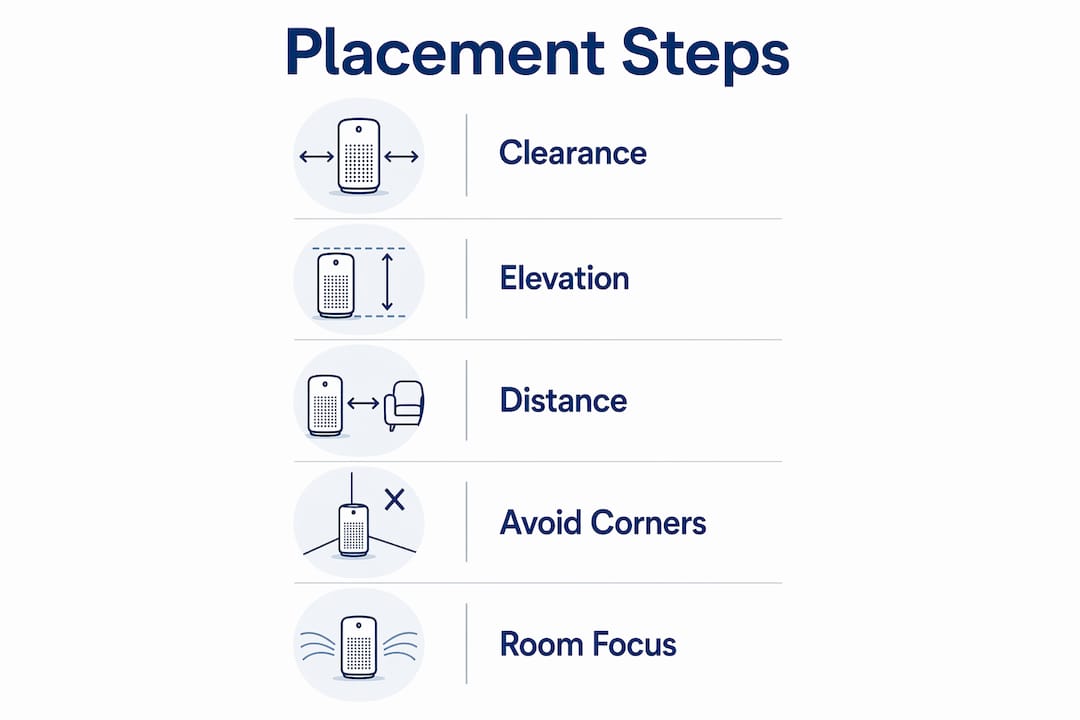
- Maintain 15–30 cm clearance on all sides. Walls and furniture block intake and output vents, starving the fan of air.
- Elevate the unit to 60–90 cm where possible. Elevated placement aligns the intake with the breathing zone, where fine particles like pollen and dander stay suspended longest.
- Avoid corners entirely. Corner placement forces the fan to work harder, increasing energy use and accelerating filter wear.
- Place units near pollution sources. Positioning within 2–3 metres of a pet bed, kitchen door, or entryway intercepts contaminants early before they spread through the room.
- Direct airflow across occupied zones, not directly at faces. Angle the output laterally so clean air sweeps the space without causing discomfort.
Pro Tip: Treat your air purifier like a ceiling fan. You want the air to circulate across the whole room, not blast one spot. Angle the output vents toward the centre of the space for the best coverage.
Air purifiers are targeted tools for specific zones, not whole-home solutions. One unit per occupied room is the standard approach for effective pollutant removal.
How should you position an air purifier in the bedroom?
The bedroom is the highest-priority room in any home. You spend roughly 7–9 hours there each night, and that extended time in filtered air significantly reduces allergen exposure over weeks and months. Getting bedroom placement right pays off faster than anywhere else in the house.
Follow these steps for the best result:
- Place the unit 1.8–3 metres from the head of the bed. A nightstand or low dresser works well. This distance keeps the unit close enough to clean the air you breathe without creating noise or draught directly on your face.
- Elevate to mattress height, roughly 60–90 cm off the floor. This puts the intake at the same level as your breathing zone while you sleep.
- Angle the output across the sleeping surface, not at your face. Direct the airflow so it sweeps laterally across the bed rather than pointing straight at the pillow.
- Keep the unit away from walls and behind furniture. Even 20 cm of clearance makes a measurable difference to airflow.
- Close doors and windows while the unit runs. Running with doors and windows closed preserves filter life and keeps the unit cycling the same air rather than pulling in fresh outdoor pollutants continuously.
Pro Tip: If you run a ceiling fan at night, set it to low and reverse the blade direction in winter. This gentle circulation helps the purifier distribute clean air more evenly without creating cold spots.
For Australian homeowners dealing with bushfire smoke season, the bedroom is the room to prioritise first. Closing the door and running a HEPA-rated unit overnight creates a clean air refuge even when outdoor air quality is poor.
What are the best air purifier locations in living areas, kitchens, and home offices?
Different rooms have different pollution sources and traffic patterns. Placement strategy shifts accordingly.
Living room positioning
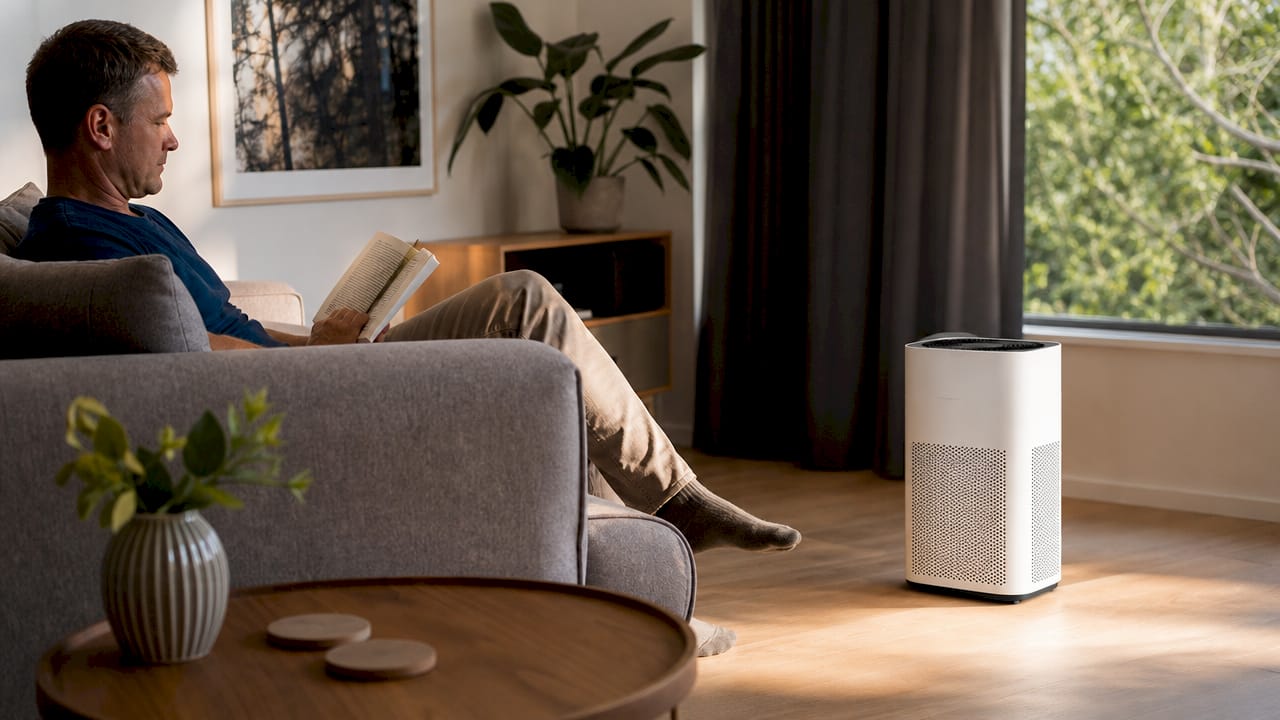
The living room demands coverage of the main seating cluster. Place the unit within 2–3 metres of where people actually sit, not in a decorative corner where it looks tidy but does little. Elevate it if possible, and keep it away from the television cabinet where heat and cables restrict airflow. For large or open-plan areas, a single unit covering roughly 90 square metres is the ceiling. Larger spaces need two units positioned at opposite ends of the seating zone. Read Pureair-au’s guide on living room setup for a detailed room-by-room breakdown.
Kitchen placement
The kitchen is the trickiest room. Cooking releases grease particles, carbon monoxide, and volatile organic compounds that clog filters fast. The correct distance is 1–1.5 metres from the cooktop. Closer than 1 metre leads to premature filter failure from grease saturation. Further than 1.5 metres and the unit misses the bulk of the pollutants before they spread. Place the unit on a bench or shelf at counter height, never directly above the stove.
Home office setup
The home office is a lower-pollution environment but a high-occupancy one. Place the unit at desk or monitor height, roughly 70–90 cm off the floor. Direct the output laterally, not toward your eyes, to avoid irritation during long work sessions. If your office doubles as a pet zone, move the unit closer to where the animal rests.
| Room | Ideal distance from source | Recommended height | Key risk to avoid |
|---|---|---|---|
| Bedroom | 1.8–3 m from bed head | 60–90 cm | Direct airflow on face |
| Living room | Within 2–3 m of seating | 60–90 cm | Decorative corner placement |
| Kitchen | 1–1.5 m from cooktop | Counter height | Grease filter clogging |
| Home office | Within 1.5 m of desk | 70–90 cm | Eye-level direct output |
Pet owners face a specific challenge in every room. Pureair-au has documented the most common pet owner errors with air purifiers, and blocked airflow from furniture placement tops the list.
What placement mistakes reduce air purifier effectiveness?
Most air purifiers underperform not because of a faulty unit but because of where they sit. These are the errors that cost homeowners the most.
- Flush against a wall or inside a corner. Corner placement increases fan load by 80–100%, energy consumption by 15–25%, and filter saturation by 20–40%. Move the unit to a central interior wall with clearance on all sides.
- Near HVAC return vents or radiators. Return vents pull air away from the purifier’s intake. Airflow conflicts near HVAC vents limit cleaning performance and make the unit work against the home’s own ventilation system.
- On shelves or inside entertainment units. Restricted airflow from shelving creates back-pressure that damages internal components and shortens the unit’s lifespan. A purifier inside a cabinet is essentially decorative.
- Ignoring where people actually spend time. A unit in the hallway does nothing for the person sleeping in the bedroom. Match placement to occupancy, not convenience.
- Running with windows and doors open. Open spaces force the filter to process an endless supply of outdoor air. The unit never cleans the same air twice, filter life drops, and indoor air quality barely improves.
Pro Tip: Before moving your unit, stand in the room and notice where you actually sit, sleep, or work. Place the purifier within 2–3 metres of that spot. That single change often delivers more improvement than upgrading to a higher-spec model.
Spatial geometry impacts purifier performance more than technical specifications. A correctly positioned mid-range unit outperforms a premium model placed in a corner.
Key takeaways
Correct placement is the single highest-impact, zero-cost change you can make to improve your home’s air quality.
| Point | Details |
|---|---|
| Clearance is non-negotiable | Maintain 15–30 cm on all sides to prevent airflow loss of up to 50%. |
| Bedroom is the top priority | Seven to nine hours of nightly occupancy makes it the highest-value placement location. |
| Match height to breathing zone | Elevate units to 60–90 cm to capture fine particles where you actually breathe. |
| Avoid corners and HVAC vents | Corner placement increases fan load by up to 100% and accelerates filter wear. |
| Close the room during operation | Sealed rooms allow the unit to cycle the same air repeatedly for maximum filtration. |
Why placement beats specs every time
I have seen homeowners spend serious money on premium HEPA units and then wedge them behind a couch because the cord only reaches that far. The unit runs, the filter loads up, and six months later they conclude air purifiers do not work. They do work. They just need room to breathe.
The insight that spatial geometry matters more than specs is one I keep coming back to. A correctly placed mid-range unit will outperform a top-tier model sitting in a corner. That is not a marketing claim. It is physics. Restrict the airflow and you restrict everything the unit can do.
What I find most homeowners overlook is the breathing zone concept. People assume floor placement is fine because the unit is out of the way. But heavier particles like dust settle low while finer particles, the ones that cause the most respiratory irritation, float at the height where you sit and sleep. Elevating the unit to 60–90 cm is a free upgrade that costs nothing and takes thirty seconds.
My honest recommendation: before you buy a second unit or upgrade your existing one, spend ten minutes repositioning what you already have. Move it away from the wall, raise it off the floor, and close the door. You will likely notice the difference within a day.
— Lucas
Pureair-au’s range for every room in your home
Getting placement right is step one. Having the right unit for the room’s size and pollution type is step two.
Pureair-au stocks a full range of AHAM-verified air purifiers, humidifiers, and dehumidifiers built for Australian conditions, from bushfire smoke season to coastal humidity. Every unit in the Pureair-au catalogue is selected for real-world performance, not just spec-sheet numbers. If you are unsure which unit suits your bedroom, living room, or open-plan space, the Pureair-au Smart Finder tool matches you to the right model based on room size and your specific concerns. Browse the full range at pureair-au.com and find a unit that works as hard as the placement you have just perfected.
FAQ
How far should an air purifier be from my bed?
Place the unit 1.8–3 metres from the head of the bed, elevated to mattress height. This distance captures airborne particles in your breathing zone without directing airflow directly at your face.
Does it matter if I put my air purifier on the floor?
Floor placement works for heavier particles like dust and pet dander. For finer particles such as pollen and smoke, elevating the unit to 60–90 cm improves capture efficiency by aligning the intake with the breathing zone.
Can I run my air purifier with the window open?
Running with windows open forces the unit to process a continuous supply of outdoor air, which reduces filtration efficiency and shortens filter life. Close doors and windows for best results.
Why is corner placement bad for an air purifier?
Corner placement increases fan load by 80–100% and raises energy consumption by 15–25%. It also accelerates filter saturation by up to 40%, meaning you replace filters more often for worse air quality.
How many air purifiers do I need for an open-plan living area?
A single unit typically covers up to approximately 90 square metres. Larger or open-plan spaces need two units positioned at opposite ends of the main seating zone to achieve full coverage.