The most effective air quality solutions for bushfire season combine portable HEPA air purifiers, building envelope sealing, and proactive health planning. A 2023 CSIRO study found that HEPA-filtered purifiers improve indoor air quality by 30–74% during smoke episodes when used in a well-sealed room. Dr. Joana Emmerson from CSIRO is direct about the priority: seal your home before smoke arrives, then run filtration inside. Asthma Australia recommends that vulnerable individuals prepare a Bushfire Smoke Asthma Plan well before fire season starts. For real-time data, AQFx gives Australians localised smoke forecasting that generic delayed reports simply cannot match.
Quick actions to take before and during a smoke event:
- Seal gaps under doors, around windows, and at exhaust vents before smoke arrives
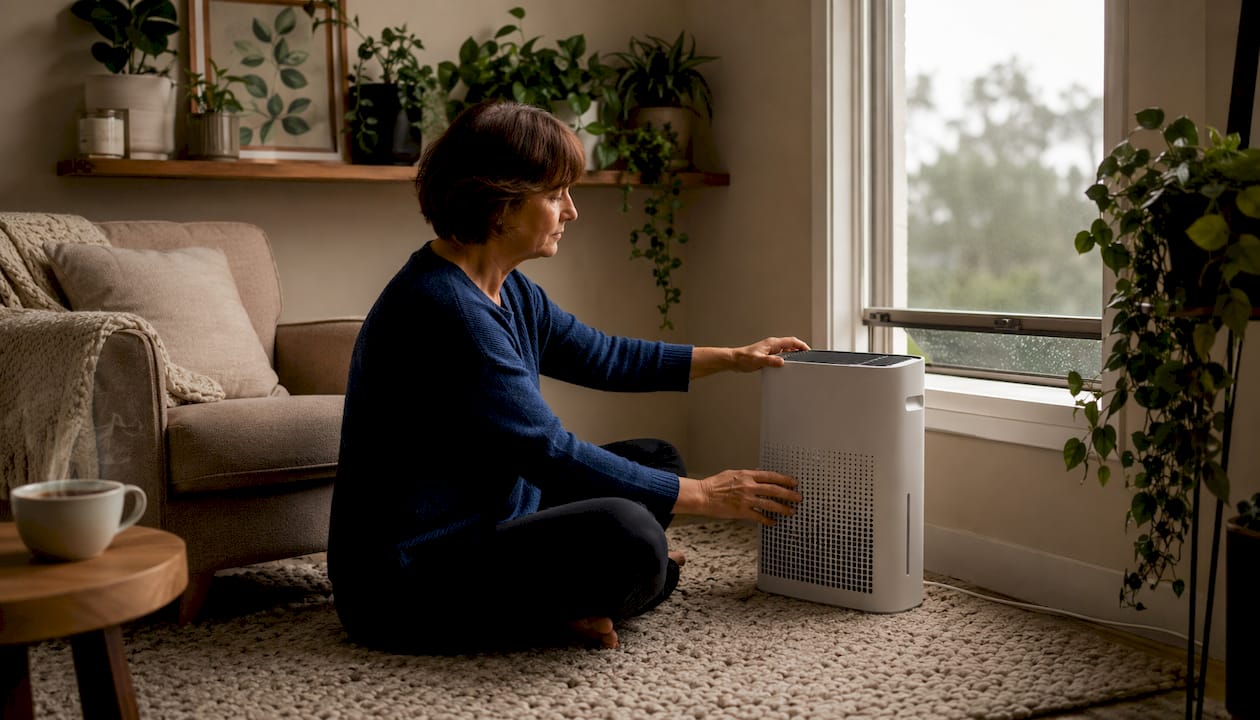
- Run a correctly sized HEPA air purifier in the room where you spend the most time
- Check AQFx or your state environmental health department for hourly PM2.5 readings
- Prepare a written asthma or health plan if anyone in your household is vulnerable
- Avoid vacuuming or burning candles indoors during smoke events
How HEPA air purifiers improve indoor air quality during bushfire smoke
Portable HEPA air purifiers are the single most evidence-backed tool for improving indoor air quality during bushfire smoke events. The 2023 CSIRO research measured improvements of 30–74% across nine homes running HEPA purifiers during prescribed burn periods, with the best results in tighter, better-sealed houses. Sizing matters: a unit rated for 15 square metres will not meaningfully clean a 40-square-metre open-plan living area.
| Factor | What to know |
|---|---|
| Filter standard | True HEPA captures 99.97% of particles at 0.3 microns, covering the 0.1–0.3 micron range of bushfire smoke |
| Room sizing | Match the purifier’s CADR rating to your room’s floor area; undersizing cuts effectiveness sharply |
| Placement | Central position away from walls, not tucked in a corner |
| Filter replacement | Replace more frequently during smoke season; a visibly grey filter is overdue |
| Energy use | Run continuously on medium speed rather than intermittently on high |
Pureair-au stocks AHAM-verified HEPA purifiers sized for Australian homes, including the Honeywell Air Touch P2, which is rated for fine particulate removal at the P2 standard.
Pro Tip: Place your purifier in the bedroom and run it overnight. You spend roughly a third of your life there, and overnight is often when outdoor smoke concentrations peak as cooler air settles.
Sealing your home and managing ventilation during bushfire season
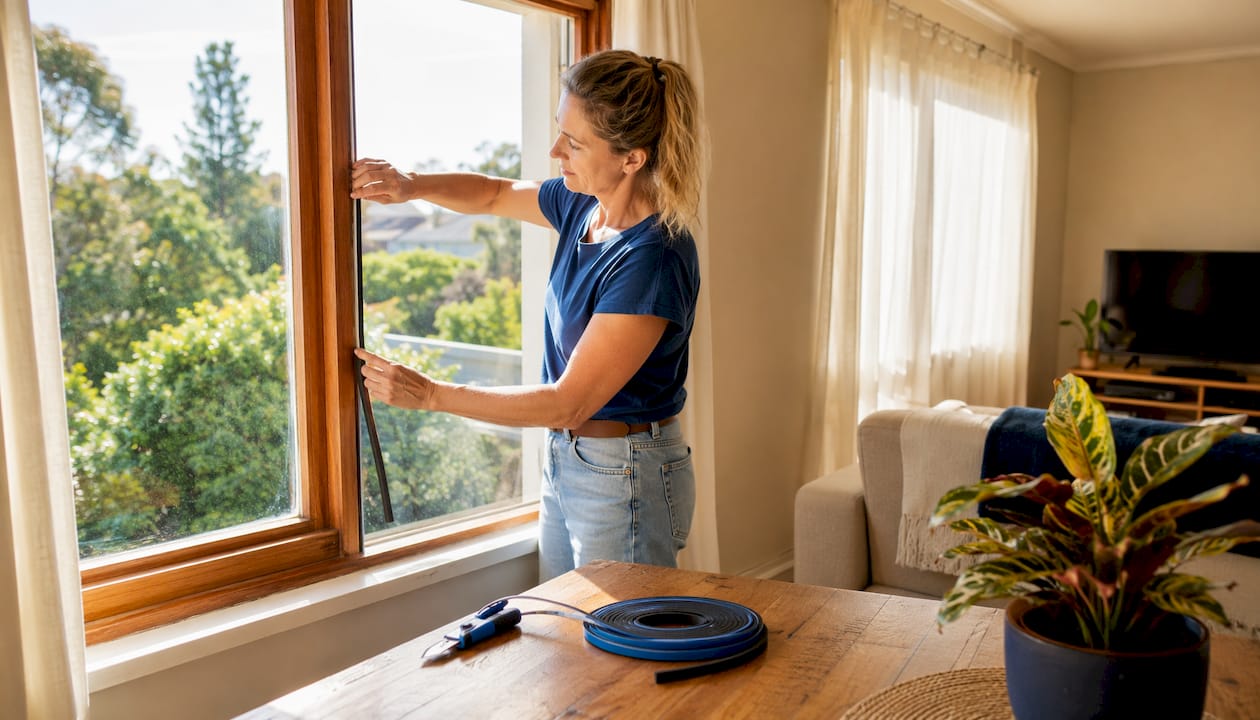
Sealing the building envelope is the first line of defence, and the data is striking. A Canberra case study cited by CSIRO found that sealing a house reduced five-minute indoor PM2.5 readings from 1,600 µg/m³ down to 300 µg/m³ during a heavy smoke event. Filtration alone cannot compensate for a leaky building when outdoor PM2.5 reaches the levels recorded during the 2019–20 Black Summer, where residential PM2.5 hit 500 µg/m³ in some homes.
Engineering experts at A.G. Coombs advise disabling HVAC night purge and economy cycles when particulate levels are elevated. These modes pull in large volumes of outside air to save energy, which is exactly what you do not want during a smoke event. Standard commercial HVAC systems remove only around 60% of smoke particles; upgrading to HEPA-rated filters on outside air intakes improves that figure substantially, though it typically requires fan upgrades to handle the added pressure drop.
Sealing and ventilation checklist:
- Apply door draft excluders and door seals to all external doors
- Use foam tape or silicone sealant around window frames and gaps
- Block or cover exhaust vents and rangehood openings when smoke is present
- Switch HVAC to recirculation mode and close fresh air intakes
- Disable night purge and economy cycles when PM2.5 exceeds elevated particulate thresholds
- Consider upgrading HVAC filters to F9 or HEPA-rated media for bushfire season (October to March), then revert to standard filters afterwards
- Avoid vacuuming during smoke events; it re-suspends fine particles already settled on surfaces
Proactive health management for vulnerable people during bushfire season
Vulnerable individuals, including people with asthma, the elderly, pregnant women, and those with cardiovascular conditions, face disproportionate risk from bushfire smoke. Asthma Australia recommends preparing a written Bushfire Smoke Asthma Plan before fire season, not during it. That plan should cover medication access, trigger thresholds, and who to contact if symptoms worsen.
During the 2019–20 season, the Federal Government allowed people in bushfire-affected areas to access prescription medicines without a prescription under PBS subsidy. That was a reactive measure. The smarter approach is having reliever medication stocked and a clear written protocol in place from october onwards.
Key health management steps:
- Prepare a written asthma or health management plan before fire season
- Stock reliever medication and confirm preventer prescriptions are current
- Identify the cleanest room in your home and set it up as a refuge space
- Stay indoors with doors and windows closed when AQI exceeds hazardous thresholds
- Keep well hydrated; smoke exposure combined with heat accelerates dehydration
- Wear a P2/N95 mask if you must go outside, or if indoor air quality deteriorates significantly
- Monitor symptoms closely and seek medical attention early rather than waiting
How to find reliable, localised air quality data in Australia
Generic air quality reports can lag real conditions by hours, which leaves families making decisions on outdated information. AQFx, developed by CSIRO, provides national smoke forecasting with far greater localisation than standard delayed index reports. Dr. Emmerson has called for a shift toward real-time hourly reporting, noting that air quality can drop from “very good” to “extremely poor” within minutes during a bushfire event.
The Bushfire Royal Commission recommended that air quality measurements be reported hourly and that jurisdictions standardise their health alert messaging. Not all states have fully implemented this yet, which makes knowing your local sources critical.
Trusted air quality data sources for Australians:
- AQFx (CSIRO): national smoke forecasting with localised plume modelling
- NSW: dpie.nsw.gov.au/air-quality for real-time updates
- Victoria: EPA AirWatch at epa.vic.gov.au
- Queensland: health.qld.gov.au bushfire smoke health alerts
- ACT: health.act.gov.au/public-health-alerts
- Bureau of Meteorology: fire weather warnings and smoke reports
- AirRater app: free, covers most states and territories with real-time updates
When PM2.5 readings climb above 100 µg/m³, that is the threshold to close fresh air intakes and activate your purifiers. Above 200 µg/m³ is classified as hazardous. On 1 january 2020, the AQI in parts of Canberra reached 4,650, more than 23 times the hazardous threshold.
How to set up a clean air room during heavy smoke events
When outdoor smoke is severe and whole-home sealing is not feasible, concentrating your efforts on one room is a practical fallback. Choose a room with fewer windows and external walls, ideally a bedroom or internal living space. Seal the gap under the door with a rolled towel or a proper door draft excluder, and cover any vents.
Run a correctly sized HEPA purifier in that room continuously. Research supports the idea that a dedicated indoor clean air space, fitted with a HEPA purifier and sealed as tightly as possible, offers meaningful protection for vulnerable household members even when the rest of the home is leaky. If budget allows, adding an activated carbon filter layer addresses gaseous pollutants from smoke, not just particles.
Do masks and respirators help indoors when air quality is poor?
P2 and N95 masks filter fine particulate matter and do provide protection when air quality is poor indoors. The key word is “fitted.” A mask with gaps around the nose bridge or sides of the face lets unfiltered air through. Beards, for instance, prevent an airtight seal entirely.
Wearing a mask indoors is a reasonable short-term measure if you cannot adequately seal or filter your space, or if you need to move through a smoky part of the home. It is not a substitute for a HEPA purifier running in a sealed room. The Australian Government distributed millions of P2 masks during the 2019–20 season, but availability during peak demand is not guaranteed. Keeping a supply at home before fire season is the sensible approach.
Do indoor plants actually help with bushfire smoke?
The honest answer: not meaningfully. Plants can absorb trace amounts of some gaseous pollutants, but the volumes involved are far too small to make a measurable difference to PM2.5 levels during a bushfire smoke event. You would need an impractical number of plants to replicate even a modest HEPA purifier’s particle removal rate.
Plants are worth having for general wellbeing and minor air quality benefits in everyday conditions. During an active smoke event, though, they offer no real protection against the fine particles that cause the most serious health effects. Rely on sealed rooms and HEPA filtration for genuine smoke protection, and treat plants as a complement to that, not a replacement.
Pureair-au: HEPA solutions built for Australian bushfire season
Pureair-au specialises in medical-grade air quality solutions designed for the specific challenges Australian families face, from bushfire smoke to pollen season. Every product in the range is AHAM verified, and the Smart Finder tool matches you to the right unit based on your room size and primary concern. Browse the full range of HEPA air purifiers and filters to find the right solution before fire season arrives.
Key takeaways
HEPA air purifiers combined with building envelope sealing deliver the strongest protection against bushfire smoke indoors. CSIRO research measured a 30–74% improvement in indoor air quality when portable HEPA purifiers are used in well-sealed rooms during smoke events.
| Point | Details |
|---|---|
| HEPA purifiers work | CSIRO found indoor air quality improved by 30–74% with correctly sized purifiers in sealed rooms during bushfire smoke episodes. |
| Seal first, filter second | Sealing gaps reduced indoor PM2.5 from 1,600 to 300 µg/m³ in a Canberra case study. |
| Disable HVAC fresh air intake | Turn off night purge and economy cycles when PM2.5 exceeds elevated particulate thresholds to stop smoke ingress. |
| Plan before fire season | Asthma Australia recommends a written Bushfire Smoke Asthma Plan prepared before october, not during a crisis. |
| Use localised data | AQFx and state EPA portals give real-time PM2.5 readings; generic delayed reports can leave you acting too late. |