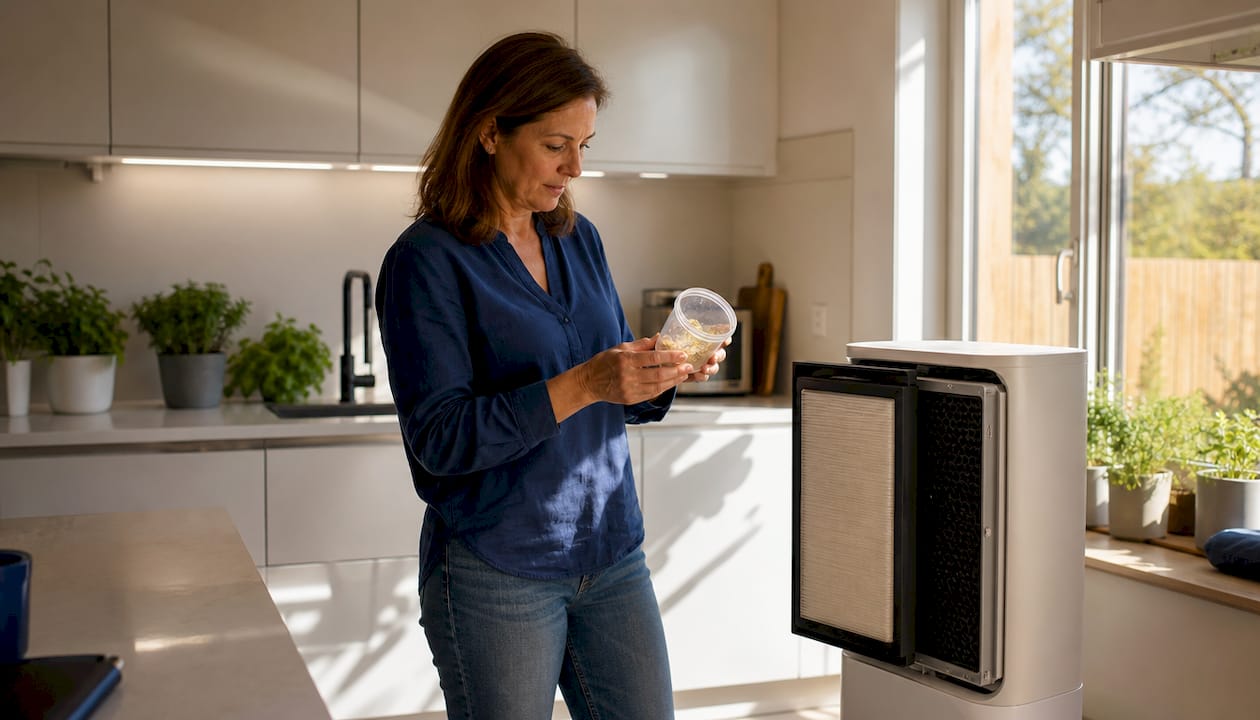
A True HEPA filter captures pollen by physically trapping particles 10–100 microns in size with at least 99.97% efficiency, using three mechanical processes that work simultaneously inside a dense mat of fibres. Pollen grains are far larger than the 0.3-micron testing standard used for HEPA certification, which means the filter performs even better on pollen than its minimum rating suggests. For allergy sufferers across Australia, where spring pollen counts can spike dramatically, understanding how HEPA filters capture pollen is the first step toward choosing a system that actually works. This guide explains the science plainly, cuts through marketing noise, and shows you how to get the most from your purifier.
How do HEPA filters capture pollen?
True HEPA filtration is defined by three physical mechanisms: impaction, interception, and diffusion. Each one targets a different particle size range, and all three operate at the same time inside the filter media. That overlap is what makes HEPA so effective across such a wide range of airborne particles, from fine dust to large pollen grains.
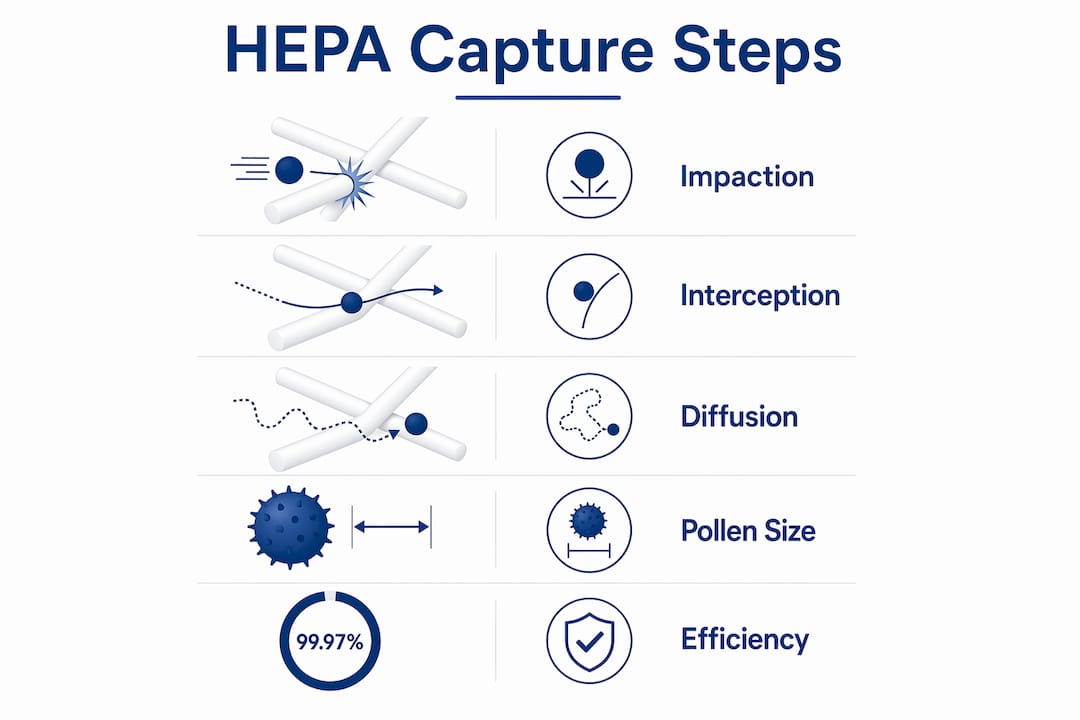
Impaction is the dominant mechanism for pollen. Large particles like pollen grains carry enough mass that they cannot follow the airstream as it curves around a filter fibre. They travel in a straight line, collide with the fibre, and stick. Pollen grains, which range from 10 to 100 microns in diameter, are ideal candidates for impaction because their size and mass make them nearly impossible to redirect.
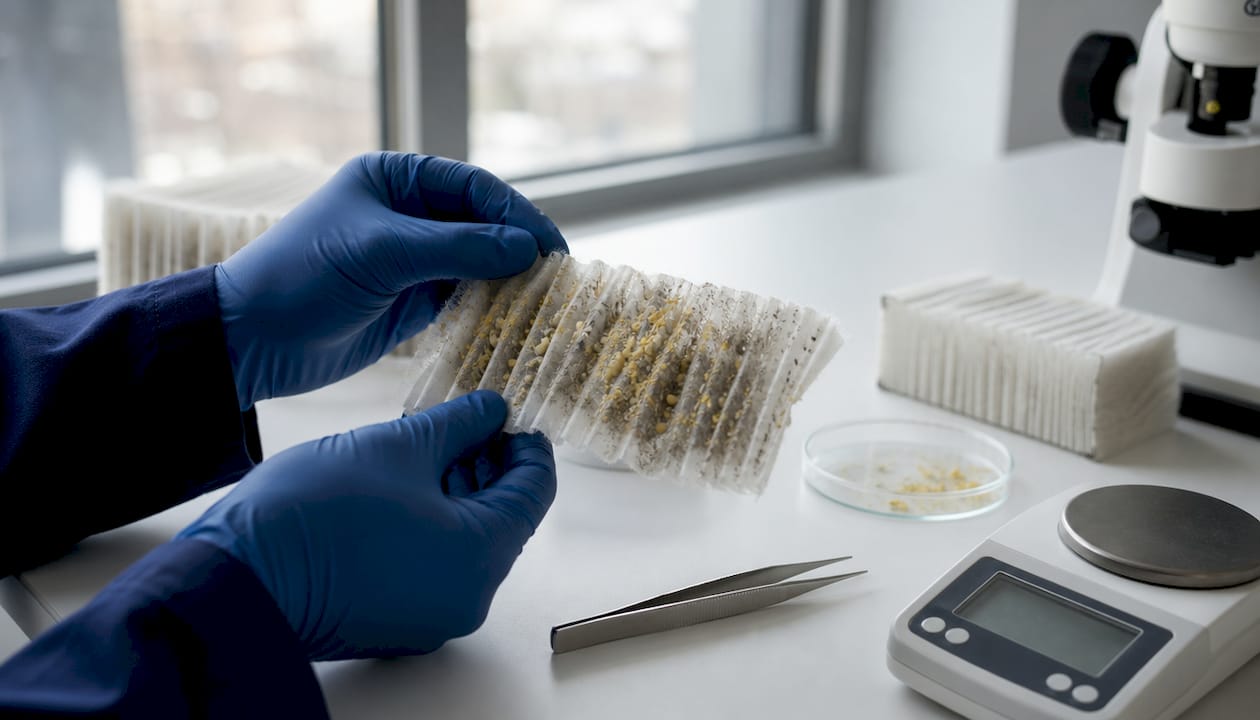
Interception handles mid-sized particles that do follow the airstream but pass close enough to a fibre to make contact. The particle brushes the fibre surface and adheres. This mechanism works alongside impaction for pollen and picks up many particles that impaction misses.
Diffusion targets the smallest particles, those below about 0.1 microns. These particles move erratically due to Brownian motion, which increases the chance they will contact a fibre. Diffusion is less relevant for pollen specifically, but it explains why HEPA filtration mechanisms work so well across the full particle size spectrum.
- Impaction: captures large particles (pollen, dust mite debris) by inertia
- Interception: captures mid-sized particles that graze filter fibres
- Diffusion: captures ultrafine particles via random Brownian movement
- All three mechanisms operate simultaneously, leaving no size gap in coverage
Pro Tip: Run your purifier on a medium or high setting during the first 30 minutes after entering a pollen-heavy environment. This clears the initial surge of particles you carry indoors on clothing and hair before impaction and interception can work at their best.
Why does the 0.3-micron standard matter for pollen capture?
The 0.3-micron particle size is the Most Penetrating Particle Size, or MPPS. It is the hardest size for any filter to capture, which is exactly why HEPA certification uses it as the benchmark. A filter that achieves 99.97% efficiency at 0.3 microns will perform better than that for both smaller and larger particles.
Pollen grains sit well above the MPPS threshold. At 10–100 microns, they are captured almost entirely by impaction and interception, both of which become more effective as particle size increases. This means a True HEPA filter is, in practical terms, a near-perfect pollen trap.
“The 0.3-micron standard is not a size limit. It is the worst-case scenario for filtration efficiency. Particles larger than 0.3 microns, including all pollen grains, are captured at rates that exceed the 99.97% minimum. The MPPS standard exists to guarantee performance at the hardest point, so allergy sufferers can trust that pollen capture is even more reliable than the headline figure suggests.”
This distinction matters because many allergy sufferers assume HEPA filters struggle with anything outside the 0.3-micron range. The opposite is true. The True HEPA standard guarantees a floor, not a ceiling, for performance.
Filters labelled “HEPA-type” or “HEPA-like” do not meet this standard. They often use lower-grade media and lack the sealed housing required to prevent air bypass. Uncertified HEPA-type filters allow pollen to pass around the filter rather than through it, which defeats the purpose entirely. For anyone managing hay fever or allergic asthma, only True HEPA certification provides reliable protection.
What practical steps improve pollen capture at home?
Choosing a True HEPA purifier is the starting point, but how you use it determines the real-world result. These steps make the difference between marginal improvement and genuine allergy relief.
-
Match CADR to your room size. The Clean Air Delivery Rate, or CADR, tells you how much filtered air a purifier delivers per minute. A unit with a low CADR in a large bedroom will not cycle air fast enough to keep pollen levels down. Check the manufacturer’s room size rating and choose a model that covers your actual space, not a smaller one.
-
Run the purifier continuously. Experts recommend 4–6 air changes per hour for effective pollen reduction. Switching the purifier off at night or only running it occasionally allows pollen to accumulate between cycles. Continuous operation during peak pollen season is the single most effective habit you can build.
-
Check the housing seal. Even a certified True HEPA filter loses effectiveness if the purifier housing leaks. Leaky purifier systems allow unfiltered air to bypass the media entirely, which is a particular risk for people with allergic asthma. When buying, look for units with tight gaskets and solid construction.
-
Add activated carbon for complete coverage. HEPA filters capture particulate matter like pollen but do not remove gases or VOCs. A purifier with a combined HEPA and activated carbon stage handles both particles and odours, which is especially useful during bushfire smoke events that often coincide with spring pollen season in Australia.
-
Replace filters on schedule. Clogged HEPA filters reduce airflow and drop capture efficiency. Check the manufacturer’s replacement interval and follow it. During high-pollen months, inspect the filter more frequently than the standard schedule suggests.
Pro Tip: Keep windows closed during peak pollen hours, typically between 5AM and 10AM, and rely on your purifier to maintain indoor air quality. This reduces the pollen load the filter must handle and extends filter life.
What are the limits of HEPA filters for pollen control?
HEPA filters are highly effective for pollen, but they are not a complete solution on their own. Understanding their limits helps you build a layered approach that actually keeps symptoms under control.
- HEPA filters capture particles only. They do not remove gases, volatile organic compounds, or odours. A layered filtration approach that includes activated carbon is necessary for full indoor air quality management.
- Closing windows during high-pollen periods is source control, and it is just as important as filtration. A purifier running in a room with open windows during a high-pollen morning is fighting a losing battle.
- Ventilation balance matters. Sealing a home completely to block pollen can cause carbon dioxide to build up indoors. Ventilate during low-pollen periods, such as after rain or in the evening, and rely on filtration the rest of the time.
- Filters labelled “HEPA-like” or “HEPA-type” carry real risk. Uncertified filter labels mislead allergy sufferers into believing they have protection they do not. Always verify True HEPA certification before purchasing.
- A well-sealed system is non-negotiable. The filter media can meet True HEPA standards perfectly, but a poorly sealed housing allows pollen to bypass it. Seal quality is as important as filter quality.
For allergy sufferers managing hay fever symptoms, the most effective strategy combines True HEPA filtration, source control, and regular maintenance into a consistent daily routine.
Key takeaways
True HEPA filters capture pollen at rates exceeding 99.97% because pollen grains, at 10–100 microns, are far larger than the 0.3-micron MPPS benchmark used for certification.
| Point | Details |
|---|---|
| Pollen capture exceeds the standard | Pollen grains are 10–100 microns, making them easier to trap than the 0.3-micron test particle. |
| Three mechanisms work together | Impaction, interception, and diffusion cover the full particle size range simultaneously. |
| True HEPA certification is non-negotiable | “HEPA-type” labels do not meet the standard and allow air bypass around the filter. |
| Continuous operation is critical | Running your purifier at 4–6 air changes per hour sustains pollen reduction during peak season. |
| Maintenance protects performance | Clogged filters reduce airflow and capture efficiency; replace on schedule or more often in high-pollen months. |
What I’ve learned about HEPA filters after years of watching people get this wrong
Most people buy an air purifier, put it in the corner of the room, and assume the job is done. The filter quality matters, but it is only one part of the equation. I have seen allergy sufferers spend good money on certified True HEPA units and still struggle through spring because the purifier was undersized for the room, or they kept a window cracked “for fresh air” during the worst pollen hours of the day.
The insight that changed how I think about this is the MPPS paradox. The 0.3-micron standard sounds like a limitation, but it is actually a guarantee of worst-case performance. Pollen grains are so much larger than 0.3 microns that a True HEPA filter captures them almost without effort. The real failure points are not the filter media. They are the housing seal, the room sizing, and the operating habits.
I also think the “HEPA-type” labelling problem is more serious than most people realise. These products sit on shelves next to certified units, look nearly identical, and cost less. For someone with mild seasonal sniffles, the difference might be tolerable. For someone with allergic asthma, it is not. The filter seal quality and True HEPA certification are the two things I would check before anything else.
My honest advice: treat your purifier like a piece of medical equipment, not a household appliance you set and forget. Match it to the room, run it continuously during pollen season, and replace the filter before it clogs. Do those three things with a certified True HEPA unit, and the technology will deliver exactly what the science promises.
— Lucas
Pureair-au’s range for Australian pollen seasons
Pureair-au stocks a curated selection of True HEPA certified air purifiers and replacement filters suited to Australian homes and allergy needs. Every unit in the range is AHAM verified, which means the CADR ratings are independently confirmed rather than self-reported.
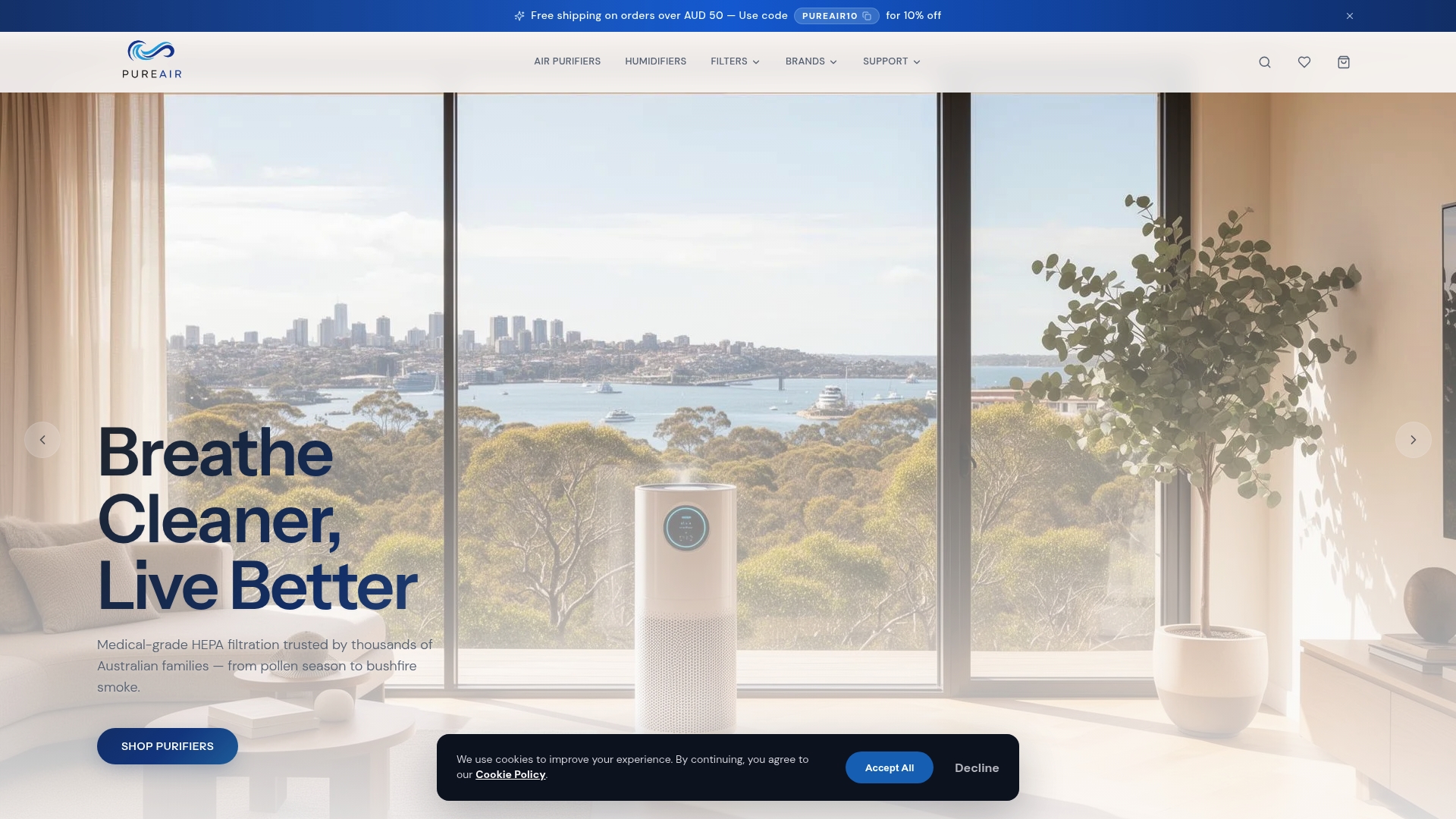
Whether you need a compact unit for a bedroom or a higher-capacity model for an open-plan living area, the full product catalogue includes options with combined HEPA and activated carbon stages for complete pollen and odour control. The Pureair-au Smart Finder tool helps you match a unit to your room size and specific concern, including pollen and hay fever, without guesswork. Replacement filters, including certified HEPA media, are also available so you can keep your system performing at its best through every pollen season.
FAQ
What is a True HEPA filter?
A True HEPA filter meets the certified standard of capturing at least 99.97% of particles at 0.3 microns in size. Filters labelled “HEPA-type” or “HEPA-like” do not meet this standard.
Are HEPA filters effective against pollen?
Yes. Pollen grains are 10–100 microns in size, far larger than the 0.3-micron MPPS benchmark, so HEPA filter pollen removal efficiency exceeds the minimum 99.97% rating.
How often should I replace my HEPA filter during pollen season?
Follow the manufacturer’s replacement schedule as a baseline, but inspect the filter more frequently during peak pollen months. A clogged filter reduces airflow and drops capture efficiency significantly.
Do HEPA filters remove all indoor allergens?
HEPA filters capture particulate allergens including pollen, dust mite debris, and mould spores. They do not remove gases, VOCs, or odours. A combined HEPA and activated carbon system provides broader coverage.
How many air changes per hour do I need for pollen control?
Experts recommend 4–6 air changes per hour for effective pollen reduction indoors. Match your purifier’s CADR to your room size and run it continuously during high-pollen periods to achieve this rate.