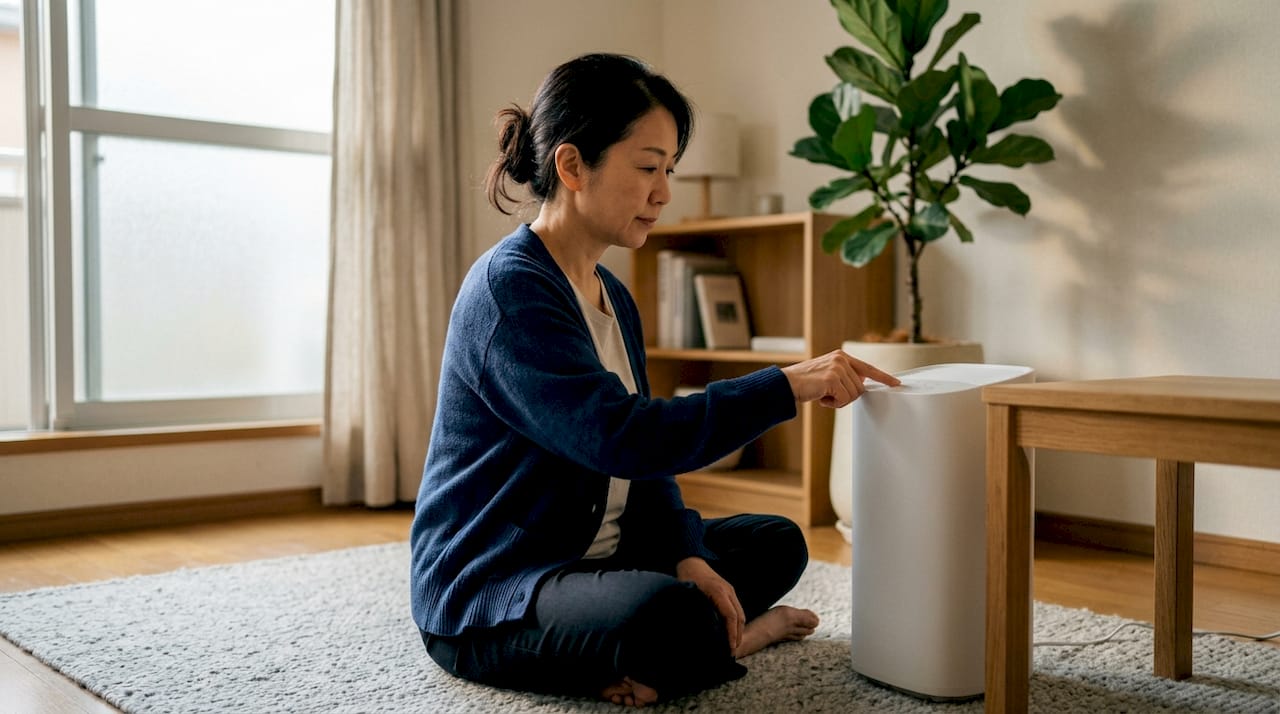
Indoor air can be 2–5 times more polluted than outdoor air, even in a clean, tidy home. To filter indoor air pollution particles effectively, you need a certified HEPA filter that captures at least 99.97% of airborne particles at 0.3 micrometres, supported by proper ventilation and humidity control. The US EPA classifies source control and ventilation as primary indoor air quality strategies, with mechanical filtration as a critical supplement. For Australian families dealing with bushfire smoke, pollen season, and high humidity, getting this combination right makes a measurable difference to health and comfort.
What types of particles do you need to filter from indoor air?
Indoor air carries a wide range of particles, and not all of them are visible. Understanding what you are dealing with helps you choose the right filtration approach.
The main particle types found in Australian homes include:
- Dust and dust mite debris. These are the most common indoor allergens. Dust mite particles are typically 10–40 micrometres and settle on surfaces, but they become airborne during movement and cleaning.
- Pollen. Outdoor pollen enters through open windows and doors. Once inside, pollen particles (10–100 micrometres) trigger allergic reactions and worsen asthma. Keeping windows closed during high pollen counts and running an air purifier helps reduce pollen exposure indoors.
- Pet dander. Tiny flakes of skin shed by cats, dogs, and other animals range from 2.5–10 micrometres. They stay airborne for hours and penetrate deep into airways.
- PM2.5 fine particles. Particles smaller than 2.5 micrometres come from cooking, candles, incense, and bushfire smoke. PM2.5 bypasses the nose and throat and reaches the lungs directly. Families managing smoke haze and indoor air quality during bushfire season face particularly high PM2.5 loads.
- Mould spores. Spores range from 3–100 micrometres and thrive in humid conditions. They are a serious concern for anyone needing to avoid indoor pollution with sensitive lungs.
- VOCs (volatile organic compounds). These are gases, not particles. Standard HEPA filters do not capture VOCs. Activated carbon layers in combination filters address gases separately.
Children and people with asthma, allergies, or chronic lung conditions face the greatest health risk from sustained particle exposure. Identifying allergy triggers in indoor air is the first step toward building an effective filtration plan.
How do HEPA filters work to capture airborne particles?
HEPA stands for High Efficiency Particulate Air. A certified HEPA filter captures 99.97% of particles at 0.3 micrometres in diameter. That 0.3 micrometre size is actually the hardest particle size to trap, so a filter rated at that threshold performs even better on larger and smaller particles.
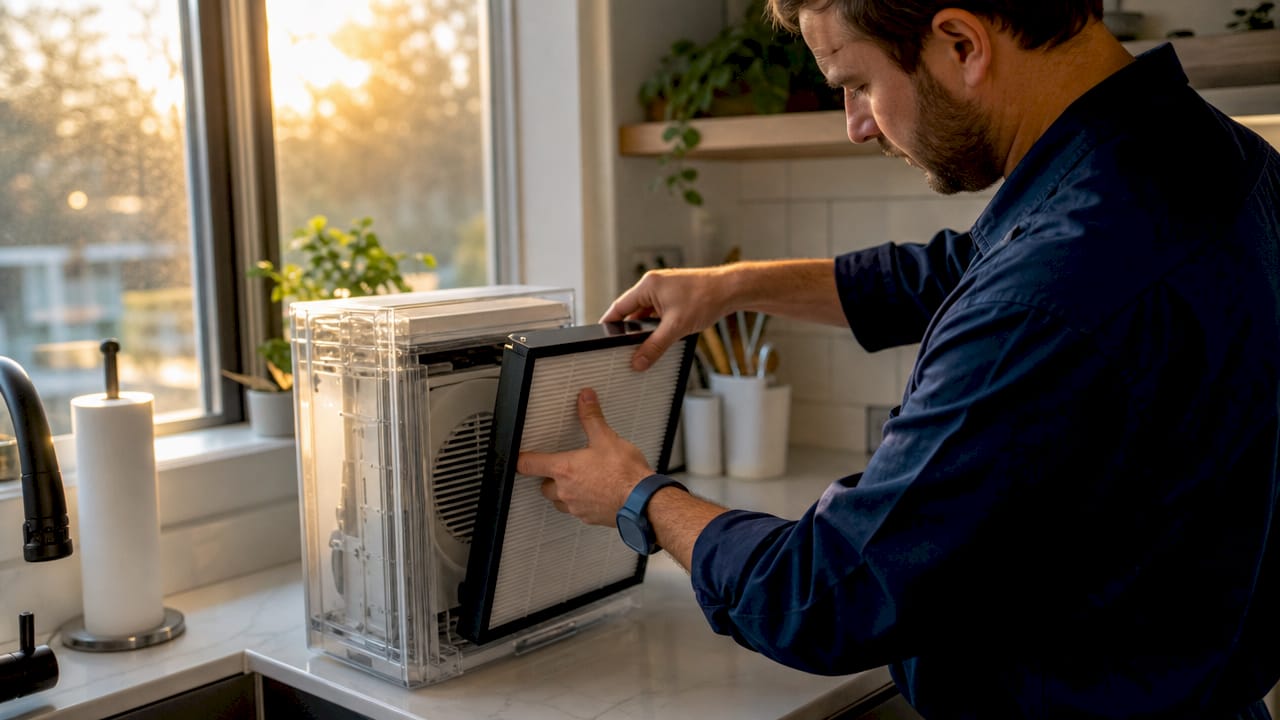
HEPA filters work through three physical mechanisms. Larger particles are intercepted directly by the fibres. Mid-sized particles collide with fibres as they follow airflow through the filter. The smallest particles move erratically (Brownian motion) and end up sticking to fibres through diffusion. This is why HEPA filters are so effective across a broad particle size range, not just at one size.
Advanced HyperHEPA technology pushes this further. HyperHEPA filters capture ultrafine particles down to 0.003 micrometres at 99.5% efficiency. Ultrafine particles are the ones most likely to penetrate deep lung tissue, so this matters for families with members who have sensitive lungs or respiratory conditions.
When choosing a unit, look for AHAM (Association of Home Appliance Manufacturers) verification. AHAM-verified units have independently tested Clean Air Delivery Rates (CADR), which tell you how quickly the unit cleans a given room size. Pureair-au stocks AHAM-verified air purifiers designed for Australian home conditions, including models suited to managing bushfire smoke and seasonal pollen. You can review the full HEPA filter buyer’s guide to compare filter technologies before buying.
Pro Tip: Match the unit’s CADR rating to your room size. A unit rated for 20 square metres will not clean a 40 square metre open-plan living area effectively, no matter how good the filter is.
What habits and tools complement air filtration at home?
Filtration alone is not enough. The US EPA recommends source control and ventilation as the primary strategies, with air purifiers as a supplement. Combining these approaches is how you actually improve breathing and air quality at home.
Follow these steps to build a complete indoor air quality routine:
-
Use a vented kitchen exhaust fan. A vented hood reduces cooking PM2.5 by over 60%. Recirculating hoods filter grease but release nitrogen dioxide (NO2) and other gases back into the kitchen. If you cook frequently, a vented hood is one of the highest-impact changes you can make.
-
Control indoor humidity. Keep relative humidity between 30% and 50%. Above 50%, mould and dust mites thrive. Below 30%, respiratory membranes dry out and become more vulnerable. A digital hygrometer costs around $15 and takes the guesswork out of monitoring. A dehumidifier or humidifier helps you stay in range year-round.
-
Vacuum with a HEPA-filter vacuum. Standard vacuums can exhaust fine particles back into the air. A HEPA-filter vacuum traps what it picks up. Vacuuming is one of the most effective everyday habits for improving indoor air quality.
-
Time your cleaning carefully. Vacuuming and wet dusting stir up settled particles. Do these tasks when the room is unoccupied, then run your air purifier on high for 30–60 minutes afterwards to capture what was resuspended.
-
Ventilate strategically. Open windows when outdoor air quality is good. Close them during high pollen periods, smoke events, or when traffic pollution peaks. Cross-ventilation (opening windows on opposite sides of the home) clears stale air faster than a single open window.
Pro Tip: Reduce indoor air pollutants naturally by switching from aerosol sprays, scented candles, and synthetic air fresheners to unscented or naturally derived alternatives. These products are a significant source of VOCs and fine particles.
How to choose, maintain, and replace your air filters
Choosing the right unit and keeping it maintained are equally important. A poorly maintained filter loses effectiveness quickly and can become a source of particles itself.
Choosing the right unit
Match the unit to the room. Check the CADR rating against your room’s floor area. For bedrooms, a quieter unit rated for the room size is better than an oversized unit running on low. For open-plan living areas, you may need a larger unit or two smaller ones placed strategically.
Filter replacement schedule
| Situation | Recommended replacement interval | Approximate cost |
|---|---|---|
| Standard household use | Every 12 months | $80–$200 |
| Homes with pets | Every 6–8 months | $80–$200 |
| Bushfire smoke or high pollution periods | Every 6 months or sooner | $80–$200 |
| Households with allergy or asthma sufferers | Every 6 months | $80–$200 |
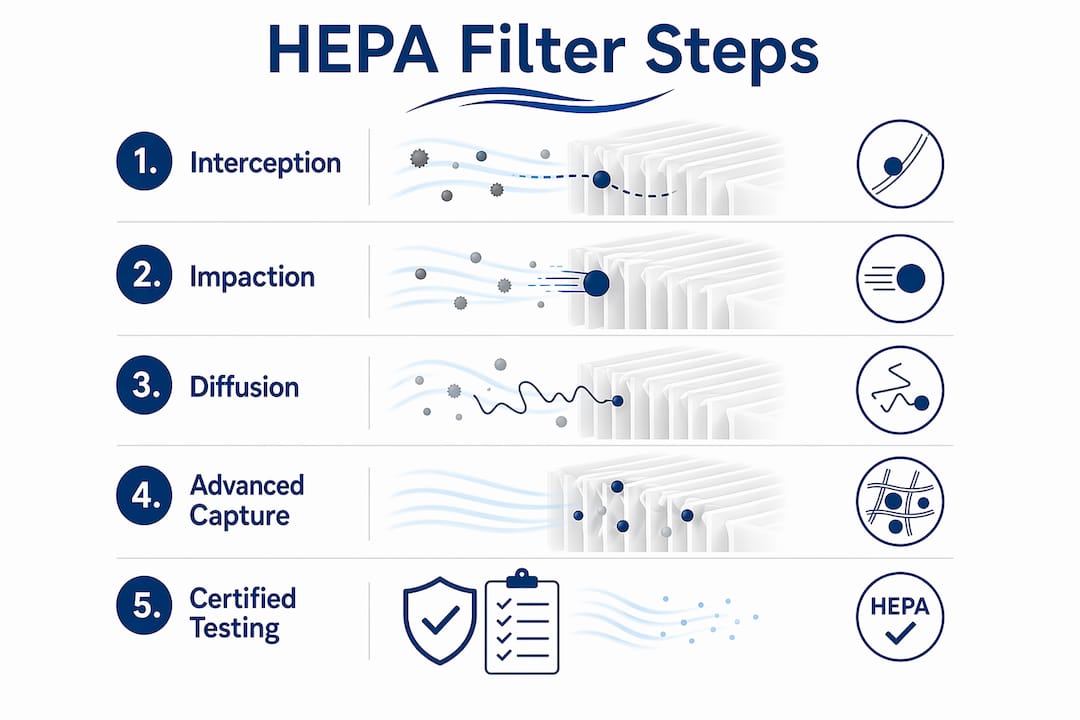
Filter replacements are typically needed every 6–12 months, with costs ranging from $80 to $200 depending on the model. That cost is worth factoring in when you buy a unit, not after. Pureair-au’s filter maintenance guide walks through the process for common models.
Signs your filter needs changing
- The unit’s indicator light activates (if the model has one)
- Airflow from the unit feels noticeably weaker
- Allergy or asthma symptoms worsen despite the unit running
- The filter appears visibly grey or clogged when inspected
- You notice a musty or stale smell from the unit
Following the manufacturer’s replacement schedule is the single most reliable way to maintain filtration performance. Skipping replacements does not save money. It reduces the unit’s effectiveness and can strain the motor.
Common mistakes that reduce filtration effectiveness
Many families buy an air purifier and assume the job is done. Filtration effectiveness is directly limited by indoor activities and pollutant sources. A purifier running in the corner of a room while someone burns toast or lights incense nearby is fighting a losing battle.
The most common mistakes include:
- Relying on houseplants for air cleaning. Houseplants do not provide meaningful air purification in homes with normal ventilation. The air exchange rate in a typical room far exceeds what a plant’s root zone can process. Plants are pleasant, but they are not a filtration strategy.
- Wrong room placement. An air purifier tucked behind furniture or in a corner with poor airflow cleans a fraction of the room it is rated for. Place units in the centre of the room or near the main source of particles, with clear space around the air intake.
- Using ozone-generating devices. Some air purifiers and ionisers emit ozone as a byproduct. Ozone is a lung irritant and is particularly harmful for children and people with asthma. Stick to certified HEPA units without ozone output.
- Ignoring the recirculating hood problem. As noted earlier, recirculating kitchen hoods release NO2 and other gases back into the room. Families who cook frequently and use recirculating hoods are adding significant pollutant loads that a bedroom air purifier cannot address.
“Air purifiers should not be seen as a set-and-forget solution. Proper placement, sizing, and complementary ventilation are vital for effectiveness.” — Indoor air filtration research, MDPI 2026
Key takeaways
Effective indoor air filtration requires certified HEPA technology, consistent maintenance, and source control working together, not any single measure alone.
| Point | Details |
|---|---|
| HEPA is the standard | Certified HEPA filters capture 99.97% of particles at 0.3 micrometres, the industry benchmark for effective filtration. |
| Source control comes first | Reduce pollutant sources (cooking, candles, sprays) before relying on filtration to clean the air. |
| Humidity matters | Keep indoor humidity between 30% and 50% to limit mould growth and dust mite activity. |
| Replace filters on schedule | Filters need replacing every 6–12 months; homes with pets or smoke exposure should replace sooner. |
| Placement and sizing are critical | A correctly sized and well-placed unit outperforms an oversized unit running in the wrong position. |
What I have learned from years of watching families get this wrong
The most common pattern I see is families spending good money on an air purifier and then wondering why their allergy symptoms have not improved. Nine times out of ten, the answer is not the filter. It is everything around it.
The purifier is running in the bedroom while the kitchen has a recirculating hood, the bathroom has no exhaust fan, and someone is burning scented candles in the lounge. The filter is doing its job. The rest of the home is not. Filtration is the last line of defence, not the first.
The other thing I have noticed is that people underestimate how much particle load changes with the seasons. During bushfire season, a filter that normally lasts 12 months might need replacing in four. During spring pollen season, families with allergy sufferers need to run their units on higher settings and check filters more often. Static schedules do not account for dynamic conditions.
My honest recommendation is to treat your air purifier the way you treat your smoke alarm. Check it regularly, replace what needs replacing, and do not assume it is working just because it is running. Pureair-au’s room air quality guide is a practical starting point for auditing your whole home, not just the room with the purifier in it.
— Lucas
Certified HEPA air purifiers available in Australia
Australian families have specific air quality challenges that generic products do not always address well. Bushfire smoke, high seasonal pollen counts, and coastal humidity all place different demands on filtration equipment.
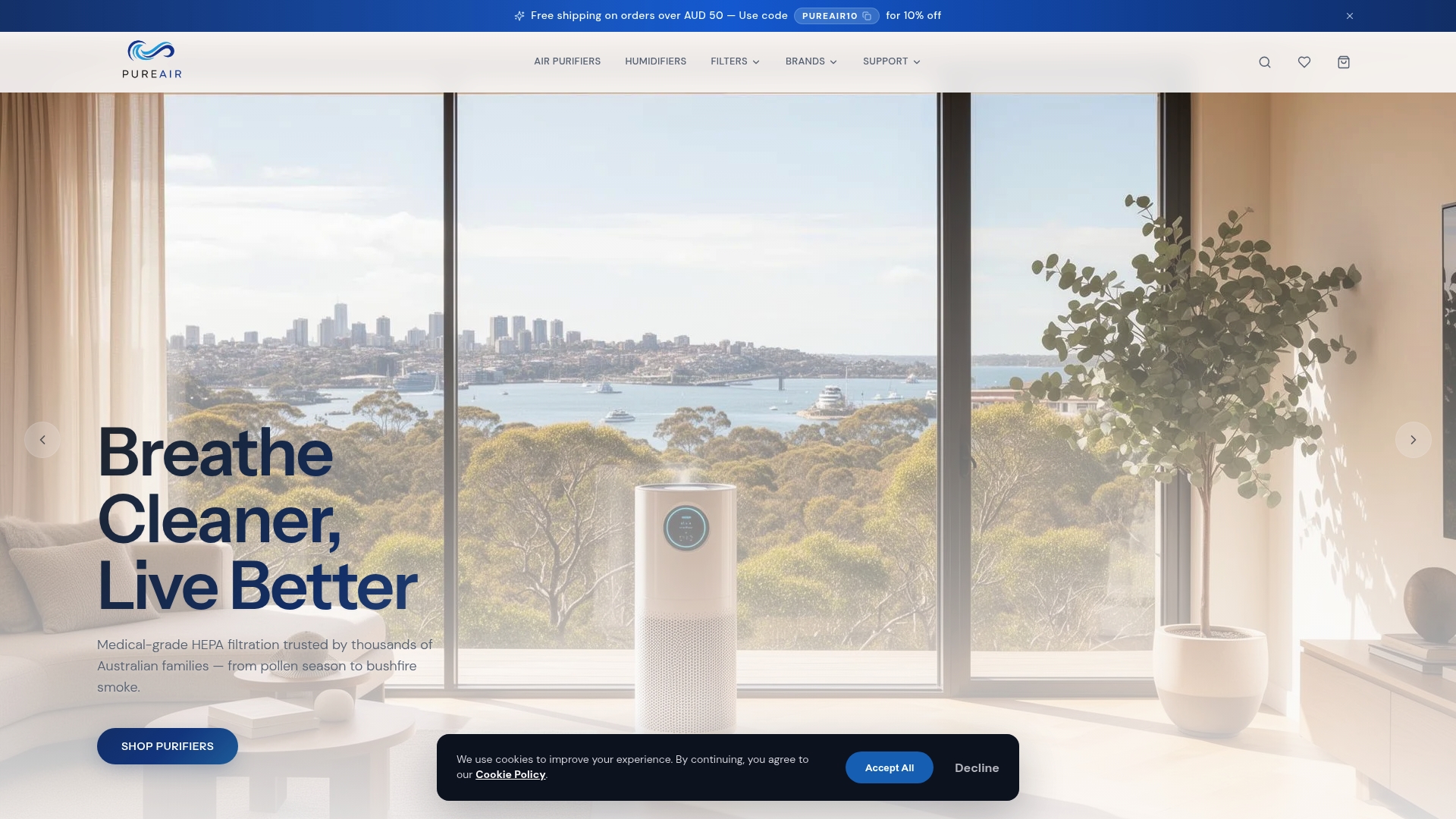
Pureair-au stocks a range of AHAM-verified air purifiers, humidifiers, and dehumidifiers selected for Australian home conditions. Every product in the Pureair-au catalogue is backed by local warranty support and detailed maintenance resources. Whether you are managing a child’s bedroom, a family living area, or a home office, there is a unit sized and rated for the job. The Pureair-au Smart Finder tool helps you match the right unit to your specific concern, whether that is pollen, mould, smoke, or general particle load.
FAQ
What does HEPA mean for air filtration?
HEPA stands for High Efficiency Particulate Air. A certified HEPA filter captures at least 99.97% of airborne particles at 0.3 micrometres, which is the industry standard for effective mechanical filtration.
How often should I replace my air purifier filter?
Most filters need replacing every 6–12 months. Homes with pets, heavy cooking, or bushfire smoke exposure should replace filters every 6 months or sooner to maintain performance.
Can I reduce indoor air pollutants without an air purifier?
Source control and ventilation reduce pollutants significantly. Use a vented kitchen exhaust fan, keep humidity between 30% and 50%, vacuum with a HEPA-filter vacuum, and avoid aerosol sprays and scented candles.
Do houseplants improve indoor air quality?
Houseplants do not provide meaningful air purification in a typical home. Normal air exchange rates far exceed a plant’s capacity to remove pollutants, making mechanical filtration the only reliable option.
What particle size should I worry about most?
PM2.5 particles (under 2.5 micrometres) pose the greatest health risk because they bypass the nose and throat and reach the lungs directly. Certified HEPA filters and advanced HyperHEPA units capture these particles effectively.