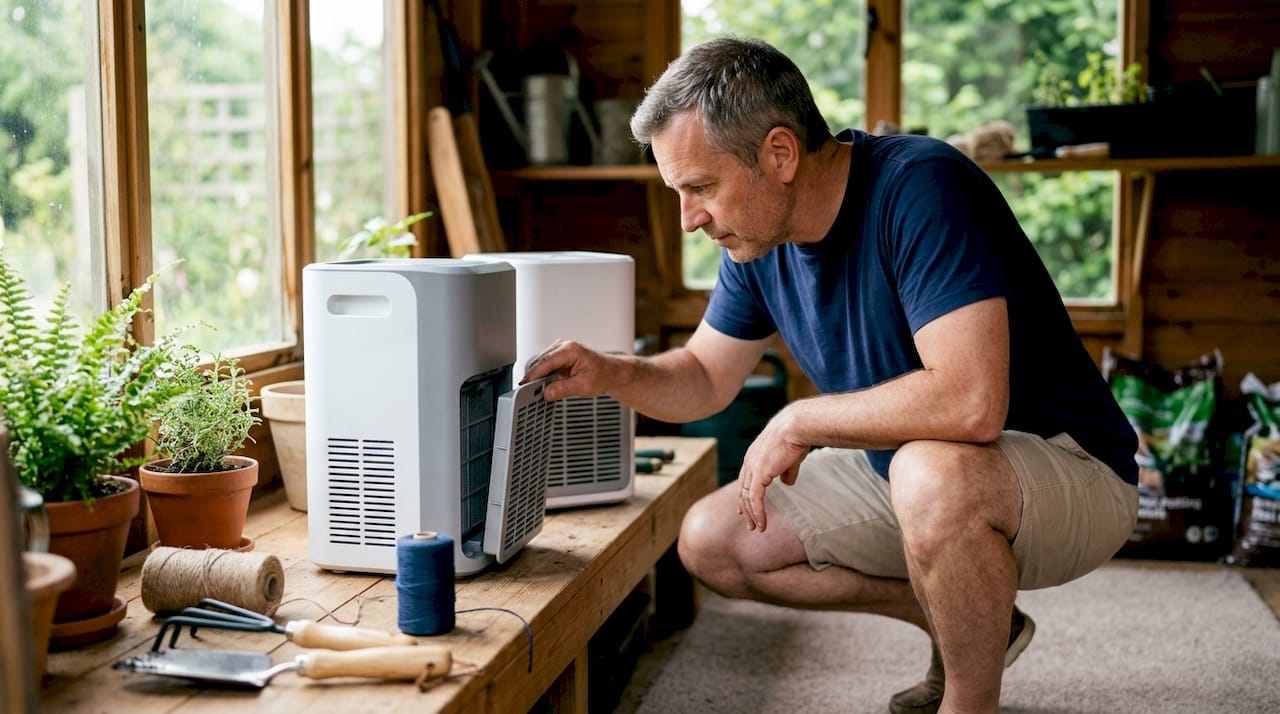
Air filtration systems are devices that remove contaminants from indoor air by forcing it through one or more filter media designed to capture particles, gases, or microbes. The main types of air filtration systems include mechanical HEPA filters, activated carbon filters, UV germicidal irradiation (UVGI), ionic filters, and whole-house HVAC-integrated systems. Each works differently and targets different pollutants. No single filter type addresses all indoor air quality concerns, which is why understanding the differences matters before you spend a cent.
1. What are the types of air filtration systems?
Air filtration is the broad industry term for any method that cleans indoor air by capturing or neutralising contaminants. The five main categories are mechanical filtration, activated carbon filtration, UV germicidal irradiation, ionic filtration, and HVAC-integrated filtration. Most quality home air purification systems combine at least two of these in a single unit. Knowing what each does, and what it cannot do, is the fastest way to match a system to your actual problem.
2. Mechanical (HEPA) filters: the gold standard for particles
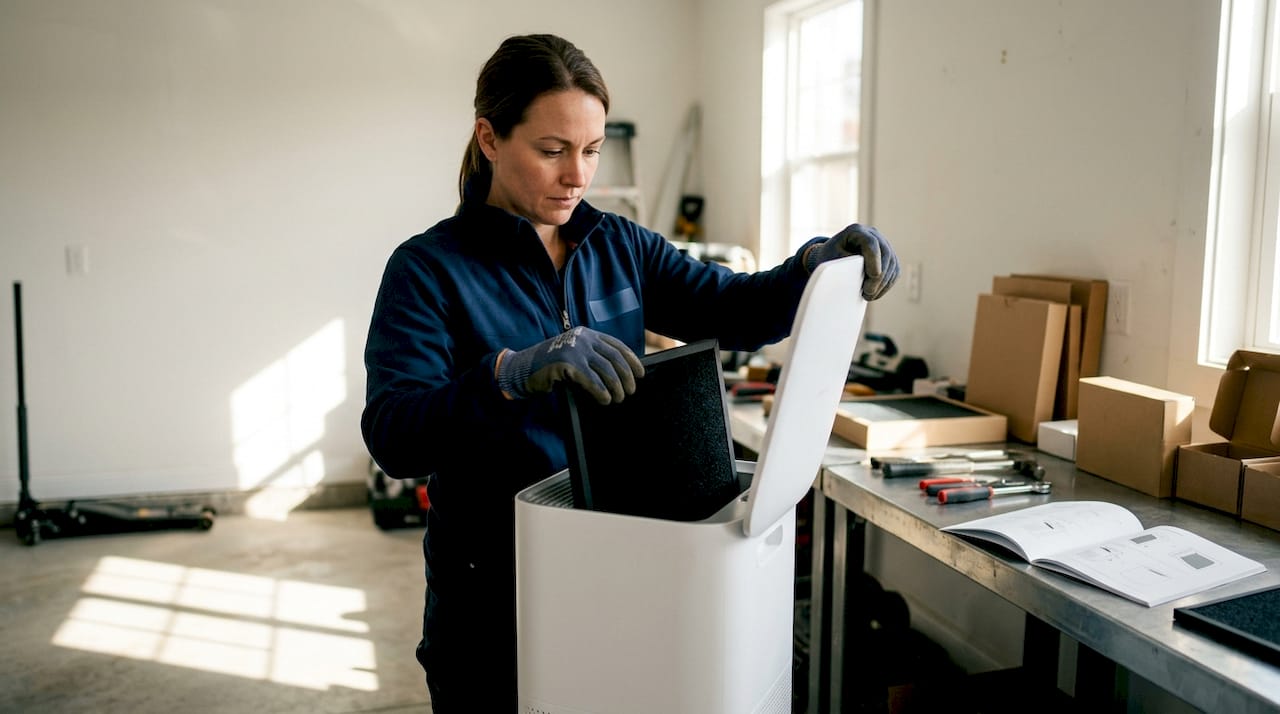
True HEPA filters are the most effective particle filtration technology available for residential use. A true HEPA filter captures 99.97% of particles at 0.3 microns, the particle size considered hardest to trap due to its aerodynamic behaviour. That standard is what separates a genuine H13-grade filter from the “HEPA-type” or “HEPA-like” labels you will see on cheaper units.
Mechanical filters work by pushing air through a dense mat of fibres. Particles get trapped by three mechanisms: direct impact, interception, and diffusion. The result is highly effective removal of:
- Dust and dust mite allergens
- Pollen
- Mould spores
- Fine particulate matter (PM2.5), including bushfire smoke particles
The limitation is clear. HEPA filters remove particles but do nothing for gases, odours, or volatile organic compounds (VOCs). They also require replacement every 6–12 months, and skipping that schedule degrades performance significantly.
Pro Tip: Always check for H13 certification on the product packaging. Consumer Reports notes that many “HEPA-like” filters lack true certification but may still perform adequately in basic tests. For allergy sufferers or households dealing with bushfire smoke, only certified H13 HEPA is worth the investment.
3. How activated carbon filters improve indoor air quality
Activated carbon filters work through a process called adsorption. Gas molecules bond to the enormous surface area inside the carbon material, effectively trapping odours, VOCs, and some chemical gases. This is the filter type you need if cooking smells, pet odours, or off-gassing from new furniture are your primary concern.
The catch is that carbon filters are ineffective against formaldehyde, ammonia, and nitrogen oxides. These gases require specialist media or much higher carbon volumes than most consumer units contain. Thin carbon sheets, common in budget purifiers, provide minimal gas filtration in practice.
Key facts about activated carbon filters:
- Replacement is needed roughly every three months
- Costs can reach up to $50 per filter replacement
- Carbon filters saturate faster than HEPA filters regardless of airflow
- Saturation causes odour removal to fail before particle filtration declines
Pro Tip: When comparing units, check the weight of the carbon layer, not just whether a carbon filter is present. A heavier carbon bed lasts longer and adsorbs more gas. Lightweight carbon sheets are largely decorative.
4. What role do UVGI and ionic filters play in air purification?
UV germicidal irradiation (UVGI) uses ultraviolet light to inactivate bacteria, viruses, and mould spores by damaging their DNA. In theory, it adds a meaningful layer of microbial control. In practice, most consumer UVGI devices expose air to UV light for only a few seconds, which is insufficient to inactivate resistant microbes reliably.
Ionic filters work by releasing negatively charged ions that attach to airborne particles, causing them to fall onto surfaces or a collection plate. The benefits include:
- No filter replacement required in some designs
- Quiet operation with no fan in certain models
- Some reduction in airborne particle counts
The drawbacks are significant. Ionic filters can produce ozone as a byproduct, which is a respiratory irritant. They also deposit particles onto floors and furniture rather than capturing them permanently. Consumer Reports does not test UVGI technology and recommends treating both UVGI and ionic methods as supplements to HEPA and carbon filtration, not replacements.
5. Whole-house vs portable air purifiers: which suits Australian homes?
Whole-house HVAC-integrated systems filter air as it circulates through your central heating and cooling system. The EPA recommends MERV 13 or higher filters for protection against wildfire smoke, and MERV 13 is the practical ceiling for most residential systems. Higher-rated filters create greater airflow resistance, which can strain blower motors in older systems.
| Feature | HVAC-integrated filtration | Portable air purifier |
|---|---|---|
| Coverage | Whole house | Single room |
| Smoke protection | Good with MERV 13+ | Excellent with HEPA |
| Installation | Requires HVAC compatibility | Plug-and-play |
| Ongoing cost | Filter replacements | Filter replacements |
| Odour removal | Limited | Good with carbon stage |
Portable purifiers win on flexibility and targeted performance. The EPA recommends combining a HVAC upgrade with a portable air cleaner in a designated cleaner-air room when whole-house coverage is insufficient. For Australian households dealing with seasonal bushfire smoke, that combined approach is the most practical solution. You can read more about protecting against bushfire smoke in a dedicated guide from Pureair-au.
Pro Tip: Before upgrading your HVAC filter to MERV 13, check your system’s manual or ask a technician. MERV filters above 13 can strain older HVAC systems and may require blower motor adjustments or replacement.
6. What factors should homeowners consider when choosing the best air filtration system?
The most important performance metric is the Clean Air Delivery Rate (CADR). CADR is a standardised measure in cubic feet per minute, rated separately for tobacco smoke, dust, and pollen. A high smoke CADR matters most during bushfire season. A high pollen CADR matters most for hay fever sufferers. Matching the CADR rating to your primary pollutant concern prevents disappointing results.
Beyond CADR, work through these considerations before purchasing:
- Identify your primary pollutant. Particles (dust, pollen, smoke) need HEPA. Odours and gases need activated carbon. Microbes benefit from UVGI as a supplement.
- Match the unit to your room size. Sizing by room coverage alone is insufficient. Use the pollutant-specific CADR value for your room volume.
- Calculate ongoing filter costs. A $200 purifier with $100 in annual filter costs is more expensive than it appears. Factor in HEPA replacement every 6–12 months and carbon replacement every three months.
- Check for AHAM verification. AHAM-verified products have independently tested CADR ratings. Unverified claims are marketing, not performance data.
- Consider health sensitivity. Households with asthma, allergies, or infants should prioritise certified H13 HEPA and avoid ionic units that produce ozone.
Pro Tip: Pureair-au’s Smart Finder tool lets you filter by concern, such as allergies or mould, and returns units matched to your room size and pollutant type. It removes the guesswork from CADR comparisons.
You can also read Pureair-au’s complete HEPA buyer’s guide for a deeper breakdown of filter grades and room-matching strategies.
Key takeaways
No single air filter type removes all indoor pollutants. Combining certified H13 HEPA with activated carbon filtration is the most effective approach for Australian homes facing particles, smoke, and odours.
| Point | Details |
|---|---|
| HEPA is for particles only | True H13 HEPA captures 99.97% of particles but does not remove gases or odours. |
| Carbon filters need frequent replacement | Activated carbon saturates in roughly three months and must be replaced to maintain odour control. |
| CADR drives real-world performance | Match the pollutant-specific CADR rating to your primary concern, not just room size. |
| UVGI and ionic are supplements | Neither technology replaces HEPA or carbon filtration as a primary defence. |
| Combined systems work best | Pairing a HVAC upgrade with a portable purifier gives the broadest protection during smoke events. |
What I have learned after years of watching homeowners choose the wrong filter
Most homeowners buy an air purifier based on price and brand recognition, then wonder why the smell in the kitchen persists or why their allergies are still flaring. The mistake is almost always the same. They bought a unit with a thin carbon sheet and a “HEPA-type” label, neither of which performs to the standard the marketing implies.
The other misconception I see constantly is treating air filtration as a set-and-forget purchase. A HEPA filter running past its replacement date does not just perform less well. It can become a reservoir for the particles it has captured. Carbon filters are even more deceptive. They stop removing odours silently, and most homeowners attribute the returning smell to something else entirely.
My honest recommendation for Australian homes is to start with a certified H13 HEPA unit that also carries a substantial carbon stage, verify the CADR rating for your specific concern (smoke CADR if you live in a bushfire-prone area, pollen CADR if hay fever is the issue), and commit to the replacement schedule. The technology is only as good as the maintenance behind it. Evolving technologies like UVGI are worth having as a bonus layer, but they should never be the reason you choose a unit.
— Lucas
Air purifiers and filters for Australian homes, available now
Pureair-au stocks a full range of air purifiers and HEPA filters suited to Australian conditions, from compact units for single bedrooms to whole-room purifiers built for bushfire smoke season. Every product in the catalogue carries AHAM verification, so the CADR figures you see are independently tested, not marketing estimates.
Filter replacement cycles vary by model and usage, but Pureair-au lists replacement intervals clearly on each product page so you can calculate the true annual cost before you buy. Whether your concern is pollen allergies, pet odours, or seasonal smoke, the range covers every major filtration need. The Honeywell Air Touch P2 is a strong starting point for households wanting certified HEPA performance at a practical price point.
FAQ
What is the most effective air filter type for allergens?
True HEPA (H13) filters are the most effective option for allergens. They capture 99.97% of particles at 0.3 microns, including dust mite allergens, pollen, and mould spores.
How often do air purifier filters need replacing?
HEPA filters typically need replacement every 6–12 months. Activated carbon filters saturate faster and require replacement roughly every three months to maintain odour control.
What does CADR mean and why does it matter?
CADR stands for Clean Air Delivery Rate and measures how quickly a purifier cleans air of a specific pollutant, such as smoke, dust, or pollen. Choosing the correct CADR for your primary concern prevents poor real-world results.
Can one air purifier handle both particles and odours?
Most quality units combine a HEPA stage for particles with an activated carbon stage for odours and gases. Single-filter units address only one category and are rarely sufficient for comprehensive air cleaning.
Is a whole-house HVAC filter enough on its own during bushfire season?
A MERV 13 HVAC filter provides solid whole-house particle filtration but works only when the fan is running. The EPA recommends pairing it with a portable HEPA purifier in a designated room for stronger protection during high-smoke events.