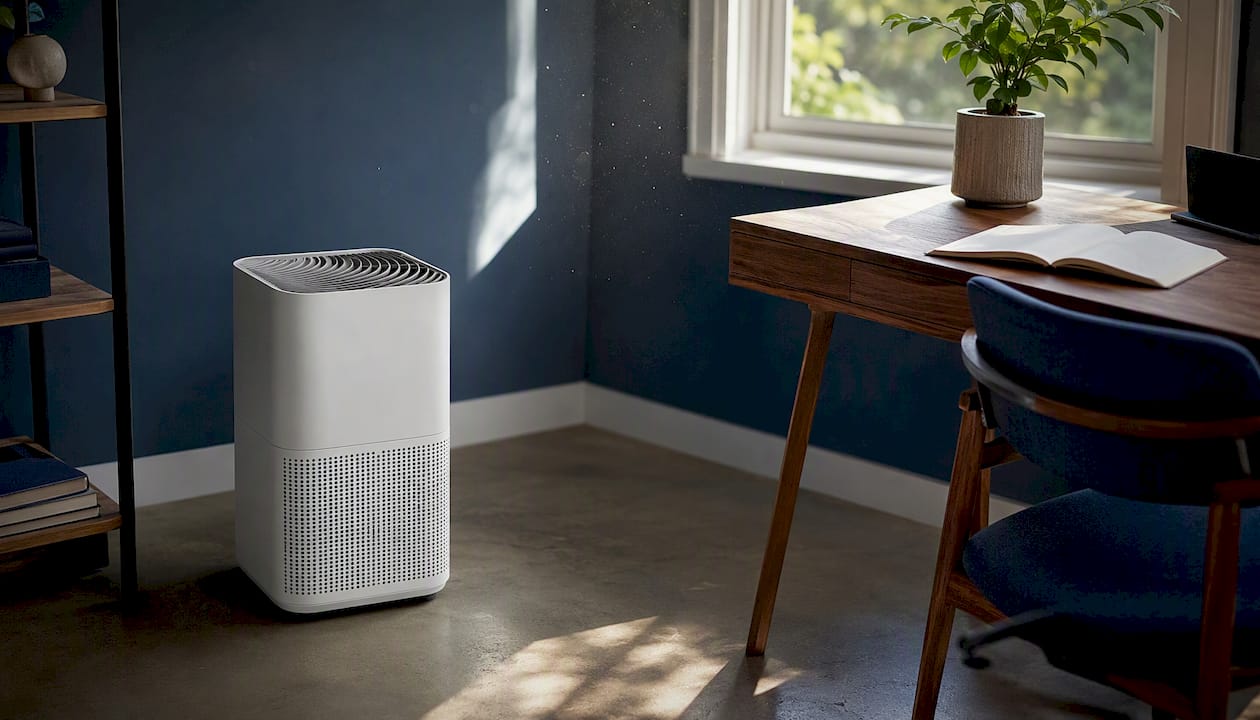
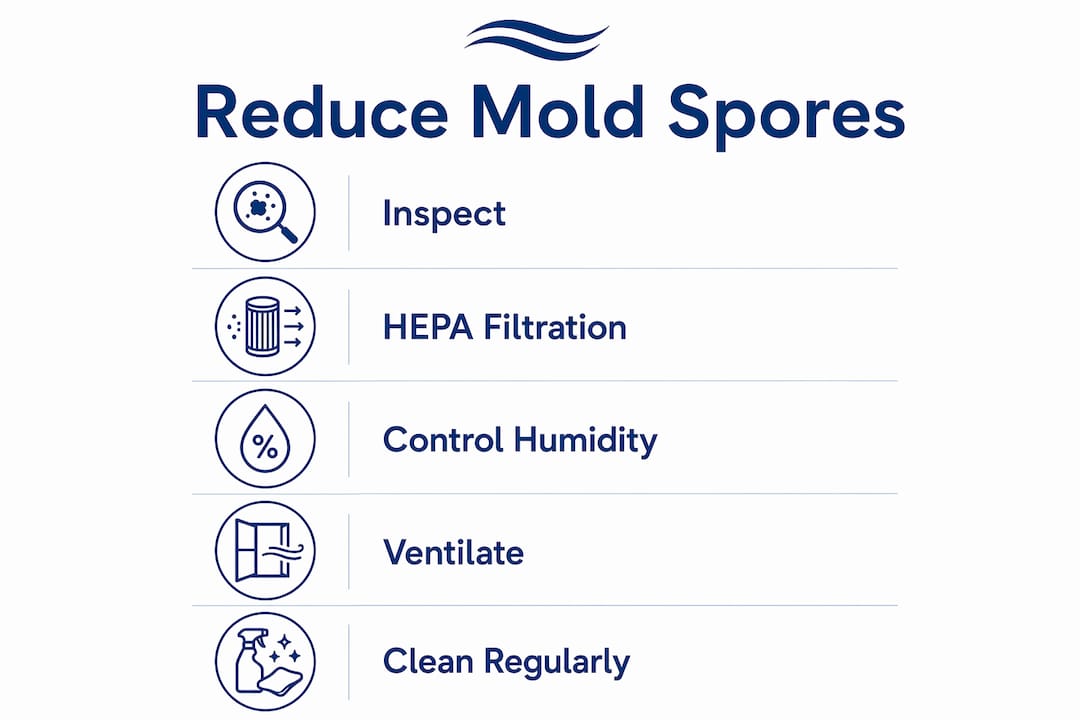
Run a True HEPA air purifier continuously and keep indoor relative humidity within the recommended range. Those two actions deliver the fastest, most measurable reduction in airborne mould spores in a child’s bedroom. Targeted moisture-control interventions have been associated with mean reductions of 70–81% in fungal spore levels in children’s bedrooms. The purifier needs to be AHAM-verified and sized to the room using its CADR rating. Pureair-au’s Smart Finder tool matches exactly that: AHAM-verified, True HEPA units to your room size and your child’s specific sensitivities, whether that’s mould, pollen, or bushfire smoke.
- Run a True HEPA purifier (99.97% particle capture) on continuous operation in the bedroom
- Target indoor relative humidity within the recommended range using a hygrometer, dehumidifier, or air conditioner
- Match the purifier’s CADR to the room size — AHAM verification is the reliable baseline
- Use Pureair-au’s Smart Finder to identify the right unit without guesswork
Table of Contents
- What should you do in the next 24–72 hours?
- Why do mould spores matter so much for children?
- What equipment settings and interventions work best?
- When should you call a professional remediator?
- How do you choose the right medical-grade purifier for a child’s bedroom?
- What routines keep spore counts low over time?
- Key takeaways
- The part most families get wrong
- Pureair-au: matched, verified, and ready for Australian bedrooms
- Useful sources
What should you do in the next 24–72 hours?
Speed matters. Mould spores need moisture to germinate, so reducing humidity and filtering the air quickly limits the opportunity for spores to establish.
- Run the purifier on high continuously, not just at night. Intermittent use leaves gaps where spore counts rebound.
- Measure humidity now. A basic hygrometer costs under $20 at most hardware stores. If the reading is above 50%, deploy a dehumidifier or run the air conditioner until it drops into the recommended 30–50% range.
- Remove damp items immediately. Wet towels, damp clothing, and sodden bedding left in the room are active spore sources. Dry wet materials within 24–48 hours to prevent mould growth.
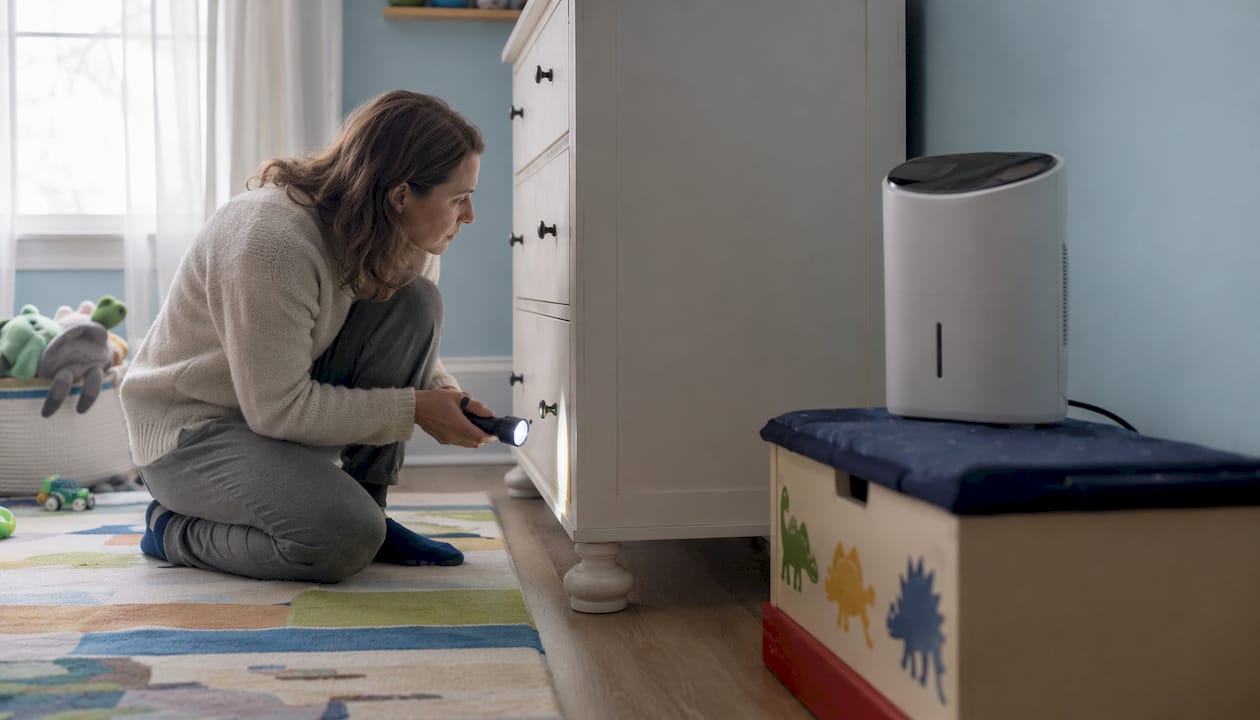
- Contain visible mould. If you can see mould, keep your child out of the room until it’s addressed. Don’t disturb the surface — agitation releases spores into the air.
- Small patches only: if the affected area is less than ~10 sq ft (roughly 3 ft x 3 ft), you can clean it yourself with soap and water. Bleach is not generally recommended; if you use it, mix no more than 1 cup per 1 gallon of water.
- Anything larger: call a licensed remediation specialist before re-entering.
Pro Tip: Check behind the wardrobe and along window sills before assuming the room is clear. Hidden condensation zones are where mould gets its foothold, often weeks before it’s visible.
Why do mould spores matter so much for children?
Mould operates on two pathways simultaneously. It acts as an allergen and as a direct irritant, triggering swelling in the eyes, nose, sinuses, and lungs. For children with asthma, that dual action can tip a manageable condition into a serious flare.
Children’s sensitivity isn’t fixed. Their exposure threshold shifts with their overall inflammatory load: a viral illness, disrupted sleep, or a stressful week can lower the point at which mould exposure triggers symptoms. That’s why a child who seemed fine last winter might react badly this autumn after a wet spell.
Key finding: Targeted moisture-control interventions, including dehumidifiers and structural repairs, reduced airborne fungal spore levels by 70–81% in children’s bedrooms where mould was present.
One important expectation to set: it is impossible to remove all mould spores from an indoor environment. Spores are everywhere. The goal is to prevent the moisture conditions that allow them to germinate and multiply. Control the moisture, and you control the risk.
What equipment settings and interventions work best?
True HEPA filtration
True HEPA filtration captures 99.97% of airborne particles at 0.3 microns, which includes mould spores. Run it continuously in the bedroom, 24 hours a day. A purifier switched off overnight is not protecting your child during their most vulnerable hours.
Match the unit’s CADR to the room. AHAM verification provides a reliable, independently tested figure rather than a manufacturer’s marketing claim. Use Pureair-au’s Smart Finder to cross-reference room dimensions with verified CADR ratings.
Humidity control
| Setting | Target | Tool |
|---|---|---|
| Indoor relative humidity | within the recommended range | Hygrometer + dehumidifier or AC |
| Purifier operation | Continuous | Night mode for sound reduction |
| Filter replacement | Per manufacturer schedule | Log replacements; buy spares in advance |
| Drying wet materials | Within 24–48 hours | Fans, open windows, dehumidifier |
Keep indoor humidity below 50% — above that level, conditions favour mould growth. A dehumidifier running in the bedroom or an adjacent hallway is often more effective than relying on air conditioning alone, particularly during humid Australian summers and after storms.
Ventilation and cleaning
Vent bathroom and kitchen moisture outdoors, and make sure dryers vent outside rather than into the roof cavity. For small mould patches, scrub with detergent and water, then dry completely. Porous materials like carpet underlay and ceiling tiles often can’t be cleaned thoroughly enough — replacement is the safer call.
Pro Tip: A purifier with a slightly higher CADR than your room strictly requires, run at a lower fan speed, is quieter overnight and often more effective than a smaller unit pushed to maximum.
When should you call a professional remediator?
The 10 sq ft threshold is the standard DIY limit. If mould covers an area larger than roughly 3 ft x 3 ft, or if it keeps returning after you’ve cleaned it, a licensed remediation specialist is the right call, not a second round of scrubbing.
Call a professional immediately if:
- Mould followed a structural water event: burst pipe, roof leak, or flooding
- The problem involves wall cavities, ceiling insulation, or the HVAC system
- A family member has had a severe respiratory reaction
- Mould reappears within weeks of cleaning
Interim steps while you wait: isolate the room, run a HEPA purifier just outside the doorway if it’s safe to do so, and avoid disturbing any mouldy surfaces. Agitation sends spores airborne.
There are no federal threshold limits for indoor mould concentration, so professional air sampling is rarely necessary for a typical household problem. If you can see or smell mould, that’s sufficient evidence to act.
How do you choose the right medical-grade purifier for a child’s bedroom?
Use this checklist when buying:
- CADR match: use AHAM-verified CADR figures as your baseline. Check the HEPA filter child safety guide for what to look for in a child’s room specifically.
- True HEPA (99.97%): not “HEPA-type” or “HEPA-like.” The standard matters.
- Sealed system: bypass leakage around the filter negates much of the filtration benefit.
- Noise levels: check the decibel rating at the lowest fan speed. Anything above 40 dB will disrupt sleep.
- Child-safe design: tamper-proof grilles and lockable controls matter for younger children.
- Filter replacement intervals: clear, documented schedules and readily available replacement filters.
- Combined options: if humidity is the primary driver, a purifier-dehumidifier combination unit handles both problems with one device.
Pureair-au’s Smart Finder steps through room size, primary concern (mould, allergens, smoke), and budget to recommend compatible AHAM-verified units and the right replacement filters.
Pro Tip: Buy your next replacement filter at the same time as the unit. Waiting until the old one fails means days of unfiltered air — exactly when your child is most exposed.
What routines keep spore counts low over time?
Single interventions don’t hold without maintenance. These habits do the work month after month.
- Replace HEPA filters on schedule. Log the date and set a calendar reminder. A clogged filter doesn’t just lose efficiency — it can push particles back into the room.
- Empty the dehumidifier bucket daily or connect it to a continuous drain. A full bucket stops the unit working and becomes a standing-water risk itself. Service the coils and internal filter per the manufacturer’s guide.
- Shower and change clothes after outdoor play during high-spore seasons. Spores carried in on hair and clothing are a major, often overlooked exposure pathway into the bedroom.
- Store bedding and clothing with airflow. Tightly packed wardrobes trap damp and create ideal mould conditions.
- Seasonal vigilance: autumn leaf decay and post-storm humidity spikes push outdoor spore counts up sharply. During these periods, opening windows can worsen indoor exposure for at-risk children — keep the purifier running and rely on mechanical ventilation instead.
- Monthly check: hygrometer reading, visual inspection behind wardrobes and along window sills, and a 30–60 minute high-fan purge cycle after any damp event.
Pro Tip: Keep a simple log on the fridge: filter change date, last dehumidifier service, and last humidity reading. Two minutes a month prevents the kind of slow drift that lets spore counts creep back up.
Key takeaways
Continuous True HEPA filtration combined with humidity control at 30–50% is the most effective strategy to reduce mould spores in a child’s bedroom and sustain that reduction over time.
| Point | Details |
|---|---|
| Run True HEPA continuously | Size the purifier to the room using AHAM-verified CADR figures and never turn it off overnight. |
| Control humidity to 30–50% | Use a hygrometer to monitor and a dehumidifier or AC to maintain the target range. |
| DIY limit is ~10 sq ft | Clean small patches yourself with soap and water; call a licensed remediator for anything larger or recurring. |
| Maintain the equipment | Replace HEPA filters on schedule, service the dehumidifier monthly, and log both. |
| Use Pureair-au’s Smart Finder | Match AHAM-verified purifiers and dehumidifiers to your room size and your child’s specific needs. |
The part most families get wrong
The conventional advice on mould in children’s bedrooms focuses almost entirely on cleaning. Scrub the patch, open a window, done. That misses the point entirely.
Cleaning removes visible mould. It does nothing about the moisture conditions that allowed it to grow, and it does nothing about the millions of spores already circulating in the air. A child sleeping in a room where humidity sits at 60% is being exposed to a mould-friendly environment every night, whether or not there’s a visible patch on the wall.
The families who see real, lasting improvement are the ones who treat this as an engineering problem, not a cleaning problem. They fix the humidity first, run filtration continuously, and treat filter replacement as non-negotiable maintenance rather than an optional extra. The purifier running quietly in the corner at 2 AM is doing more for your child’s airways than any amount of weekend scrubbing.
Australian conditions add a specific wrinkle. Our humid coastal summers and post-storm periods push outdoor spore counts high enough that opening windows for “fresh air” can actively worsen indoor exposure for sensitive children. A well-sized HEPA purifier with the windows closed beats open windows on a humid February night.
Pureair-au: matched, verified, and ready for Australian bedrooms
If you’ve read this far, you know what you need: an AHAM-verified True HEPA purifier sized to your child’s room, a dehumidifier that keeps humidity in the 30–50% range, and replacement filters on hand before the old ones fail.
Pureair-au’s Smart Finder does the matching for you. Tell it your room size and your primary concern (mould, allergens, bushfire smoke), and it returns AHAM-verified units with the right CADR, documented filter replacement schedules, and child-safe features. Every product in the Pureair-au catalogue is selected for Australian conditions: the humidity swings, the seasonal spore loads, and the overnight noise requirements that matter in a child’s bedroom. Browse medical-grade air purifiers and dehumidifiers or contact the Pureair-au support team for personalised advice on the right combination for your home.
Useful sources
The sources below back the guidance in this article. Australian families dealing with severe reactions should also speak with their GP or paediatrician.
- Asthma and Allergy Foundation of America (AAFA) — mould as allergen and irritant, clinical impact on children with asthma
- US EPA: Mold — DIY vs professional thresholds, moisture control as the core strategy
- CDC: Mold — humidity targets, ventilation guidance, safe cleaning steps
- Healio: Targeted interventions reduced mold spores in children’s bedrooms — 70–81% spore reduction data from moisture interventions
- Boston Children’s Hospital: Pediatric Environmental Health Center — drying timelines and porous material replacement
- Sleep Foundation: Mold in the bedroom — bedroom-specific risk zones and testing expectations
- National Asthma Council Australia — local guidance on seasonal spore exposure and ventilation for at-risk children
- AAFA Community: Can mould affect my child’s asthma? — dynamic sensitivity thresholds and clothing/hair exposure pathways