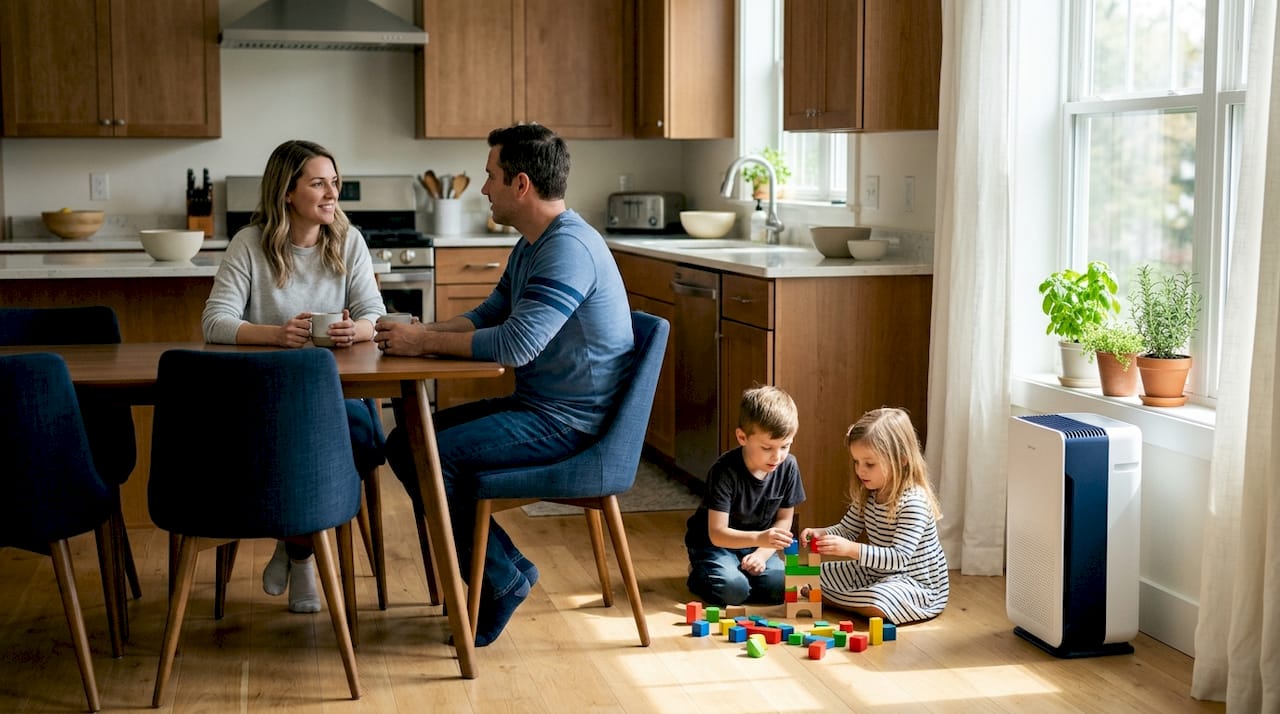
Medical-grade air filtration is defined as True HEPA filtration that captures 99.97% of airborne particles at 0.3 microns, combined with airflow delivering 6–12 air changes per hour. This standard, recognised by bodies including ASHRAE and NAFA, sets a clear performance bar that most consumer air purifiers do not reach. For Australian families dealing with bushfire smoke, high pollen seasons, and humid conditions that breed mould, the benefits of medical grade air filtration go well beyond basic dust removal. The right system reduces pathogens, allergens, and volatile organic compounds (VOCs) in your home, with measurable effects on health.
1. How medical-grade air filtration improves respiratory health and reduces allergies
True HEPA filters physically trap particles that trigger respiratory problems. Pollen, dust mites, pet dander, and mould spores all fall within the 0.3–10 micron range that a certified HEPA filter captures with at least 99.97% efficiency. This matters because these particles are the primary drivers of allergic rhinitis, asthma exacerbations, and chronic airway inflammation in Australian homes.
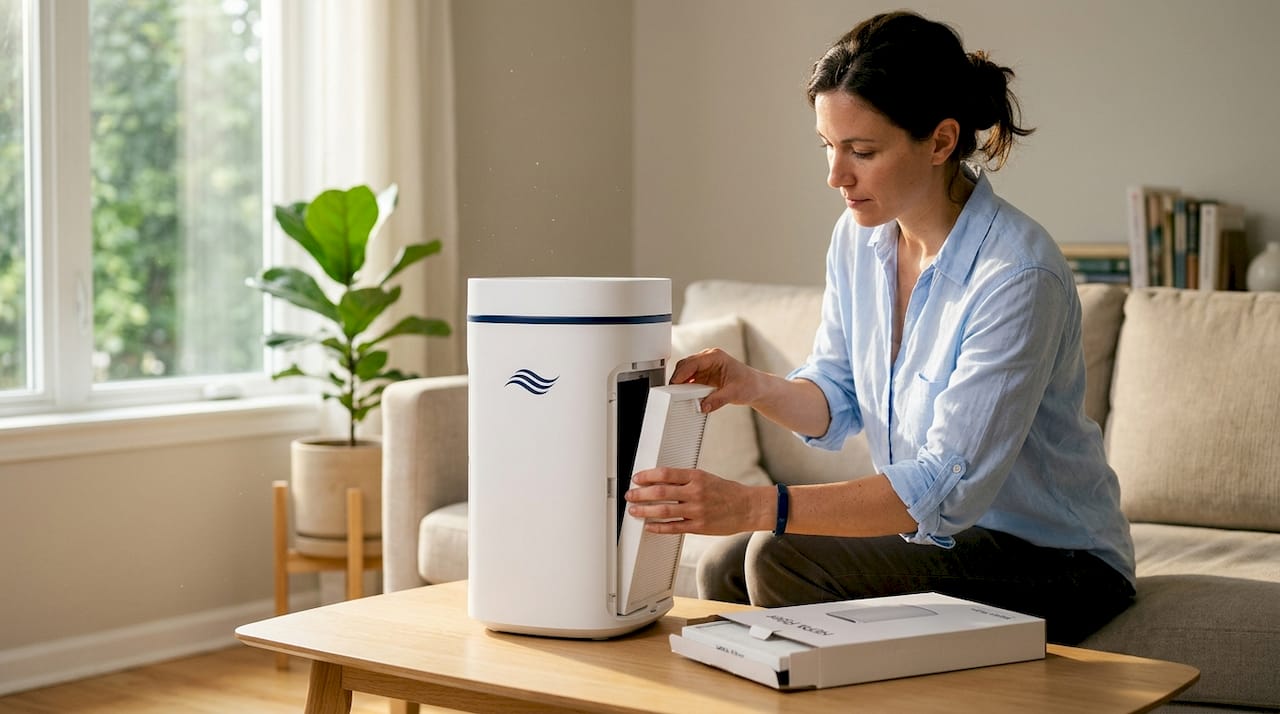
Families with asthma or hay fever notice the difference most clearly during high-pollen months or after bushfire events. A well-sized air purifier running continuously in a bedroom reduces the overnight allergen load your lungs process. Lower allergen exposure means fewer flare-ups, less reliance on antihistamines, and better sleep quality.
The key word here is “well-sized.” A unit rated for 20 square metres will not deliver meaningful air changes in a 50-square-metre open-plan living area. Matching the device’s Clean Air Delivery Rate (CADR) to your room size is what converts a marketing claim into a real health outcome.
- Pollen and dust mite allergens: captured at 99.97% efficiency by True HEPA
- Pet dander: trapped before it settles on surfaces or enters airways
- Mould spores: removed from air before they colonise lungs or surfaces
- Fine bushfire smoke particles: addressed by HEPA combined with activated carbon
Pro Tip: Replace filters on schedule, not just when the indicator light appears. A clogged filter can drop efficiency significantly, turning your medical-grade unit into little more than a fan.
2. Reducing airborne infectious disease risk indoors
HEPA filtration removes viral aerosols with the same physical mechanism it uses for allergens. HEPA achieves 99.97% removal of SARS-CoV-2 particles after seven air changes, a finding that shifted how infection control specialists think about indoor air. The implication for families is direct: more air changes per hour means less viral load in shared spaces.
Healthcare data reinforces this. Air purification systems running at 6–12 air changes per hour reduce airborne infection risk by 40–90% compared to standard ventilation. Real-world ICU deployments with integrated filtration strategies have reduced healthcare-associated infections and bioaerosols by 70–90%. These are not laboratory numbers. They come from clinical environments where infection control is measured rigorously.
“IAQ should be treated as a clinical intervention, not just a facilities management checkbox, to proactively improve patient and staff health outcomes.”
For families, this translates to fewer colds and flu circulating through the household, particularly in homes with young children, elderly relatives, or immunocompromised members.
- Viral aerosols: removed by True HEPA at 99.97% efficiency after sufficient air changes
- Bacterial particles: captured within the same size range as allergens and spores
- Shared living spaces: benefit most from continuous operation during illness season
- Bedrooms: high ACH overnight reduces exposure during the body’s recovery window
Pro Tip: Combining your air purifier with good ventilation, such as opening windows during low-pollution periods, multiplies the infection risk reduction. Filtration and fresh air work together, not against each other.
3. Improving indoor air quality beyond particulate matter
Particles are only part of the indoor air quality problem. VOCs from paints, cleaning products, furniture off-gassing, and cooking create a chemical burden that standard HEPA filters do not address. This is where activated carbon stages become critical. A genuinely medical-grade purifier requires around 15 pounds or more of activated carbon to meaningfully reduce VOCs. The thin carbon-coated mesh found in many consumer units offers minimal chemical removal.
Research links poor indoor air quality to reduced cognitive performance and sick building syndrome. Improving indoor air quality beyond conventional standards can reduce absenteeism, inflammation, and respiratory symptoms by over 33% and improve cognitive performance by up to 50%. For families working or studying from home, this is a tangible productivity and wellbeing benefit.
Ozone-free operation is a non-negotiable feature of genuine medical-grade systems. Many consumer ionisers produce ozone, a lung irritant that worsens respiratory conditions. A device that generates ozone while claiming to clean air is counterproductive, particularly for asthma sufferers.
- Substantial activated carbon: required for real VOC and odour reduction
- Ozone-free operation: mandatory for genuine medical-grade classification
- Formaldehyde removal: addressed by specialist filter stages in higher-end units
- Cooking and cleaning fumes: reduced by combined HEPA and carbon filtration
Pro Tip: Check whether a unit’s carbon filter is a thin mesh or a deep-bed carbon stage. The weight of the carbon bed is a reliable proxy for its chemical removal capacity.
The role of HEPA filter stages in a multi-stage system explains why layered filtration outperforms single-filter designs for whole-home air quality.
4. What to look for when selecting a medical-grade system for home use
Only about 20% of products marketed as medical-grade truly meet the highest international safety and performance standards. This is the most important fact families need to know before purchasing. The label “medical grade” carries no legal protection in Australia, which means verification falls to you.
Third-party certification is your primary filter. Look for AHAM verification, which confirms CADR ratings are independently tested. True HEPA certification confirms 99.97% particle capture at 0.3 microns. Sealed housing matters too. A filter that meets HEPA standards inside a leaky casing allows unfiltered air to bypass the filter entirely.
- Confirm True HEPA certification, not “HEPA-type” or “HEPA-style” labelling
- Check for AHAM verification of CADR ratings for your room size
- Verify sealed housing construction to prevent air bypass
- Assess the activated carbon stage by weight, not just its presence
- Confirm ozone-free operation, particularly if anyone in your home has asthma
- Match the unit’s coverage area to your actual room dimensions
Portable air cleaners work best as part of a layered IAQ strategy that includes ventilation, source control, and strategic placement. A purifier positioned in a corner behind furniture will not deliver the air changes its specifications promise.
Pro Tip: Place your unit in the room where your family spends the most time, typically the main bedroom or living area. Running it continuously on a medium setting outperforms short bursts on maximum speed.
5. Broader health and wellbeing benefits for your family
The cumulative effect of cleaner indoor air reaches further than most families expect. Reduced allergen and pathogen exposure lowers the frequency of respiratory infections and chronic symptom flare-ups. Lower inflammation over time supports immune function rather than constantly taxing it.
Fewer sick days are a direct outcome. When children breathe cleaner air overnight, they sleep better and attend school more consistently. Adults working from home report improved concentration and reduced fatigue in environments with better air quality. These are not abstract benefits. They show up in daily life within weeks of consistent use.
The economic case is straightforward too. Fewer GP visits, less spending on antihistamines and cold remedies, and improved productivity at home all offset the cost of a quality filtration system over time. For families managing chronic conditions like asthma or allergies, the reduction in symptom management costs can be substantial.
- Fewer respiratory infections across the household
- Reduced chronic symptom flare-ups for allergy and asthma sufferers
- Better sleep quality from lower overnight allergen exposure
- Improved cognitive function and concentration during the day
- Lower long-term spending on symptom management
Improving indoor air quality at home through filtration, ventilation, and source control creates a compounding effect. Each measure reinforces the others.
Key takeaways
Medical-grade air filtration delivers its full health benefits only when the system is genuinely certified, correctly sized, properly placed, and consistently maintained.
| Point | Details |
|---|---|
| True HEPA is the baseline | Only systems capturing 99.97% of particles at 0.3 microns qualify as medical-grade. |
| Air changes per hour matter | Systems delivering 6–12 ACH reduce airborne infection risk by 40–90%. |
| Carbon mass determines VOC removal | Effective chemical filtration requires substantial activated carbon, not a thin mesh layer. |
| Certification beats marketing | Only about 20% of “medical-grade” products meet verified international standards. |
| Filtration works best in layers | Combine your purifier with ventilation and source control for maximum real-world benefit. |
What I’ve learned from years of watching families get this wrong
Most families I speak with have already bought an air purifier before they contact Pureair-au. The common pattern is the same: they purchased based on a “medical grade” label, placed it in a corner of the lounge room, and wondered why their child’s asthma symptoms barely improved.
The honest truth is that the air purifier market is full of products that look credible and perform poorly. The certification gap is real. A unit can carry impressive-sounding labels and still bypass its own filter through a poorly sealed casing. I have seen families spend good money on ionisers that were actively worsening their indoor air by generating ozone.
What actually works is less exciting than the marketing suggests. A verified True HEPA unit, correctly sized for the room, running continuously in the space where your family sleeps, with filters replaced on schedule. That combination, paired with basic ventilation habits, delivers the health outcomes the research supports.
The other misconception worth addressing is that one unit solves everything. A purifier in the bedroom does not clean the air in the kitchen or the study. Families with serious allergy or asthma concerns need to think about coverage across the rooms they actually use, not just the one room they remember to treat.
— Lucas
Pureair-au’s range of verified medical-grade air purifiers
Australian families deserve air purifiers that perform as labelled, not just as marketed. Pureair-au stocks a curated range of certified True HEPA air purifiers selected for verified performance, AHAM-tested CADR ratings, and ozone-free operation. Every unit in the range is matched to real room sizes, so you are not guessing whether coverage is adequate.
Whether you need a compact unit for a child’s bedroom or a higher-capacity system for an open-plan living area, the Pureair-au catalogue covers both. The Honeywell Air Touch P1 is a strong starting point for families new to medical-grade filtration, with True HEPA performance at an accessible price. Replacement filters, sizing guidance, and ongoing support are all part of the service.
FAQ
What is a medical-grade air purifier?
A medical-grade air purifier uses a True HEPA filter that captures at least 99.97% of airborne particles at 0.3 microns, combined with airflow delivering 6–12 air changes per hour. It must also operate ozone-free and have sealed housing to prevent air bypass.
How often should I replace filters in a medical-grade unit?
Filter replacement intervals depend on usage and air quality conditions, but most manufacturers recommend every 6–12 months. A clogged filter performs like no filter at all, so follow the manufacturer’s schedule rather than waiting for visible signs of blockage.
Can a medical-grade air purifier reduce the risk of catching viruses at home?
HEPA filtration removes 99.97% of viral aerosols including SARS-CoV-2 after seven air changes, which directly reduces airborne viral load in enclosed spaces. Combined with ventilation, this measurably lowers infection risk within the home.
Is “medical grade” a regulated term in Australia?
No, “medical grade” carries no legal protection in Australia as a product label. Families should look for third-party certifications such as AHAM verification and confirmed True HEPA ratings rather than relying on marketing language alone.
Do I need more than one air purifier for my home?
A single unit only cleans the air in the room where it operates. Families with asthma, allergies, or young children benefit from placing certified units in the rooms they use most, typically bedrooms and main living areas, rather than relying on one device for the whole house.