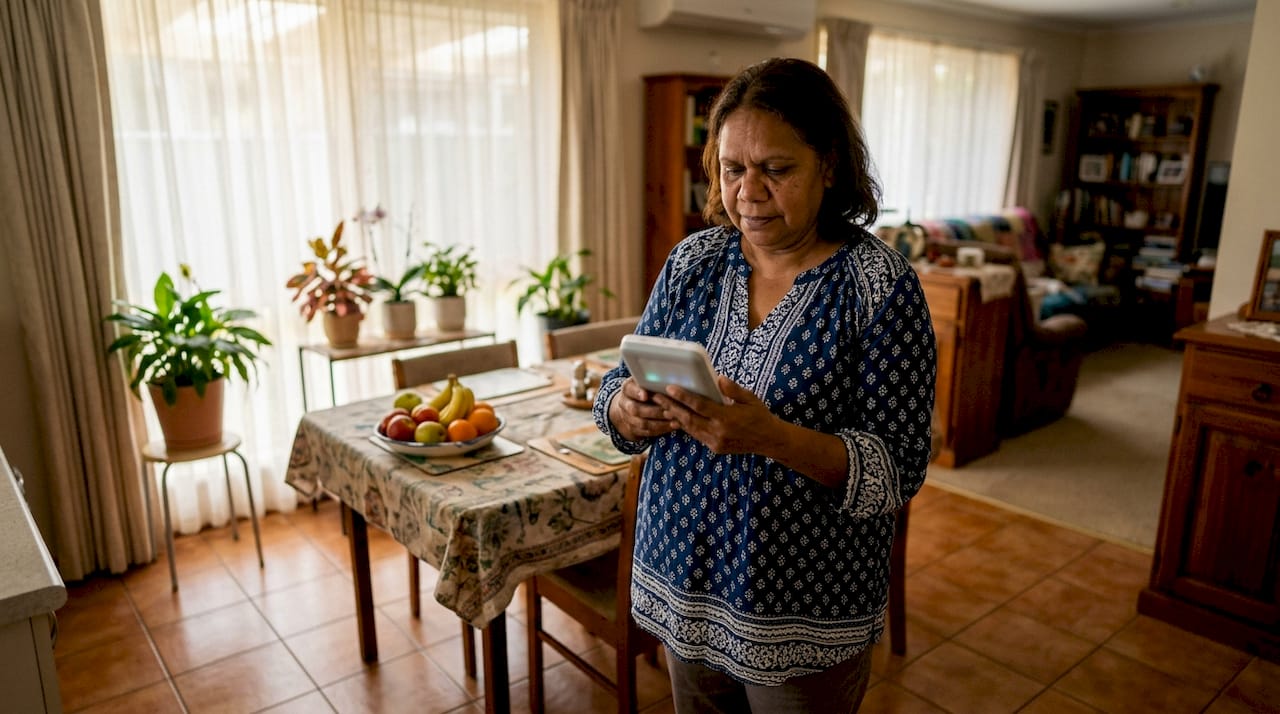
Indoor air pollutants are defined as harmful gases, particles, and biological materials present inside buildings that degrade the quality of the air people breathe. Australians face a particular challenge here. People spend about 90% of their time indoors, and indoor pollution levels can reach up to 5 times higher than outdoor concentrations. That statistic reframes the whole conversation about air quality. The threats are not outside on a smoky day. They are inside your home, often invisible, and building up right now. Understanding what indoor air pollutants are is the first step toward doing something about them.
What are the main types of indoor air pollutants?
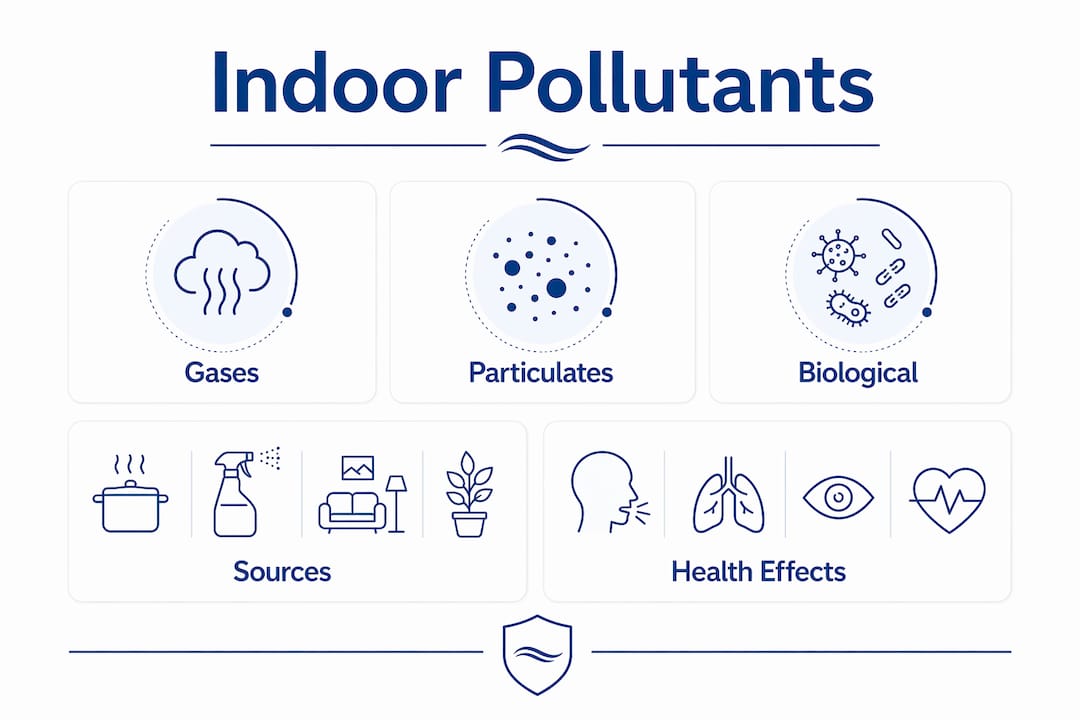
Indoor air pollutants fall into three broad categories: gases, particulate matter, and biological contaminants. Each behaves differently, comes from different sources, and poses different risks. Key indoor pollutants include carbon monoxide, nitrogen dioxide, VOCs, particulate matter, radon, mould, and biological allergens such as pet dander and dust mites.
Gases
Carbon monoxide (CO) is produced by incomplete combustion. Gas heaters, stoves, and wood-burning appliances are the main indoor sources. CO is colourless and odourless, which makes it acutely dangerous. Nitrogen dioxide (NO2) comes from the same combustion sources and irritates the airways with repeated exposure. Radon is a naturally occurring radioactive gas that seeps through soil and building foundations. Volatile organic compounds (VOCs) include formaldehyde, benzene, and toluene, released from paints, adhesives, cleaning products, and furnishings.
Particulate matter
PM2.5 refers to fine particles smaller than 2.5 micrometres in diameter. These particles penetrate deep into the lungs and enter the bloodstream. Sources include cooking, candles, incense, tobacco smoke, and, critically for Australian homes, bushfire smoke infiltrating through gaps in the building envelope. Coarser dust particles carry dust mite allergens and pet dander.
Biological contaminants
Mould thrives in humid indoor environments and releases spores that trigger allergies and asthma. Dust mites colonise bedding, carpets, and upholstery. Pet dander from cats and dogs remains airborne for hours.
| Pollutant type | Common sources | Typical health effects |
|---|---|---|
| Carbon monoxide | Gas heaters, wood fires, stoves | Headaches, nausea, death at high levels |
| Radon | Soil, building foundations | Lung cancer with long-term exposure |
| VOCs (incl. formaldehyde) | Furniture, paints, cleaning products | Eye irritation, respiratory damage, cancer risk |
| PM2.5 | Cooking, candles, bushfire smoke | Lung and cardiovascular disease |
| Mould spores | Damp walls, bathrooms, roof leaks | Asthma, allergic rhinitis, respiratory illness |
| Dust mites and pet dander | Bedding, carpets, upholstery | Allergic reactions, asthma attacks |
Pro Tip: Formaldehyde off-gassing from pressed wood products can continue for years after purchase. When buying new furniture, choose solid timber or products labelled low-VOC or E0-rated for formaldehyde emissions.
Why is indoor air often more polluted than outdoor air?
Modern homes are built tighter than ever. Better insulation and draught sealing reduce energy bills, but they also trap pollutants inside. Without adequate ventilation, gases and particles accumulate to concentrations that would never build up in open air.
Indoor activities add to the problem. Cooking on a gas stove releases CO and NO2 directly into your living space. Frying food generates PM2.5 at levels that briefly exceed outdoor pollution on a bad bushfire day. Burning candles or incense adds ultrafine particles and VOCs simultaneously. Tobacco smoke indoors is one of the most concentrated sources of mixed pollutants in any residential setting.
Off-gassing from furnishings is a slow, persistent contributor. New carpets, flat-pack furniture, and vinyl flooring release VOCs for months or years. Humidity amplifies the problem. Warm, damp conditions accelerate mould growth and increase the rate at which VOCs volatilise from surfaces. A bathroom without an exhaust fan or a kitchen with poor ventilation creates exactly those conditions.
The most dangerous indoor pollutants are the invisible ones. Carbon monoxide and radon produce no smell, no colour, and no immediate warning. By the time symptoms appear from CO exposure, the situation is already serious.
Pro Tip: Run your kitchen range hood on high during and for 15 minutes after cooking. This single habit removes a significant fraction of combustion gases and cooking-generated PM2.5 before they disperse through the rest of your home.
What health impacts do indoor air pollutants cause?
The health consequences of indoor air pollution range from mild irritation to death, depending on the pollutant, concentration, and duration of exposure.
- Carbon monoxide causes headaches, dizziness, and nausea at low concentrations. At high concentrations it is fatal. Combustion of fuels like natural gas, propane, and wood causes approximately 400 accidental CO deaths annually in the United States. Australia records deaths each year from faulty gas heaters and unflued combustion appliances.
- Radon is a long-term threat. Radon gas is the second-leading cause of lung cancer globally, sitting behind smoking. Its effects accumulate silently over years of exposure.
- PM2.5 damages the cardiovascular and respiratory systems. Fine particles are linked to increased rates of heart attack, stroke, and chronic obstructive pulmonary disease.
- VOCs cause eye, nose, and throat irritation at typical indoor concentrations. Long-term exposure to benzene and formaldehyde carries a recognised cancer risk.
- Mould and biological allergens trigger asthma attacks, allergic rhinitis, and eczema flare-ups. Children exposed to mould in early life have higher rates of asthma diagnosis.
Vulnerable groups face disproportionate risk. Children breathe more air relative to their body weight than adults do. The elderly often have reduced lung function and weaker immune responses. People with asthma, COPD, or cardiovascular disease are sensitive to even small increases in PM2.5 or NO2. For families with young children, the child bedroom air quality deserves particular attention.
Indoor air pollution often goes unnoticed because many hazardous gases and fine particles cannot be detected by smell or sight, making monitoring critical.
How to reduce indoor air pollutants in your home
Source control is the first and most effective step for improving indoor air quality. Filtration and ventilation help, but they cannot compensate for a strong pollutant source left in place.
- Remove or replace pollutant sources. Switch from unflued gas heaters to reverse-cycle air conditioning or flued alternatives. Choose low-VOC paints, adhesives, and cleaning products. Prohibit smoking indoors entirely.
- Ventilate deliberately. Open windows when outdoor air quality is good. Run exhaust fans in bathrooms and kitchens whenever moisture or combustion is present. In bushfire season, keep windows closed and rely on filtered recirculation.
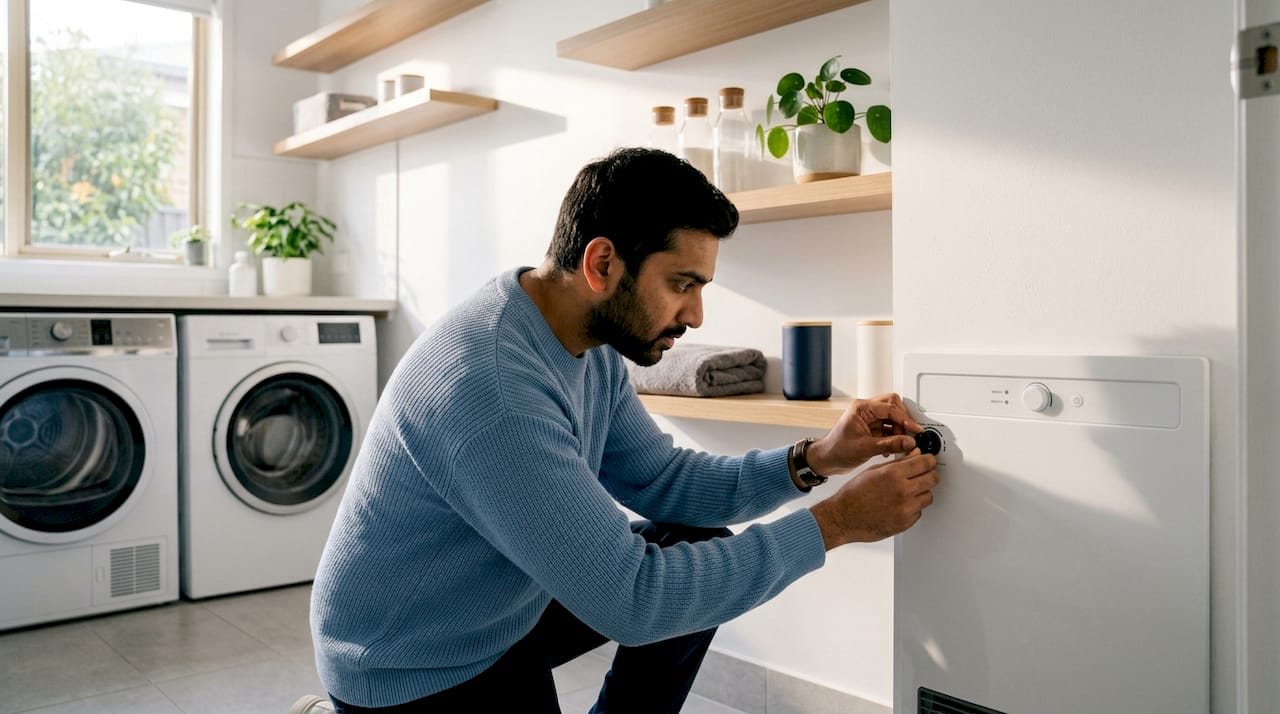
- Use air filtration. A quality air purifier fitted with a HEPA filter captures 99.97% of airborne particles, including PM2.5, dust mite allergens, mould spores, and pet dander. Understanding the types of air filtration systems helps you match the right unit to your specific concern.
- Manage humidity. Keep indoor relative humidity between 40% and 60%. Below 40%, respiratory membranes dry out. Above 60%, mould and dust mites proliferate. A dehumidifier in bathrooms, laundries, or basements keeps conditions outside the mould growth range.
- Clean strategically. Vacuum with a HEPA-filtered vacuum cleaner. Vacuuming and mopping when family members are out prevents inhalation of fine particles stirred up during cleaning. Damp-mop hard floors rather than dry-sweeping.
Pro Tip: Ozone-generating air purifiers can produce new pollutants indoors rather than removing them. Stick to units that use HEPA filtration and activated carbon. Check that any purifier you buy carries AHAM verification before purchasing.
For a room-by-room approach, the room air quality improvement steps guide covers practical changes you can make without major renovation.
How to identify and monitor air pollutants in your home
Many indoor pollutants are completely undetectable without instruments. Relying on your senses alone leaves you exposed to the most dangerous ones.
- Carbon monoxide detectors are non-negotiable in any home with gas appliances, wood heaters, or an attached garage. Testing devices for CO and radon are essential because these gases have no smell or colour. Install CO detectors in sleeping areas and near combustion appliances.
- Radon test kits are available through hardware stores and online. Long-term test kits placed in the lowest occupied level of your home give the most accurate reading over 90 days or more.
- Mould is visible when established, but early-stage growth hides behind walls and under flooring. Musty odours in a room without visible mould suggest hidden growth. A professional assessment is warranted after flooding, roof leaks, or major renovations.
- VOC monitors and particulate sensors give real-time readings of PM2.5 and total VOC levels. Consumer-grade air quality monitors have improved considerably and provide useful trend data even if absolute accuracy varies.
- Professional testing is advisable for older homes built before 1990, which may contain asbestos or lead paint disturbed during renovation. Post-renovation air quality testing confirms whether dust and fibre levels have returned to safe levels.
Observable signs that warrant investigation include persistent headaches with no other cause, worsening asthma or allergy symptoms at home, visible condensation on windows, and unexplained musty or chemical odours.
Key takeaways
Indoor air pollutants are a genuine health risk in Australian homes, and source control combined with HEPA filtration and deliberate ventilation is the most effective way to reduce exposure.
| Point | Details |
|---|---|
| Pollutants are invisible | CO, radon, and fine particles cannot be seen or smelled, so detectors and monitors are necessary. |
| Source control comes first | Removing or replacing pollutant sources is more effective than filtration or ventilation alone. |
| Vulnerable groups face greater risk | Children, the elderly, and people with respiratory conditions need lower pollutant levels than healthy adults. |
| Ozone purifiers cause harm | Air purifiers that generate ozone can create new indoor pollutants; choose HEPA and activated carbon units only. |
| Humidity drives biological growth | Keeping indoor humidity between 40% and 60% prevents mould and dust mite proliferation. |
The mistake most Australian households make
Most people I speak with assume that if their home smells fine, the air is fine. That assumption is wrong, and it is the single most common mistake I see. Carbon monoxide has no smell. Radon has no smell. Fine particles from a gas cooktop are invisible. The absence of an odour tells you nothing about the safety of your air.
The second mistake is buying an air purifier and treating it as a complete solution. A purifier running in the lounge room does not fix a poorly ventilated bathroom growing mould behind the tiles. It does not stop formaldehyde off-gassing from a new flat-pack wardrobe in the bedroom. Devices help, but they sit at the end of the chain. Source control and ventilation come first.
Australian homes have specific challenges that generic advice misses. Bushfire smoke season has lengthened, and smoke infiltration through leaky building envelopes is now a recurring problem across much of the country. Coastal humidity in Queensland and northern New South Wales creates persistent mould risk that drier climates do not face. High-density living in Sydney and Melbourne means shared ventilation systems and pollutants crossing between dwellings.
The practical answer is not complicated. Test for CO and radon. Fix moisture problems before they become mould problems. Choose low-VOC materials when renovating. Run exhaust fans. Use a quality HEPA air purifier in rooms where you spend the most time. None of these steps requires specialist knowledge. They just require knowing that the problem exists.
— Lucas
Pureair-au: Australian air quality solutions for your home
Australian homes face air quality challenges that generic products are not built for. Pureair-au specialises in medical-grade air quality solutions designed for local conditions, from bushfire smoke season to coastal humidity.
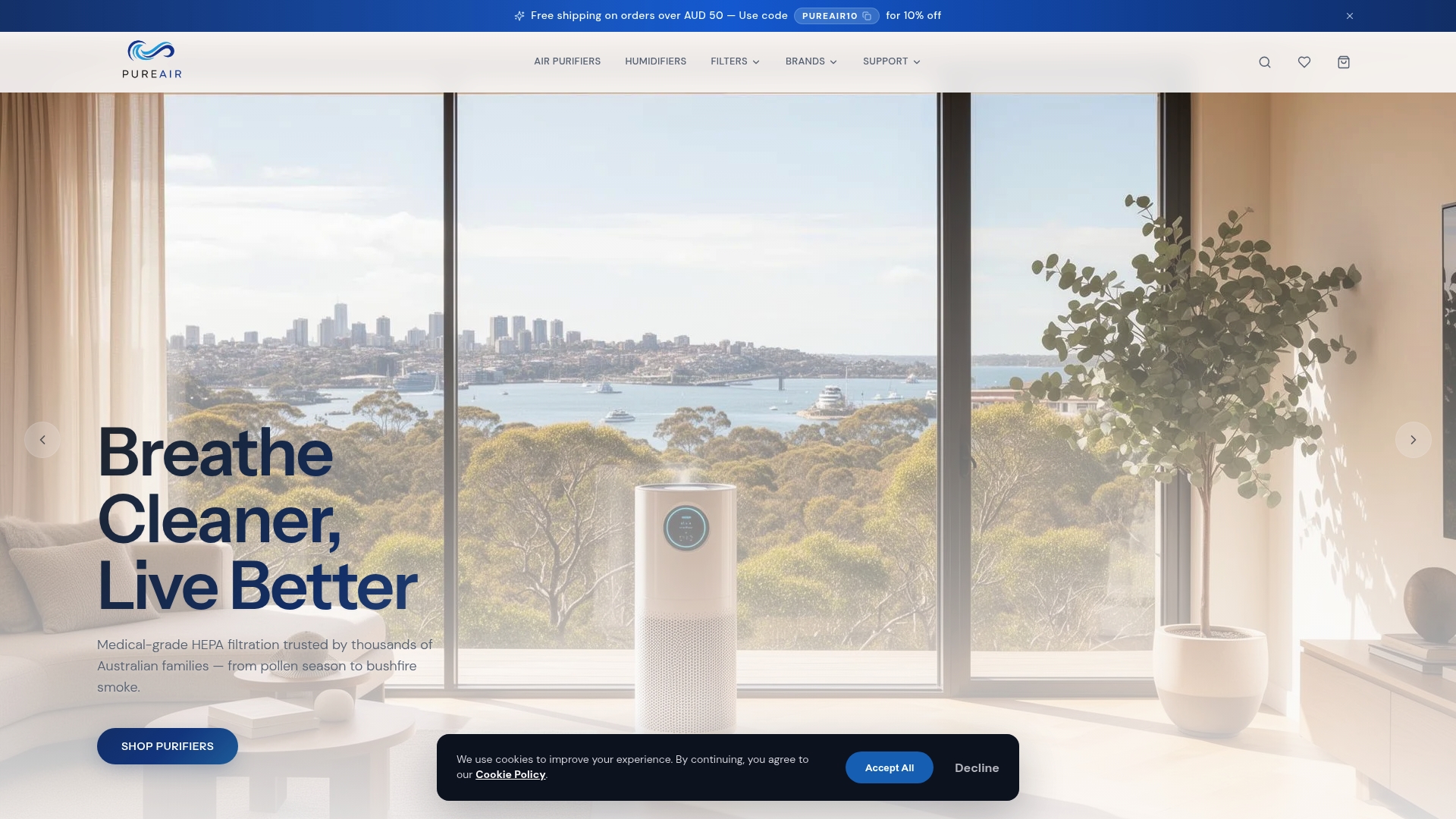
The Pureair-au product catalogue covers HEPA air purifiers, humidifiers, and dehumidifiers, all AHAM verified for confirmed performance. The Smart Finder tool on the site matches you to the right unit based on your specific concern, whether that is pollen allergies, mould, or smoke. Every product captures 99.97% of airborne particles, including PM2.5, dust mite allergens, and mould spores. Australian customer support and local delivery are included. If you are ready to act on what you have read here, the catalogue is the right place to start.
FAQ
What are indoor air pollutants?
Indoor air pollutants are harmful gases, particles, and biological materials present inside buildings that degrade air quality and affect health. Common examples include carbon monoxide, radon, VOCs, PM2.5, mould spores, and dust mite allergens.
Is indoor air quality worse than outdoor air quality?
Indoor air pollution levels can reach up to 5 times higher than outdoor concentrations, particularly in poorly ventilated homes. Combustion appliances, off-gassing furnishings, and biological growth all contribute to this accumulation.
How do I know if my home has an indoor air quality problem?
Many indoor pollutants like CO and radon are undetectable without instruments, so installing CO detectors and using radon test kits is the most reliable approach. Persistent headaches, worsening allergy symptoms, musty odours, and visible condensation are observable warning signs.
What is the most effective way to reduce indoor air pollutants?
Source control is the most effective first step, meaning you remove or replace the pollutant source before relying on ventilation or filtration. Combining source control with a HEPA air purifier and deliberate ventilation delivers the best results.
Are all air purifiers safe to use indoors?
No. Air purifiers that generate ozone can create new harmful pollutants rather than removing them. Choose units that use HEPA filtration and activated carbon, and verify AHAM certification before buying.