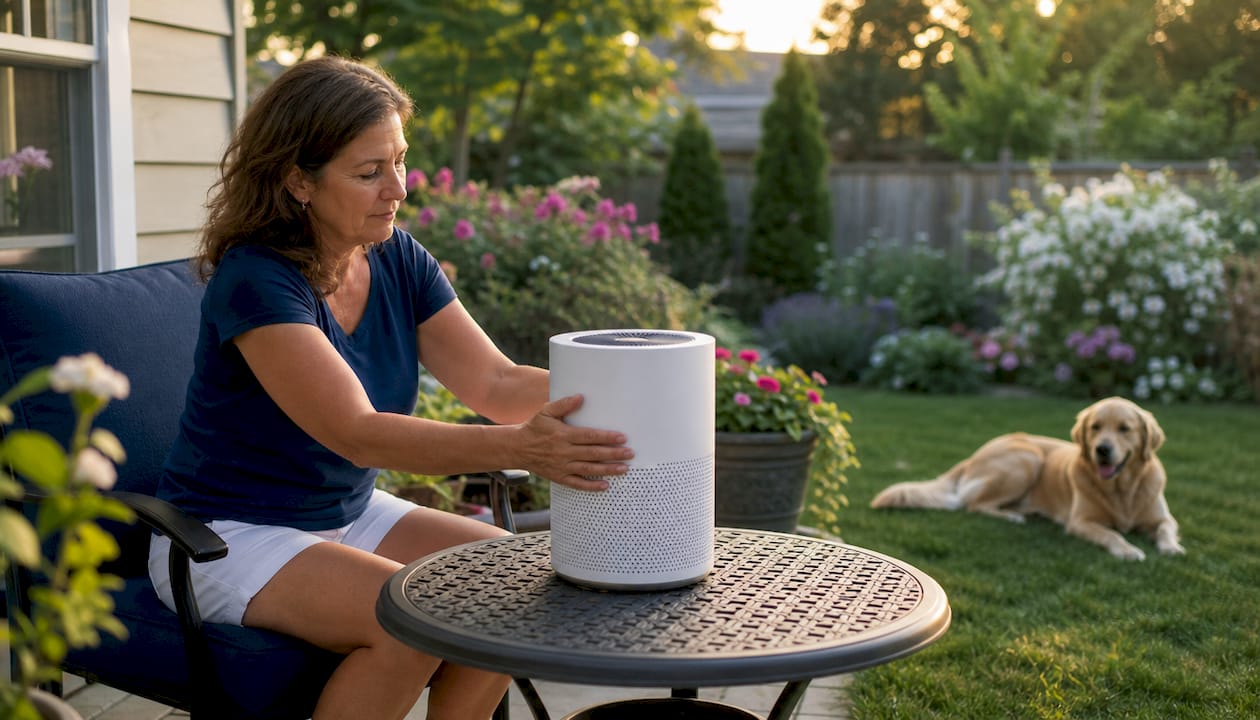
An air purifier for pet hair is a filtration device that captures airborne pet dander, hair, and odours to reduce allergen load in your home. The real threat is not the fur you can see on your couch. Microscopic dander proteins are the primary trigger for respiratory allergic reactions, and they persist indoors for weeks. True HEPA filtration, the standard specified by health authorities, captures 99.97% of particles down to 0.3 microns, making it the most effective technology for pet allergen removal. Pureair-au stocks AHAM-verified purifiers designed specifically for Australian homes and the unique air quality challenges they face.
What are common pet allergens and how do they affect indoor air?
Pet hair is visible but not the main problem. The real culprits are microscopic proteins found in pet saliva, skin flakes, and urine. These proteins become airborne when your pet moves, grooms, or sheds, and they stay suspended in the air far longer than visible hair does.
Dander particles are so light that normal air currents carry them throughout your entire home. They settle on soft furnishings, bedding, curtains, and carpet, where they can remain active for weeks after a pet has left the room. This is why dander persists indoors long after you clean visible fur from surfaces.
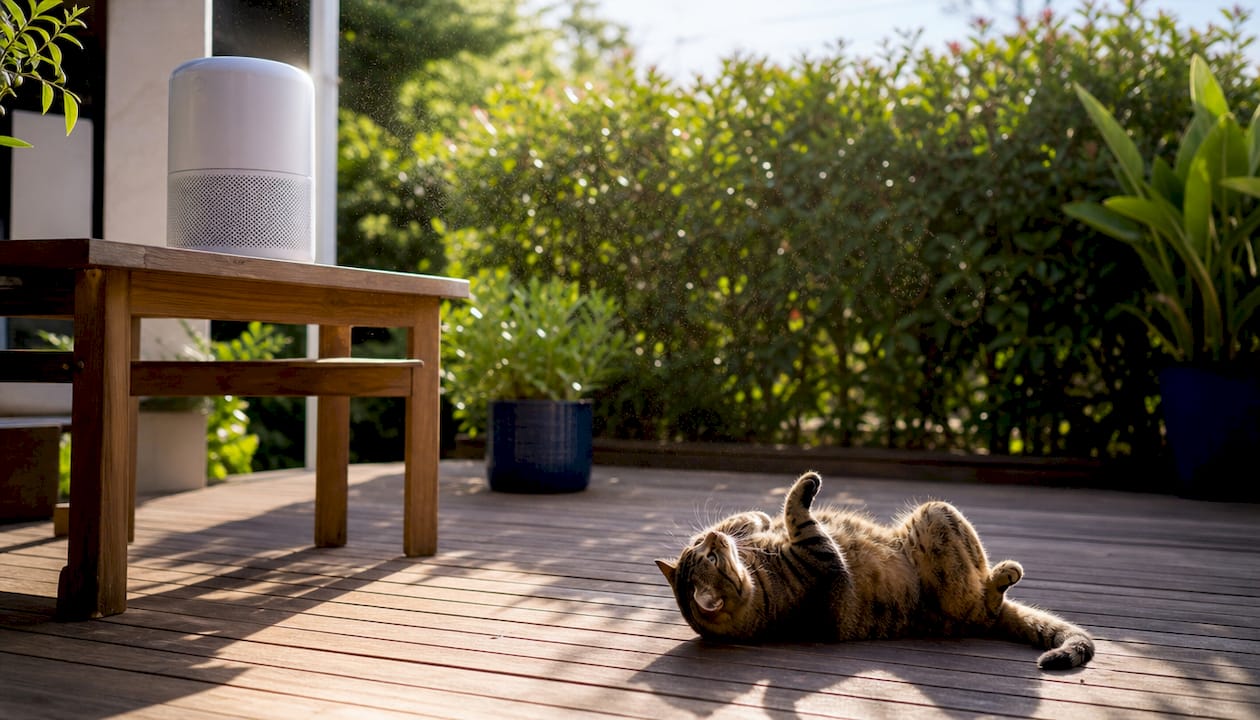
A common misconception is that short-haired or “hypoallergenic” breeds are safe for allergy sufferers. All furry animals produce the same allergenic saliva and skin proteins regardless of coat length. A Labrador and a poodle both shed dander. The breed changes the amount, not the presence.
Bird owners face an additional challenge. Feather dust and powder down from parrots and cockatiels create a fine particulate that coats surfaces and irritates airways. A bird dander air purifier needs to handle particles even finer than typical dog or cat dander. The common pet allergens in Australian homes include:
- Pet dander: Microscopic skin protein flakes from dogs, cats, rabbits, and birds
- Saliva proteins: Deposited on fur during grooming and released when fur dries and breaks apart
- Feather dust: Fine powder from birds that coats surfaces and stays airborne for extended periods
- Pet odours: Volatile organic compounds (VOCs) from urine, faeces, and body oils
- Secondary allergens: Dust mites that feed on shed skin cells, compounding the allergen load
What features should you look for in an air purifier for pet hair?
The filtration system is the most important factor. A True HEPA filter is non-negotiable for pet owners because it captures particles at the size where dander lives. Pre-filters, activated carbon layers, and CADR ratings all matter too, but they support the HEPA layer rather than replace it.
Filtration layers that matter
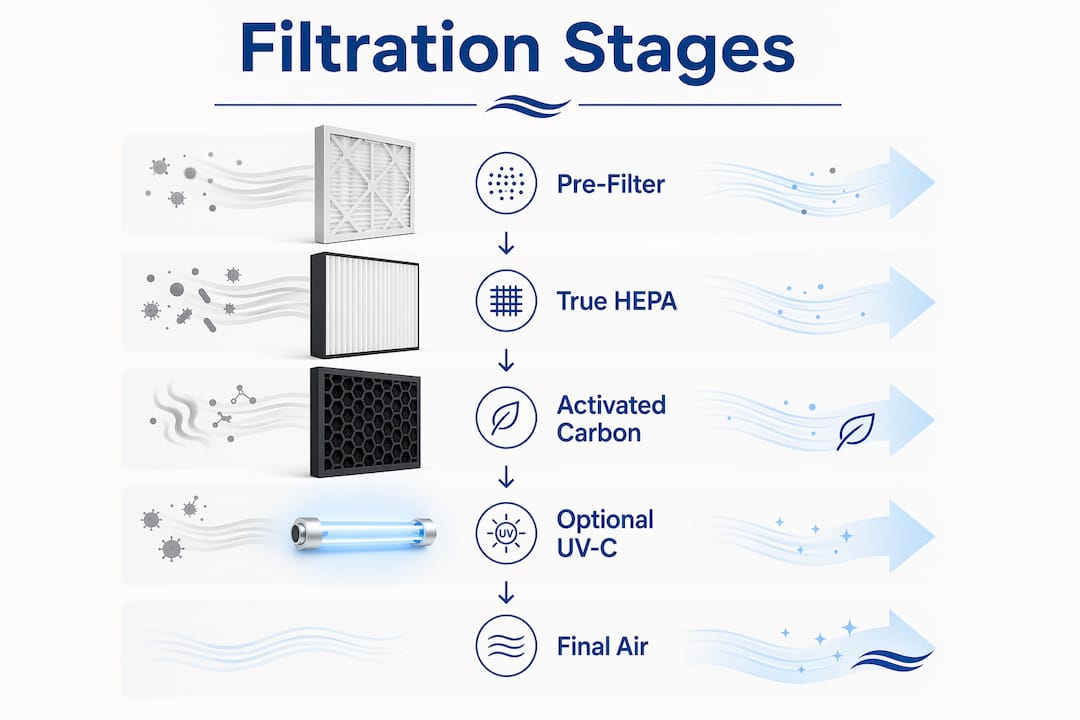
A quality pet-focused purifier uses at least three filtration stages. The pre-filter catches visible pet hair and larger particles, protecting the HEPA filter from clogging too quickly. The True HEPA layer then captures fine dander and allergen particles. Activated carbon filters adsorb odour molecules and VOCs, which is what removes that distinctive “pet smell” from your air rather than just masking it.
CADR and room size matching
The Clean Air Delivery Rate (CADR) tells you how quickly a purifier cleans a given volume of air. CADR must match your room size and the density of allergens present. A purifier rated for 20 square metres will underperform in a 40 square metre living room where two dogs spend most of their day. Always size up if your pet spends significant time in the room.
Features worth prioritising
| Feature | Why it matters for pet owners |
|---|---|
| True HEPA filter | Captures dander particles at 0.3 microns, the standard for allergen removal |
| Washable pre-filter | Traps visible hair and extends HEPA filter life, reducing running costs |
| Activated carbon layer | Removes pet odours and VOCs rather than just filtering particles |
| High CADR rating | Cleans air faster in rooms with heavy dander loads from multiple pets |
| Sleep or quiet mode | Runs at 23–27 dB overnight without disturbing pets or light-sensitive birds |
| AHAM VERIFIDE rating | Independently verifies the purifier performs as claimed by the manufacturer |
Avoid purifiers that rely on ozone generation or UV-C technology as their primary filtration method. These technologies can produce secondary pollutants that irritate airways, particularly in homes with birds, which have highly sensitive respiratory systems.
Pro Tip: If you have a bird, look specifically for a purifier with a light-off sleep mode. Sensitive pets like birds can have their circadian rhythms disrupted by display lights running overnight, causing stress and behavioural changes.
Smart controls and air quality sensors add genuine value in pet homes. Smart purifiers with app controls automatically increase fan speed when dander levels spike, such as after your dog shakes or your cat jumps off the couch. This responsiveness means the purifier works hardest exactly when it needs to, rather than running at a fixed speed all day.
How to place and maintain your purifier for best results
Placement determines how much of the airborne allergen load your purifier actually captures. Most pet owners position their purifier in a central hallway or corner, which is one of the most common mistakes pet owners make with these devices.
Positioning for maximum capture
- Place the purifier near your pet’s sleeping or resting area. Pet hair and dander settle quickly once airborne. Positioning near pet activity zones captures particles before they spread through the rest of the home.
- Keep at least 30 centimetres of clearance on all sides. Blocking the intake or outlet with furniture reduces airflow and cuts cleaning efficiency significantly.
- Use multiple smaller units rather than one large unit for whole-home coverage. A single purifier cannot effectively clean air across multiple rooms. One unit per main living area and bedroom gives far better results.
- Run the purifier continuously on a low setting. Turning it on only when you notice odours means dander has already spread. Continuous low-speed operation maintains a consistently lower allergen baseline.
- Avoid placing purifiers directly on carpet. Carpet fibres restrict airflow through the base intake. A hard floor or low table keeps air circulation unobstructed.
Maintenance that keeps performance high
Replacing filters on schedule is the single most important maintenance task for pet owners. A clogged filter does not just underperform. It forces the motor to work harder, shortens the device’s life, and can push trapped allergens back into the air. In a pet home, filters typically need replacement more frequently than the manufacturer’s standard recommendation for a non-pet household.
Wash the pre-filter every two to four weeks. Vacuum pet bedding and soft furnishings weekly to reduce the volume of hair and dander entering the air in the first place. Combining air purification with HEPA-filtered vacuuming and regular washing of pet bedding produces significantly better allergen reduction than a purifier alone.
Pro Tip: Set a recurring phone reminder for filter checks. Pet homes accumulate dander faster than the filter indicator light accounts for, particularly during shedding seasons in spring and autumn.
Which additional technologies help manage pet hair and dander?
Beyond the core HEPA and carbon filtration stack, several additional technologies improve outcomes for pet owners. Not all of them suit every household, so understanding what each does helps you choose without paying for features you will not use.
- Ionisers (optional): Some purifiers include an ioniser that charges particles, causing them to clump and fall out of the air faster. This can help with very fine dander, but ionisers that produce ozone as a byproduct are unsuitable for homes with birds or pets with respiratory sensitivities. Choose an ozone-free ioniser or skip this feature entirely.
- Smart air quality sensors: These measure particulate levels in real time and adjust fan speed automatically. They are particularly useful in pet homes where allergen levels spike unpredictably after grooming or play.
- Combined purifier-humidifier units: Dry air causes dander to stay airborne longer. A unit that purifies and humidifies simultaneously can reduce airborne dander time while also improving comfort for both pets and their owners.
- Pet-specific filter replacements: Some manufacturers offer filter variants with denser media or additional allergen-targeting layers designed for high-dander environments. These are worth considering if you have multiple pets or a breed known for heavy shedding.
- HEPA-filtered vacuum cleaners: Not a purifier accessory, but an essential companion. Vacuuming with a standard vacuum redistributes fine dander back into the air. A HEPA-filtered vacuum traps it instead.
The holistic approach to pet allergen management consistently outperforms relying on a purifier alone. Air purification handles what is airborne. Grooming, washing, and vacuuming reduce the source load that feeds the air in the first place.
Key takeaways
An air purifier with True HEPA filtration, a washable pre-filter, and activated carbon is the most effective tool for reducing pet dander, hair, and odours in Australian homes.
| Point | Details |
|---|---|
| HEPA is non-negotiable | True HEPA captures 99.97% of particles at 0.3 microns, the size where pet dander lives. |
| Placement beats power | Positioning near pet activity zones captures dander before it spreads through the home. |
| Filter maintenance is critical | Clogged filters in pet homes reduce performance and can push allergens back into the air. |
| Hypoallergenic breeds still shed dander | All furry animals produce allergenic proteins; air purification remains necessary regardless of breed. |
| Combine strategies for best results | Pairing a purifier with HEPA vacuuming and regular pet bedding washes cuts allergen load most effectively. |
What I have learned after years of advising pet owners on air quality
Most pet owners I speak with make the same two mistakes. They buy a purifier sized for a smaller room than they actually have, and they put it in the wrong spot. A mid-range purifier placed one metre from where your dog sleeps will outperform a premium unit sitting in the hallway every single time. Placement is the variable that most product reviews ignore entirely, and it is the one that changes results the most dramatically.
The other thing I have come to believe strongly is that the filter replacement schedule matters more than the brand name on the box. I have seen expensive purifiers running on filters that were six months overdue for replacement, doing almost nothing for the household’s air quality. The filter replacement guide for pet homes from Pureair-au is one of the more practical resources I point people toward, because it accounts for the faster clogging rate in high-dander environments rather than giving a generic 12-month figure.
For bird owners specifically, the noise and light sensitivity of the device matters more than most people realise. Running a purifier on a high, noisy setting near a parrot’s cage at night causes genuine stress to the animal. A quiet sleep mode is not a luxury feature in that context. It is a welfare consideration.
My honest recommendation is to treat the purifier as one part of a system, not a standalone solution. Groom your pets regularly, wash their bedding weekly, vacuum with a HEPA-filtered machine, and run your purifier continuously near where your pets spend the most time. That combination will do more for your indoor air quality than any single device running in isolation.
— Lucas
Pureair-au’s range for pet owners
Pet owners need purifiers built for the job, not general-purpose units pressed into service.
Pureair-au carries a full range of pet-focused purifiers with True HEPA filtration, activated carbon layers, and AHAM-verified performance ratings. Models like the Levoit Core P350 Pet Care are designed specifically for high-dander environments, with pre-filters built to handle heavy shedding. All units ship from Australian stock with local customer support to help you match the right model to your room size, pet type, and allergen concerns. If you are unsure where to start, the Pureair-au Smart Finder tool walks you through the selection based on your specific situation.
FAQ
What does an air purifier actually remove from pet homes?
A True HEPA air purifier removes airborne pet dander, fine hair particles, and odour molecules when paired with an activated carbon filter. It does not remove dander that has already settled on surfaces, which is why vacuuming remains necessary alongside purifier use.
Do air purifiers help with pet allergies?
Yes. Air purifiers with True HEPA filters reduce the airborne allergen load that triggers sneezing, itchy eyes, and respiratory irritation. They work best as part of a broader approach that includes grooming and regular cleaning of pet bedding and soft furnishings.
How often should I replace filters in a pet home?
Pet homes typically require more frequent filter replacement than the manufacturer’s standard schedule suggests. Pre-filters should be washed every two to four weeks, and HEPA filters may need replacement sooner than the stated interval due to higher dander loads. The Pureair-au filter replacement guide covers pet-specific schedules in detail.
Are air purifiers safe for birds and other sensitive pets?
Purifiers using True HEPA and activated carbon filtration are safe for birds. Avoid units that generate ozone as a byproduct, as birds have highly sensitive respiratory systems and ozone causes serious harm even at low concentrations. Choose a model with a quiet sleep mode and light-off setting to avoid disrupting your bird’s sleep cycle.
Do hypoallergenic dog breeds reduce the need for an air purifier?
No. All dog and cat breeds produce the allergenic proteins found in saliva and skin cells. Hypoallergenic breeds may shed less visibly, but they still produce dander. An air purifier remains necessary in any pet household where allergy sufferers live.