

Immunotherapy is a medical treatment that retrains the immune system to tolerate specific allergens, while air purifiers mechanically filter airborne particles to reduce trigger exposure indoors. Understanding what immunotherapy vs air purifiers actually means for your health is the first step to managing allergies well. These two approaches work on completely different levels. Immunotherapy targets the root cause inside your body. Air purifiers clean the air around you. Neither is a standalone cure, but together they address allergy and respiratory symptoms from two angles that complement each other directly.
What is immunotherapy vs air purifiers: core differences explained
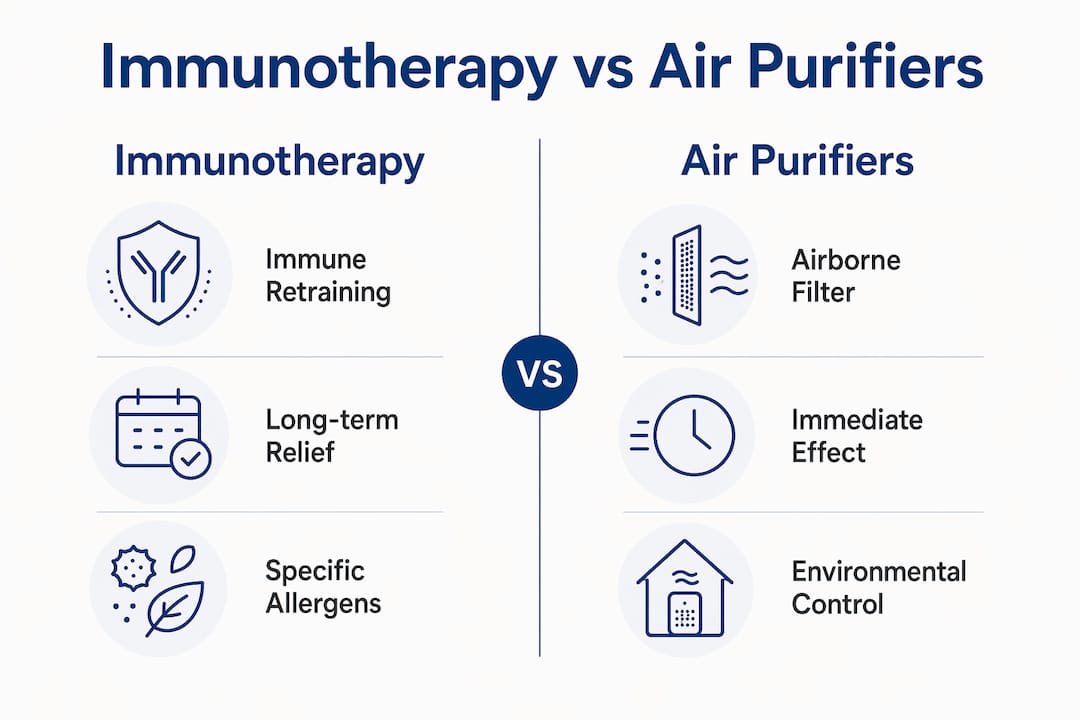
Immunotherapy is a disease-modifying treatment that changes how your immune system responds to allergens. Air purifiers are environmental devices that remove particles from the air you breathe. One works inside your body over years. The other works in your room within minutes. Allergists describe these as complementary roles, not interchangeable options.
One point worth clarifying upfront: allergy immunotherapy and cancer immunotherapy share a name but nothing else. Cancer immunotherapy includes CAR T-cell therapy and checkpoint inhibitors, which treat malignant diseases through entirely different biological mechanisms. This article covers allergen immunotherapy only.
How does immunotherapy work for allergies?
Allergen immunotherapy works by exposing your immune system to gradually increasing doses of a specific allergen. Over time, your immune system learns to tolerate that allergen rather than overreact to it. The result is reduced symptoms, lower medication use, and in many cases lasting relief even after treatment ends.
Types of allergen immunotherapy
Two main forms exist for allergy patients in Australia.
- Subcutaneous immunotherapy (SCIT): Injections given at a clinic, starting weekly and tapering to monthly. This is the traditional form and has decades of clinical evidence behind it.
- Sublingual immunotherapy (SLIT): Tablets or drops placed under the tongue at home. SLIT is increasingly common for grass pollen and dust mite allergies and suits patients who cannot commit to regular clinic visits.
Both forms require a 3–5 year commitment to retrain the immune system properly. That timeline puts off many patients, but the payoff is long-lasting change rather than temporary symptom masking.
Immunotherapy benefits and limitations
The primary immunotherapy benefit is that it modifies the disease course. Antihistamines and nasal sprays suppress symptoms while you take them. Immunotherapy can reduce your reactivity permanently. Studies show patients often maintain reduced symptoms for years after completing a full course.
Limitations are real, though. Immunotherapy targets specific allergens, so if you react to dust mites, grass pollen, and cat dander, you may need separate treatment courses. Results are slow. Most patients see meaningful improvement only after 6–12 months. Not every patient is a suitable candidate, particularly those with severe asthma or certain autoimmune conditions.
Pro Tip: Ask your allergist for a full skin prick test or specific IgE blood test before starting immunotherapy. Knowing your exact allergen triggers helps you choose the right treatment and set realistic expectations for the timeline.
Do air purifiers help with allergies?
Air purifiers with True HEPA filters capture 99.97% of airborne particles at 0.3 microns, including pollen, dust mite debris, pet dander, and mould spores. That particle capture rate is the standard that separates genuine HEPA units from cheaper alternatives. Studies confirm that correct HEPA use produces a 25–60% improvement in allergy symptoms and reduced reliance on medication.
What air purifiers actually do
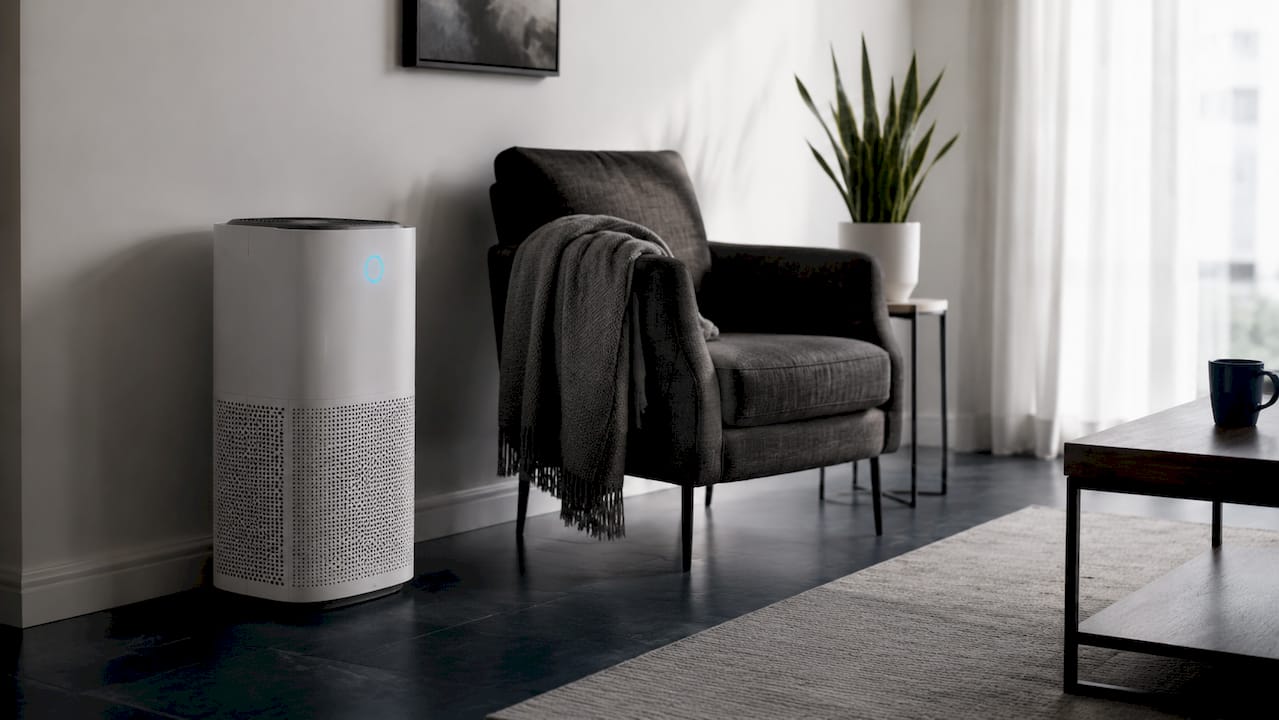
A HEPA air purifier draws room air through a dense filter, trapping particles before returning clean air to the space. The process is continuous and immediate. You can notice a difference in air quality within hours of running a unit in a bedroom or living area. For Australian families dealing with bushfire smoke seasons or high spring pollen counts, that immediate relief matters.
Air purifiers also reduce indoor PM2.5, the fine particulate matter linked to respiratory irritation. One study found that HEPA filtration over one month improved cognitive task completion speed by 12% among adults aged 40 and over. That finding suggests benefits beyond just sneezing less.
Limitations of air purifiers
Air purifiers only clean the air that passes through them. Allergens settled on carpets and furniture are untouched until they become airborne again. A purifier running in your bedroom will not clean the dust mite allergen embedded in your mattress. That is why vacuuming, mattress covers, and humidity control remain necessary alongside any purifier.
Placement also matters more than most people realise. A unit pushed into a corner or blocked by furniture can lose up to 50% of its efficiency compared to a well-placed unit in an open, central location. Room size matching is equally critical. A unit rated for 20 square metres will underperform in a 40 square metre open-plan space.
Pro Tip: Place your air purifier at least 30 centimetres from walls and furniture, at floor level or elevated slightly in the room where you spend the most time. For allergy sufferers, the bedroom is the highest priority location.
Immunotherapy vs air purifiers: a direct comparison
The table below shows where each approach fits in a complete allergy management plan.
| Feature | Allergen immunotherapy | HEPA air purifier |
|---|---|---|
| How it works | Retrains immune system response | Filters airborne particles mechanically |
| Onset of relief | 6–12 months minimum | Within hours of use |
| Duration of effect | Years after treatment ends | Only while the unit is running |
| Targets | Specific allergens (e.g. dust mite, grass pollen) | General airborne particles in a room |
| Requires medical supervision | Yes | No |
| Addresses surface allergens | No | No |
| Suitable for all patients | No | Generally yes |
The core distinction is systemic versus environmental. Immunotherapy changes your body’s reaction. An air purifier changes your room’s air. Both leave surface allergens untouched, which is why neither works well in isolation.
Effective allergy management combines medical treatments such as SLIT immunotherapy with environmental strategies including air purification and humidity management. Specialists consistently recommend this combined approach rather than choosing one or the other.
How to combine immunotherapy and air purifiers effectively
Using both approaches together produces better outcomes than either alone. The practical challenge is knowing how to integrate them without wasting money or effort.
- Run your air purifier throughout immunotherapy treatment. The early months of immunotherapy bring little symptom relief. A HEPA purifier reduces your allergen load during that period, making the process more tolerable.
- Prioritise the bedroom. You spend 7–9 hours there each night. Reducing allergen exposure during sleep has an outsized effect on daytime symptoms.
- Control humidity alongside filtration. Dust mites thrive above 50% relative humidity. A dehumidifier for allergen control used alongside a HEPA purifier reduces both airborne and settled allergen levels.
- Replace filters on schedule. A clogged HEPA filter loses efficiency and can release trapped particles back into the air. In homes with pets, filter replacement frequency increases significantly compared to standard households.
- Keep realistic expectations about immunotherapy timelines. Most patients feel frustrated in the first six months. Knowing that air purifiers are managing your environment while immunotherapy works in the background helps you stay committed.
- Work with a GP or allergist. A personalised plan accounts for your specific allergen triggers, home environment, and health history. Self-managing either treatment without professional input reduces effectiveness.
The hay fever treatment landscape in Australia has improved significantly, with SLIT tablets now available for grass pollen and dust mite allergies. Pairing these with a well-placed HEPA purifier gives Australian allergy sufferers a genuinely strong management strategy.
Key takeaways
Immunotherapy modifies your immune system for lasting allergy relief, while air purifiers reduce airborne triggers immediately. Neither replaces the other, and the best outcomes come from using both together.
| Point | Details |
|---|---|
| Different mechanisms | Immunotherapy changes immune response; air purifiers filter room air mechanically. |
| Timeline contrast | Air purifiers work within hours; immunotherapy requires 3–5 years for lasting effect. |
| Neither treats surfaces | Both approaches leave allergens settled on carpets and furniture untouched. |
| Combined use is best | Running a HEPA purifier during immunotherapy reduces allergen load while treatment takes effect. |
| Placement and maintenance matter | A poorly placed or unmaintained purifier loses up to 50% of its particle removal efficiency. |
Why I think most allergy sufferers are solving only half the problem
Most people I speak with are doing one thing and wondering why it is not enough. They are either committed to immunotherapy and ignoring their indoor environment, or they have bought a good air purifier and assumed that covers their allergy management. Both groups are getting partial results.
The patients who see the biggest improvement are the ones who treat their home like a clinical environment during immunotherapy. They run their HEPA unit in the bedroom every night, they use mattress and pillow covers, and they keep humidity below 50%. They are not leaving their immune system to do all the work alone.
The other thing I have noticed is how badly most people place their purifiers. A unit sitting behind a couch or in a corner is working at a fraction of its capacity. Moving it to a central, unobstructed position in the room you use most is the single cheapest improvement you can make without buying anything new.
Immunotherapy is a long game. It asks a lot of you in terms of patience and commitment. Air purifiers are the short game running in parallel. Treating them as competing options rather than partners is the most common mistake I see, and it costs people months of unnecessary discomfort.
— Lucas
Find the right air purifier for your allergy management plan
If you are managing allergies alongside immunotherapy or simply want cleaner air at home, Pureair-au stocks a full range of HEPA air purifiers, humidifiers, and replacement filters suited to Australian homes and climates.
Pureair-au carries models from Honeywell, Blueair, and Philips, all AHAM verified for performance. The Honeywell Air Touch P2 is a strong option for bedrooms and medium-sized living areas, priced at $295.00. For a combined purification and humidification solution, the Blueair DH3i handles both functions in one unit at $492.00. Browse the full air purifier catalogue to find the right unit for your room size and allergy triggers.
FAQ
What is the main difference between immunotherapy and air purifiers?
Immunotherapy is a medical treatment that retrains your immune system to tolerate specific allergens over 3–5 years. Air purifiers are environmental devices that filter airborne particles immediately but only while running.
Do air purifiers help during immunotherapy treatment?
Yes. Air purifiers reduce your allergen exposure during the early months of immunotherapy when symptom relief is minimal. Running a HEPA purifier in your bedroom makes the treatment period more manageable.
Can an air purifier replace immunotherapy?
No. Air purifiers control airborne triggers in a room but do not change how your immune system responds to allergens. Immunotherapy addresses the underlying immune overreaction that purifiers cannot reach.
How long does allergen immunotherapy take to work?
Most patients notice meaningful improvement after 6–12 months, with full benefit typically achieved after a 3–5 year course. Results can persist for years after treatment ends.
Is allergy immunotherapy the same as cancer immunotherapy?
No. Allergy immunotherapy desensitises the immune system to specific allergens. Cancer immunotherapy uses treatments such as CAR T-cell therapy and checkpoint inhibitors to treat malignant disease. The two share a name only.