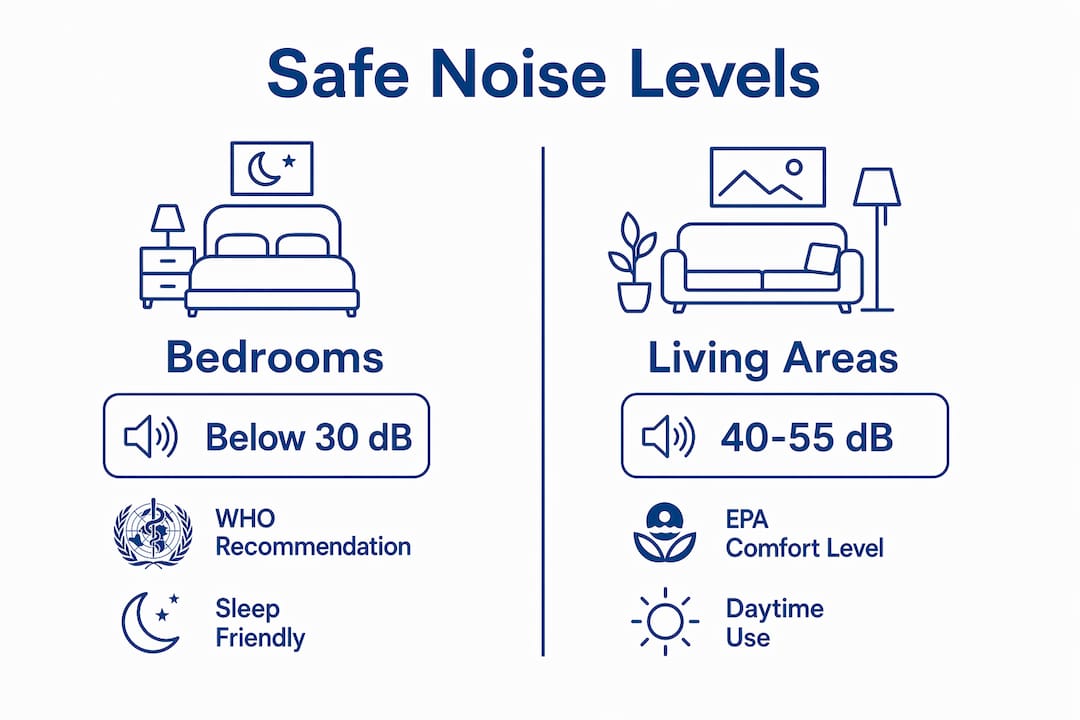
A safe air purifier noise level is defined as at or below 30 decibels (dB) in bedrooms and between 40–55 dB in daytime living areas. The World Health Organization sets continuous bedroom noise below 30 dB as the threshold for undisturbed sleep, with peaks not exceeding 45 dB. Anything above 58–60 dB causes discomfort with prolonged exposure. These thresholds are not arbitrary. They come from decades of public health research linking noise to sleep disruption, stress, and reduced wellbeing. Knowing what is safe purifier noise level for each room in your home is the first step to choosing a unit that actually improves your life rather than interrupting it.
How are air purifier noise levels measured?
Decibels are the standard unit for measuring sound intensity. The dB scale is logarithmic, which means a 10 dB increase represents roughly a doubling of perceived loudness, not a simple addition. A purifier rated at 50 dB sounds noticeably louder than one rated at 40 dB, even though the numerical gap looks small.
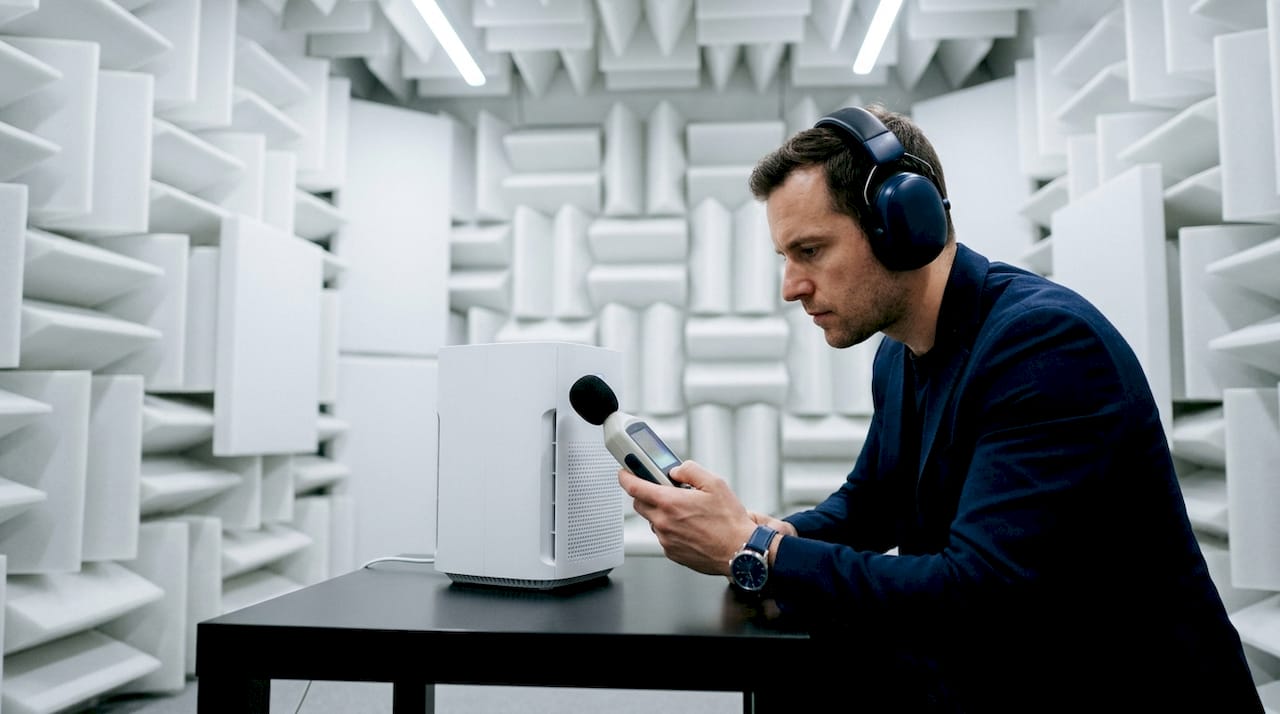
Manufacturers typically measure noise in anechoic chambers, which are specially designed rooms that absorb all sound reflections. Your living room or bedroom is nothing like an anechoic chamber. Hard floors, bare walls, and furniture all reflect sound, which means the actual noise you hear at home is often higher than the rated figure on the box.
To put the numbers in context, the US EPA’s noise comparisons show that 25–30 dB is comparable to a whisper or a quiet library, while 50 dB sits around the level of a modern refrigerator or a quiet office. That comparison is useful because most people already know how much a fridge hum bothers them, or does not.
Pitch and frequency also shape how disturbing a sound feels. A low, soft hum is far better tolerated than a high-pitched whine or a mechanical rattle, even if the decibel reading is identical. This is why two purifiers with the same dB rating can feel completely different in a room.
Pro Tip: Before buying, search for real-world sound recordings of the model you are considering. Many reviewers post audio clips online, and a 30-second listen tells you more about pitch and tone than any spec sheet.
- Whisper or quiet library: 25–30 dB
- Modern refrigerator or quiet office: 50 dB
- Normal conversation: 60 dB
- Anechoic chamber ratings: typically lower than real home readings
What noise levels are safe for air purifiers in bedrooms?
The bedroom is where noise matters most. The WHO recommends continuous sound below 30 dB for undisturbed sleep, with noise peaks capped at 45 dB. These figures are not just about comfort. They reflect the physiology of sleep itself.
Noise above 35 dB disrupts sleep architecture, increasing cortisol levels and reducing time spent in deep, restorative sleep, even when the sleeper does not consciously wake. That means a purifier running at 38 dB on its lowest setting can quietly degrade your sleep quality night after night without you realising it.
The critical factor is noise at the fan speed that actually cleans the air, not just the silent or sleep mode rating. A purifier advertised as “whisper quiet” may achieve 25 dB on its lowest fan setting, but that setting may move too little air to filter a bedroom effectively. The noise at effective cleaning speed is the number that matters.
When assessing bedroom purifiers, look for these characteristics:
- Sleep mode noise: at or below 30 dB at a fan speed that still delivers meaningful airflow
- Peak noise on higher settings: below 45 dB to avoid waking you during auto-adjustments
- AHAM-verified CADR rating: confirms the unit actually cleans air at the speeds it claims
- Auto-sensor function: adjusts fan speed based on air quality, keeping noise low when the air is already clean
Pureair-au stocks AHAM-verified purifiers with verified sleep mode performance, so the noise figures you see reflect real cleaning capacity, not just the lowest possible fan speed.
What noise levels are acceptable for living areas during the day?
Daytime living spaces allow more flexibility. Air purifiers operating at 40–55 dB are generally acceptable for living rooms, kitchens, and open-plan areas during waking hours. That range sits comfortably alongside background conversation and typical household sounds.
The EPA recommends indoor noise below 45 dB as a general comfort guideline. A purifier running at 40 dB produces roughly the same sound as a humming refrigerator, which most people find easy to tune out. Noise above 58–60 dB, however, causes fatigue and irritability with prolonged exposure, and makes conversation and concentration harder.
Sizing matters here. A unit designed for a 30-square-metre room will run at high fan speeds in a 50-square-metre open-plan space, pushing noise well above comfortable levels. Choosing a purifier rated for a larger area than your actual room allows it to run at lower, quieter fan speeds while still meeting your air quality needs. This is one of the most overlooked factors in the purifier buying process.
Auto-sensor modes are particularly useful in living areas. When the sensor detects clean air, the fan drops to a low, quiet speed. When someone cooks or opens a window during bushfire season, the fan ramps up automatically and then settles back down. You get effective cleaning without constant high-speed noise.
Pro Tip: Position your purifier away from seating areas and hard reflective surfaces like bare walls. Placing it on carpet or using a rubber mat underneath reduces vibration noise, which can add several dB to the perceived sound level.
- 40–45 dB: comfortable background noise, comparable to a quiet office
- 46–55 dB: noticeable but tolerable for most people during active hours
- 56–60 dB: approaching the limit of comfortable prolonged exposure
- Above 60 dB: consistently disruptive and unsuitable for home use
How to balance noise level with cleaning performance
Clean air delivery rate (CADR) measures how much filtered air a purifier produces per hour. Higher CADR requires more airflow, which means more fan speed, which means more noise. The trade-off is real, but it is manageable with the right approach.
The most effective strategy is to size up for your room. A purifier rated for a room 30% larger than yours will reach your air quality target at a lower, quieter fan speed than a unit matched exactly to your room size. The motor works less hard, the noise drops, and the filter lasts longer.
- Measure your room accurately. Calculate floor area in square metres before comparing CADR ratings. Do not guess.
- Choose a unit rated for a larger space. A purifier rated for 40 square metres in a 28-square-metre bedroom will run quietly and still clean effectively.
- Use auto-sensor mode as your default. Auto-sensors adjust fan speed based on real-time air quality, which keeps noise low whenever conditions allow.
- Consider multiple smaller units. Running two smaller purifiers on low settings in a large open-plan area produces less noise than one large unit running at high speed, while delivering comparable or better air coverage.
- Check for efficient motor design. Units with brushless DC motors tend to run quieter at equivalent airflow compared to older AC motor designs.
For placement advice that accounts for both noise and airflow, the air purifier placement guide on the Pureair-au website covers room-by-room positioning in detail.
Pro Tip: Run your purifier on high for 30 minutes when you first enter a room, then switch to auto or low. You get fast air cleaning without sustained high-speed noise during the hours you are actually in the space.
Common misconceptions about air purifier noise
The biggest misconception is that the noise rating on the box reflects what you will hear at home. Manufacturer ratings measured in anechoic chambers consistently underestimate real-world noise because they strip out all acoustic reflections. Your tiled bathroom or timber-floored bedroom adds those reflections back in.
The second misconception is that a lower decibel number always means a more comfortable sound. Pitch and frequency influence perceived comfort more than the raw dB figure. A 38 dB high-pitched whine from a cheap motor is far more irritating than a 42 dB low hum from a well-engineered unit. Always listen before you buy if possible.
The third misconception is that “quiet mode” or “sleep mode” ratings tell you how the unit sounds during actual air cleaning. Many purifiers achieve their lowest noise ratings at fan speeds too slow to meaningfully filter a room. The noise at effective cleaning speed is the only rating worth comparing.
“A purifier that is silent but ineffective is not a quiet purifier. It is just a fan. The goal is the lowest noise level at which the unit still delivers meaningful clean air delivery.”
To assess noise accurately before purchase:
- Download a free sound level metre app (such as NIOSH SLM or Decibel X) and measure the unit in-store or at home during a return window
- Test at the fan speed you plan to use most, not the lowest setting
- Listen for tonal quality: rattles, whistles, and high-frequency hums are more disruptive than smooth, low-frequency airflow sounds
- Check the living room setup guide for placement tips that reduce perceived noise in your specific room layout
Key takeaways
Safe air purifier noise levels are defined by room use: below 30 dB for bedrooms to protect sleep quality, and 40–55 dB for daytime living areas, with anything above 58–60 dB considered uncomfortable for prolonged exposure.
| Point | Details |
|---|---|
| Bedroom noise threshold | Keep purifier noise at or below 30 dB continuous sound to protect sleep quality. |
| Daytime living area range | 40–55 dB is acceptable for living rooms; above 58 dB causes fatigue over time. |
| Noise at cleaning speed | Always check dB ratings at the fan speed that delivers effective air cleaning, not just silent mode. |
| Size up for quieter operation | A purifier rated for a larger room runs at lower, quieter fan speeds in your actual space. |
| Pitch matters as much as dB | A low hum is better tolerated than a high-pitched tone, even at the same decibel level. |
Why I think most people shop for purifiers the wrong way
People fixate on the lowest noise rating in the spec sheet. I understand why. “25 dB sleep mode” sounds perfect. The problem is that 25 dB at the lowest fan setting often means the unit is barely moving air. You end up with a quiet purifier that is not actually purifying much.
The question I always ask is: what does this unit sound like at the speed needed to clean my room in one hour? That is the number that determines whether you will sleep through the night or lie there listening to a motor whine.
I have also noticed that room acoustics are almost never discussed in buying guides. A purifier that sounds fine in a carpeted showroom can feel noticeably louder in a bedroom with timber floors and bare walls. The unit has not changed. The room has. Sizing up and placing the unit on a soft surface makes a real difference.
My honest recommendation: treat noise quality as seriously as noise quantity. A consistent, low-frequency hum at 42 dB is genuinely easier to sleep through than a variable, high-pitched sound at 35 dB. Listen to the unit before you commit, and always test it at the fan speed you will actually use.
— Lucas
Quiet, effective air purifiers for Australian homes
Pureair-au specialises in air quality solutions built for Australian conditions, from bushfire smoke season to coastal humidity. Every unit in the catalogue is AHAM-verified, which means the noise and CADR ratings reflect real performance, not just ideal-condition lab results.
The Pureair-au air purifier catalogue includes models across a range of room sizes, with detailed noise specifications at each fan speed so you can compare accurately. Whether you need a whisper-quiet unit for a child’s bedroom or a higher-capacity model for an open-plan living area, the Smart Finder tool matches you to the right unit based on your room size, air quality concerns, and noise tolerance. Browse the full range at Pureair-au and filter by noise level to find a model that fits your home and your sleep.
FAQ
What is a safe noise level for a bedroom air purifier?
The WHO recommends continuous noise below 30 dB in bedrooms for undisturbed sleep, with peaks not exceeding 45 dB. Any purifier running above 35 dB at its effective cleaning speed risks disrupting sleep architecture over time.
How loud is 50 dB from an air purifier?
50 dB is roughly equivalent to a modern refrigerator or a quiet office environment. Most people find this level tolerable during the day but too loud for overnight bedroom use.
Why does my air purifier sound louder at home than the rating suggests?
Manufacturer noise ratings are measured in anechoic chambers that eliminate all sound reflections. Hard surfaces in a typical home, such as timber floors and bare walls, reflect sound and increase the perceived noise level above the rated figure.
Does pitch affect how disturbing an air purifier sounds?
Pitch and frequency influence comfort more than the raw decibel number. A low, steady hum is far better tolerated than a high-pitched whine or mechanical rattle, even if both measure the same dB level.
Can running two smaller purifiers be quieter than one large unit?
Running two smaller purifiers on low settings delivers comparable air cleaning to one large unit at high speed, with noticeably less noise. This approach works well in open-plan living areas where a single large unit would need to run at maximum fan speed.
Recommended
- Premium Air Purifiers, Humidifiers & HEPA Filters | Pure & Co
- Buy Philips PureProtect Quiet 2200 Series — Smart Air Purifier in Australia | Best Price $492.00 | Pure & Co
- Buy Philips PureProtect Pro 4200 Series — Smart Air Purifier in Australia | Best Price $820.00 | Pure & Co
- Buy Philips PureProtect 3200 Series — Smart Air Purifier in Australia | Best Price $623.00 | Pure & Co