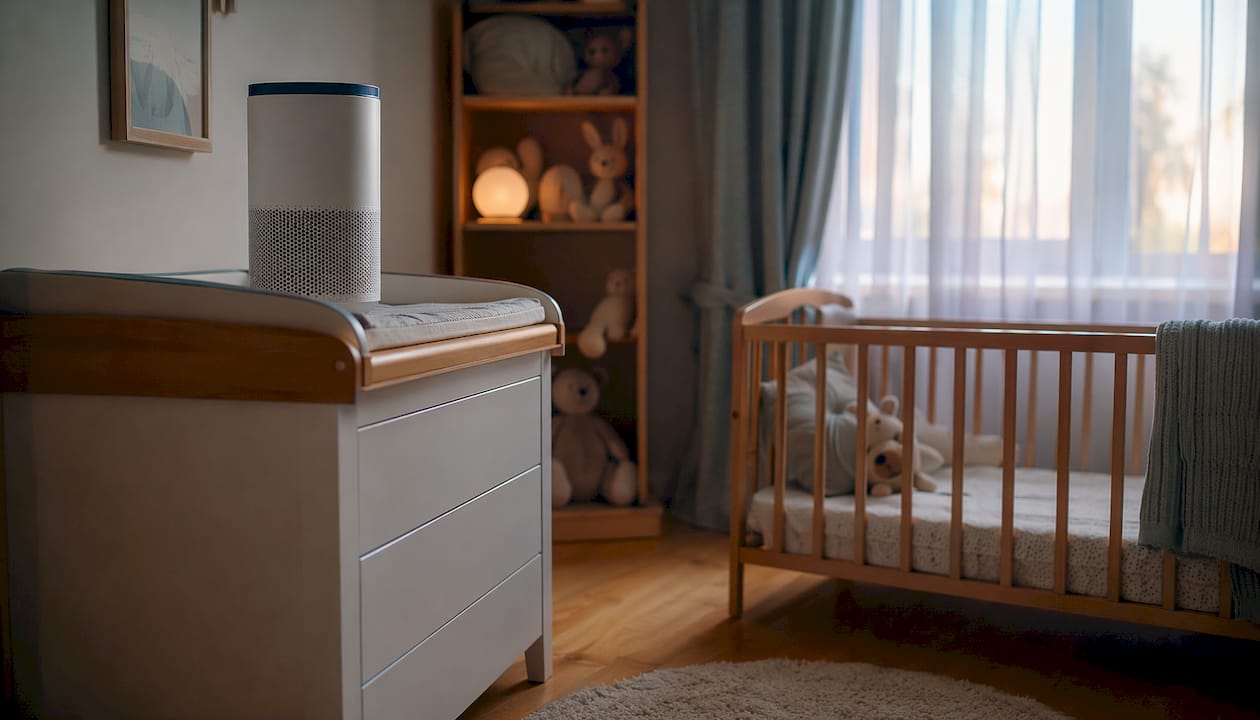
Safe air purifier placement in a nursery means positioning the unit on a stable surface 60–120 cm above the floor and at least 1.5 metres away from the crib. This is the industry standard for nursery air purifier placement, and it exists for two reasons: it aligns the purifier’s clean air output with the baby’s breathing zone, and it prevents direct airflow drafts on a sleeping infant. HEPA filtration technology, which captures 99.97% of airborne particles, only delivers its full benefit when the unit is placed correctly. Getting the location right matters as much as choosing the right device.
What is safe purifier placement in a nursery?
Safe nursery purifier placement is defined by two measurements: height and distance. Placement at breathing zone cuts airborne particle counts by up to 50% compared to floor placement. That single fact should settle the debate about putting a purifier on the floor.
The breathing zone for a baby in a cot sits roughly 60–120 cm above the floor. A purifier placed on a dresser, bookshelf, or dedicated stand at that height delivers filtered air directly into the space where your baby breathes. A purifier sitting on the floor recycles dust and debris near ground level, missing the breathing zone entirely.
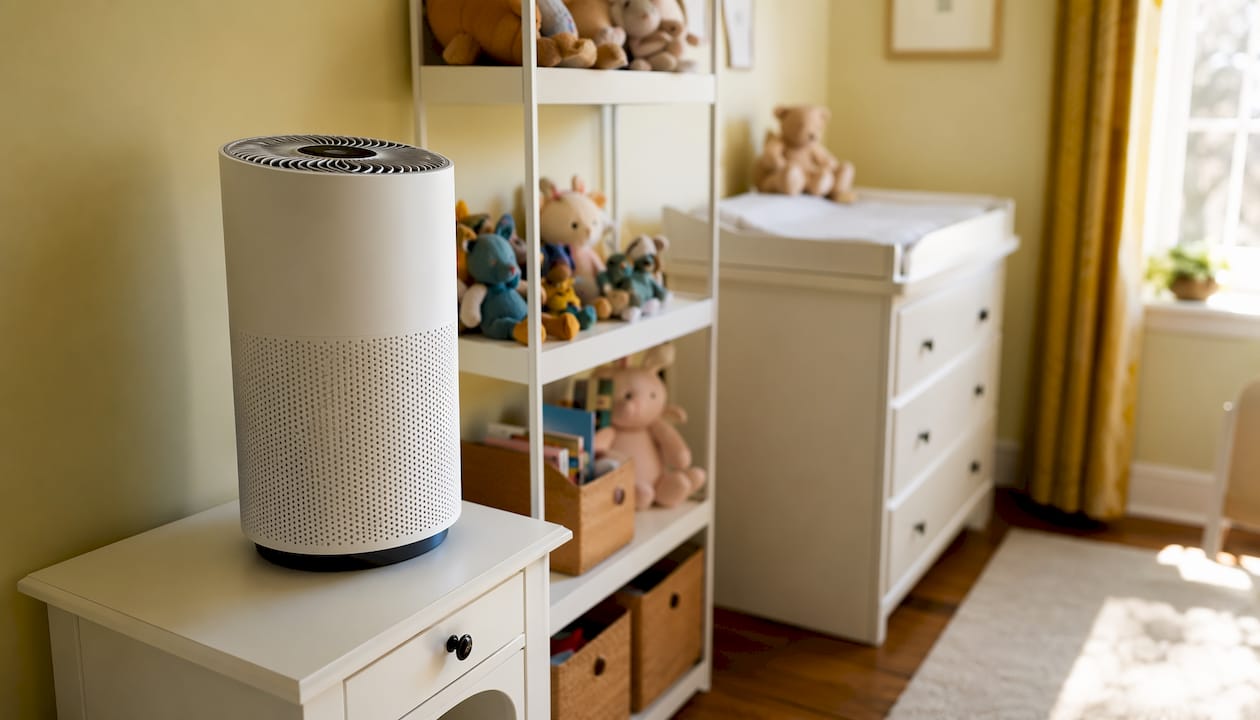
Distance from the crib matters just as much as height. The recommended minimum is 1.5–2 metres. This prevents direct airflow from blowing onto the baby, which can cause discomfort and disturb sleep. It also keeps the unit out of reach as your baby grows and begins pulling up on furniture.
Pro Tip: A chest of drawers at the right height makes an excellent purifier stand. It keeps the unit elevated, stable, and naturally integrated into the room without taking up extra floor space.
Why does elevated placement improve nursery air quality?
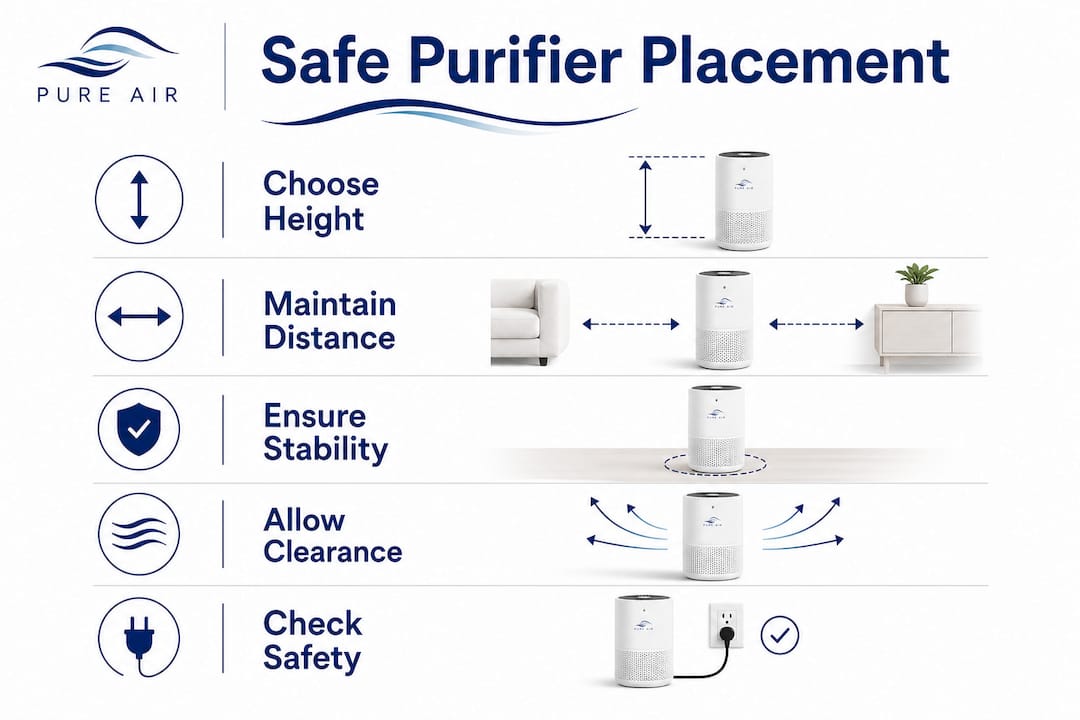
Elevated placement works because it targets the air your baby actually breathes, not the air near the skirting boards. Floor-level purifiers recycle dust and miss particles at breathing height, reducing their practical effectiveness significantly. Positioning the unit at cot height changes the entire dynamic of how clean air moves through the room.
There is another factor parents often overlook: wall and corner placement. Pressing a purifier flush against a wall or tucking it into a corner reduces airflow by 30–50%. The unit needs clear space on all sides to draw in dirty air and push out clean air efficiently.
Key reasons elevated and spaced placement outperforms floor or corner placement:
- Breathing zone alignment: Filtered air reaches the baby’s nose and mouth rather than dispersing near the floor.
- Reduced dust recycling: Floor placement stirs up settled dust and pet dander, increasing particle counts rather than reducing them.
- Better airflow circulation: A unit with clear space around it draws from a wider area and cleans the room more evenly.
- Lower noise impact: At the correct distance, even a unit running on medium speed produces less perceived noise at the cot than one placed right beside it.
- Crawling safety: Elevated placement keeps the unit away from curious hands and reduces the risk of tipping hazards as your baby becomes mobile.
Pro Tip: Leave at least 20–30 cm of clearance on the sides and back of the purifier. This is the single easiest way to recover lost efficiency without moving the unit to a new location.
What safety features should parents look for alongside placement?
Placement solves the positioning problem, but the device itself must also be safe for nursery use. Nursery purifiers must not use ionisers or ozone-generating technology, as ozone is harmful to infant lungs. This rules out a significant category of air cleaning devices regardless of where you place them.
Noise is the other non-negotiable. Purifier noise levels below 30 dB are recommended to avoid disturbing infant sleep, with the best sleep modes operating at 21–25 dB, comparable to a soft whisper. A purifier that runs loudly defeats its own purpose by disrupting the sleep it is meant to protect. You can read more about safe noise thresholds for nursery use on the Pureair-au website.
Safety features to prioritise when choosing a nursery purifier:
- HEPA certification: Confirms the filter captures 99.97% of airborne particles, including pollen, dust mites, and bushfire smoke particles common in Australian conditions.
- No ioniser or ozone output: Check the product specifications explicitly. “Air cleaning” claims do not automatically mean ozone-free.
- Child lock: Prevents small fingers from changing settings or switching the unit off during the night.
- Stable base: A wide, low centre of gravity reduces tipping risk. Avoid tall, narrow units in nurseries.
- Certifications such as CARB and ETL: Certified models reduce risks and confirm safe, quiet operation suitable for infants.
- Secured power cord: Route the cord behind furniture and use a cord clip or cable tie to keep it flat against the wall and out of reach.
Pro Tip: Check the child safety features of any purifier before purchase, not just the filtration specs. A HEPA filter in an unstable unit with an exposed cord is still a hazard.
How does room layout affect where you place the purifier?
Room layout determines how air actually moves through the nursery, and placement should work with that movement rather than against it. Placing a purifier diagonally opposite vents or windows creates an effective airflow loop that lowers particle counts more evenly across the whole room. This is more effective than central placement or corner placement.
The logic is straightforward. Fresh or incoming air enters from a window or vent. The purifier, positioned on the opposite diagonal, draws that air across the room before cleaning it. The result is a circulation loop that covers the entire nursery rather than just the area immediately around the unit.
Placement blockers to avoid:
- Curtains and blinds: Fabric directly in front of the intake restricts airflow and can be drawn into the unit.
- Wardrobes and tall furniture: Placing the purifier in a gap between large pieces of furniture creates a dead air pocket.
- Low shelves above the unit: These block the clean air outlet and redirect filtered air downward rather than across the room.
- Directly under a window: Temperature fluctuations and condensation near windows affect sensor accuracy and filter performance.
- Against the wall behind the crib: This places the unit too close to the baby and creates direct airflow toward the sleeping area.
The goal is a gentle, indirect flow of clean air that passes near the cot without blowing directly on the baby. Think of it as positioning the purifier so clean air arrives at the crib from the side, not head-on.
What placement mistakes reduce nursery air quality?
The most common nursery purifier mistake is placing the unit directly beside or behind the crib. Parents often place purifiers too close to cribs, causing drafts, noise disturbance, and reduced filter efficiency. The instinct to put the purifier as close to the baby as possible is understandable, but it works against both comfort and air quality.
Other placement mistakes that reduce effectiveness or create safety risks:
- Placing the unit against a wall or in a corner: This cuts effective airflow by 30–50%, meaning the purifier works harder and cleans less.
- Positioning on an unstable surface: A unit on a wobbly side table or stacked boxes is a tipping hazard, particularly once a baby starts pulling up to stand.
- Placing the purifier near a humidifier: Close proximity to a humidifier causes the purifier’s sensor to misread humidity as particles, saturating the filter prematurely and reducing efficiency. Maintain at least 1.5 metres between the two devices.
- Running the highest fan speed to compensate for poor placement: This increases noise above safe sleep thresholds and wastes energy without fixing the underlying positioning problem.
- Blocking the intake or outlet with toys or fabric: Even a muslin cloth draped over the unit for aesthetics can cut airflow significantly.
Pro Tip: Continuous operation at low to medium fan speed maintains stable nursery air quality without noise disruption. Running the purifier at high speed for short bursts is less effective than steady, quiet operation throughout the night.
Key takeaways
Safe nursery purifier placement requires a stable surface 60–120 cm above the floor, a minimum 1.5 metres from the crib, clear airflow on all sides, and a HEPA-certified, ozone-free device operating below 30 dB.
| Point | Details |
|---|---|
| Correct height matters most | Place the purifier 60–120 cm above the floor to align with the baby’s breathing zone. |
| Distance from crib is non-negotiable | Keep at least 1.5–2 metres between the unit and the cot to prevent drafts and noise. |
| Avoid walls and corners | Flush placement reduces airflow by 30–50%; leave 20–30 cm clearance on all sides. |
| Choose ozone-free, quiet models | Nursery purifiers must be HEPA-certified, ioniser-free, and operate below 30 dB on sleep mode. |
| Separate purifiers from humidifiers | Maintain 1.5 metres between devices to prevent filter saturation and sensor misreading. |
What I have learned placing purifiers in nurseries
Most parents I speak with focus almost entirely on which purifier to buy. The placement question comes second, if at all. That is the wrong order of priorities.
A well-chosen purifier in the wrong spot will underperform a basic model placed correctly. Free-flowing air in the room matters more than finding the geometrically perfect position. If you have to choose between ideal placement and unobstructed airflow, always choose the unobstructed option.
The two things I see parents get wrong most often are cord management and humidifier proximity. A cord running across the floor is a trip hazard for parents during night feeds and a strangulation risk as the baby grows. And placing a humidifier and purifier side by side looks tidy but destroys filter longevity within months.
My honest recommendation: run the purifier on its lowest setting continuously rather than on high speed for short periods. The air quality improvement is more consistent, the noise stays well below the 30 dB sleep threshold, and the filter lasts longer. If the unit has an air quality indicator light, watch it for the first few nights to confirm your placement is actually working. A light that stays in the “clean” range within 20 minutes of the baby going down is a good sign. One that stays in the “poor” range suggests the unit is fighting poor placement rather than cleaning the air.
No placement is perfect. But correct height, adequate distance from the crib, and clear airflow will get you 90% of the way there.
— Lucas
Nursery-ready air purifiers from Pureair-au
Parents setting up a nursery need a purifier that is HEPA-certified, ozone-free, and quiet enough to run through the night without disturbing sleep. Pureair-au stocks a curated range of nursery-safe purifiers with child-safe features, stable designs, and sleep modes operating well below 30 dB, all suited to typical Australian nursery room sizes.
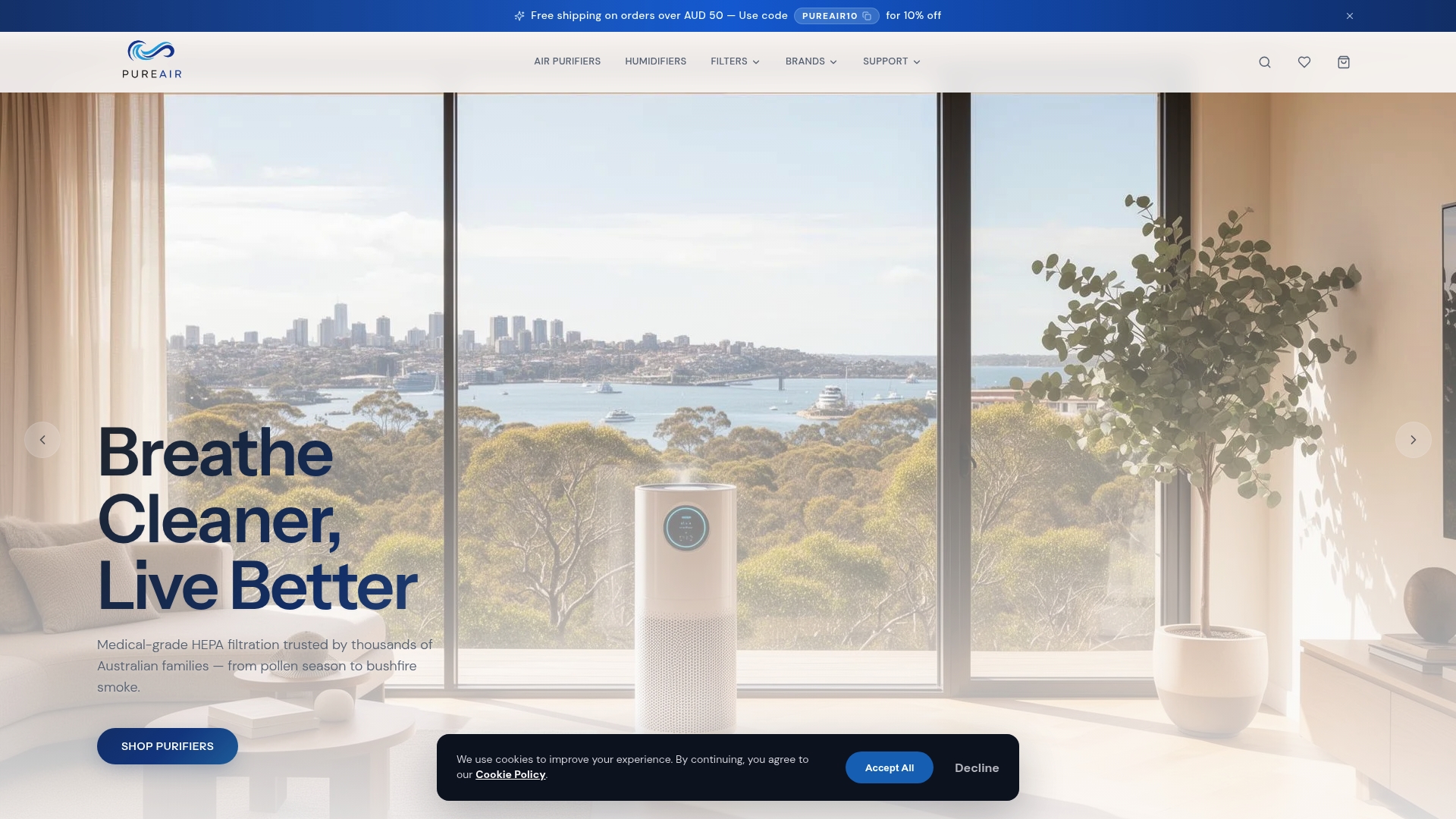
Every model in the Pureair-au range is AHAM verified, meaning the performance claims on the box match real-world results. The Smart Finder tool on the Pureair-au website helps parents match a unit to their specific nursery size and air quality concern, whether that is bushfire smoke, pollen, dust mites, or mould. For parents who also use a humidifier, the Blueair 2-in-1 Purify + Humidify DH3i combines both functions in a single unit, removing the proximity problem entirely.
FAQ
What height should a nursery air purifier be placed at?
Place the purifier on a stable surface 60–120 cm above the floor to align with the baby’s breathing zone. This height reduces airborne particle counts by up to 50% compared to floor placement.
How far should an air purifier be from a baby’s crib?
Maintain a minimum distance of 1.5–2 metres between the purifier and the crib. This prevents direct airflow drafts on the baby and keeps noise levels at a safe distance for sleep.
Can I use an ioniser air purifier in a nursery?
No. Ionisers and ozone-generating purifiers are not safe for nursery use, as ozone is harmful to infant lungs. Choose a HEPA-certified, ozone-free model confirmed by CARB or ETL certification.
Should I run the nursery air purifier all night?
Yes. Continuous operation at low to medium fan speed maintains stable air quality without noise disruption. Short bursts at high speed are less effective and more likely to disturb sleep.
How close can a purifier be to a humidifier in a nursery?
Keep at least 1.5 metres between the two devices. Closer proximity causes the purifier’s sensor to misread humidity as airborne particles, saturating the filter prematurely and reducing its efficiency.