An air purifier is an active system that draws in air and neutralises contaminants using technologies like True HEPA filtration, UV-C light, and activated carbon, while an air cleaner is a broader category that relies on passive mechanical filtration to trap particles as air passes through. The air purifier vs air cleaner distinction matters because choosing the wrong device means spending money on something that does not address your actual indoor air problem. Australian homes face specific challenges, including bushfire smoke, high pollen counts, and coastal humidity, that make this choice more consequential than it might seem. This article breaks down how each technology works, what it costs to run, and how to combine both for the best result.
What is the difference between an air purifier and an air cleaner?
The terms “air purifier” and “air cleaner” are often used interchangeably, but they describe different approaches to indoor air quality. Confusion arises because “air cleaner” is a broad category that includes HVAC filters, standalone mechanical filters, and even some purifiers. That overlap is where most buyers go wrong.
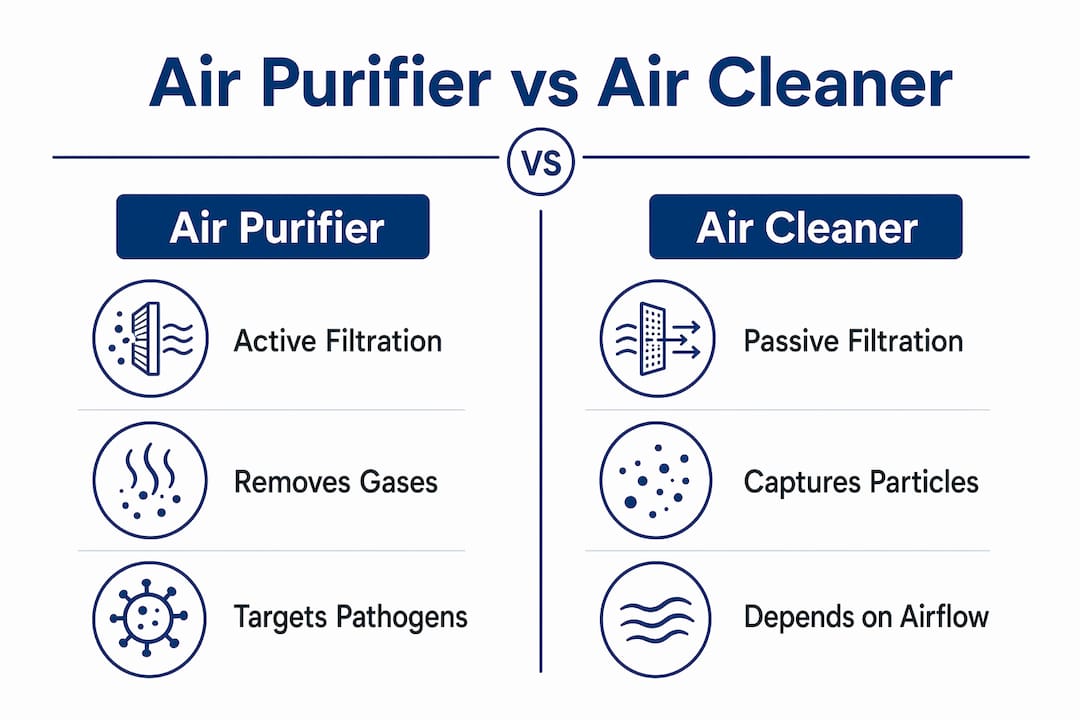
An air cleaner captures particles passively. Air must physically pass through a filter medium for anything to be removed. An air purifier goes further by actively pulling air through multiple treatment stages, which can include True HEPA filters, activated carbon layers, UV-C germicidal lamps, and ionisation chambers. The result is that purifiers address a wider range of pollutants, including gases, odours, and pathogens, that passive filters simply cannot touch.
Think of an air cleaner as a net and an air purifier as a full treatment plant. Both catch things, but only one processes what it catches.
How do air purifiers work and what pollutants do they target?
Air purifiers use multi-stage filtration to address a broad spectrum of indoor air contaminants. A typical unit moves air through several distinct layers, each targeting a different class of pollutant.
The most important stage is the True HEPA filter. True HEPA filters capture 99.97% of airborne particles at 0.3 microns, reducing indoor PM2.5 concentrations by 29–56%. That means fine particles from bushfire smoke, which are a real and recurring problem across much of Australia, are captured at a rate that makes a measurable difference to the air you breathe.
The second critical stage is activated carbon filtration. Activated carbon filters reduce odours and volatile organic compounds (VOCs) that mechanical filters alone cannot address. VOCs come from paint, cleaning products, and even cooking. Without an activated carbon stage, a purifier leaves these gases untouched.
Additional stages vary by model and include:
- UV-C light: Damages the DNA of bacteria and viruses, reducing pathogen load in circulating air
- Ionisation: Charges particles so they clump together and fall out of the air or are captured by a collector plate
- Pre-filters: Capture large particles like pet hair and dust before they clog the HEPA layer, extending filter life
The health evidence for air purifiers is strong. HEPA air purifiers reduce allergy symptoms by 25–60% and improve asthma airway resistance by 24% when used overnight. Less commonly discussed are the cardiovascular and cognitive benefits, including modest reductions in blood pressure and improved cognitive response, which research has documented in adults exposed to cleaner indoor air over time.
Performance is measured using CADR, or Clean Air Delivery Rate. CADR indicates how quickly a unit purifies specific pollutants, guiding selection according to your primary indoor air concern. A higher CADR suits tobacco smoke or high-allergen environments; a lower CADR may be adequate for a bedroom with minimal pollutant sources.
Pro Tip: Match your purifier’s CADR rating to your room size. A unit rated for 20 square metres will underperform in a 40-square-metre open-plan living area, even if it runs continuously.
What are air cleaners and how do passive filtration systems work?
Air cleaners rely on air movement to function. They do not actively draw air in. Instead, they depend on natural airflow or your HVAC system to push air through a filter medium. This passive approach works well for bulk particle removal but has clear limits.
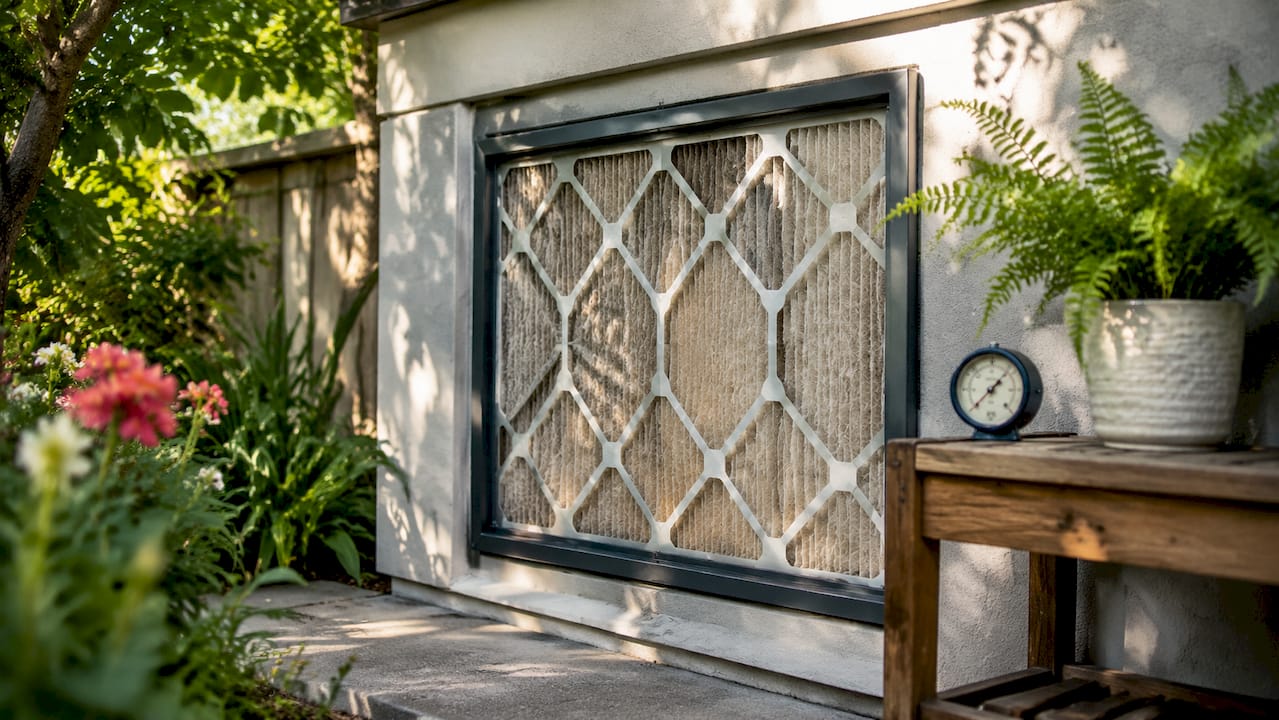
The most common air cleaners are HVAC filters rated on the MERV scale. MERV 8–13 filters are the standard recommendation for residential use. They capture dust, pollen, pet dander, and mould spores effectively. What they do not capture are fine particulates below 1 micron, gases, VOCs, or pathogens.
Here is a quick comparison of common air cleaner types:
| Type | Particles captured | Gases and VOCs | Pathogens |
|---|---|---|---|
| MERV 8 HVAC filter | Dust, pollen, dander | No | No |
| MERV 13 HVAC filter | Fine dust, some smoke | No | Limited |
| Standalone HEPA filter | Fine particulates | No | No |
| Activated carbon filter | Limited particles | Yes | No |
Maintenance is straightforward but non-negotiable. HVAC filters require replacement every 30–90 days, depending on household conditions. Homes with pets, smokers, or high dust loads need more frequent changes. A clogged filter does not just stop working. It restricts airflow, which can damage your HVAC system and actually worsen air distribution.
Standalone HEPA filters used as air cleaners, without a fan or active draw mechanism, are less effective than purifiers because they depend entirely on ambient airflow to bring particles into contact with the filter medium.
Air purifier vs air cleaner: effectiveness, costs, and maintenance compared
Choosing between these two technologies comes down to what you need to remove from your air and what you are willing to spend to do it.
| Factor | Air purifier | Air cleaner |
|---|---|---|
| Pollutants targeted | Particles, gases, VOCs, pathogens, odours | Primarily particles |
| Operation | Active, fan-driven | Passive, relies on airflow |
| Upfront cost | $150–$800+ | $20–$150 |
| Filter replacement | Every 6–12 months (HEPA); every 3 months (carbon) | Every 30–90 days (HVAC) |
| Electricity use | Continuous fan operation | Minimal (HVAC integrated) |
| Room coverage | Rated by CADR and room size | Whole-home via HVAC |
| Noise | Variable; check decibel ratings | Near-silent |
Noise is a factor that buyers consistently underestimate. Loud purifiers are less likely to be used at the settings needed for effective air cleaning, which reduces their real-world benefit. A unit that runs quietly at medium speed all night delivers more value than a powerful unit you switch off because it disturbs your sleep.
Running costs add up over time. Activated carbon filters typically need replacement every three months. HEPA filters in quality units last 6–12 months, and some HEPA H13-grade units have filter longevity of up to 11 years. Proprietary filter designs from some brands can significantly increase lifetime costs, so check replacement filter prices before you buy the unit.
Pro Tip: Before purchasing, search the model number plus “replacement filter cost Australia.” Some units look affordable upfront but cost more in filters over two years than a premium unit with longer-lasting media.
For a deeper look at selecting the right HEPA unit, the HEPA filter buyer’s guide at Pureair-au covers CADR ratings and filter grades in practical detail.
How to choose the best solution for your indoor air quality needs
The right choice depends on your specific pollutant concerns, your home layout, and how much maintenance you are willing to commit to. Here is a practical framework.
-
Identify your primary concern. Allergies and asthma respond well to True HEPA purifiers. Cooking odours and VOCs require activated carbon. Bushfire smoke needs both. Dust and pet dander can often be managed with a quality HVAC filter upgrade alone.
-
Consider a layered approach. The most effective strategy combines MERV 8–13 HVAC filtration for bulk particle capture with a standalone HEPA purifier in high-use rooms like bedrooms and living areas. This layered defence addresses both coarse and fine pollutants across the whole home.
-
Match CADR to room size. A general rule is to select a unit with a CADR rating at least two-thirds of your room’s square footage in square feet. For a 25-square-metre bedroom, that means a CADR of roughly 180 or above for the pollutant type you are targeting.
-
Check noise ratings before you buy. Look for decibel ratings at medium speed, not just maximum. Most people run purifiers on medium overnight. A unit rated at 35 dB on medium is barely audible; one rated at 52 dB will wake a light sleeper.
-
Plan your maintenance schedule. Air purifier effectiveness requires three conditions: a True HEPA filter, a correctly sized unit, and timely filter maintenance. Missing any one of these significantly reduces the health benefit. Set a calendar reminder for filter checks when you install the unit.
-
Position the unit correctly. Place purifiers in the room where you spend the most time, not in a hallway or corner. Keep doors and windows closed when the unit is running to prevent drawing in fresh outdoor pollutants faster than the unit can process them.
For practical advice on maintaining air quality across your whole home, the room air quality guide at Pureair-au covers positioning, ventilation, and filter care in one place.
Air purification also works best as part of a broader health strategy. Purifiers complement but do not replace regular cleaning, source control, and ventilation. Reducing the source of pollutants, whether that means switching to low-VOC cleaning products or vacuuming with a HEPA-filtered vacuum, reduces the load on any filtration device and extends filter life.
Key takeaways
Air purifiers outperform passive air cleaners for fine particles, gases, and pathogens, but the best indoor air quality results come from combining both technologies in a layered approach.
| Point | Details |
|---|---|
| Active vs passive filtration | Air purifiers actively draw and treat air; air cleaners rely on air passing through filter media. |
| HEPA performance | True HEPA filters capture 99.97% of particles at 0.3 microns, reducing PM2.5 by 29–56%. |
| Layered defence works best | Combine MERV 8–13 HVAC filters with a standalone HEPA purifier for whole-home coverage. |
| Maintenance determines results | Skipping filter replacements significantly reduces effectiveness regardless of unit quality. |
| Noise affects real-world use | Choose a unit with low decibel ratings at medium speed to support consistent overnight use. |
Why I think most Australians are buying the wrong device
I have spent years looking at how Australian families approach indoor air quality, and the most common mistake is buying a single device and expecting it to solve everything. Someone buys a mid-range air purifier for their living room, runs it for six months without changing the filter, and then tells me air purifiers do not work. The device did not fail. The maintenance did.
The second mistake is ignoring the HVAC filter entirely. Your ducted system is moving air through every room in the house. A MERV 8 filter costs under $30 and catches the bulk of dust and pollen before it ever circulates. Pair that with a quality HEPA purifier in the bedroom and you have a genuinely effective system for a fraction of what people spend on a single premium unit.
What I find most interesting is the evidence on air purifier effectiveness being conditional on three specific factors. Most buyers only think about one: the filter type. Room size matching and maintenance are just as important, and they are both free to get right.
My honest recommendation for most Australian households is to start with a MERV 11 HVAC filter upgrade, add a True HEPA purifier with activated carbon in the bedroom, and set a quarterly reminder to check both. That combination, properly maintained, will outperform any single expensive unit running on a dirty filter in the wrong room.
— Lucas
Find the right air purifier for your Australian home with Pureair-au
Pureair-au stocks a full range of HEPA air purifiers and filtration solutions designed specifically for Australian conditions, from bushfire smoke season to high-pollen spring months. Every product in the catalogue is AHAM verified, which means the performance claims are independently tested, not just marketing copy. The Smart Finder tool on the Pureair-au website helps you match a unit to your specific concern, whether that is allergies, mould, or cooking odours, without needing to decode technical specifications yourself. Australian-based support means you get advice from people who understand local air quality challenges, not a generic offshore helpdesk. Browse the Pureair-au product catalogue and find a unit that fits your room, your budget, and your air quality goals.
FAQ
What is the main difference between an air purifier and an air cleaner?
An air purifier actively draws air through multiple treatment stages including HEPA filters, activated carbon, and UV-C, while an air cleaner typically uses passive mechanical filtration to trap particles as air flows through. Purifiers address a broader range of pollutants including gases, odours, and pathogens.
Do air purifiers actually work for allergies and asthma?
Yes. HEPA air purifiers reduce allergy symptoms by 25–60% and improve asthma airway resistance by 24% when used overnight, provided the unit has a True HEPA filter, is correctly sized for the room, and has a clean filter.
What does CADR mean and why does it matter when choosing an air cleaner?
CADR stands for Clean Air Delivery Rate and measures how quickly a unit removes specific pollutants from the air. A higher CADR means faster air cleaning, and matching the CADR to your room size is one of the most important factors in getting real-world results.
How often do I need to replace filters in an air purifier vs an air cleaner?
HEPA filters in air purifiers typically need replacement every 6–12 months, while activated carbon filters require replacement every three months. HVAC filters used in passive air cleaners need changing every 30–90 days depending on household conditions.
Can I use an air purifier and an air cleaner together?
Yes, and this is the recommended approach. A MERV 8–13 HVAC filter handles bulk particle removal across the whole home, while a standalone HEPA purifier targets fine particulates, VOCs, and pathogens in high-use rooms like bedrooms and living areas.