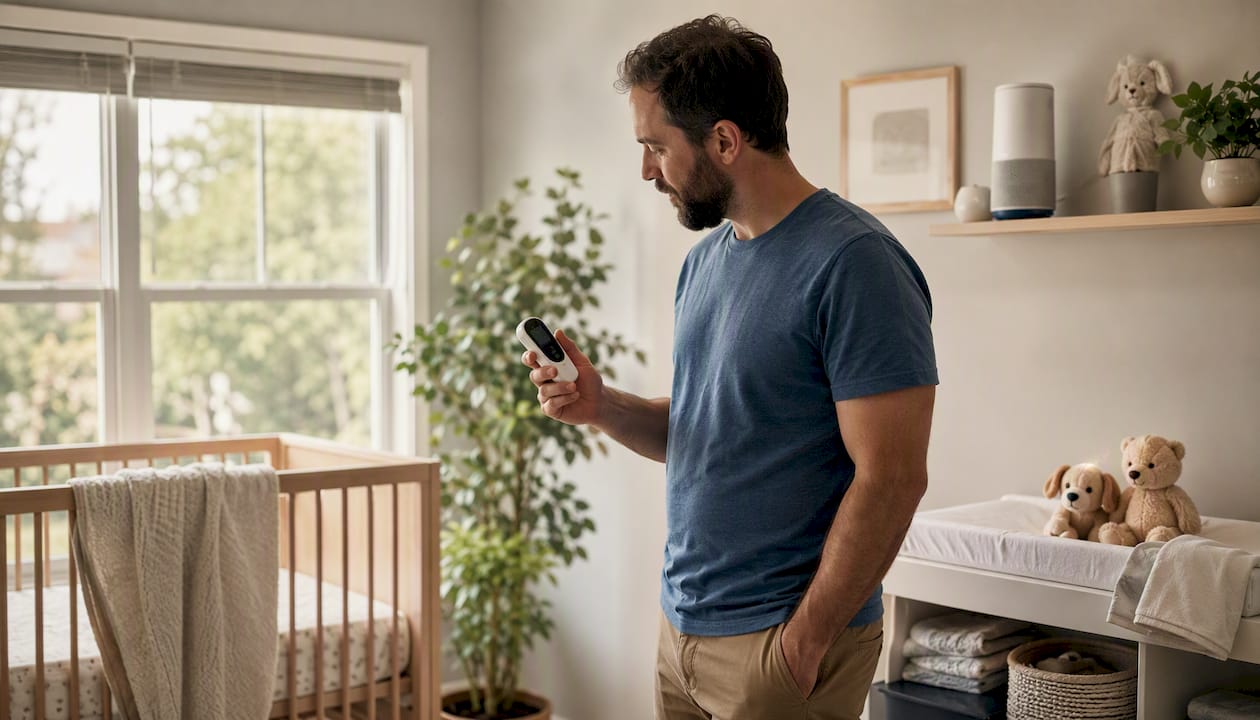
Nursery environments contain a distinct mix of indoor air contaminants that most parents never see measured or reported. The main categories are: particulate matter (PM10, PM2.5, and ultrafine PM0.1); gaseous pollutants including CO2, carbon monoxide (CO), nitrogen dioxide (NO2), ozone (O3), formaldehyde, and VOCs/TVOCs (with BTEX compounds — benzene, toluene, ethylbenzene, xylenes — as key subcategories); biological pollutants such as dust mite, cat, and dog allergens, mould spores, and microbial VOCs (MVOCs); and dust-bound contaminants including lead particles and flame retardants from soft furnishings. Children spend 80–90% of their time indoors, which means a nursery’s air quality matters far more than most people assume.
Three actions you can take or request right now:
- Improve ventilation — open windows before and after high-activity periods; ask whether the nursery has a scheduled fresh-air plan.
- Control sources — request low-VOC cleaning products and check whether pressed-wood furniture, MDF shelving, or particleboard is present.
- Add targeted filtration — a HEPA-grade air purifier placed correctly in the main play area captures PM2.5 and allergens that ventilation alone cannot remove. See the room air quality improvement steps for a practical home framework you can adapt.
Pro Tip: Baseline formaldehyde in a nursery almost always signals continuous off-gassing from building materials and pressed-wood furniture, not a one-off event. Intermittent airing helps briefly but does not solve it. Source replacement or continuous high-quality filtration is the only durable fix.
Key takeaways
Particulate matter, formaldehyde, and biological allergens are the three most consistently elevated contaminant types in nursery settings, and source control combined with scheduled ventilation addresses all three more effectively than filtration alone.
| Point | Details |
|---|---|
| Main pollutant categories | Nurseries contain particulates (PM10, PM2.5, PM0.1), gaseous pollutants (CO2, formaldehyde, VOCs/BTEX, NO2), biologicals (allergens, mould), and dust-bound contaminants. |
| Source control first | Replace pressed-wood furniture, switch to low-VOC cleaning products, and schedule cleaning after children leave — these steps reduce the load before filtration is needed. |
| Monitor what matters | Use continuous CO2 and PM sensors for daily patterns; commission laboratory sampling for formaldehyde, speciated VOCs, and allergens at least annually. |
| Children’s vulnerability | Children breathe more air relative to body weight and spend more time near the floor, making the same concentration of a pollutant a proportionally greater exposure than for adults. |
| Pureair-au for home | AHAM-verified HEPA units from Pureair-au complement nursery measures by reducing PM, allergens, and mould spores in the home environment where children spend most of their time. |
Table of Contents
- What the main categories of nursery air pollutants actually cover
- 1. Particulate matter: what the numbers mean for children’s lungs
- 2. Gaseous pollutants: CO2, formaldehyde, VOCs, and the rest
- 3. Biological pollutants: allergens, mould, and microbial VOCs
- 4. Why nurseries have a distinct pollutant profile
- 5. How to measure and interpret pollutant levels in a nursery
- 6. Health effects for young children: what the evidence shows
- 7. Practical mitigation checklist for nurseries and carers
- What I think parents and nurseries are getting wrong
- Clean air at home to complement what happens at nursery
- Sources
What the main categories of nursery air pollutants actually cover
The phrase “types of nursery air pollutants” covers four distinct groups with different sources, measurement methods, and health relevance for young children. Grouping them correctly helps you ask the right questions and prioritise the right actions.
- Particulates (PM10, PM2.5, PM0.1): Generated indoors by activity, cleaning, and cooking; also infiltrate from outdoor traffic and bushfire smoke. Measured with optical sensors or gravimetric samplers.
- Gaseous pollutants: CO2 (ventilation proxy), CO (combustion), NO2 (traffic/gas appliances), O3 (outdoor infiltration, some cleaning products), formaldehyde (materials), and the broader VOC/TVOC family including BTEX. Measured by electrochemical sensors, photoionisation detectors (PIDs), or laboratory methods.
- Biological pollutants: Allergens (cat Fel d 1, dog Can f 1, dust mite Der p/Der f), mould spores (Penicillium, Cladosporium), bacteria, and MVOCs. Measured by dust sampling, air culture counts (CFU/m³), or MVOC screening.
- Dust-bound contaminants: Lead from older paint or soil tracked indoors, and flame retardants from soft furnishings and foam. Measured by laboratory analysis of settled dust.
Each category differs by how it enters the space, how quickly it accumulates, and which health outcomes it is most associated with in young children. A nursery that only monitors CO2 is missing most of this picture.
1. Particulate matter: what the numbers mean for children’s lungs
Particulate matter is the most studied and most commonly elevated indoor pollutant in nursery settings. A 2023 global systematic review of day-care centre monitoring found PM was the predominant measured contaminant across studies, with PM10 appearing more frequently than PM2.5 in study counts, and wide concentration ranges reported across sites and countries.
Size determines where particles deposit. PM10 settles in the upper airways; PM2.5 penetrates deep into the alveoli; ultrafine PM0.1 can cross into the bloodstream and reach the brain. Children breathe more air relative to their body weight than adults do, and their respiratory and neurological systems are still developing, which makes prolonged PM exposure a genuine concern rather than a theoretical one.
Indoor PM in nurseries is often equal to or higher than outdoor concentrations. Studies confirm that occupancy and activities drive this: children playing on the floor resuspend settled dust, cleaning raises short-term peaks, and indoor cooking or gas heating adds ultrafine particles. Urban nurseries tend to show higher PM linked to traffic infiltration through windows and ventilation systems, while rural sites generally show lower background levels but can still spike during activities.
Common indoor PM sources in nurseries:
- Floor play and running (resuspension of settled dust)
- Vacuuming without HEPA filtration
- Gas cooking or gas heating appliances
- Craft activities (chalk, clay, glitter, spray paints)
- Outdoor infiltration via open windows near roads
Statistic: The 2023 systematic review of global day-care monitoring identified particulate matter as the most investigated and most commonly elevated indoor pollutant across nursery studies, with indoor PM frequently exceeding outdoor values at many monitored sites.
A practical caveat on sensors: consumer optical sensors estimate PM by light scattering, which means they can over- or underestimate depending on particle composition, humidity, and aerosol type. They are useful for spotting patterns and peaks, but a single reading should not be treated as a precise mass concentration. Short-term spot checks during activities reveal peak exposures; continuous monitoring over at least a week reveals the baseline and daily patterns.
Pro Tip: Schedule vacuuming and floor cleaning for the end of the day, after children have left. Cleaning during occupancy consistently raises PM2.5 above activity-period levels, and the particles take 30–60 minutes to settle.
2. Gaseous pollutants: CO2, formaldehyde, VOCs, and the rest
Gaseous contaminants in nurseries span a wide range of compounds with very different sources and health profiles. Treating them as a single category leads to the wrong interventions.
CO2 is not the primary toxicant of concern in most nurseries, but it is the most useful ventilation proxy available to a low-cost sensor. When CO2 climbs above roughly 1,000 ppm, it signals that fresh air exchange is insufficient and that other pollutants generated by occupants and materials are also accumulating. Think of it as a canary: when CO2 is high, everything else is probably elevated too.
CO, NO2, and O3 each have distinct urban/rural patterns. CO comes from gas appliances and combustion; NO2 is strongly linked to traffic exhaust and gas cooking, with urban nurseries typically showing higher concentrations. O3 is primarily an outdoor pollutant that infiltrates through ventilation, though some cleaning products and photocopiers generate it indoors. Bushfire smoke events raise both PM and O3 simultaneously, a combination that is particularly relevant in Australian conditions.
Formaldehyde deserves its own attention. Continuous monitoring in Portuguese nurseries found baseline formaldehyde concentrations consistent with persistent off-gassing from building materials and furnishings, with episodic VOC peaks tied to cleaning and children’s activities. A California monitoring project found frequent formaldehyde exceedances relative to reference values across child-care facilities, alongside PM exceedances in many sites. Pressed wood (MDF, particleboard, plywood), adhesives, and some paints are the main sources. The key point: formaldehyde does not spike and disappear; it leaches continuously, which is why source control matters more than opening a window once a week.
VOCs and TVOCs cover hundreds of compounds. Speciated VOC monitoring in indoor settings commonly detects BTEX compounds — benzene, toluene, ethylbenzene, and xylenes — with concentrations that vary by indoor source and season. Beyond BTEX, nursery VOC mixtures include alcohols, ketones, terpenes (from cleaning products and air fresheners), and glycol ethers (from paints and craft supplies). The mix shifts depending on what products are in use, which is why a single TVOC reading tells you something is present but not what.
Typical indoor sources of gaseous pollutants:
- Pressed-wood furniture and MDF shelving (formaldehyde)
- Cleaning products, disinfectants, and air fresheners (VOCs, terpenes)
- Art supplies: paints, glues, markers, solvents (BTEX, ketones)
- Gas cooking and heating (CO, NO2)
- Traffic infiltration through windows (NO2, benzene)
Measurement matters here. CO2 and NO2 can be tracked with electrochemical sensors; TVOC sensors give a rough signal but cannot identify individual compounds. Formaldehyde and speciated VOCs need laboratory methods — passive diffusion tubes or active sampling analysed by gas chromatography — for reliable quantification. Allergen and mould sampling also requires laboratory analysis.
Pro Tip: Schedule any cleaning, painting, or craft activities that use solvent-based products for times when windows can be fully open and children are absent. VOC concentrations from a single mopping session can remain elevated for several hours in a poorly ventilated room.
3. Biological pollutants: allergens, mould, and microbial VOCs
Biological contaminants are among the least-monitored pollutants in childcare facilities, yet they are among the most clinically relevant for young children who are still developing immune responses.
Allergens found in nurseries include cat allergen (Fel d 1), dog allergen (Can f 1), and dust mite allergens (Der p 1 from Dermatophagoides pteronyssinus, Der f 1 from D. farinae). Importantly, cat and dog allergens reach nurseries not because pets are present, but because they are carried on the clothing and hair of staff and children who have pets at home. Allergen surveys in nurseries commonly detect Fel d 1 and Can f 1, with concentrations that track laundry practices and soft furnishing density rather than any direct animal presence. Dust mite levels vary by region and humidity; in humid climates, concentrations in bedding and soft toys can reach sensitisation thresholds.

Mould and fungi are a separate concern. Indoor fungal concentrations in nurseries are often higher than in homes and show seasonal variation, with Penicillium and Cladosporium among the most frequently reported genera. Concentrations tend to peak in summer in some studies, linked to higher outdoor spore counts and indoor humidity. Hidden dampness behind walls, under floor coverings, or in poorly maintained HVAC systems can sustain mould growth year-round without visible signs.
MVOCs (microbial volatile organic compounds) are gases produced by actively growing mould colonies. Compounds such as 1-octen-3-ol and 2-pentanol are associated with mould activity and can be detected even when the mould itself is not visible. A musty smell in a room that looks clean is a reliable indicator worth investigating.
Key biological sources and reservoirs:
- Soft toys, cushions, and fabric-covered furniture (dust mites, allergens)
- Bedding and nap mats (dust mites, Fel d 1, Can f 1)
- Damp areas: bathrooms, nappy change areas, window sills (mould)
- HVAC ducts and filters (mould, bacteria, allergens redistributed by airflow)
- Staff and children’s clothing (pet allergens)
Measurement for biological pollutants requires dust sampling (for allergens, analysed by ELISA) and air culture counts (CFU/m³) or spore trap analysis for fungi. MVOC screening is less standardised but useful when hidden mould is suspected.
Pro Tip: Wash soft toys and nap mats weekly in hot water (above 55°C) and dry thoroughly. This reduces dust mite populations and removes accumulated allergens more effectively than any air purifier alone.
4. Why nurseries have a distinct pollutant profile
Nurseries are not just small schools. Their pollutant profile differs from other indoor environments because of a combination of factors that rarely occur together elsewhere.
Indoor drivers specific to nurseries:
- Pressed-wood and MDF furniture, shelving, and storage units (formaldehyde off-gassing)
- Cleaning products used multiple times daily (VOCs, disinfectant byproducts)
- Art and craft supplies: paints, glues, markers, clay (VOCs, PM)
- Nappy bins and nappy change areas (ammonia, biological aerosols)
- On-site cooking or food preparation (PM, CO, NO2, cooking VOCs)
- High occupant density relative to floor area (rapid CO2 and PM accumulation)
- Soft furnishings, carpets, and fabric toys (allergen reservoirs, VOC sinks)
Even a small group of active children raises PM and CO2 measurably within minutes. A global review noted that nurseries often show persistent exposures exceeding guideline values, driven by this combination of high occupant density, soft furnishings, and a wider range of chemical sources than most other educational settings.
Outdoor drivers that infiltrate:
- Traffic exhaust (NO2, PM2.5, benzene) — strongest near busy roads
- Bushfire smoke (PM2.5, PM10, CO, VOCs) — episodic but severe
- Pollen and outdoor bioaerosols — seasonal, worsened by open-window ventilation
- Soil and dust tracked indoors (lead, metals, biological material)
Building age and ventilation system condition also matter. Older buildings with poor sealing allow more outdoor infiltration; mechanical ventilation systems with dirty or unmaintained ducts can redistribute allergens and mould spores throughout a facility. Duct debris reduces airflow and can become a secondary source of particulates and biological material if ducts are not inspected and cleaned regularly.
5. How to measure and interpret pollutant levels in a nursery
Measurement is where most nurseries fall short. A CO2 display on the wall is a start, not a monitoring programme.
Consumer sensors vs laboratory sampling:
Consumer-grade sensors for CO2, PM, and TVOC are useful for identifying patterns, peaks, and ventilation failures. They are not precise enough for regulatory compliance or health-risk assessment on their own. Formaldehyde, speciated VOCs (including BTEX), and allergens all require laboratory sampling for reliable results. Monitoring literature consistently recommends using continuous CO2 and PM sensors for pattern detection, and laboratory analysis for compounds where health thresholds and speciation matter.
Practical monitoring approach:
- Run continuous CO2 and PM sensors for at least one full week to capture daily patterns across arrival, activity, meal, nap, and cleaning periods.
- Prioritise spot checks during the highest-activity periods: morning arrival (CO2 spike), active play (PM spike), and immediately after cleaning (VOC and PM spike).
- Commission laboratory sampling for formaldehyde and BTEX at least once, particularly in rooms with new or pressed-wood furniture, and repeat after any renovation.
- Arrange allergen dust sampling annually, or after any change in soft furnishings or bedding.
Interpretation rules of thumb:
- CO2 above 1,000 ppm consistently signals inadequate ventilation; above 1,500 ppm, ventilation is poor enough that other pollutant accumulation is likely significant.
- PM2.5 short-term spikes during activities are expected; a prolonged elevated mean (sustained above WHO’s 24-hour guideline of 15 µg/m³) warrants source investigation and filtration review.
- TVOC sensor readings above 500 ppb during non-cleaning hours suggest a persistent source worth identifying.
Common sensor pitfalls:
- High humidity causes optical PM sensors to overestimate (water droplets scatter light like particles).
- TVOC sensors respond differently to different compounds and cannot distinguish formaldehyde from terpenes.
- Placing a sensor near a door, window, or cooking appliance gives misleading readings for the room’s general air quality.
Pro Tip: Place CO2 and PM monitors at child breathing height (roughly 0.5–1 m from the floor) in the centre of the main activity area, away from windows, doors, and any cooking or heating appliance. A monitor near the ceiling or beside an open window will consistently underestimate what children are actually breathing.
6. Health effects for young children: what the evidence shows
Young children face a higher effective dose from indoor air pollutants than adults in the same space. They breathe faster, spend more time on the floor where settled dust and resuspended particles concentrate, and their respiratory, immune, and neurological systems are still developing.
Health outcomes linked to nursery pollutants:
- Respiratory irritation and wheeze: PM2.5, formaldehyde, and NO2 are all associated with airway irritation, increased mucus production, and wheeze in young children. Short-term effects can appear within hours of elevated exposure.
- Asthma exacerbation: Allergens (dust mite, cat, dog), mould spores, and PM2.5 are established asthma triggers. Children with existing sensitisation are at particular risk during high-occupancy periods.
- Allergy sensitisation: Early and repeated exposure to allergens during infancy and toddlerhood is associated with increased risk of developing allergic sensitisation, though the relationship is complex and influenced by genetics and exposure timing.
- Increased infection risk: Poor ventilation (high CO2) correlates with higher airborne pathogen concentrations; biological aerosols from nappy change areas add to this.
- Developmental concerns from chronic PM exposure: Evidence from epidemiological studies links long-term PM2.5 exposure in early childhood to effects on lung development and, in some studies, neurodevelopmental outcomes. Evidence strength varies across studies, and causality in specific nursery settings has not been established with certainty.
The National Institute of Environmental Health Sciences notes that children’s greater vulnerability to indoor air contaminants stems from their higher breathing rate relative to body weight, their time spent close to the floor, and the fact that their organ systems are still maturing — all of which mean the same concentration of a pollutant delivers a proportionally greater biological dose to a child than to an adult in the same room.
The distinction between short-term irritation and long-term risk matters for how you frame action. A single high-PM day from a cleaning event is unlikely to cause lasting harm; a nursery where PM2.5 is chronically elevated above guideline values across months of attendance is a different situation. The California child-care monitoring project found exceedances of reference values for formaldehyde and PM at many facilities, underscoring that these are not rare edge cases.
Medical note: If a child shows persistent respiratory symptoms, frequent wheeze, or signs of allergic sensitisation, consult a GP or paediatric allergist. Air quality data from a nursery can be a useful input to that conversation, but it does not replace clinical assessment.
7. Practical mitigation checklist for nurseries and carers
Effective mitigation follows a clear priority order: remove the source first, then dilute with ventilation, then filter what remains.
Stepwise checklist:
- Source control — materials: Replace or seal pressed-wood (MDF, particleboard) furniture with solid wood or metal alternatives. Choose low-VOC or zero-VOC paints, adhesives, and craft supplies. Avoid synthetic air fresheners and fragranced cleaning products.
- Source control — cleaning products: Switch to fragrance-free, low-VOC cleaning agents. Schedule cleaning for after children leave. Use HEPA-filtered vacuums rather than standard vacuums, which resuspend fine dust.
- Ventilation — mechanical and natural: Establish a scheduled fresh-air plan: open windows fully for 10–15 minutes before children arrive, during outdoor play, and after cleaning. For nurseries with mechanical ventilation, inspect and clean ducts regularly; duct inspection guidance can help identify airflow restrictions that worsen pollutant accumulation.
- Humidity control: Keep indoor relative humidity between 40–60%. Below 40%, dust mite populations decline but respiratory irritation increases; above 60%, mould growth accelerates. A dehumidifier in humid climates or a humidifier in dry conditions helps maintain this range.
- Targeted filtration: Place a HEPA-grade air purifier in the main play area. Size it to the room’s floor area using the CADR (Clean Air Delivery Rate) rating. Follow safe purifier placement guidance to avoid placing units where children can access filters or cords.
- Cleaning and laundry: Wash soft toys, nap mats, and bedding weekly in hot water. Damp-wipe hard surfaces rather than dry dusting. Mop floors rather than sweep.
- Policies: No smoking within the building or near entry points. No renovation or repainting during operating hours. Establish a pet-allergen policy for staff who own cats or dogs (consider a change of outer clothing on arrival).
- Monitoring: Install continuous CO2 and PM sensors in main activity rooms. Commission laboratory formaldehyde sampling at least once per year, and after any new furniture or renovation. Review allergen dust sampling annually.
What to ask your nursery:
- “What cleaning products do you use, and are they low-VOC?”
- “Has the nursery been tested for formaldehyde or VOCs?”
- “Do you have a scheduled ventilation plan?”
- “Are the HVAC filters and ducts inspected and cleaned regularly?”
- “What is your policy on soft toys and bedding laundering?”
Pro Tip: HEPA filters in air purifiers need replacing on schedule, not just when the indicator light appears. In a high-occupancy nursery environment, filter life is often shorter than the manufacturer’s standard estimate. Check the filter monthly and replace it when resistance increases noticeably, even if the timer has not triggered.
What I think parents and nurseries are getting wrong
The conversation about nursery air quality tends to jump straight to air purifiers, and while filtration matters, it is the third line of defence, not the first. Source control is where the real leverage sits. A HEPA purifier running in a room full of MDF shelving and fragranced cleaning products is fighting a battle it cannot win on its own.
The other thing that gets underweighted is monitoring cadence. A single formaldehyde test done once after a nursery opens tells you almost nothing about ongoing exposure. Formaldehyde off-gassing from materials is temperature-dependent — it rises in summer — and it continues for years. A nursery that tested clean in winter may exceed reference values in a hot January. Continuous monitoring for CO2 and PM, combined with annual laboratory sampling for formaldehyde and allergens, gives a picture that is actually useful for decision-making.
The evidence from peer-reviewed nursery monitoring studies is consistent: indoor PM and formaldehyde are the most frequently elevated contaminants, biological pollutants are under-measured, and the gap between what is monitored and what children are actually exposed to remains wide. Closing that gap does not require expensive equipment. It requires a systematic approach: identify sources, improve ventilation, measure what matters, and filter what remains.
Clean air at home to complement what happens at nursery
A child who attends nursery for 30–40 hours a week still spends the majority of their time at home. That means home air quality is not a secondary concern — it is where you have the most direct control.
Pureair-au’s catalogue of medical-grade air purifiers, humidifiers, and filters is built around the specific challenges Australian families face: bushfire smoke events, high pollen seasons, and humid climates that favour mould growth. All units are AHAM verified, which means the CADR ratings are independently tested rather than self-reported. The child-safe placement guide covers positioning, cord management, and which settings to use during sleep. Browse the full range and use the Smart Finder tool to match a unit to your specific concern — whether that is allergens, PM from bushfire smoke, or mould spores.
Sources
- Indoor air quality in day-care centres: a global review
- Indoor air quality in nurseries and preschool settings (review/study)
- Indoor Air Quality | National Institute of Environmental Health Sciences
- Air pollution and contaminants at child-care and preschool facilities in California | California Air Resources Board
This article is general information, not a substitute for advice from a qualified doctor. Consult a qualified healthcare professional about your own circumstances before acting on anything here.