Close every window and door, switch your HVAC to recirculate mode, then move into one small, sealable room and run a HEPA purifier on continuous high. That single sequence does more to cut your smoke exposure than any other action available to you in the first hour of a smoke event. Everything else, from weatherstripping to blower-door tests, builds on that same principle: keep smoke out, keep clean air moving, and give it as few gaps as possible to work through.
Here’s what to do in the next ten to sixty minutes if smoke is rolling in:
- Shut all windows, doors, and any operable skylights, and check they’re latched, not just pushed closed.
- Set your HVAC system to recirculate rather than drawing in outside air, or switch it off at the wall if your system has no recirculate setting.
- Cover or seal exhaust vents, pet doors, and any obvious gaps around window frames with painter’s tape or plastic sheeting.
- Choose a safe room, ideally a small space with few windows and only one external wall, and start sealing its perimeter first.
- Run a properly sized HEPA purifier in that room on its highest continuous setting.
- Keep a battery radio or phone charged nearby so you can track fire updates without opening doors to check on things outside.
A safe room is exactly what it sounds like: one interior space, sealed tighter than the rest of the house, where a household can retreat and breathe cleaner air while smoke sits outside. FireRescue’s guidance on bushfire smoke recommends this over trying to make an entire house airtight, because one room with a good purifier is achievable in an afternoon, while a whole house rarely is.
Pro Tip: Never tape over or seal vents connected to gas heaters, wood fires, or other combustion appliances. Blocking their exhaust path risks carbon monoxide build-up indoors, which is a far greater danger than the smoke you’re trying to keep out. Leave at least one exterior door unlocked, even while closed, so firefighters or emergency services can get in if needed, a point WA’s Department of Biodiversity, Conservation and Attractions makes explicit in its own guidance on prescribed burn smoke.
Key Takeaways
Sealing gaps, running a correctly sized HEPA purifier in one safe room, and monitoring PM2.5 levels together cut smoke exposure more reliably than any single fix alone.
| Point | Details |
|---|---|
| Act immediately | Close all openings, switch HVAC to recirculate, and move into a sealed safe room with a HEPA purifier running. |
| Target permanent fixes | Prioritise attic penetrations, door thresholds, and window weatherstripping for lasting smoke protection and energy savings. |
| Monitor, don’t guess | Use a PM2.5 sensor and act at AQI 100, complete sealing by AQI 150, and shelter or evacuate at AQI 200+. |
| Call a professional when needed | Get a blower-door test and duct sealing done by a certified contractor if DIY sealing isn’t reducing indoor smoke. |
| Choose a sized purifier | Pure Air’s Smart Finder and AHAM-verified HEPA units help match filtration capacity to your safe room’s actual size. |
Table of Contents
- How does smoke actually get into a sealed house?
- What can you seal in an emergency without renovating?
- What permanent sealing upgrades actually reduce smoke long term?
- Which HVAC settings and filters actually stop smoke?
- How do you set up a reliable safe room?
- When should you call a professional instead of DIYing it?
- When does air quality mean it’s time to leave?
- Why a sealed room plus a good purifier beats a perfect house
- A ready path to cleaner air during smoke season
- Sources
How does smoke actually get into a sealed house?
Smoke doesn’t need an open window. It finds gaps, joints, and mechanical pathways that most homeowners never think about, because a house that looks closed is rarely closed at the level smoke particles need. Fine wildfire smoke, known as PM2.5, measures around 2.5 micrometres across, small enough to pass through gaps you’d struggle to see with the naked eye. According to MyFloodTape’s guide to sealing homes against wildfire smoke, a typically leaky house behaves like a window left cracked open all year round, which is a sobering way to think about your own place if you’ve never had it tested.
The usual entry points fall into a handful of categories:
- Roof and attic penetrations, including hatches, recessed downlights, and gaps around plumbing stacks.
- Window and door frames, particularly older timber frames that have shrunk or warped over years of weather.
- Exhaust vents for bathrooms, rangehoods, and dryers, which are designed to let air out and just as happily let it back in.
- Chimneys and flues, especially when dampers are old or poorly fitted.
- Ductwork with loose joints, which can pull smoke into the return air and distribute it through every room the system serves.
- Subfloor and foundation gaps, common in older raised timber homes.
Start your inspection with the visible gaps first: daylight around door thresholds, worn weatherstripping, and attic hatches that don’t sit flush. From there, move to what you can’t see. Leaky return ducts are the sneakiest culprit, because they don’t just let smoke in, they actively push it into bedrooms and living areas through the same vents meant to deliver clean, conditioned air. If your air conditioning already smells like campfire ten minutes after you’ve closed the house up, that’s usually where it’s coming from.
What can you seal in an emergency without renovating?
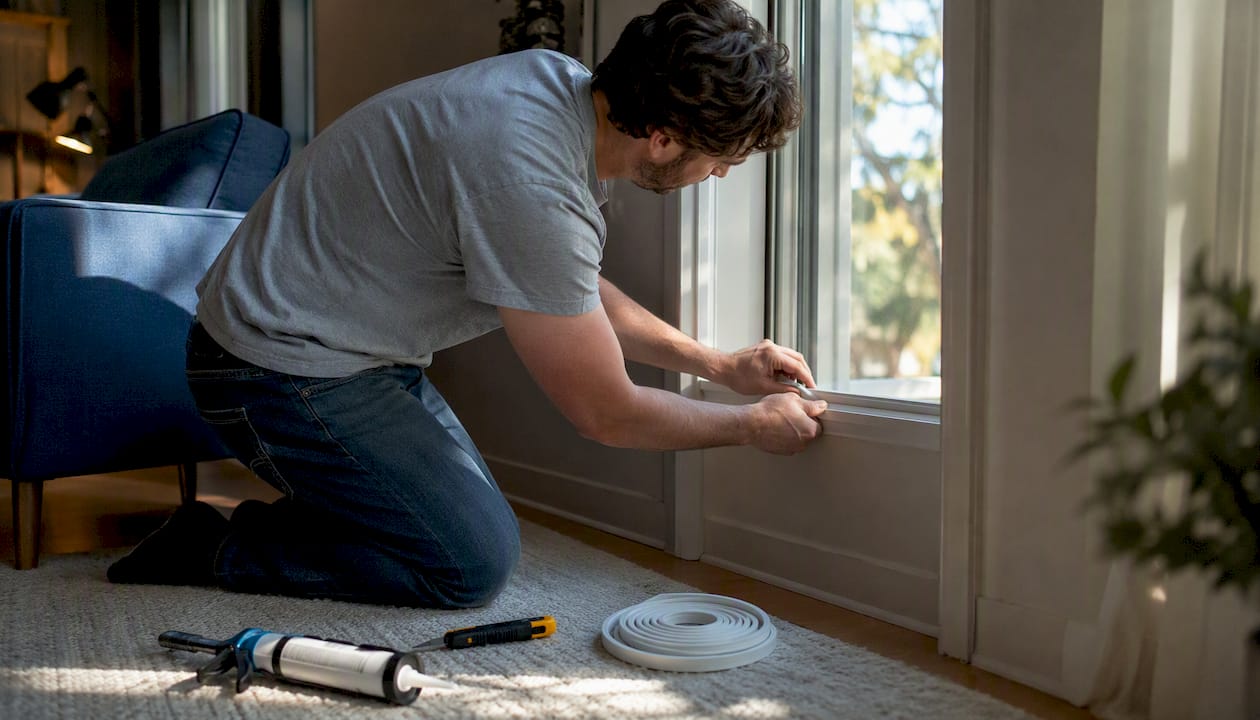
Prioritise doors, windows, and any active vents first. These are the leak points that let smoke in fastest, and they’re also the ones you can address with things you probably already have in a cupboard.
Before fire season starts, it’s worth keeping a small kit on hand:
- Plastic sheeting or heavy-duty painter’s plastic, for covering window gaps and inactive vents.
- Wide sealing tape or duct tape, stronger and more reliable than standard masking tape for temporary seals.
- Painter’s tape, useful where you want a clean removal later without damaging paint.
- A door sweep or a rolled towel, to close the gap under external doors.
- Temporary magnetic or tape-on vent covers, for bathroom and rangehood exhausts.
With that kit ready, the actual sealing takes less time than most people expect:
- Close every external door and window, then run your hand along the frame to feel for draughts.
- Fit a door sweep or press a rolled towel firmly against the gap under each external door.
- Tape plastic sheeting over any window that doesn’t seal well, focusing on the corners where frames have warped.
- Cover bathroom and kitchen exhaust vents with tape or a temporary cover, unless they’re actively venting a running appliance.
- If you have a fireplace, close the damper fully and, once the fire is completely out and cold, seal the flue opening with plastic and tape.
- For window-mounted air conditioning units, seal the gaps around the unit’s frame with tape, since these are notorious for letting smoke straight through.
None of this works if the surface underneath is dusty. Tape and plastic sheeting need a clean, dry frame to grip properly, and a lot of DIY seals fail within hours simply because nobody wiped the sill first. Give yourself thirty seconds with a cloth before you tape anything down.
As with the safe room setup, the same rule applies here: don’t seal any vent tied to a combustion appliance, and keep at least one door accessible and unlocked. According to Wildfire Partners, if you’re instructed to shut off your HVAC entirely during an active smoke event, do it at the breaker rather than just the thermostat, and close but don’t lock doors and windows so they stay accessible for emergency crews.
What permanent sealing upgrades actually reduce smoke long term?
Systematic air sealing, done properly across attic penetrations, windows, doors, and ductwork, is the single most effective long-term defence against smoke infiltration, and it happens to be the same work that cuts your heating and cooling bills. Clean Energy Connection’s guide to smoke-proofing homes frames air sealing primarily as an energy-efficiency strategy, one that also happens to build the exact infrastructure a home needs to keep wildfire smoke out. It’s a rare case where the fix for one problem solves another you were probably going to tackle eventually anyway.
Work through the house room by room rather than trying to do everything at once:
- Attic and roof: Seal rim joists, plumbing stack penetrations, and recessed light housings with acrylic or silicone caulk; use low-expansion spray foam for larger gaps around structural penetrations.
- Walls and plumbing penetrations: Caulk anywhere a pipe, cable, or vent passes through an exterior wall.
- Windows: Replace worn weatherstripping with adhesive foam or V-strip weatherstrip, and consider upgrading single-pane glazing to double-pane or laminated glass, which resists both heat and fine particle penetration far better than older glass.
- External doors: Fit new door sweeps and check that thresholds sit flush; a warped or undersized threshold is one of the most common and cheapest fixes available.
- Garage: Seal the door between the garage and the living area, since garages often have poor air sealing and can pull smoke and fumes into the house.
- Crawlspace or subfloor: Seal foundation vents with fine mesh where cross-ventilation is required by building code, and caulk any visible gaps in the subfloor framing.
- Fireplace and chimney: Fit a proper damper or chimney cap, and consider a flue seal if the fireplace sees little use.
For non-combustible sealing near heat sources, mineral wool is a safer choice than foam. Budget-wise, most of this work splits into three brackets: caulking and weatherstripping sit at the low end, typically a weekend project with materials costing well under a hundred dollars; door and threshold replacement sits in the middle; and full duct sealing or attic remediation sits at the higher end, usually requiring a professional. If money’s tight, prioritise attic sealing and door thresholds first, since these tend to be the leakiest points in most Australian homes.
Seals don’t last forever. Check weatherstripping and door sweeps every year or two, since foam and rubber compress and crack with age, and re-caulk any joint that’s visibly separated from the surface it was applied to.
Which HVAC settings and filters actually stop smoke?
Run your filtration continuously, switch to recirculate mode wherever your system allows it, and step up to the highest-rated filter your equipment supports, ideally MERV 13 or better, or run a dedicated HEPA purifier if your ducted system can’t take a higher-rated filter. Continuous operation matters more than most people assume: a purifier that cycles on and off every hour gives smoke time to build back up between cycles.
MERV and HEPA aren’t the same thing, and the difference matters for your equipment. MERV (Minimum Efficiency Reporting Value) rates filters designed to sit inside your ducted HVAC system, and MERV 13 catches a solid share of the fine particles found in wildfire smoke. HEPA (High Efficiency Particulate Air) filters are a stricter standard again, typically used in portable purifiers rather than ducted systems, because most residential furnaces and air handlers aren’t built to push air through HEPA-grade media without straining the fan motor. Before upgrading a ducted filter, check with a professional or your system’s documentation, since not every furnace handles MERV 13 without a drop in airflow.
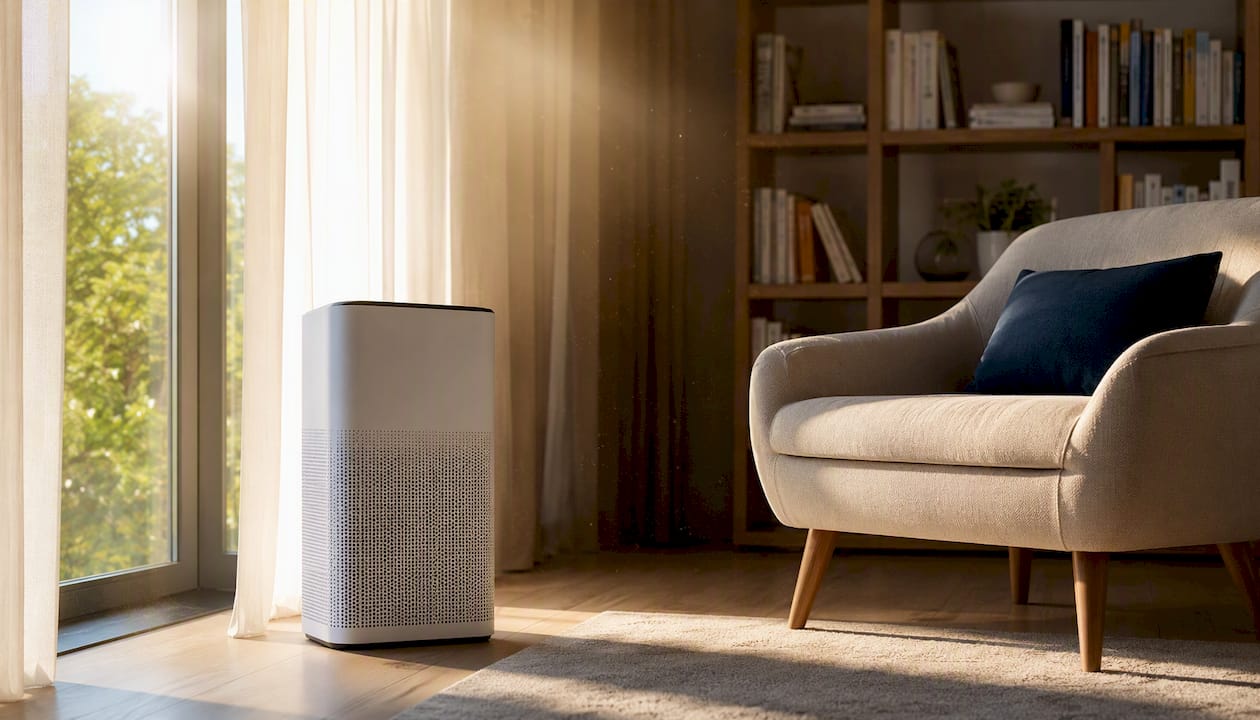
For portable HEPA purifiers, look at the unit’s CADR (Clean Air Delivery Rate) relative to your room size. A rough rule of thumb: match the purifier’s CADR to roughly two thirds of your room’s square footage for smoke-specific clearing, and place the unit away from walls and furniture so air can circulate freely around it. Models like the Levoit EverestAir are built with haze and smoke conditions specifically in mind, and reviewing how a Dyson purifier performs against bushfire smoke is a useful comparison point if you’re deciding between portable options.
Whole-home approaches, such as in-duct purifiers or a heat recovery ventilator (HRV) or energy recovery ventilator (ERV), filter incoming fresh air before it enters the house, which matters because a sealed house still needs some air exchange for humidity and CO2 control. An ERV or HRV lets you bring in filtered outside air without opening a window, a genuinely useful option if you live somewhere smoke season runs for weeks rather than days. One common mistake: leaving evaporative coolers running during a smoke event. They pull in large volumes of unfiltered outside air by design, which defeats every sealing effort you’ve made elsewhere in the house.
Pro Tip: Place your purifier close to where people actually sit or sleep, not in a corner of the room furthest from foot traffic. Clean air needs to reach your breathing zone quickly, and a purifier tucked behind a couch is doing a fraction of the job it could.
How do you set up a reliable safe room?
Pick the smallest practical room with the fewest windows and only one exterior wall, then treat its perimeter like the most important sealing job in the house. Bedrooms often work better than living rooms for this, since they’re smaller and usually have fewer external openings to manage.
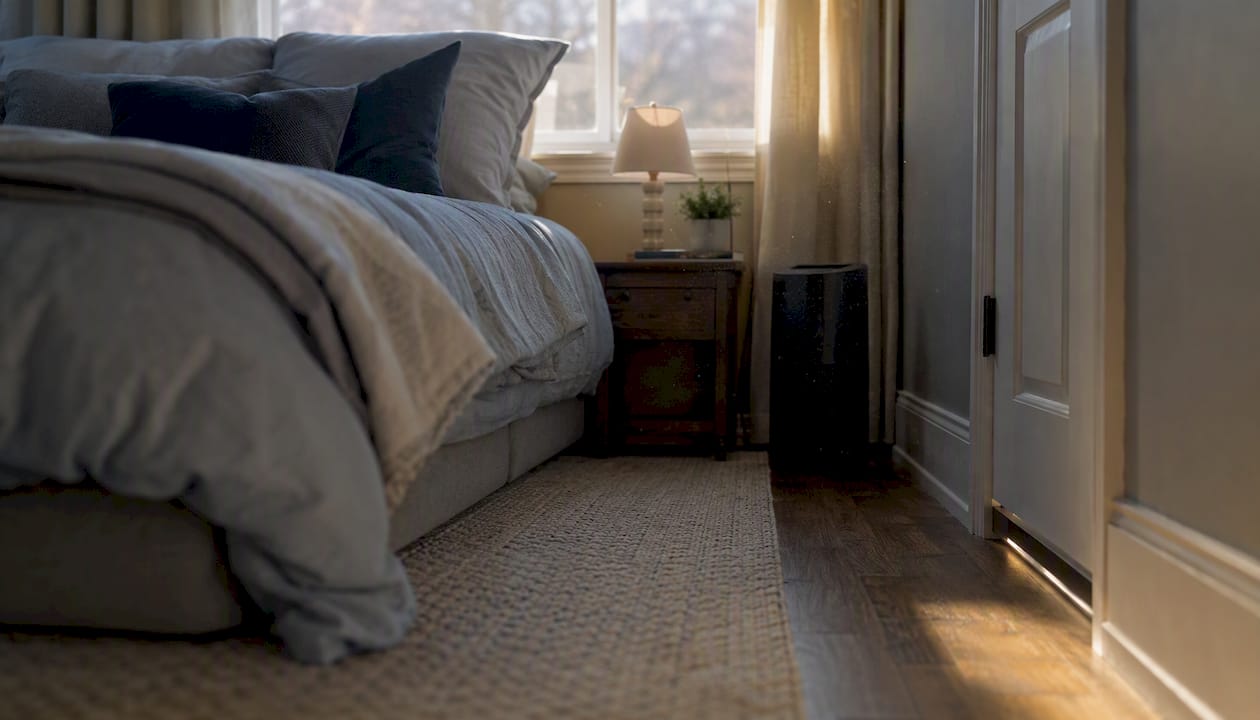
Setting it up properly means working through a short sequence: seal the door and window perimeter with tape or weatherstripping, cover any vents with temporary covers, and run a HEPA purifier sized correctly for the room’s square footage on its highest continuous setting. If your purifier and room setup allow for it, maintaining slight positive pressure inside the room, more clean air pushed in than leaks out, helps keep smoke from creeping in around the door each time someone enters or leaves. Stock the room with a few days of water, any regular medications, and P2 or N95 masks for anyone who needs to step outside briefly.
Keep a short monitoring checklist in the room itself:
- A portable AQI or PM2.5 monitor so you can see whether the room is actually holding clean air.
- Spare filters for the purifier, since a clogged filter during a multi-day smoke event is the last thing you want to discover at 2am.
- A battery-powered radio for updates if power or mobile networks drop out.
Move vulnerable household members, including young children, older adults, and anyone with asthma or a respiratory condition, into the safe room earliest, well before air quality outside becomes genuinely hazardous. Fire and rescue experts consistently recommend this concentrated approach over trying to seal an entire home to the same standard, simply because it’s achievable in hours rather than days and doesn’t require touching every window in the house. If you’re not sure which purifier size actually suits your room, Pure & Co’s Smart Finder tool is built for exactly that kind of quick sizing decision.
When should you call a professional instead of DIYing it?
Bring in a certified weatherisation or HVAC professional when you need blower-door testing, duct sealing, or complex penetrations sealed properly, particularly if DIY caulking hasn’t noticeably reduced smoke smell or haze indoors during past events.
A blower-door test is exactly what it sounds like: a contractor fits a calibrated fan into an exterior doorway, depressurises the house, and measures how much air is leaking in through every gap combined. It’s the single best way to know objectively how airtight your home actually is, rather than guessing based on which rooms feel draughtiest. Many contractors pair the test with a smoke pencil or infrared camera to pinpoint exactly where the leaks are, a technique the ACT Government’s bushfire smoke and air quality strategy also recommends for homeowners doing their own inspections with a smoke pencil or incense stick.
Scope and cost vary a lot depending on your home’s age and construction, but a few patterns hold generally: a blower-door test alone is usually a half-day job; targeted duct sealing sits in the low-to-mid range depending on ductwork length and access; and a full retrofit covering attic, ducts, and multiple window and door upgrades is a bigger, multi-day undertaking that costs considerably more. Age and construction type push costs around more than almost anything else, since older timber homes with harder-to-access subfloors and roof cavities take longer to seal properly than a newer build. If you’re weighing up whether to inspect your own ductwork first, CleanVents’ guide to duct inspection is a solid starting point before calling anyone out.
Before you commit to a contractor, run through a short vetting checklist:
- Ask whether they offer blower-door testing as standard or as an add-on.
- Check for relevant certifications and ask for at least two references from similar-aged homes.
- Get a written scope of work, not a verbal estimate, before any work starts.
- Ask whether sealing work comes with a warranty, and for how long.
Choose targeted upgrades, duct sealing or an HRV/ERV install, when your home is broadly in good shape but one system is clearly underperforming. Go for a whole-house retrofit when a blower-door test shows leakage well above what’s typical for your home’s age, or when you’re already planning other renovation work and can bundle the sealing in.
When does air quality mean it’s time to leave?
Start sealing actions when the Air Quality Index (AQI) hits around 100, aim to have full sealing and your safe room running by AQI 150, and treat AQI 200 or higher as the point to shelter fully in your sealed room or consider evacuating, especially if anyone in the household is showing symptoms.
| AQI / PM2.5 level | Category | Recommended response |
|---|---|---|
| Around 100 | Unhealthy for sensitive groups | Begin sealing doors, windows, and vents; check purifier is ready |
| Around 150 | Unhealthy | Complete sealing, move to safe room, run HEPA purifier continuously |
| Around 200+ | Very unhealthy to hazardous | Shelter fully in sealed safe room; consider evacuation if symptoms worsen |
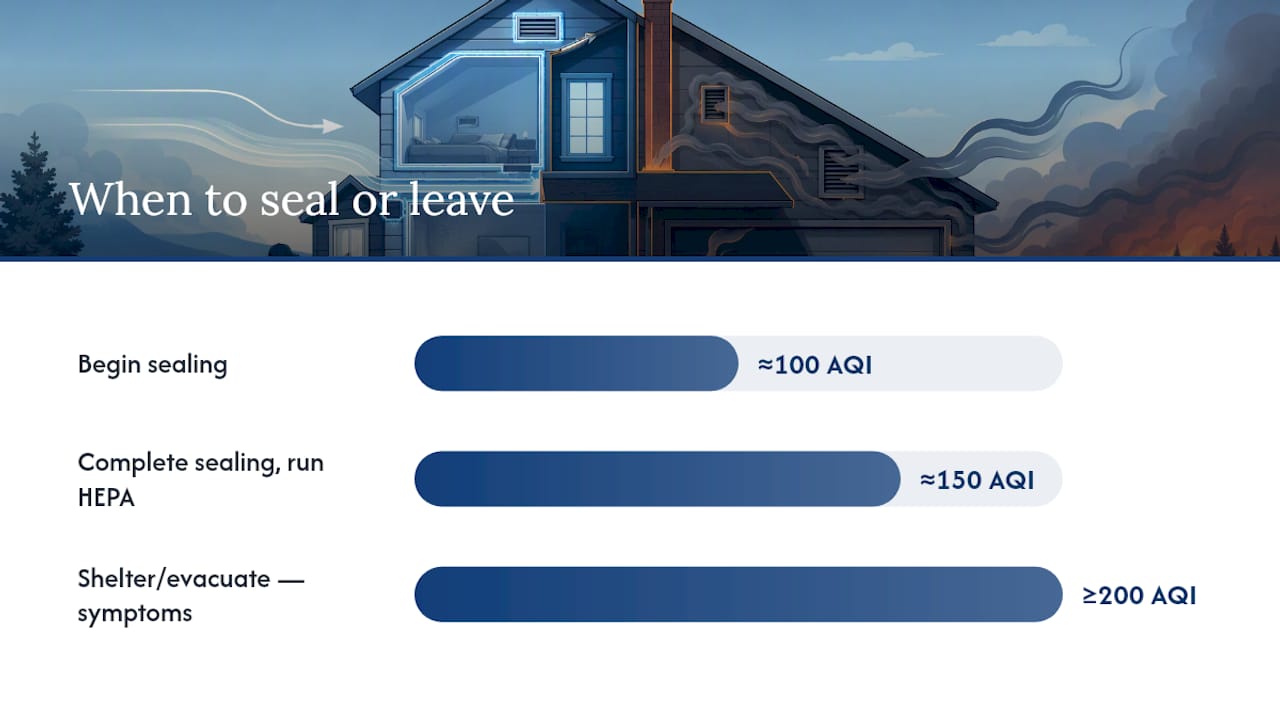
These thresholds come from MyFloodTape’s wildfire smoke protection guide, and they’re a useful practical trigger system rather than a hard science, since individual sensitivity varies a lot between household members.
A cheap consumer-grade PM2.5 sensor placed in your main living area, with a second one inside your safe room, gives you a clear before-and-after comparison. If your safe room’s PM2.5 reading isn’t noticeably lower than the rest of the house within thirty minutes of sealing and running the purifier, something in that room still needs attention, likely a gap you haven’t found yet.
Watch for symptoms that mean it’s time to act regardless of what the monitor says: shortness of breath, chest pain, a cough that won’t settle, or dizziness. These warrant medical attention or evacuation immediately, no matter how sealed the house feels. Always prioritise children, older adults, pregnant people, and anyone with asthma, COPD, or heart conditions when deciding who moves into the safe room first or who should leave the area altogether.
Once outdoor AQI has sat at moderate levels for several hours, and you can confirm it with your own monitor rather than a general area forecast, it’s safe to start opening windows again and letting the house air out properly. Ventilating too early, based on how the sky looks rather than what your sensor reads, is one of the most common mistakes homeowners make once a fire event seems to be easing. Pure & Co’s guide to ventilating a home without letting outdoor pollution back in covers the safest way to do this transition.
Why a sealed room plus a good purifier beats a perfect house
Every homeowner I’ve spoken with about bushfire smoke eventually asks the same question: should I just seal the whole house? It’s the wrong goal, and chasing it usually means the one room that matters most, wherever your family actually sleeps, never gets sealed properly because the effort’s spread too thin across twenty other rooms.
What I’ve found more consistently effective is picking one room and doing it properly rather than doing the whole house at sixty percent. A small, well-sealed room with a correctly sized HEPA purifier running continuously will out-perform a large, loosely-sealed house every single time, because the physics favours small volumes and continuous filtration over sprawling square footage and intermittent effort. This isn’t a shortcut. It’s the same logic FireRescue and other emergency guidance bodies land on when they recommend a safe room over whole-house sealing as the primary defence.
Where Pure Air’s approach earns its place in this conversation is in the detail most guides skip: matching purifier capacity to room size properly, rather than buying whatever’s on special and hoping it’s big enough. That’s the kind of proof point that matters more during a three-day smoke event than any marketing claim.
A ready path to cleaner air during smoke season
Sealing your home buys you time and reduces exposure, but the room you retreat to is only as good as the purifier running in it. Medical-grade HEPA filtration matters here because bushfire smoke particles are small enough to slip past cheaper filter media, and a unit that isn’t sized correctly for your safe room will struggle to keep pace once the door starts opening and closing during a multi-day event.
Pure Air’s Smart Finder tool matches a purifier to your room size and specific concern, whether that’s bushfire smoke, allergies, or general air quality, so you’re not guessing at CADR numbers on a product page. Every unit in the Pure Air catalogue is AHAM verified, meaning its performance claims have been independently tested rather than self-reported. If you already own a purifier, check your filter replacement schedule now, before smoke season arrives, rather than discovering a clogged filter mid-event. Browse the full range of purifiers, humidifiers, and replacement filters and find the right size for your safe room today.
Sources
- Bushfire smoke indoors: sealing, filtering and safe rooms | FireRescue
- How to smoke‑proof your house for wildfire season | Clean Energy Connection
- Bushfire smoke and air quality strategy 2021–2025 | ACT Government
- How to seal home from wildfire smoke: expert protection guide | MyFloodTape
- Wildfire smoke and your home: what to do before and after a fire | Wildfire Partners
- Smoke from prescribed burning | Department of Biodiversity, Conservation and Attractions (WA)
These cover the official thresholds, safety rules, and testing standards referenced throughout this guide, and they’re worth bookmarking before smoke season arrives rather than searching for them mid-event.
This article is general information, not a substitute for advice from a qualified doctor. Consult a qualified healthcare professional about your own circumstances before acting on anything here.