Do those three things and you’ve already cut the biggest triggers. Everything else in this guide builds on that foundation.
Here’s a quick checklist you can work through before your child goes to sleep:
- No smoke, ever. Second-hand smoke is one of the most potent asthma triggers. No smoking in the bedroom, the house, or the car.
- Encase the bed. Fit a fully sealed, zippered dust-mite-proof encasement over the mattress and each pillow tonight. If you don’t have encasements yet, hot-wash the pillowcases and run the duvet through a hot dryer cycle.
- Check humidity. Grab a hygrometer (under $20 at most hardware stores). If the reading is above 50%, run a dehumidifier or reverse-cycle air conditioner. Below 30%, consider a humidifier. The 30–50% target discourages both dust mites and mould.
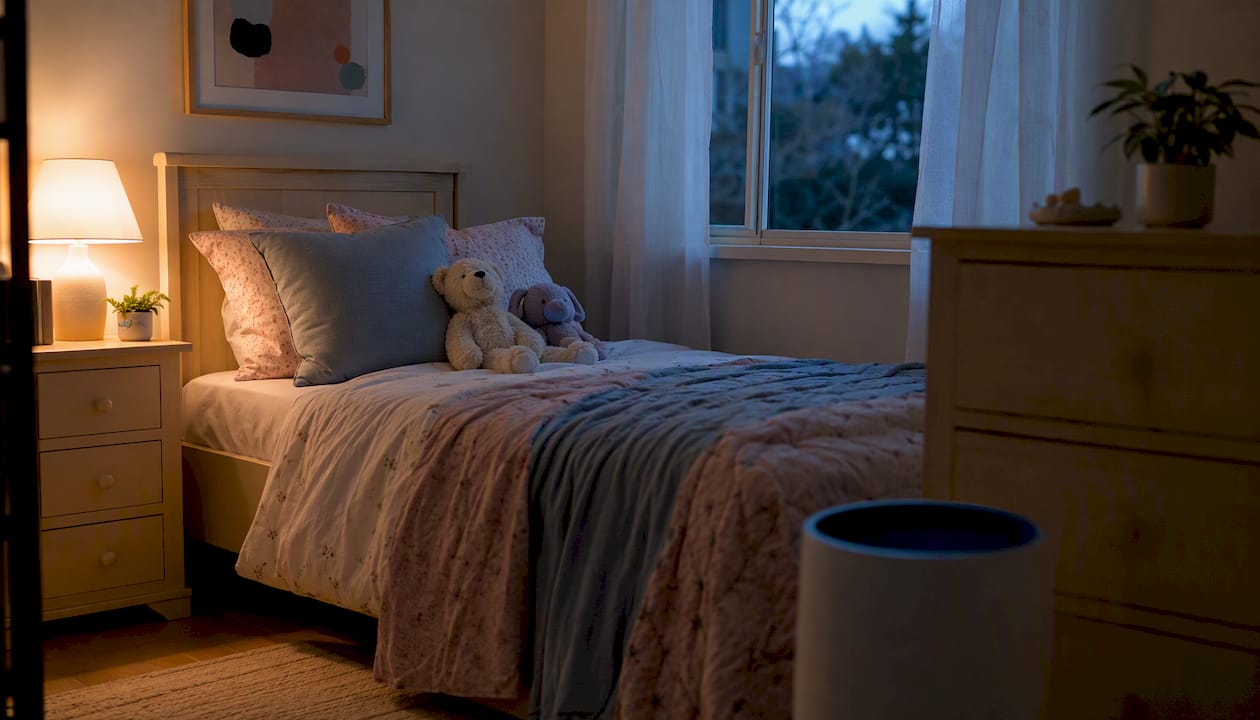
- Clear the clutter. Remove soft toys from the bed, put books and knick-knacks in closed bins or cupboards, and damp-wipe any dusty surfaces.
- Run a HEPA air purifier. Place a True HEPA unit near the bed and run it overnight. Position matters: breathing-zone proximity gives the fastest measurable reduction in airborne particles.
Follow the child bedroom air quality checklist from Pureair-au for a downloadable version of this routine.
Key takeaways
Making a child’s bedroom asthma-friendly requires four things working together: a smoke-free, low-humidity environment, a protected and regularly washed bed, reduced dust reservoirs in flooring and furnishings, and clean filtered air overnight.
| Point | Details |
|---|---|
| Protect the bed first | Fit zippered dust-mite-proof encasements on the mattress and pillows; wash bedding weekly at 55°C or above. |
| Keep humidity at 30–50% | Use a hygrometer to measure; run reverse-cycle AC or a dehumidifier when readings exceed 50%. |
| Smoke-free is non-negotiable | No smoking in the bedroom, house, or car; second-hand smoke is a primary asthma trigger. |
| Run a True HEPA purifier overnight | Place a CADR-matched unit near the bed; replace filters per schedule to maintain performance. |
| Pureair-au for Australian families | AHAM-verified HEPA purifiers, dehumidifiers, and humidifiers selected for local climates, with a Smart Finder tool to match the right unit to your child’s bedroom. |
Table of Contents
- Why does the bedroom matter most for kids with asthma?
- How do you improve air quality, ventilation, and humidity in a child’s bedroom?
- How do you reduce dust-mite exposure in your child’s bed?
- How do flooring, furniture, and toys affect bedroom allergens?
- How do you prevent and manage mould in a child’s bedroom?
- Which chemical and scent triggers should you remove from the bedroom?
- A simple cleaning schedule and realistic cost guide
- When should you seek medical help for your child’s asthma?
- How do you choose a HEPA air purifier for a child’s bedroom?
- Pure Air’s Australian HEPA range: a product note
- Should pets be allowed in a child’s asthmatic bedroom?
- Where can you buy asthma-friendly bedroom products in Australia?
- What actually moves the needle in an asthmatic child’s bedroom
- Pureair-au: find the right bedroom air quality solution for your family
- Sources
Why does the bedroom matter most for kids with asthma?
Children typically spend many hours in their bedroom each night. That’s a long, uninterrupted stretch of breathing in whatever the room contains: dust mite droppings, pet dander, mould spores, and fine particles from outdoor pollution that drifts in through gaps and windows. No other room in the house comes close to that exposure time.
The mattress and pillow are the worst offenders. Dust mites thrive in the warm, humid microclimate of a bed, and their droppings concentrate right where a child’s face rests. A single mattress can harbour millions of mites if it’s unprotected. That’s not a reason to panic; it’s a reason to prioritise the bed above everything else in this asthma-friendly bedroom kids guide.
Small, targeted changes here tend to produce faster symptom improvements than whole-house interventions. Parents often notice fewer night-time coughs within a few weeks of encasing the bed and washing bedding consistently, well before they’ve tackled flooring or curtains.
How do you improve air quality, ventilation, and humidity in a child’s bedroom?
Hitting the 30–50% humidity target
Humidity is the single most controllable variable in bedroom air quality for kids. Keeping indoor relative humidity at 30–50% discourages dust mites and mould without drying airways out. A basic digital hygrometer gives you a real reading rather than a guess; place it at bed height, not near a window or air vent where readings skew.
Reverse-cycle air conditioning is the most practical tool for most Australian homes. It dehumidifies while cooling, which is useful during humid summer nights in coastal cities. If you’re in a humid climate and using evaporative cooling, check the hygrometer reading after an hour of use.
Humidity control is a balancing act. Too low irritates airways; too high feeds dust mites and mould. A hygrometer removes the guesswork entirely.
Pro Tip: Set a weekly reminder to check the hygrometer reading. Seasonal changes in Australia, particularly the shift from dry winter to humid summer in coastal areas, can push bedroom humidity out of range quickly.
Ventilation and outdoor pollution
Fresh air matters, but timing matters more. On high-pollen days (check the AirRater app or Bureau of Meteorology pollen forecasts), keep windows closed in the morning when pollen counts peak. During bushfire smoke events, keep windows and doors shut and rely on filtered mechanical ventilation or a HEPA purifier running on recirculation mode.
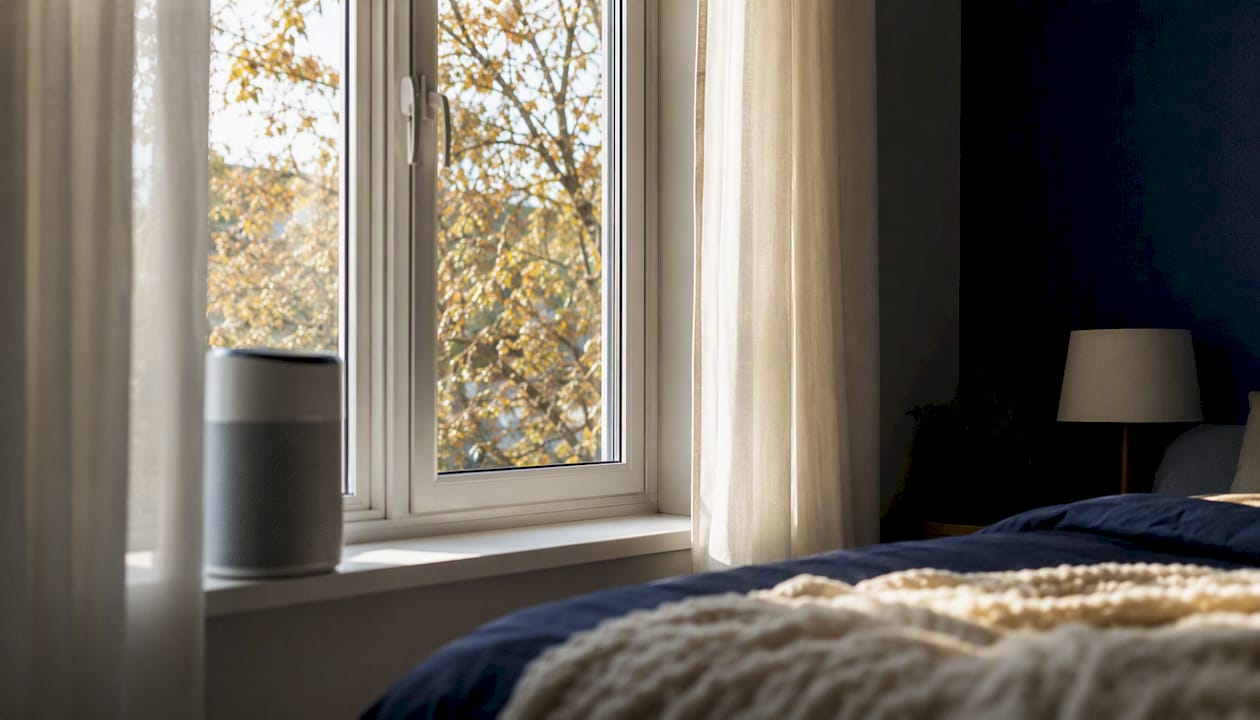
When outdoor air is clean, brief cross-ventilation before bed clears cooking fumes and volatile compounds that build up during the day. Shower before bed to rinse pollen from hair and skin before it transfers to pillows.
Heating choices
Prefer electric heating or reverse-cycle systems. Un-flued gas heaters and open wood fires produce combustion gases including nitrogen dioxide, which irritate airways and worsen asthma symptoms. If you’re renting and can’t change the heating system, a heating system upgrade guide covers what’s feasible for tenants and landlords. Keep all heating and cooling filters clean; a clogged filter recirculates the particles it’s supposed to capture.
How do you reduce dust-mite exposure in your child’s bed?
Bedding is where the biggest allergen load sits, and it’s also the easiest place to make rapid improvements.
What to do:
- Fit zippered, fully sealed encasements on the mattress, each pillow, and the box spring if there is one. A top-cover that tucks under isn’t the same thing; gaps let mites through.
- Wash sheets, pillowcases, and removable duvet covers weekly in the hottest water the fabric tolerates. Clinical guidance commonly cites 55°C or above as the threshold to kill dust mites reliably. Most Australian washing machines have a “hot” or “sanitise” cycle that reaches this temperature; check your machine’s manual.
- Skip feather and down fillings. They’re harder to wash at high temperatures and can harbour allergens. Choose washable synthetic fillings instead.
- Replace pillows every 3–5 years, or per the manufacturer’s recommendation. Even with encasements, pillows degrade and become harder to clean effectively over time.
The “hypoallergenic” label warning: products marketed as hypoallergenic aren’t regulated to a specific standard in Australia. A pillow labelled hypoallergenic may still harbour mites if it’s not encased and washed regularly. The encasement and the wash routine are what actually reduce exposure, not the marketing claim.
Tonight, if you don’t have encasements yet: hot-wash the pillowcases, run the duvet through a hot dryer cycle for 30 minutes, and order encasements for delivery. That’s a meaningful short-term reduction while you wait.
How do flooring, furniture, and toys affect bedroom allergens?
Hard floors — timber, vinyl, or tiles — are far easier to keep low-allergen than wall-to-wall carpet. Carpet traps dust, mite droppings, and pet dander deep in its fibres where a standard vacuum can’t reach. If removing carpet isn’t possible right now, vacuum at least weekly with a HEPA-filtered vacuum and use a washable rug over the top that you can launder regularly.
Practical steps for the rest of the room:
- Store toys in closed bins or cupboards, not open shelves. Open shelving is a dust magnet.
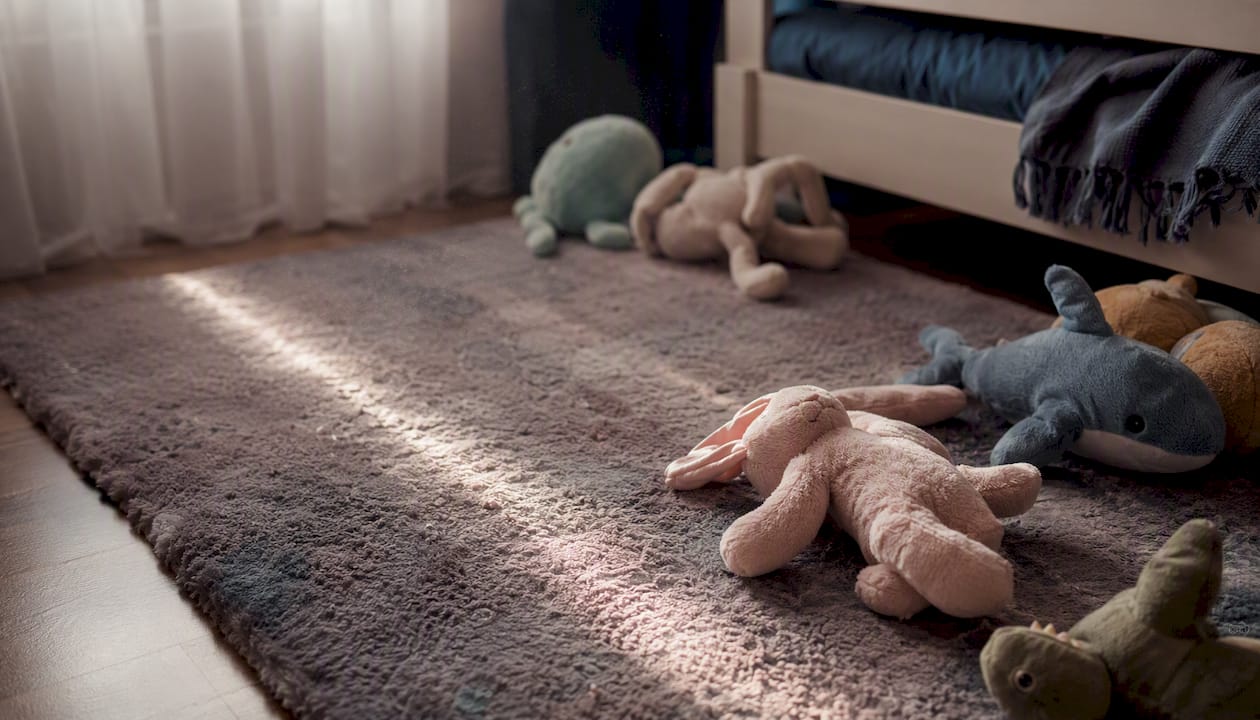
- Limit stuffed toys on the bed to one or two favourites. Wash them weekly at hot settings when the label allows. For toys that can’t be washed, seal them in a plastic bag and freeze for 24 hours; this kills mites, though it doesn’t remove the allergen load, so a cold rinse afterwards helps.
- Choose furniture with smooth, easy-to-wipe surfaces: timber, metal, or sealed plastic. Upholstered chairs and fabric ottomans in a child’s sleeping area collect allergens quickly.
- Slide furniture out monthly to clean underneath. Dust accumulates under beds and behind wardrobes faster than most parents expect.
- Wipe down skirting boards and fan blades monthly. Damp-dust rather than dry-dust; a dry cloth lifts particles into the air where they’re inhaled before settling again.
How do you prevent and manage mould in a child’s bedroom?
Mould needs moisture. Fix the moisture source and you fix the mould problem. Window condensation, bathroom steam migrating down a hallway, and roof leaks are the three most common culprits in Australian homes.
Keeping indoor humidity consistently below 50% is the most effective long-term mould prevention strategy — more reliable than any cleaning product.
Small mould patches on non-porous surfaces (tiles, painted walls, glass) can be scrubbed with detergent and water, then dried thoroughly. Don’t use bleach sprays in a child’s bedroom; the fumes are an airway irritant. Porous materials with persistent mould — ceiling tiles, carpet, particleboard — should be replaced rather than cleaned, because mould roots into the material and resurfaces.
Pro Tip: After cleaning a small mould patch, run a dehumidifier or reverse-cycle AC for several hours to dry the area completely. Mould returns fastest to surfaces that stay damp after cleaning.
When to call a professional: visible mould covering more than a 30cm × 30cm area, mould inside walls or ceilings, or recurrent mould despite fixing apparent moisture sources. Professional remediation protects health and prevents structural damage. For guidance on reducing mould spores in a child’s bedroom, Pureair-au’s resource covers dehumidifier selection and cleaning steps suited to Australian climates.
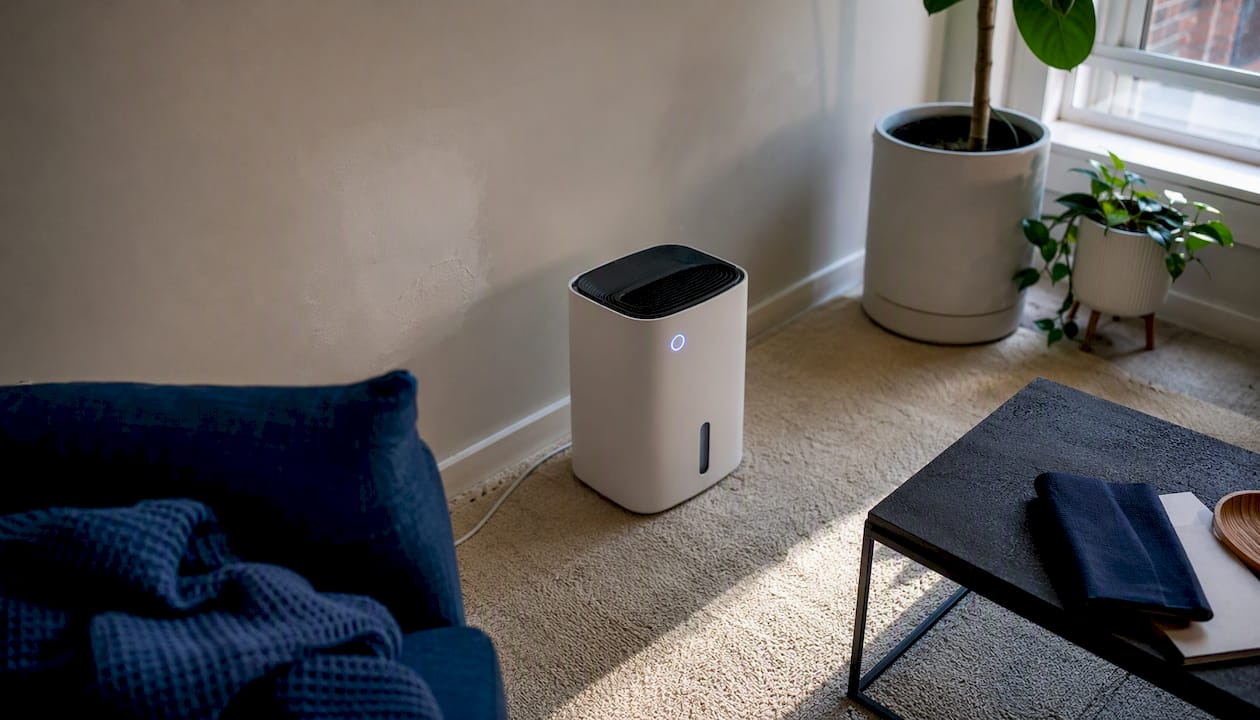
Dehumidifiers and reverse-cycle air conditioners both reduce indoor humidity, but they need maintenance. Evaporative systems can raise humidity and encourage mould if not managed carefully. Clean dehumidifier water tanks and filters per the manufacturer’s schedule; a neglected tank grows mould and defeats the purpose.
Which chemical and scent triggers should you remove from the bedroom?
Airways inflamed by asthma react to irritants that most people barely notice. The bedroom should be the lowest-irritant room in the house.
Remove or avoid:
- Air fresheners, scented candles, and incense. These release volatile organic compounds (VOCs) that directly irritate bronchial tissue.
- Essential oil diffusers. Even “natural” oils produce fine aerosol particles that can trigger symptoms.
- Aerosol sprays: deodorant, hairspray, insect repellent. Use these in a bathroom with the door closed, not in the bedroom.
- Strongly fragranced laundry products. Switch to unscented, dye-free detergent and fabric softener for all bedding and pyjamas.
- Un-flued gas heaters and wood fires. Combustion sources produce irritant gases that worsen asthma, particularly in enclosed spaces overnight.
If you need to clean the bedroom, use unscented products and ventilate the room for at least 30 minutes before the child returns. The same applies to any painting or renovation work; plan these during school hours and air the room thoroughly.
A simple cleaning schedule and realistic cost guide
Small, repeatable routines stop allergen build-up rather than trying to eliminate it all at once. Consistent weekly hot washes and nightly tidying produce steady benefit over time.
| Frequency | Key actions | Who typically does it |
|---|---|---|
| Nightly | Tidy floors, remove food, move pets out of the bedroom, run HEPA purifier on low | Parent or older child |
| Weekly | Wash bedding at 55°C+, HEPA vacuum floors and under bed, damp-dust surfaces, wash or rotate stuffed toys | Parent |
| Monthly | Clean curtains or blinds, check and spot-clean mattress encasements, wipe fan blades and vents, check hygrometer readings | Parent |
Typical AU$ cost ranges for common interventions:
- Dust-mite-proof encasements (mattress + 2 pillows): roughly $60–$150 depending on size and brand
- Entry-to-mid-range bedroom HEPA air purifier: roughly $150–$400; CADR rating and room size coverage vary significantly at this price range
- HEPA-filtered vacuum cleaner: roughly $200–$600; filter replacement typically $30–$80 per year
- Digital hygrometer: roughly $15–$30
- Dehumidifier suited to a small bedroom: roughly $180–$350
Quality varies considerably within each range. For air purifiers, check the CADR (Clean Air Delivery Rate) against your bedroom’s floor area rather than relying on marketing descriptions alone.
When should you seek medical help for your child’s asthma?
Bedroom changes reduce triggers; they don’t replace medical care. Every child with asthma should have a written Asthma Action Plan from their GP or paediatrician, and parents should know exactly which step to follow at each symptom level.
Red flags requiring urgent care:
- Increased night-time coughing that wakes the child repeatedly
- Waking with wheeze or breathlessness
- Faster-than-normal breathing at rest
- Bluish tinge to lips or fingernails
- Rapid deterioration despite reliever medication
Follow the child’s Asthma Action Plan for these situations. If you don’t have one, ask the GP at the next appointment. The CDC home assessment checklist is a useful tool to bring to that appointment; it organises home trigger information into modules a clinician can work through with you.
Routine follow-up: if symptoms persist despite consistent bedroom changes over 4–6 weeks, speak with the GP or an asthma nurse. Consider allergy testing if specific triggers remain unclear. Persistent symptoms despite home measures are a signal to investigate further rather than add more cleaning steps. Keep a simple diary of symptom patterns alongside the changes you’ve made; this gives the clinician something concrete to work with.
When indoor remediation (mould removal, major repairs) is underway, get professional advice before assuming the work has resolved the exposure. Construction dust and disturbed mould spores can temporarily worsen symptoms even when the long-term outcome is positive.
How do you choose a HEPA air purifier for a child’s bedroom?
-
Confirm True HEPA filtration. True HEPA filters capture 99.97% of airborne particles at 0.3 microns, which covers dust mite allergens, pollen, pet dander, mould spores, and fine smoke particles. “HEPA-type” or “HEPA-style” filters don’t meet this standard. Look for AHAM verification or equivalent independent performance testing; HEPA filtration reduces airborne particle levels when the unit is correctly sized and maintained.
-
Match the CADR to the room. CADR (Clean Air Delivery Rate) tells you how quickly a unit cleans a given volume of air. Check the manufacturer’s room size recommendation against your child’s bedroom floor area. A unit rated for 15m² won’t perform well in a 25m² room.
-
Place it near the bed. Positioning the purifier close to the breathing zone gives the fastest measurable reduction in airborne particles while broader home changes are planned. Keep the inlet and outlet unobstructed.
-
Check noise levels. Children are light sleepers. Look for a unit with a dedicated sleep or low-noise mode, ideally rated below 35 decibels on its lowest setting. Some units include a sleep timer.
-
Factor in filter replacement costs. The purchase price is only part of the cost. HEPA filters typically need replacing every 6–12 months depending on usage and air quality. Replacement filters for bedroom units range from roughly $52–$82 for compatible Philips NanoProtect filters available through Pureair-au.
-
Consider 2-in-1 purify and humidify units carefully. These can be useful in dry climates, but only if the humidifier output is easy to control and the device is cleaned per the manufacturer’s schedule. A neglected humidifier tank grows bacteria and mould, which then get dispersed into the air the purifier is supposed to be cleaning.
-
Child-safe design. Look for units with no exposed heating elements, stable bases that won’t tip easily, and cord management that keeps cables out of reach.
For medical-grade air filtration benefits for families, Pureair-au’s resource explains AHAM verification and what it means in practice for Australian households.
Pure Air’s Australian HEPA range: a product note
A HEPA air purifier addresses what’s already airborne. Encasements, hot washing, and humidity control address the source. Used together, they cover both sides of the problem.
Should pets be allowed in a child’s asthmatic bedroom?
The short answer: ideally, no. Pet dander (tiny flakes of skin, saliva proteins, and urine residue) is one of the most potent and persistent indoor allergens. It’s lightweight, stays airborne for hours, and settles into every soft surface in the room.
If keeping pets out of the bedroom entirely is feasible, that’s the most effective step. Keep the bedroom door closed at all times, not just at night. Dander circulates through the house and will still enter the room on clothing and through gaps, but a closed door significantly reduces the load.
If the pet currently sleeps in the child’s room and the family isn’t ready to change that, these steps reduce (but don’t eliminate) exposure:
- Wash the pet weekly to reduce dander shedding.
- Wash the child’s bedding more frequently, at least twice a week.
- Run the HEPA purifier continuously, not just overnight.
- Keep the pet off the bed itself, even if it stays in the room.
For renters navigating pet restrictions, the pet policy guidance from EchoPM covers what landlords can and can’t require around pet access to specific rooms. If allergy testing confirms the child is sensitised to a specific animal, the GP will likely recommend complete removal from the bedroom as a non-negotiable step.
Where can you buy asthma-friendly bedroom products in Australia?
Most of what you need is available through major Australian retailers and specialist online stores. Here’s a practical list:
Dust-mite-proof encasements: Available from Woolworths, Big W, Myer, and specialist allergy retailers online. Look for zippered encasements with a pore size of 6 microns or smaller. Avoid “anti-allergy” covers that use only a tight weave without a membrane; they’re less effective.
HEPA air purifiers: Pureair-au stocks AHAM-verified bedroom units including the Honeywell Air Touch P1 (from $246) and the Honeywell Air Touch P2 (from $295), both suited to bedroom use. For humid climates, the Blueair 2-in-1 Purify + Humidify DH3i ($492) combines filtration with humidity management.
Dehumidifiers: The Xiaomi Smart Dehumidifier Lite ($180) is a compact option for smaller bedrooms. Larger units are available through Pureair-au’s full catalogue.
HEPA vacuum cleaners: Miele, Dyson, and Bosch all produce HEPA-filtered models available through Harvey Norman, JB Hi-Fi, and online. Confirm the filter is sealed HEPA, not just HEPA-grade.
Hygrometers: Available from Bunnings, Jaycar, and online marketplaces for under $30.
Washable synthetic bedding: Target, Kmart, and Bed Bath N’ Table carry washable synthetic duvets and pillows. Check the care label confirms machine washing at 60°C or above.
What actually moves the needle in an asthmatic child’s bedroom
Most parents I speak with start by buying an air purifier and stop there. That’s understandable: it’s the most visible, tangible step. But the purifier addresses what’s already airborne. The mattress encasement addresses the source. The hot wash kills what’s already in the bedding. Humidity control stops new mites and mould from establishing. These four steps work as a system, and skipping any one of them leaves a significant gap.
The other thing worth saying plainly: perfection isn’t the goal. The weekly hot wash matters more than the premium encasement brand. The nightly purifier run matters more than the most expensive unit on the market.
Parents often feel guilty when their child has a bad night despite their efforts. Asthma has multiple triggers, and the bedroom is one piece of a larger picture that includes outdoor air quality, school environments, exercise, and medication adherence. What you control at home matters; it’s just not the whole story.
Pureair-au: find the right bedroom air quality solution for your family
For Australian families managing childhood asthma, getting the right unit for the right room makes a real difference. Pureair-au’s range is selected specifically for Australian conditions, from coastal humidity to inland bushfire smoke seasons.
The Smart Finder tool on the Pureair-au website takes your specific concern (allergies, mould, smoke, pet dander) and your room size, then recommends the unit that fits. All products are AHAM-verified, so the performance claims are independently tested, not just marketing copy. Replacement filters, dehumidifiers, and humidifiers are stocked alongside purifiers so you can manage the full picture from one place.
Browse the full Pureair-au catalogue to find a bedroom HEPA purifier, dehumidifier, or humidity solution suited to your child’s room and your local climate.
Sources
- Asthma‑friendly home (Better Health Channel, Victoria)
- Allergy‑proof your home – Mayo Clinic
- Strategies for addressing asthma in homes – CDC home assessment checklist (2024)
- Controlling your home environment to prevent asthma flares – Children’s Hospital of Philadelphia (CHOP)
This article is general information, not a substitute for advice from a qualified doctor. Consult a qualified healthcare professional about your own circumstances before acting on anything here.