If you’re weighing up airora.com.au alternatives, the three options worth your time are Pure Air, the Winix Zero+ Pro, and the Airthings Wave Plus. Each takes a different approach to indoor air quality, and the right one depends on whether you need to actively clean the air, measure it, or both. Airora’s hydroxyl technology is interesting, but for Australian families dealing with bushfire smoke, pollen, and sealed modern homes, proven HEPA and carbon filtration backed by independent certification is the more reliable foundation.
| Product | Best for | Coverage area | Filter technology | Additional features | AHAM verified | Price range |
|---|---|---|---|---|---|---|
| Pure Air | Australian allergens and bushfire smoke | Up to 65m² | HEPA + carbon | Smart Finder tool, local support | Yes | $$$ |
| Winix Zero+ Pro | Large open-plan homes | Up to 99m² | HEPA + carbon | PlasmaWave, auto mode | Yes | $$$ |
| Airthings Wave Plus | CO2 and radon monitoring | Room-level sensor | N/A (monitor only) | CO2, radon, VOC, humidity | N/A | $$ |
| Breville Protect Max | Mid-size rooms, VOC-heavy environments | Up to 65m² | HEPA + carbon filtration | — | Yes | $$$ |
Table of Contents
- How do these airora.com.au alternatives compare for Australian homes?
- How should Australian families choose a medical-grade air purifier?
- Why Pure Air stands out for Australian families
- Key takeaways
How do these airora.com.au alternatives compare for Australian homes?
The most important distinction here is between devices that clean air and devices that measure it. Airora uses hydroxyl technology, which remains less independently validated for home use than HEPA filtration. Families researching similar sites to airora.com.au will find that HEPA and carbon filter systems carry far stronger certification trails.
Pure Air: filtration built for local conditions
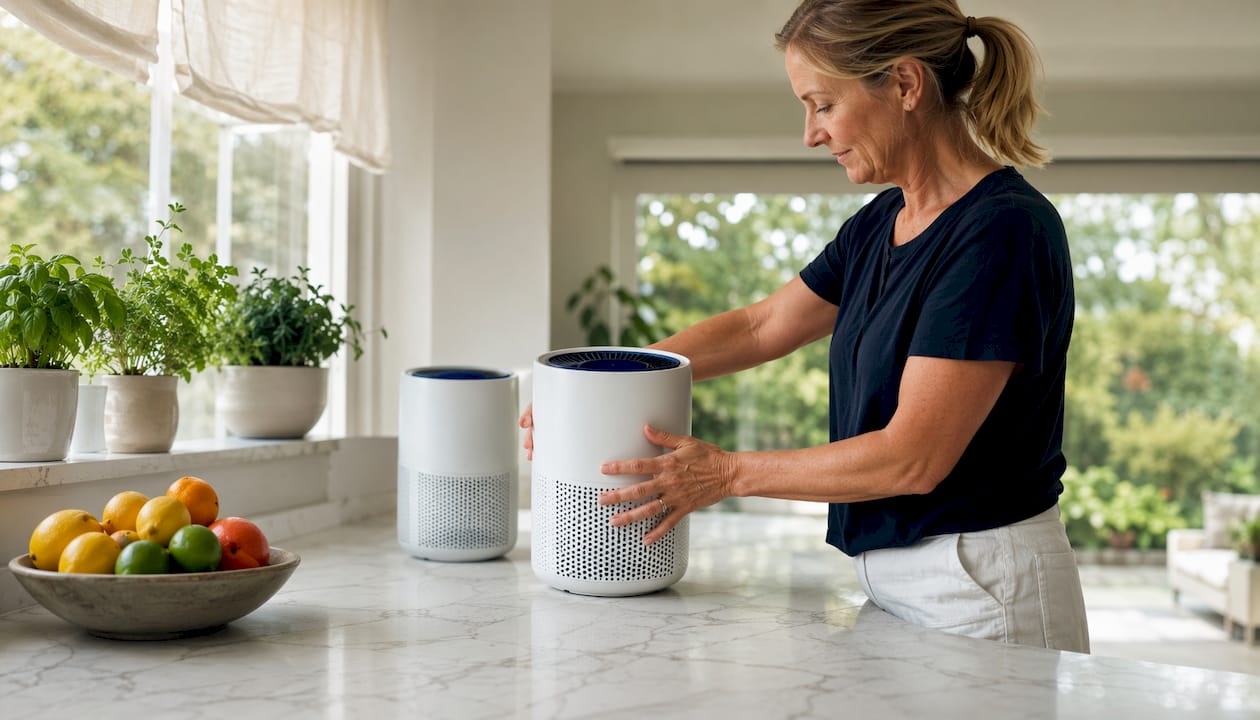
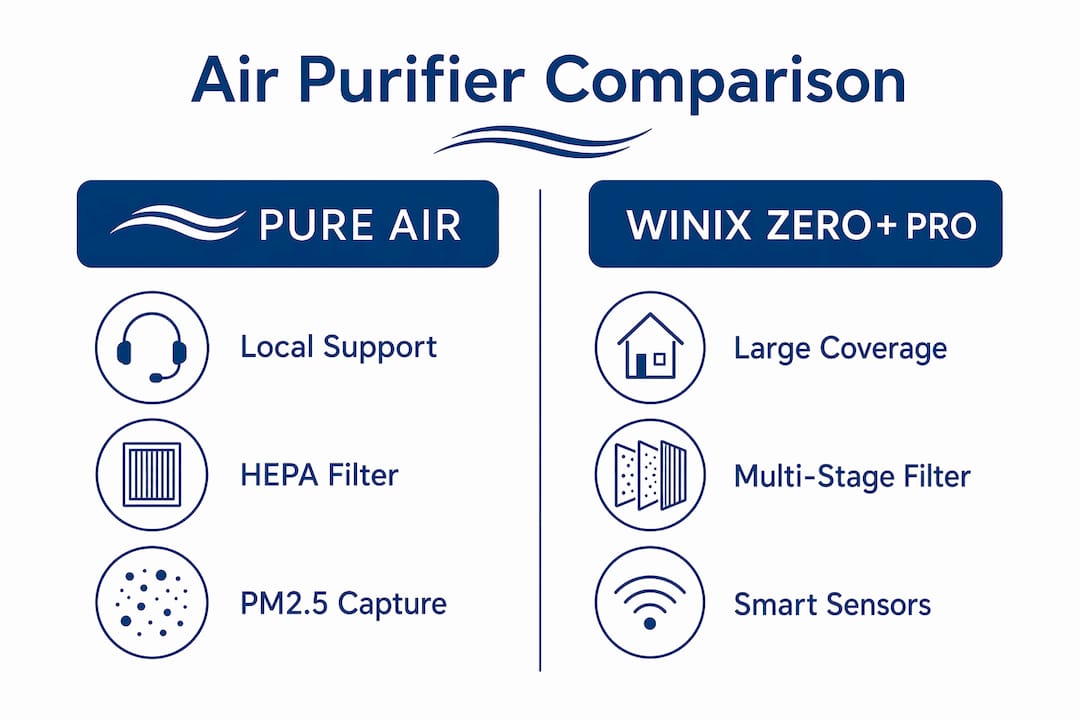
Pure Air’s HEPA filtration captures 99.97% of airborne particles, covering the PM2.5 range that bushfire smoke sits squarely within. That figure isn’t marketing copy; it reflects the certified standard applied to every unit. The product range spans purifiers, humidifiers, and dehumidifiers, and the Smart Finder tool narrows down the right unit based on your specific concern, whether that’s mould, allergies, or smoke. All products are AHAM verified, which means independent testing confirms the stated performance rather than relying on manufacturer claims alone.
Winix Zero+ Pro: the large-home option
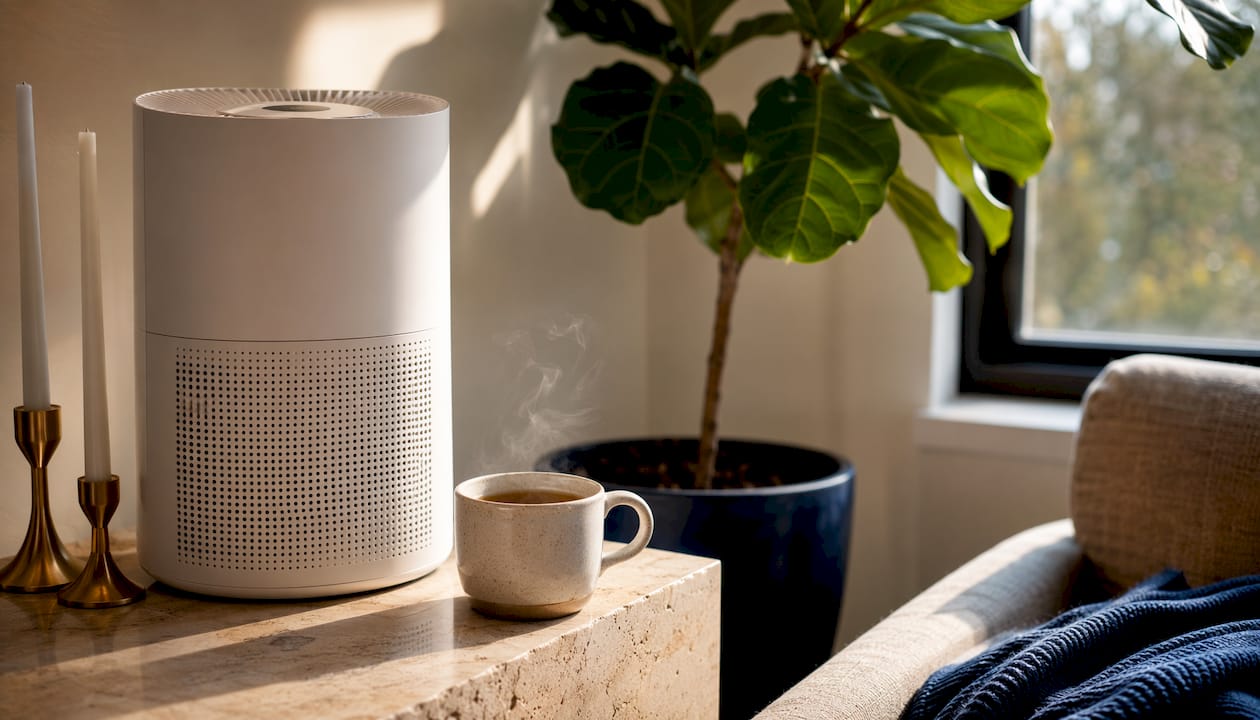
For open-plan living areas common in newer Australian builds, the Winix Zero+ Pro covers up to 99m², making it one of the more capable purifiers in this category. It pairs HEPA filtration with carbon filtration and a PlasmaWave feature. Worth noting: PlasmaWave generates trace ions, and some families prefer to run it with that feature off, relying on the HEPA and carbon stages alone.
Airthings Wave Plus: when you need to know what’s in the air
The Airthings Wave Plus monitors CO2, radon, VOC levels, temperature, and humidity simultaneously. It doesn’t purify anything, but that’s the point. In modern sealed Australian homes, CO2 build-up during winter and radon seeping from certain soil types are genuine concerns that a purifier alone won’t reveal. Pairing a monitor like this with a certified HEPA purifier gives you the full picture.
Key differences at a glance:
- Pure Air and Winix Zero+ Pro actively remove particles; Airthings Wave Plus only measures them
- AHAM verification applies to purifiers, not monitors; look for independent CADR ratings when comparing purifiers
- Winix Zero+ Pro suits homes above 65m²; Pure Air and Breville Protect Max handle rooms up to 65m²
- Airthings Wave Plus adds radon detection, which no purifier in this comparison offers
- Replacement filters for Pure Air products are available through major Australian retailers
How should Australian families choose a medical-grade air purifier?
The term “medical-grade” gets used loosely. The reliable way to cut through it is to check two things: the CADR rating and AHAM certification. CADR (Clean Air Delivery Rate) is an independently measured figure that tells you how quickly a unit cleans a given volume of air. AHAM certification means a third party has verified those numbers. If a product doesn’t carry both, treat the performance claims with scepticism.
Beyond certification, here’s what to prioritise:
- Room size match: measure your main living area in square metres before buying. A unit rated for 40m² running in a 70m² open-plan kitchen will underperform constantly.
- Filter type: HEPA captures particulates including pollen and smoke; activated carbon handles gases, VOCs, and odours. You want both for Australian conditions.
- Sensor integration: CO2 monitoring matters in well-sealed homes. Pairing a purifier with a dedicated monitor like the Airthings Wave Plus gives you data to act on, not just a machine running in the background.
- Filter availability: check that replacement HEPA and carbon filters are stocked through Australian retailers before committing. Filters need replacing every 6–12 months depending on use.
- Smart home compatibility: if your home runs Google Home or Amazon Alexa, confirm the purifier integrates before purchase.
- Warranty and support: prioritise brands with Australian-based customer service. Shipping a faulty unit overseas for warranty claims adds weeks and cost.
Pro Tip: Don’t rely on a purifier alone to manage indoor air quality. A dedicated multi-sensor monitor tells you when CO2 or VOC levels are elevated, so you know whether to run the purifier on high, open a window, or both. It’s the difference between reacting to a problem and preventing one.
For a deeper look at filtering indoor air pollutants at home, the technology choices and their trade-offs are worth understanding before you spend.
Why Pure Air stands out for Australian families
Pure Air is the most direct answer for Australian families who want a verified, locally supported alternative to airora.com.au’s hydroxyl approach. The full product catalogue covers air purifiers, humidifiers, and dehumidifiers, all selected for Australian climate conditions rather than a generic global market.
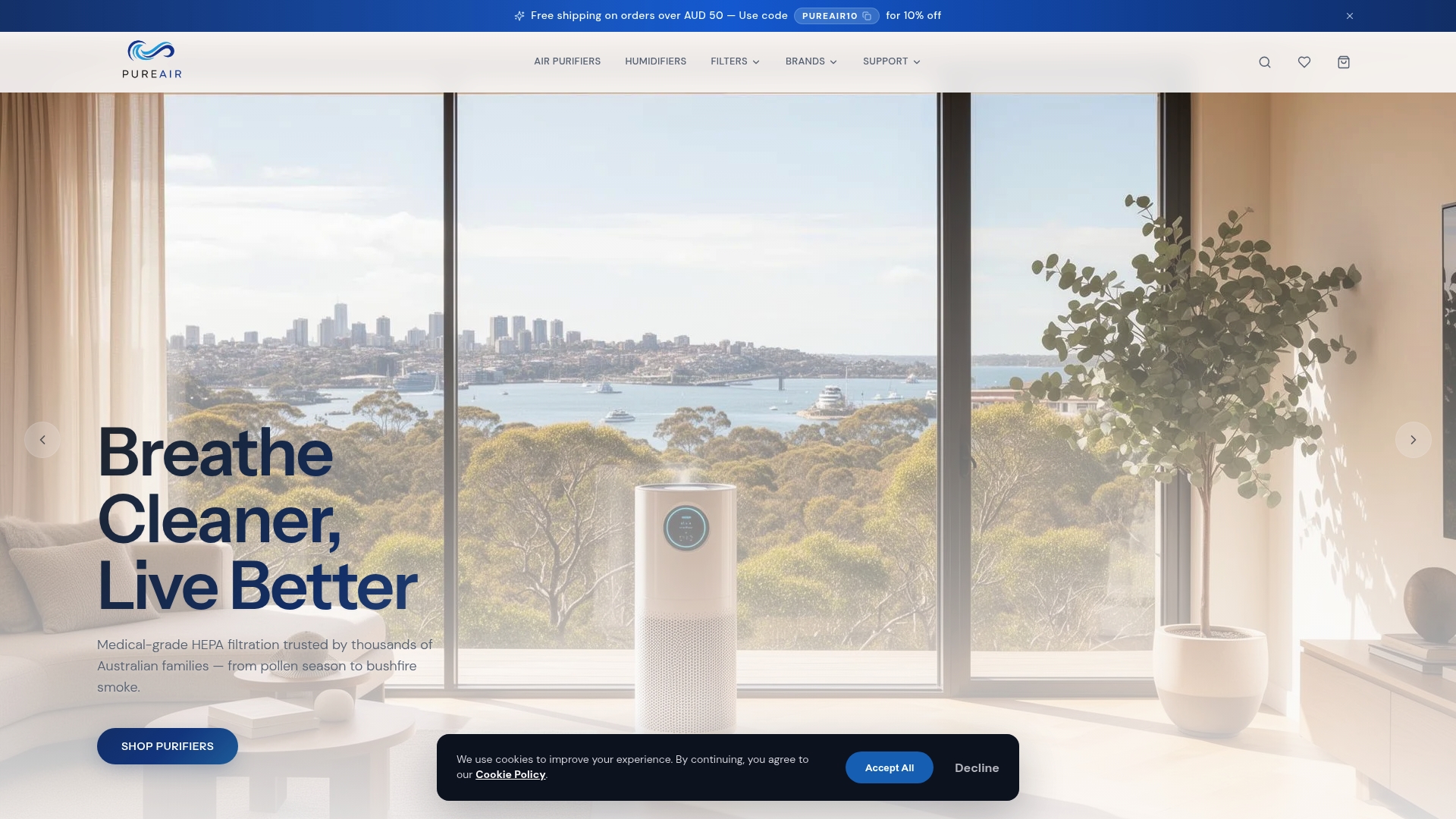
What separates Pureair-au from most options in this space is the combination of AHAM-verified performance, local filter availability, and the Smart Finder tool that removes the guesswork from choosing between models. Replacement filters are stocked through major Australian retailers, so you’re not waiting on international shipping when it’s time to swap them out. Australian-based customer support means warranty issues get resolved without the runaround.
- HEPA filtration certified at 99.97% particle removal, covering bushfire smoke and pollen
- AHAM verification on every unit, not just selected models
- Smart Finder tool matches your household concern to the right product
- Filters available through Australian retail networks
- Local customer service and warranty support
Browse the Pure Air range and use the Smart Finder to identify the right unit for your home.
Key takeaways
Pure Air, backed by AHAM-verified HEPA filtration and local Australian support, is the strongest certified alternative to airora.com.au for families managing bushfire smoke, pollen, and indoor air quality year-round.
| Point | Details |
|---|---|
| Certification matters most | Look for AHAM verification and independent CADR ratings, not just manufacturer claims. |
| Match coverage to room size | Winix Zero+ Pro covers up to 99m²; Pure Air and Breville Protect Max cover rooms up to 65m². |
| Monitors complement purifiers | Airthings Wave Plus measures CO2 and radon; pair it with a HEPA purifier for full coverage. |
| Filter access is ongoing | Confirm replacement HEPA and carbon filters are available through Australian retailers before buying. |
| Pureair-au for local families | Pure Air offers AHAM-verified purifiers, a Smart Finder tool, and Australian-based support for long-term air quality management. |