
A child bedroom air quality checklist is a practical tool parents use to protect their child’s respiratory health by targeting key indoor pollutants with specific, evidence-based actions. Children spend more time indoors than adults, making the air in their bedroom one of the most significant environmental factors in their daily health. The core checklist covers smoke avoidance, dust and allergen control, humidity management, ventilation, and air filtration. Tools like HEPA vacuums, hygrometers, air quality monitors, and air purifiers for kids’ rooms form the practical backbone of any effective approach.
1. Eliminate smoke and aerosol exposure first
Smoke is the single most damaging indoor air pollutant for children. Indoor air pollution from cigarettes, vaping, and aerosol sprays releases hundreds of harmful compounds that linger on surfaces, fabrics, and walls long after the source is gone. This residue, known as third-hand smoke, is particularly dangerous because children touch surfaces and then put their hands near their mouths.
A complete smoking ban is the only effective response. That means no smoking in the home, car, garage, or yard. It also means changing clothes after smoking outdoors before re-entering the house, because smoke particles cling to fabric and transfer indoors.
Key sources of smoke re-entry parents often miss:
- Open windows near a smoking area outside
- Visitors’ clothing and hair
- Shared hallways in apartments or townhouses
- Scented candles and incense, which release fine particles similar to tobacco smoke
Pro Tip: If you suspect third-hand smoke residue in a room, wipe hard surfaces with a damp cloth and wash soft furnishings. A persistent stale smell after cleaning is a reliable sign that residue is present.
2. Vacuum and clean to cut dust and allergens
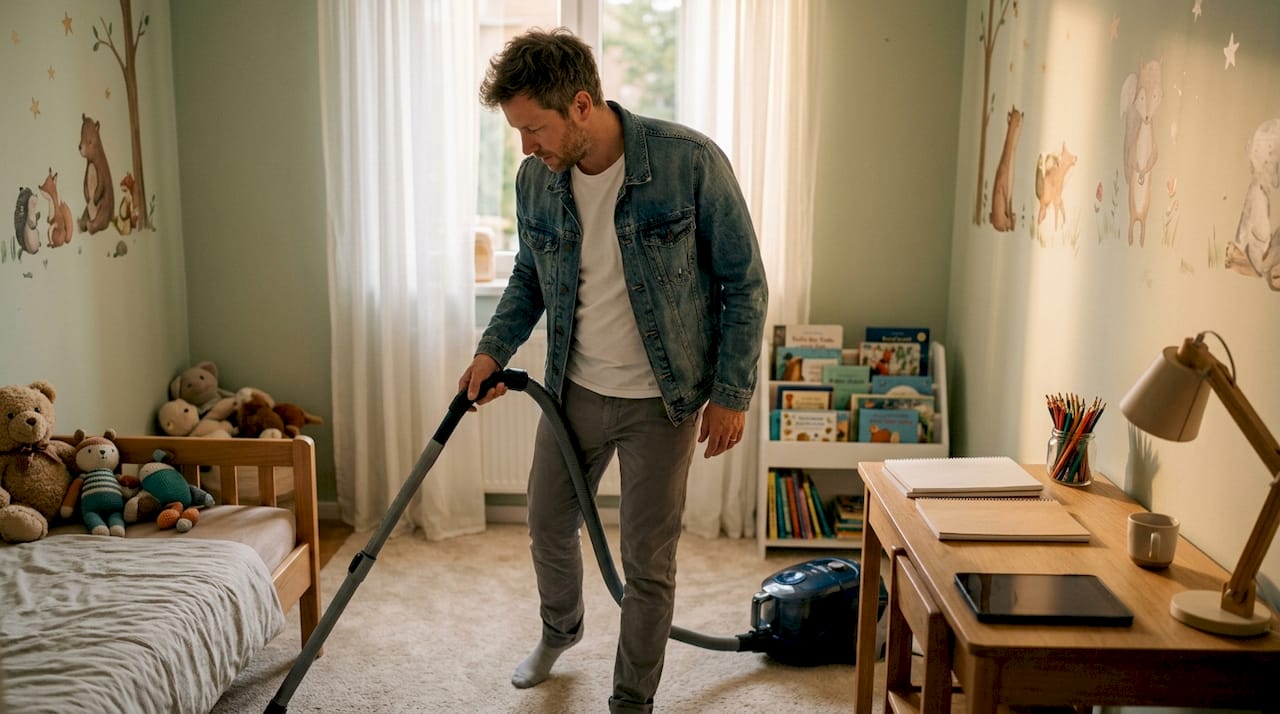
HEPA vacuum cleaners are the most effective tool for removing dust, pet dander, and allergens from carpets and rugs. Standard vacuums recirculate fine particles back into the air. A HEPA filter traps particles as small as 0.3 microns, preventing them from returning to the breathing zone.
Follow this cleaning sequence for the best results:
- Remove the child from the room before starting any cleaning.
- Vacuum carpets and rugs thoroughly with a HEPA-filter vacuum.
- Wet-dust hard surfaces using a damp microfibre cloth and a fragrance-free cleanser.
- Mop hard floors after dusting to capture any remaining particles.
- Wash bedding weekly in hot water (above 60°C) to kill dust mites.
- Fit anti-allergy covers on mattresses and pillows.
- Limit soft toys on the bed. Wash them regularly or place them in the freezer overnight to kill mites.
Timing cleaning activities so the child is absent prevents inhalation of dust stirred into the air during the process. This is one of the most overlooked steps in any indoor air quality checklist for families.
Pro Tip: Wait at least 30 minutes after vacuuming before letting your child back into the room. Fine particles disturbed during cleaning take time to settle or be captured by an air purifier.
3. Control humidity to stop mould and dust mites
Maintaining bedroom humidity between 40–60% is the single most effective way to limit dust mite populations and prevent mould growth. Below 40%, the air becomes dry enough to irritate airways. Above 60%, mites thrive and mould spores multiply on walls, windowsills, and soft furnishings.
A hygrometer is the tool that makes this manageable. It gives you a real-time reading of relative humidity so you know when to act rather than guessing. Most hygrometers cost under $30 and are widely available in Australia.
| Device | Purpose | Best used when |
|---|---|---|
| Hygrometer | Measures relative humidity | Always on, to monitor baseline |
| Humidifier | Adds moisture to dry air | Humidity drops below 40% |
| Dehumidifier | Removes excess moisture | Humidity rises above 60% |
Fix moisture at the source first. Repair leaking pipes, seal gaps around windows, and ventilate wet areas like bathrooms before they affect the bedroom. Relative humidity outside 40–60% directly increases allergen load and respiratory risk for children.
4. Ventilate the bedroom to reduce CO2 and stale air
Parents often overlook CO2 build-up in sealed bedrooms. A child sleeping in a closed room generates CO2 and moisture throughout the night. By morning, levels can be high enough to cause grogginess and reduce sleep quality. Simple ventilation steps make a measurable difference.
Practical ventilation habits to build into your routine:
- Leave the bedroom door slightly ajar at night (a 5cm gap is enough) to allow air circulation without draughts.
- Open bedroom windows for 10–15 minutes each morning before making the bed. This flushes overnight CO2 and moisture before disturbing bedding.
- Use trickle vents if your windows have them. They allow continuous low-level airflow without fully opening the window.
- Check outdoor air quality before ventilating. On high-pollution days or during bushfire smoke events, keep windows closed and rely on an air purifier instead.
- In humid climates or during wet seasons, balance ventilation with dehumidifier use to avoid drawing in moist outdoor air.
Seasonal adjustments matter in Australia. Summer bushfire smoke and spring pollen peaks are times to rely more heavily on filtration rather than open windows. On wildfire smoke days, close all windows and doors and run a HEPA purifier on its highest setting.
5. Choose and use an air purifier correctly
HEPA air purifiers are the most reliable tool for continuous particle removal in a child’s bedroom. They capture 99.97% of airborne particles including pollen, dust mite debris, pet dander, and fine smoke particles. Running a purifier continuously in the bedroom delivers the most consistent protection.
Choosing the right unit matters. A purifier sized for a room larger than the child’s bedroom will clean the air faster and run more quietly at lower settings. Key selection factors include:
- Filter type: True HEPA certification, not “HEPA-style” or “HEPA-like” filters.
- Airflow rate: Match the unit’s clean air delivery rate (CADR) to the room size.
- Noise level: Bedroom units should operate below 40 decibels on the lowest setting.
- Energy rating: Look for Energy Star-rated units to keep running costs low.
- Filter replacement: Follow the manufacturer’s schedule. A clogged filter reduces performance significantly.
The Honeywell Air Touch P1 is one option available in Australia that suits smaller bedrooms. For parents who also need humidity control, the Blueair 2-in-1 Purify + Humidify DH3i combines filtration and humidification in a single unit.
Pro Tip: Place the purifier near the child’s breathing zone, not in a corner. A unit positioned 1–2 metres from the bed delivers cleaner air where it counts most.
6. Monitor air quality to verify your checklist is working
Indoor air quality monitors vary widely in accuracy and the pollutants they detect. Choosing a validated model that reliably measures PM2.5 (fine particles), VOCs (volatile organic compounds), and relative humidity gives you real data to act on. A monitor without PM2.5 detection misses the most health-relevant pollutant in most Australian homes.
Key pollutants a good monitor should track:
- PM2.5: Fine particles from smoke, dust, and combustion. The most critical reading for children’s health.
- VOCs: Gases released by paints, cleaning products, furniture, and adhesives.
- CO2: Indicates ventilation quality. Levels above 1,000 ppm suggest the room needs more fresh air.
- Relative humidity: Confirms your humidifier or dehumidifier is maintaining the 40–60% target.
Consumers must verify the measurement parameters and response times of any monitor before purchase. A unit that updates readings every 10 minutes is not useful for detecting a sudden smoke event. Look for models with fast response times and clear visual alerts.
7. Create a clean air room plan for smoke events
Australian families face bushfire smoke events that can make outdoor air quality dangerous for days at a time. During wildfire smoke events, isolating an interior room as a clean air refuge is the most effective strategy for limiting children’s exposure to smoke particles.
The clean air room approach works like this. Choose an interior room with few windows. Close all doors and windows in the house. Run a HEPA air purifier on its highest setting in that room. Keep the child in that room as much as possible during the event. Avoid cooking on a gas stove or burning candles, as both add indoor particles during an already compromised period.
This strategy is especially relevant for families in regional New South Wales, Victoria, and Queensland, where bushfire seasons now extend well beyond the traditional summer months. Having a plan before smoke arrives means you act quickly rather than improvising.
Key takeaways
A child bedroom air quality checklist works best when smoke elimination, dust control, humidity management, ventilation, and HEPA filtration are all addressed together as a system.
| Point | Details |
|---|---|
| Eliminate smoke first | A complete smoking ban indoors and outdoors near the home removes the most harmful pollutant. |
| Time your cleaning | Vacuum and wet-dust when the child is out of the room to prevent dust inhalation during cleaning. |
| Keep humidity at 40–60% | Use a hygrometer and adjust with a humidifier or dehumidifier to control mites and mould. |
| Ventilate daily | Open windows for 10–15 minutes each morning and leave the door ajar at night to reduce CO2. |
| Choose verified monitors | Select air quality monitors that detect PM2.5 with fast response times for reliable data. |
What I’ve learnt from using a bedroom air quality checklist daily
Most parents start with an air purifier and consider the job done. That was my first mistake too. The purifier matters, but it is the last line of defence, not the first. Smoke avoidance and cleaning habits do more for air quality than any device you can buy.
The timing of cleaning surprised me most. I used to vacuum the bedroom in the morning before school. Then I checked the air quality monitor immediately after and saw PM2.5 spike sharply. Moving cleaning to after school drop-off, with the child out of the house for at least an hour, eliminated that exposure entirely. The monitor made the problem visible. Without it, I would never have known.
Humidity is the other factor parents underestimate. A hygrometer costs almost nothing, but the data it provides changes how you use every other device in the room. I found our bedroom was consistently sitting at 65% in summer, well above the safe range, until we added a dehumidifier. Dust mite symptoms dropped noticeably within a few weeks.
My honest advice is to work through the checklist in order. Smoke first, then cleaning habits, then humidity, then ventilation, then filtration and monitoring. Each step builds on the last. Skipping to devices without fixing the basics wastes money and leaves the real problems in place.
— Lucas
Pureair-au products that support your checklist
Pureair-au stocks a curated range of HEPA air purifiers, humidifiers, and dehumidifiers built for Australian conditions, including bushfire smoke seasons and high-humidity coastal climates. Every product in the catalogue is AHAM verified, so the performance claims you read are the performance you get.
The Pureair-au catalogue includes units suited to small bedrooms through to open-plan family spaces, with filter replacement options for Philips, Blueair, and Honeywell systems. If you are unsure which unit fits your child’s room, the Smart Finder tool on the Pureair-au website matches you to the right product based on room size and your specific concern, whether that is allergies, mould, or smoke. Replacement filters are stocked alongside every unit so maintenance never becomes a barrier to clean air.
FAQ
What does a child bedroom air quality checklist include?
A child bedroom air quality checklist covers smoke avoidance, regular HEPA vacuuming, humidity control between 40–60%, daily ventilation, and the use of a HEPA air purifier. Monitoring tools like air quality monitors and hygrometers help verify that each step is working.
How do I monitor air quality in my child’s room?
Use an indoor air quality monitor that measures PM2.5, VOCs, CO2, and relative humidity. Choose a validated model with fast response times, as slow-updating units miss sudden pollution events like cooking smoke or outdoor bushfire smoke.
What humidity level is safe for a child’s bedroom?
The safe range is 40–60% relative humidity. Below 40%, airways dry out and become irritated. Above 60%, dust mite populations increase and mould growth becomes likely on walls and soft furnishings.
Do I need an air purifier if I already ventilate the room?
Yes. Ventilation alone cannot filter fine particles, allergens, or smoke. A HEPA air purifier captures particles that open windows cannot remove, and it is the only safe option on high-pollution or bushfire smoke days when windows must stay closed.
Is an air quality checklist different for a newborn’s room?
The core steps are the same, but the priority is higher. Newborns have smaller airways and spend almost all their time in one room. An air quality checklist for a newborn’s home should be implemented before the baby arrives, with smoke elimination and HEPA filtration in place from day one.