A HEPA filter is defined as a mechanical air filter that captures 99.97% of airborne particles at 0.3 microns, the most difficult particle size to trap. Understanding what is HEPA filter child safety means knowing both how these filters work and how to use them correctly around kids. Children breathe faster than adults and spend more time indoors, making air quality a direct health issue rather than a background concern. The US Department of Energy and the US EPA define True HEPA as the benchmark standard. For Australian families dealing with bushfire smoke, high pollen seasons, and mould, a certified HEPA air purifier is one of the most practical tools available.
How do HEPA filters improve child safety in indoor air quality?
HEPA filtration works by forcing air through a dense mat of fibres that trap particles through three physical mechanisms: impaction, interception, and diffusion. The 0.3 micron size is the hardest to capture, and True HEPA filters meet the standard at that exact size. Particles larger or smaller are actually caught at even higher rates. That means fine dust, smoke particles, and biological matter are all captured effectively.
The list of pollutants a True HEPA filter removes from indoor air is directly relevant to children’s health:
- Pollen from grasses, trees, and weeds, a primary trigger for hay fever in school-age children
- Dust mite debris, including faecal particles that provoke allergic reactions
- Pet dander, microscopic skin flakes that remain airborne for hours
- Mould spores, which are particularly problematic in humid Australian climates
- Smoke particles, including fine particles from bushfire smoke
HEPA air purifiers reduce airborne triggers such as pet dander, pollen, mould spores, and smoke, with measurable benefits for children with allergies or asthma. The key word is “airborne.” HEPA filters clean the air that passes through the unit. They do not remove allergens already settled into carpet, bedding, or soft furnishings.
Pro Tip: Run the air purifier continuously in your child’s room rather than switching it on and off. Airborne particle levels drop significantly with continuous operation, and the filter only works on air that moves through it.
This limitation matters. A child with dust mite allergy still needs regular washing of bedding in hot water and vacuuming with a HEPA-certified vacuum. The air purifier complements cleaning rather than replacing it.
Are HEPA filters safe for children? What safety features matter?
HEPA filters are safe for children when used correctly. They are passive mechanical filters with no chemical output. They do not affect immune development, and there is no evidence that clean indoor air harms children’s health in any way.
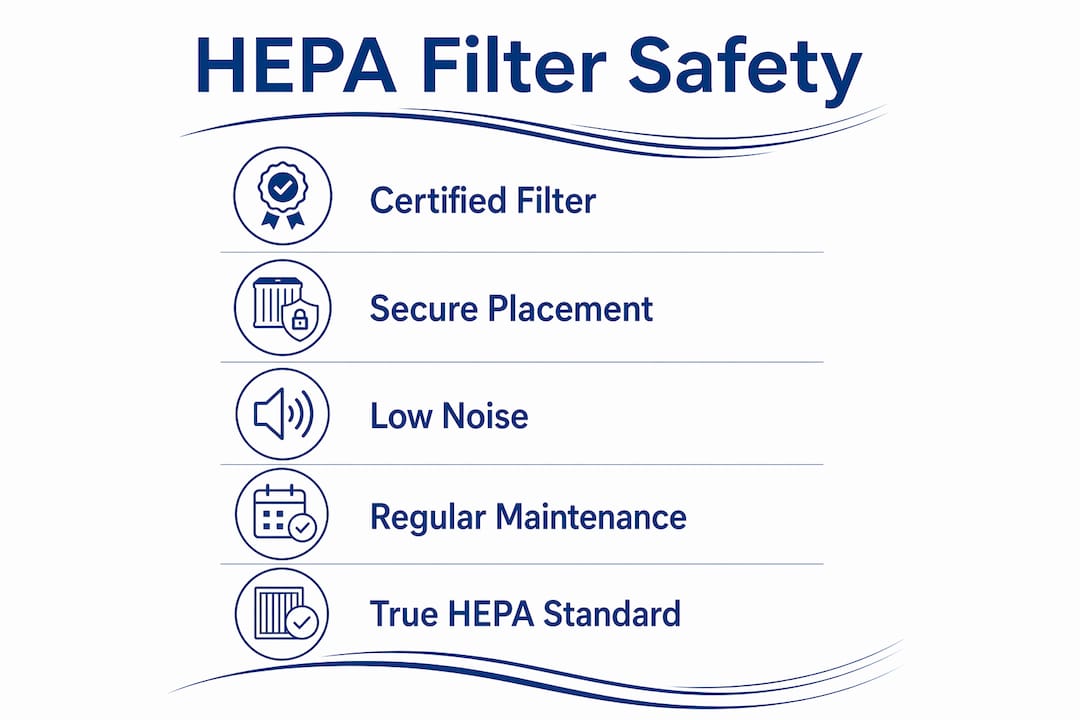
The safety concern parents should focus on is not the filter itself. It is the type of air purifier and the features it includes. Ozone-producing air purifiers are hazardous for children, especially those with asthma. Ionisers and UV-C devices that generate ozone as a byproduct should be avoided in children’s rooms. Certified True HEPA units do not produce ozone.
Physical safety features matter just as much as filtration performance. When choosing a unit for a child’s room, check for:
- Child lock controls to prevent settings being changed by curious toddlers
- Tip-over protection, which automatically shuts the unit off if knocked over
- Stable, low-profile design that reduces the risk of tipping
- Cord management to prevent strangulation or tripping hazards
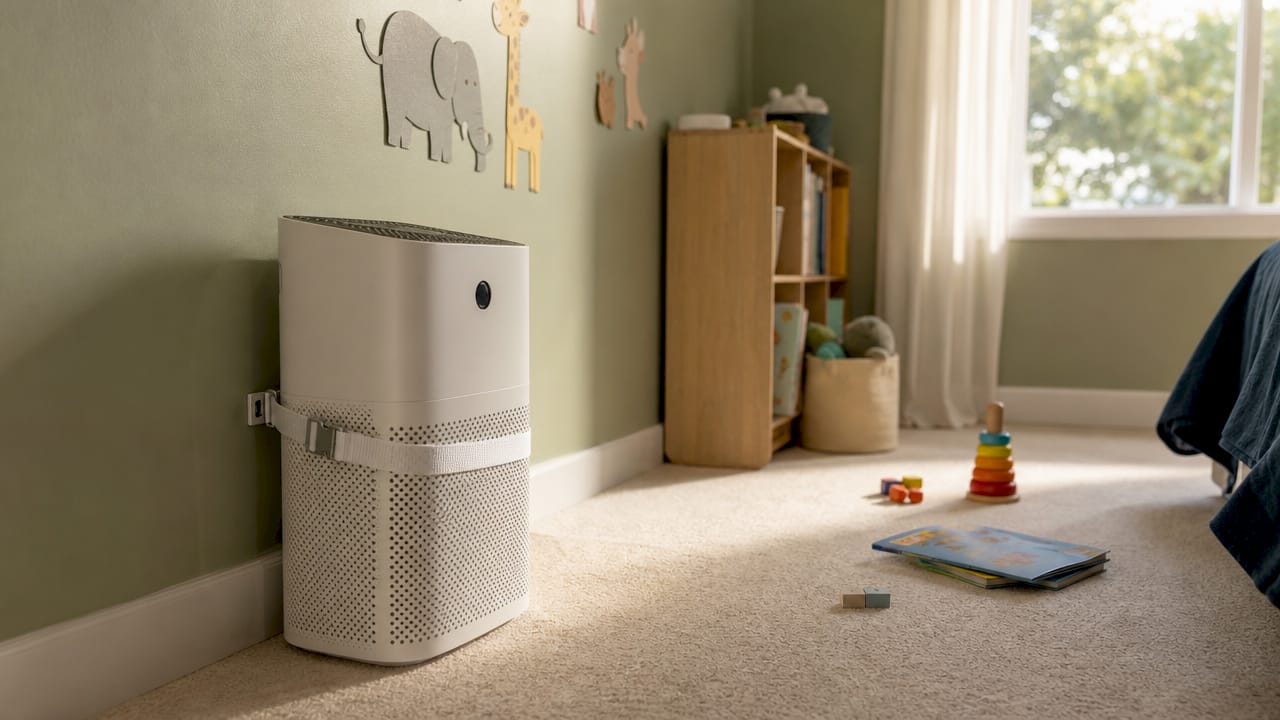
Securing the air purifier with stable furniture or anti-tip straps is recommended to avoid accidents. Physical stability is a genuine safety issue in rooms where toddlers and young children play.
Noise is the other underestimated factor. Air purifiers for sleeping environments should operate below 50 decibels, with the best models offering sleep modes under 30 decibels. A unit that is too loud will be switched off at bedtime, which defeats the purpose entirely. Look for models with a dedicated sleep or night mode.
Pro Tip: Check the decibel rating on the lowest fan setting, not the maximum. Marketing specs often list the highest performance figure. The low-speed noise level is what your child will actually sleep with.
One more warning: filters labelled “HEPA-like” or “99% HEPA” do not meet the True HEPA standard and often fail to provide meaningful protection for children with respiratory sensitivities. Only filters certified to capture 99.97% at 0.3 microns deliver clinically relevant results.
How to choose and maintain a HEPA air purifier for your child’s room
Choosing the right unit starts with matching the purifier’s capacity to the room size. The Clean Air Delivery Rate (CADR) is the key metric. It measures how quickly a unit cleans a specific volume of air. A higher CADR means faster, more effective filtration for a given room size.
Follow these steps when selecting a unit:
- Measure the room. Calculate the floor area in square metres and match it to the purifier’s rated coverage area.
- Check the CADR rating. A CADR of at least 2/3 of the room’s square footage in cubic feet per minute is the standard recommendation.
- Confirm True HEPA certification. The filter must meet 99.97% capture at 0.3 microns. Reject anything labelled “HEPA-type” or “HEPA-like.”
- Look for AHAM verification. The Association of Home Appliance Manufacturers (AHAM) independently tests and verifies purifier performance claims.
- Check noise ratings. Confirm the decibel level on the lowest setting is below 50dB for a sleep environment.
| Feature | What to look for |
|---|---|
| CADR rating | Matches or exceeds the room’s square metreage |
| Filter certification | True HEPA, 99.97% at 0.3 microns |
| Noise level | Below 50dB on low; sleep mode under 30dB |
| Physical safety | Tip-over protection, child lock, stable base |
| Ozone output | Zero. Avoid ionisers or UV-C units that generate ozone |
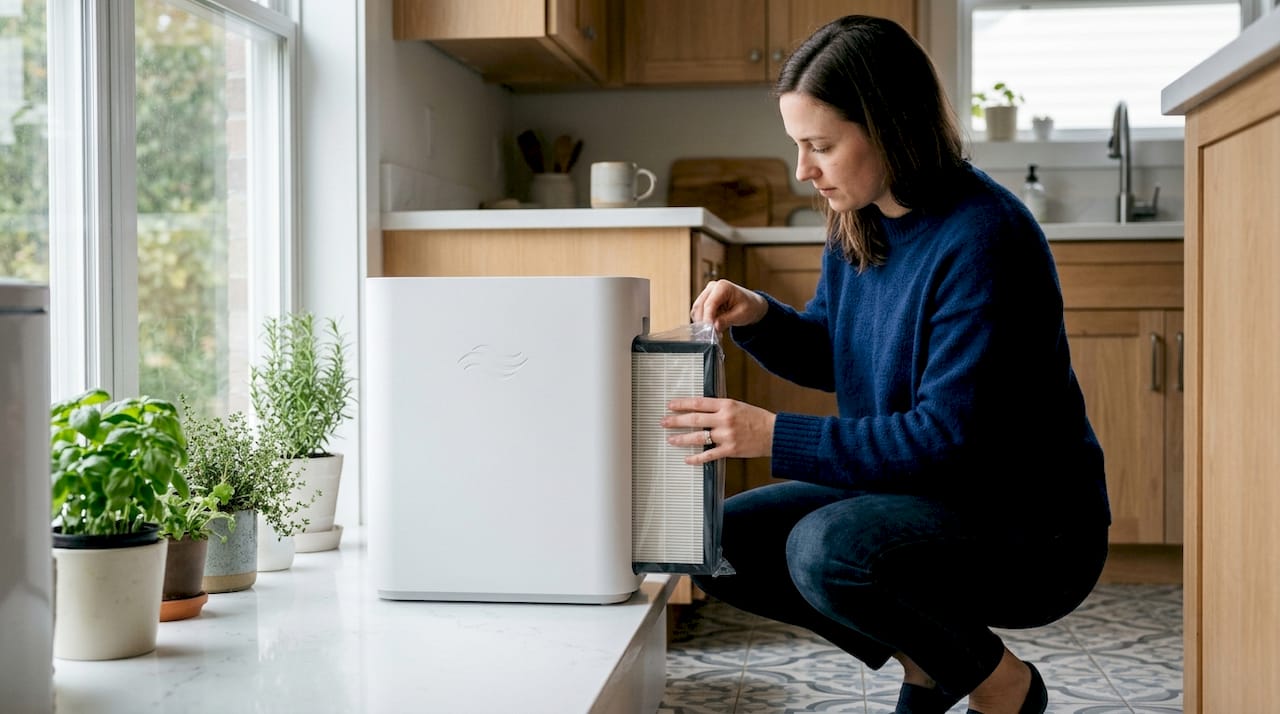
Maintenance is where many parents fall short. Poorly maintained filters can become allergen sources rather than reducing them. Replace filters according to the manufacturer’s schedule, typically every 6–12 months depending on usage and local air quality. In bushfire season or high-pollen periods, replacement may be needed sooner. Check the pre-filter monthly and clean it to extend the life of the main HEPA filter.
Place the unit on a stable surface at least 30 centimetres from walls to allow proper airflow. Keep it out of reach of young children despite any child lock features. A child bedroom air quality checklist can help parents confirm all placement and maintenance steps are covered.
What are the real benefits and limits of HEPA filters for child health?
HEPA filters deliver measurable air quality improvements in children’s rooms, particularly for allergy and asthma triggers. The benefit is strongest in enclosed spaces where the purifier can cycle the room’s air multiple times per hour. Nurseries, bedrooms, and play areas with closed doors are the most effective environments for HEPA filtration.
The realistic picture for parents includes both benefits and boundaries:
- What HEPA filters do well: Remove airborne pollen, dander, mould spores, dust mite debris, and fine smoke particles from the air in the room
- What they cannot do: Remove allergens already settled in carpet, mattresses, or curtains; eliminate chemical gases or volatile organic compounds (VOCs) without an additional activated carbon layer; replace ventilation or cleaning
- Where they add the most value: Bedrooms and nurseries where children spend 8–12 hours, especially during pollen season or after bushfire events
- Where they are less effective: Large open-plan areas where air volume exceeds the unit’s CADR capacity
Paediatric experts state that air purifiers are not a substitute for vacuuming with HEPA-certified vacuums, damp dusting, and adequate ventilation. HEPA filtration performs best as one part of a broader indoor environment strategy. The combination of a certified air purifier, regular cleaning, and good ventilation produces better outcomes than any single measure alone.
Cost is a fair consideration. A quality certified HEPA air purifier for a child’s bedroom sits in a mid-range price bracket, with ongoing filter replacement costs. Weighed against the frequency of allergy symptoms, GP visits, and disrupted sleep, most parents find the investment worthwhile. For families in bushfire-prone regions or high-pollen areas of Australia, the case is even stronger.
For parents wanting to go further, room air quality improvement steps cover the full range of ventilation and household practices that work alongside HEPA filtration.
Key takeaways
A certified True HEPA filter capturing 99.97% of particles at 0.3 microns is the most effective single tool for reducing airborne allergens in a child’s room, but it works best alongside regular cleaning and proper ventilation.
| Point | Details |
|---|---|
| True HEPA standard | Only filters certified at 99.97% capture at 0.3 microns provide meaningful protection for children. |
| Physical safety features | Choose units with tip-over protection, child locks, and stable bases to prevent accidents. |
| Noise matters for sleep | Select models operating below 50dB, with a sleep mode under 30dB, to avoid disrupting children’s rest. |
| Maintenance is non-negotiable | Replace filters every 6–12 months; a neglected filter can become an allergen source. |
| HEPA complements cleaning | Air purifiers reduce airborne particles but do not replace vacuuming, damp dusting, or ventilation. |
Why I think parents underestimate the basics with HEPA filters
Most parents I speak with focus almost entirely on which brand to buy. The filter certification and the noise rating get far less attention than they deserve. A “HEPA-like” filter in a quiet, well-designed unit is a worse choice than a certified True HEPA filter in a slightly noisier one. The certification is the non-negotiable part.
The placement question also gets overlooked. I have seen units tucked into corners behind furniture, which blocks airflow and cuts performance significantly. A purifier needs clear space around it to draw in and push out air effectively. Thirty centimetres from any wall is a practical minimum.
The other thing I would push back on is the idea that a HEPA purifier is a set-and-forget solution. Parents who run the unit continuously, replace filters on schedule, and combine it with regular vacuuming see real results. Parents who switch it on occasionally and forget the filter for two years do not. The technology works. The discipline around using it correctly is what makes the difference.
For families in Australia dealing with bushfire smoke seasons, a certified HEPA purifier in the child’s bedroom is not optional. It is the most direct response to a real and recurring hazard. The benefits of HEPA for hay fever are well documented, and the same filtration logic applies to smoke particles.
— Lucas
Certified HEPA air purifiers for children’s rooms, available now
Pureair-au stocks a range of AHAM-verified HEPA air purifiers selected for Australian conditions, including models with quiet sleep modes, tip-over protection, and child lock controls.
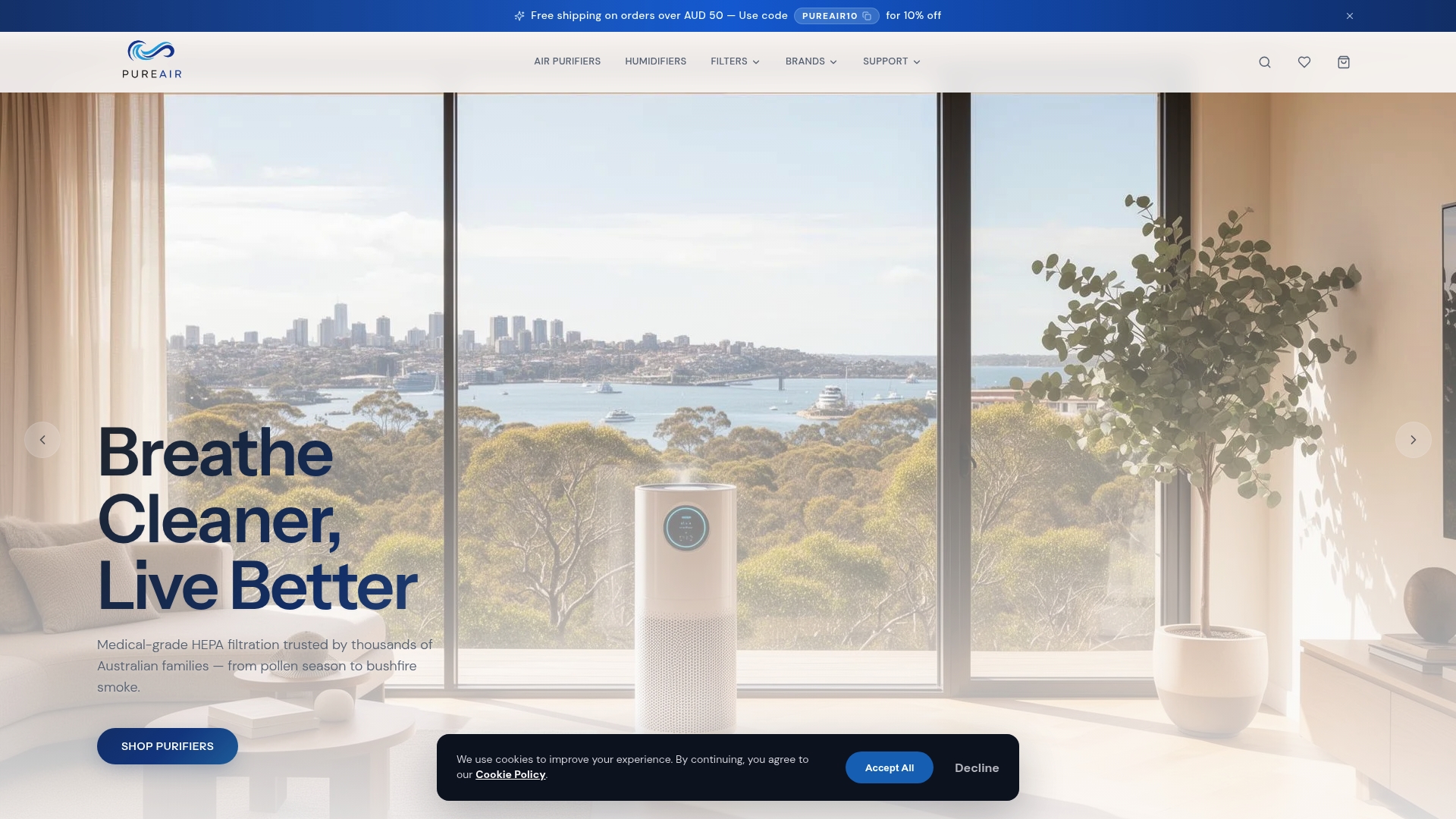
Every unit in the Pureair-au range meets the True HEPA standard of 99.97% particle capture at 0.3 microns. That means no “HEPA-like” substitutes and no guesswork about whether the filter actually performs. Parents can use the Smart Finder tool on the Pureair-au website to match a unit to their child’s room size and specific concerns, whether that is pollen, mould, pet dander, or smoke. Browse the full certified air purifier range to find the right fit for your family’s home.
FAQ
What does a HEPA filter actually do?
A True HEPA filter physically traps airborne particles including pollen, dust mite debris, pet dander, mould spores, and smoke by forcing air through a dense fibre mat. It captures at least 99.97% of particles at 0.3 microns, the most challenging size to filter.
Are HEPA filters safe for babies and toddlers?
Certified True HEPA filters are safe for babies and toddlers. They produce no ozone or chemical byproducts. The main safety considerations are physical, including tip-over protection, child locks, and stable placement out of reach.
What is the difference between True HEPA and HEPA-like filters?
True HEPA filters meet a certified standard of 99.97% capture at 0.3 microns. Filters labelled “HEPA-like” or “99% HEPA” do not meet this standard and often fail to provide meaningful protection for children with respiratory sensitivities.
How often should I replace a HEPA filter in a child’s room?
Most manufacturers recommend replacing the HEPA filter every 6–12 months. In high-pollution periods such as bushfire season or peak pollen months, replacement may be needed sooner. Check the pre-filter monthly and clean it to extend the main filter’s life.
Can a HEPA filter replace regular cleaning in a child’s room?
No. HEPA filters reduce airborne particles but cannot remove allergens already settled in carpet, bedding, or soft furnishings. Regular vacuuming with a HEPA-certified vacuum, damp dusting, and ventilation remain necessary alongside air purifier use.