

Reducing dust buildup indoors is defined as the ongoing practice of trapping, removing, and limiting the sources of airborne particles that settle on surfaces and degrade indoor air quality. The US Environmental Protection Agency (EPA) and Consumer Reports both endorse a combined approach: regular cleaning, HEPA filtration, and source control working together. No single method eliminates dust permanently, because dust is continuously generated inside your home. Understanding that reality is the first step toward managing it well.
What are the primary sources of indoor dust?
Indoor dust originates mostly from within the home rather than from outside dirt tracked in on shoes. That means cleaning alone can never fully stop it. The main indoor contributors include:
- Skin cells. Every person sheds skin cells continuously throughout the day.
- Textile fibres. Carpets, rugs, curtains, and upholstered furniture shed microscopic fibres with every step or touch.
- Pet dander. Cats and dogs release dander constantly, even when they are not visibly shedding.
- Carpet fragments. High-traffic areas break down carpet pile into fine particles over time.
- Outdoor particles. Pollen, soil, and pollution enter through open windows, doors, and gaps in the building envelope.
Natural convection currents and HVAC airflow transport these particles through every room, depositing them wherever air movement slows. That is why dust collects on top of ceiling fans, behind furniture, and along skirting boards. It is not random. Air carries particles to low-velocity zones, and they settle there.
Humidity levels also affect how long particles stay airborne. Lower indoor humidity keeps particles suspended longer, spreading them further before they settle. This is particularly relevant in Australian homes during dry summer months or in air-conditioned environments.
Pro Tip: Check your ceiling fan blades monthly. Heavy dust accumulation there signals that your HVAC system is moving particles through the room but not capturing them.
Which cleaning techniques best reduce indoor dust buildup?
The most effective cleaning philosophy is “trap and remove.” Dry dusters and cotton rags push particles back into the air. Wet methods capture them.
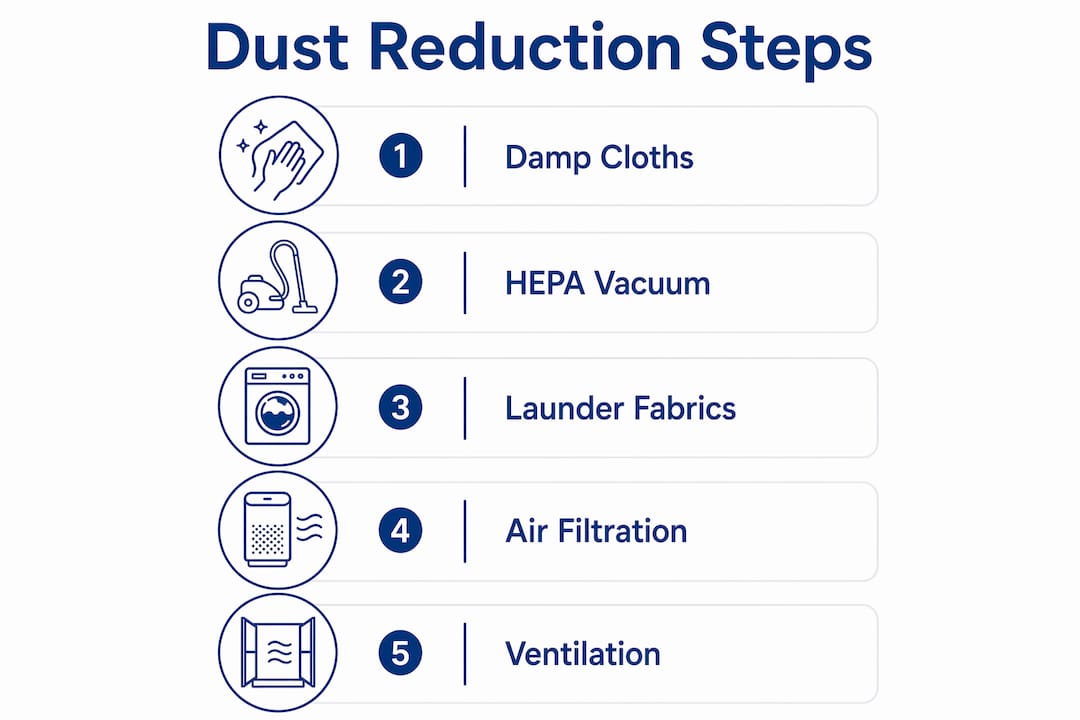
1. Use damp microfiber cloths
Damp microfiber cloths trap fine dust more effectively than dry dusters, which aerosolise particles back into the room. Microfiber works because its split fibres create a static charge that holds particles rather than releasing them. Use a lightly damp cloth on hard surfaces, shelves, and skirting boards. Rinse the cloth frequently so you are not redistributing what you have already collected.
2. Vacuum with a HEPA-filtered machine
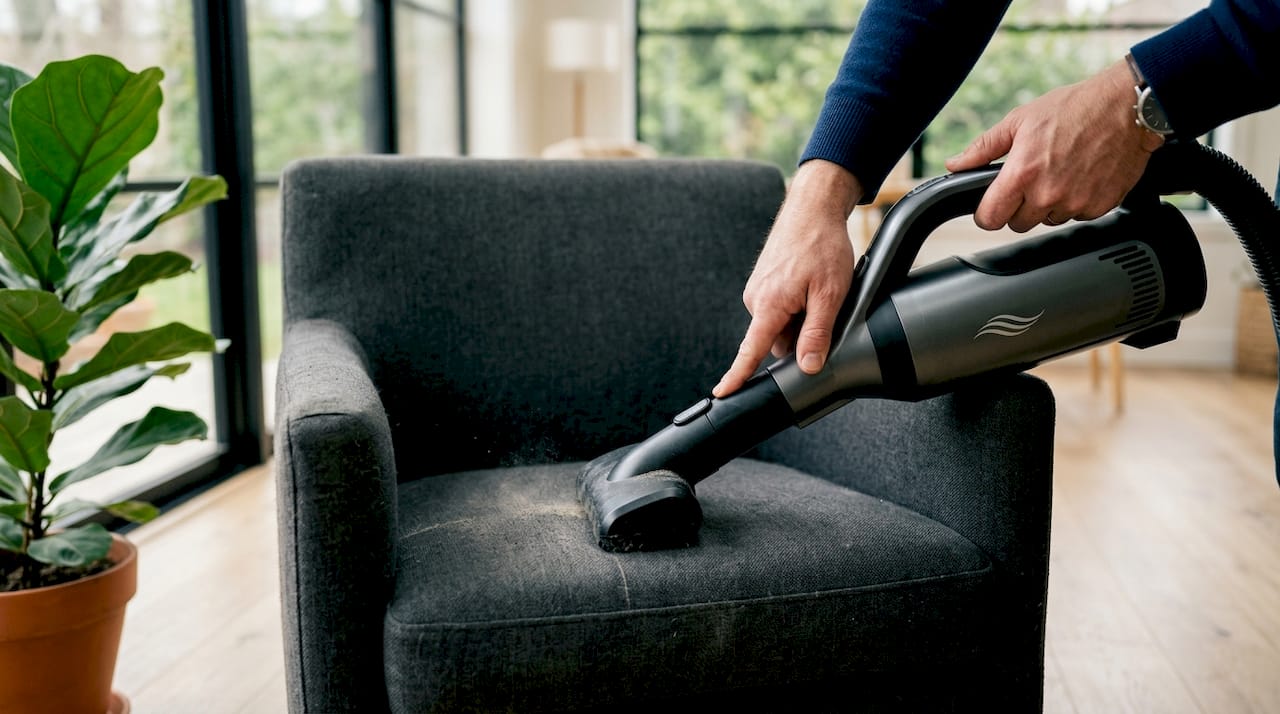
Weekly vacuuming with a HEPA-filtered vacuum in high-traffic areas and on upholstery prevents dust from accumulating to the point where it becomes airborne again. Standard vacuums without HEPA filters exhaust fine particles back into the room through the motor. A HEPA-filtered vacuum captures those particles instead of recycling them. Vacuum carpets, rugs, sofas, and mattresses, not just floors.
3. Launder soft furnishings regularly
Bedding, curtains, and cushion covers are major dust reservoirs. Washing bedding weekly in hot water removes accumulated skin cells and dust mite debris. Curtains should be washed or vacuumed at least monthly. Soft toys, throw rugs, and decorative cushions need the same attention.
Pro Tip: Always vacuum before you mop or wipe surfaces. Vacuuming first removes the bulk of particles so your damp cloth is not just pushing grit around.
The table below compares common cleaning tools by their effectiveness at removing rather than redistributing dust.
| Cleaning tool | Traps dust? | Risk of aerosolising? | Best use |
|---|---|---|---|
| Damp microfiber cloth | Yes | Very low | Hard surfaces, shelves, skirting boards |
| Dry feather duster | No | High | Not recommended for dust control |
| HEPA-filtered vacuum | Yes | Very low | Carpets, upholstery, mattresses |
| Standard vacuum | Partially | Moderate | Hard floors only |
| Dry cotton rag | No | High | Not recommended for dust control |
Wet cleaning techniques are the single most important shift you can make in your cleaning routine. The difference between a damp microfiber cloth and a dry duster is not marginal. It is the difference between removing dust and moving it.
How can air filtration and ventilation reduce indoor dust accumulation?
HEPA air purifiers capture 99.97% of particles as small as 0.3 microns, including pet dander, pollen, and fine dust. That standard, set by the US Department of Energy, makes HEPA filtration the most reliable technology for removing airborne particles from indoor air. An air purifier running continuously in a bedroom or living area intercepts particles before they settle on surfaces. You can read more about choosing the right unit in this HEPA filter buyer’s guide.
Ventilation also plays a direct role. Opening windows on low-pollen days creates cross-ventilation that flushes stale, particle-laden air out of the home. In Australian cities, early morning is often the best time to ventilate, before traffic pollution peaks and before pollen counts rise. Cross-ventilation works best when you open windows on opposite sides of the home to create airflow through the space.
HVAC systems distribute and concentrate dust simultaneously. HVAC filter choice and upkeep directly affect indoor dust levels. A clogged or low-grade filter recirculates particles rather than capturing them. Replace HVAC filters according to the manufacturer’s schedule, and choose a filter rated to capture fine particles, not just large debris. For detailed guidance on keeping your filters effective, see this HEPA filter maintenance guide.
The table below outlines the key filtration and ventilation strategies and their primary benefits.
| Strategy | Primary benefit | Frequency |
|---|---|---|
| HEPA air purifier | Captures airborne particles continuously | Run daily |
| HVAC filter replacement | Prevents recirculation of captured dust | Every 1–3 months |
| Cross-ventilation | Flushes stale air and reduces particle concentration | When pollen is low |
| Humidity management | Reduces time particles stay airborne | Monitor year-round |
What practical steps minimise indoor dust sources?
Source control is the part of dust management most homeowners overlook. Cleaning and filtration remove dust that already exists. Source control reduces how much dust is generated in the first place.
- Declutter surfaces. Decluttering reduces the surfaces where dust accumulates, making cleaning faster and more thorough. Open shelves, collections of ornaments, and stacked papers are dust traps. Storing items in closed cupboards or boxes removes those surfaces from the equation entirely.
- Groom pets outside. Brush dogs and cats outdoors so dander and loose fur do not become airborne inside. Wash pet bedding weekly using hot water, the same as human bedding.
- Use doormats and a shoes-off policy. A shoes-off policy and doormats at every entry point significantly reduce the outdoor particles tracked inside. Soil, pollen, and pollution from footwear account for a meaningful share of indoor dust, particularly in Australian homes near bushland or construction zones.
- Seal gaps around windows and doors. Gaps in the building envelope allow outdoor dust, pollen, and bushfire smoke particles to enter continuously. Weatherstripping and door seals are low-cost fixes that make a measurable difference, especially during high-wind or high-pollen periods.
- Choose hard flooring where possible. Carpet holds far more dust than timber, tiles, or vinyl. If replacing carpet is not practical, use washable rugs that can be laundered regularly rather than vacuumed in place.
For a broader look at improving room air quality, source control and filtration work best as a combined system rather than separate efforts.
Key takeaways
Effective dust control requires cleaning, filtration, source management, and ventilation working together as a system, not as isolated tasks.
| Point | Details |
|---|---|
| Dust is mostly generated indoors | Skin cells, fibres, and pet dander are the primary sources, not outdoor dirt. |
| Wet cleaning outperforms dry methods | Damp microfiber cloths and HEPA vacuums trap particles rather than spreading them. |
| HEPA filtration is the gold standard | Air purifiers with HEPA filters capture 99.97% of particles as small as 0.3 microns. |
| Source control reduces dust generation | Decluttering, pet grooming outside, and shoes-off policies cut dust at its origin. |
| Ventilation and humidity both matter | Cross-ventilation flushes stale air; managed humidity reduces how long particles stay airborne. |
Dust is a system, not a mess: my honest view
Most people treat dust as a cleanliness problem. They clean more, buy more products, and still find dust on the shelves three days later. The frustration is real, but the framing is wrong.
Dust is a physical process. Air moves through your home continuously, carrying particles from surfaces, textiles, and people. Those particles settle wherever air slows down. No amount of cleaning stops that process. What you can do is intercept particles before they settle, reduce how many are generated, and make removal faster when they do land.
The homes I have seen manage dust best share one thing: they treat it as a system. They run a HEPA air purifier in the rooms where people spend the most time. They vacuum with a HEPA-filtered machine weekly. They keep surfaces clear. They wash bedding regularly. None of those steps is dramatic on its own. Together, they reduce the dust load to a level that is manageable rather than relentless.
The trap most homeowners fall into is relying on one method. An air purifier alone will not compensate for carpets that are never washed or a dog that is brushed indoors. A rigorous cleaning routine will not help much if your HVAC filter is clogged and recirculating particles. The system only works when the parts work together.
Start with the highest-impact changes: switch to damp microfiber cloths, upgrade to a HEPA-filtered vacuum, and introduce a shoes-off policy at the door. Those three steps alone will produce a noticeable difference within a fortnight.
— Lucas
Air quality products from Pureair-au for lasting dust control
Cleaning and source control reduce dust significantly. Air filtration handles what cleaning cannot reach.
Pureair-au stocks a range of HEPA air purifiers, humidifiers, and dehumidifiers selected for Australian conditions, including homes affected by bushfire smoke, high pollen seasons, and dry inland air. All products are AHAM verified, so the performance figures you see are independently confirmed. The Honeywell Air Touch range and Blueair units are well suited to bedrooms and living areas where dust accumulation is highest. If humidity control is also a concern, the Blueair 2-in-1 purifier and humidifier addresses both in a single unit. Browse the full air purifier and filter range to find the right fit for your home.
FAQ
What is the fastest way to reduce dust in a room?
Switch to damp microfiber cloths for all surface wiping and vacuum with a HEPA-filtered machine weekly. These two changes trap and remove particles rather than redistributing them into the air.
How often should I replace HVAC filters to control dust?
Replace HVAC filters every 1–3 months, depending on the manufacturer’s recommendation and your household’s dust load. Homes with pets or high foot traffic need more frequent replacement.
Do air purifiers actually help with indoor dust?
Yes. HEPA air purifiers capture 99.97% of particles as small as 0.3 microns, including fine dust and pet dander. Running one continuously in high-use rooms significantly reduces airborne particle levels.
Why does dust come back so quickly after cleaning?
Dust returns because it is continuously generated indoors from skin cells, textile fibres, and pet dander. Air movement then carries those particles to surfaces. Cleaning removes settled dust, but the generation process does not stop.
Does humidity affect indoor dust levels?
Yes. Lower indoor humidity keeps particles airborne longer, increasing how far they spread before settling. Maintaining moderate indoor humidity reduces suspension time and can lower the overall dust load on surfaces.