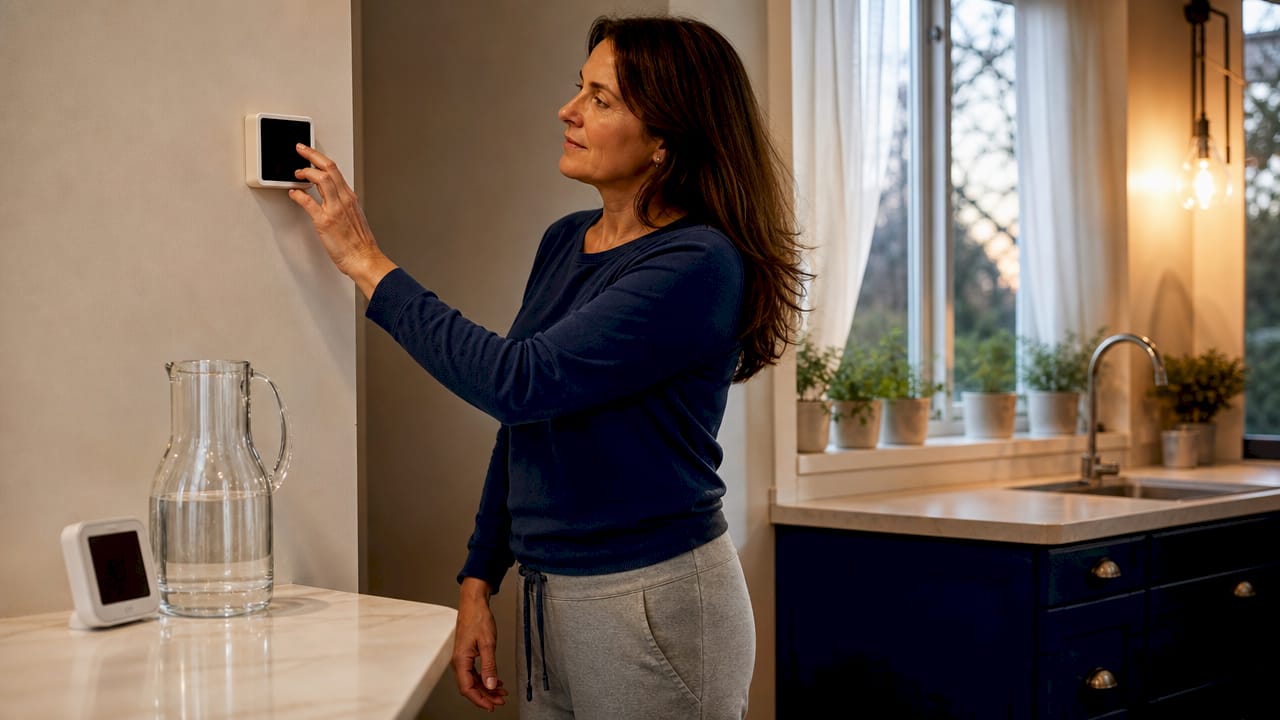
Reducing indoor humidity in a humid climate means keeping your home’s relative humidity (RH) between 40% and 50%, the range recognised by 2026 industry guidance as optimal for comfort and health. Once RH climbs past 60%, mould colonies and dust mite populations grow rapidly. That single threshold explains why so many Australian homes in Queensland, the Northern Territory, and coastal New South Wales feel stuffy and smell musty despite running the air conditioning all day. The most effective approach to reduce indoor humidity in a humid climate combines HVAC optimisation, proper ventilation, building moisture barriers, and targeted dehumidification. No single fix works alone.
How can AC settings reduce indoor humidity in humid climates?
Air conditioning is the first line of defence against excess moisture, but most homeowners run it incorrectly. Two settings in particular make or break its ability to control indoor humidity.
Set the fan to AUTO, not ON
Leaving the fan set to “ON” keeps it running continuously, even between cooling cycles. When the compressor stops, the cold evaporator coil warms up and the moisture it collected evaporates straight back into your home. Switching to “AUTO” can reduce indoor humidity by up to 20%. That is a significant gain from a single button change.
Adjust airflow for better moisture removal
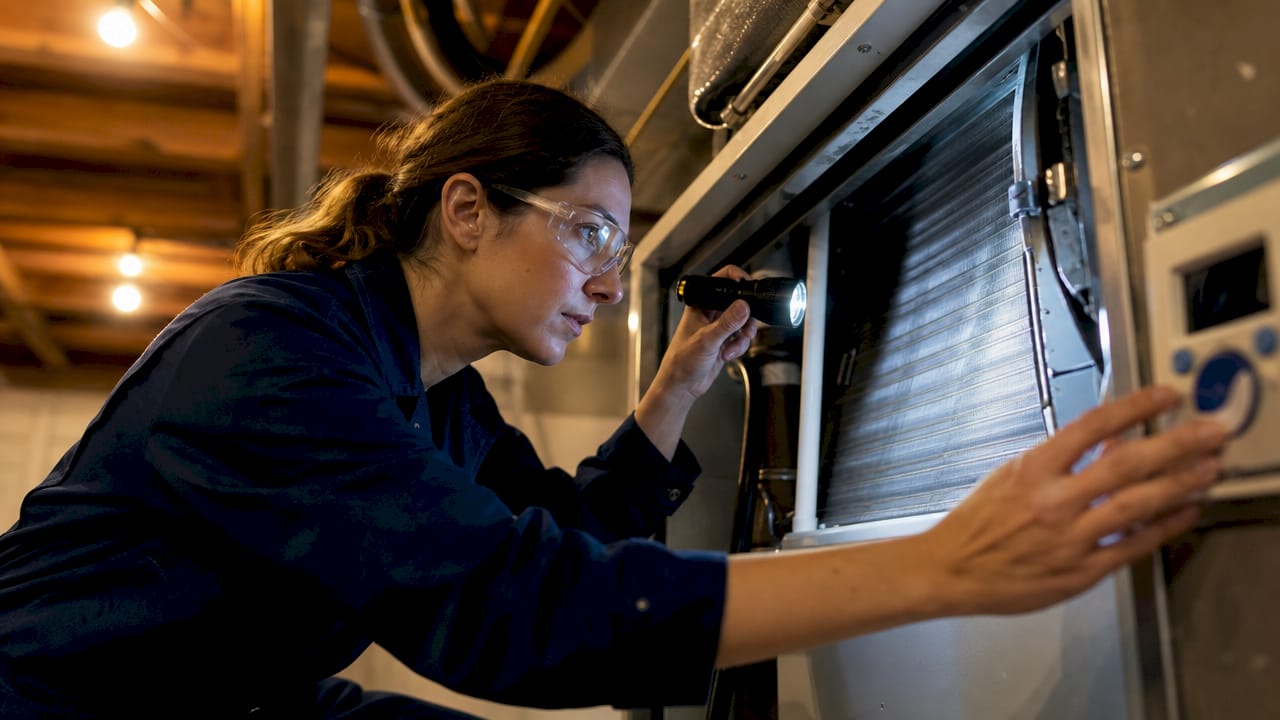
Most residential AC systems are set to move air too quickly across the evaporator coil. Slowing airflow to approximately 350 CFM per ton improves moisture removal by 16% because air spends more time in contact with the cold coil. A qualified HVAC technician can adjust this during a routine service.
Watch for short cycling
An oversized AC unit cools the room quickly, then shuts off before it has had time to pull moisture from the air. The result is cold but clammy indoor air, which is a clear sign of short cycling. Variable-speed or two-stage compressors run longer at lower capacity, giving the system time to dehumidify properly. If you are building or replacing a system, this is worth the extra cost.
Replace filters on schedule
A clogged filter restricts airflow across the coil and reduces the system’s ability to remove moisture. Replace air filters every 1–3 months to keep the coil working at full efficiency. In dusty or high-pollen areas, lean toward the one-month end of that range.
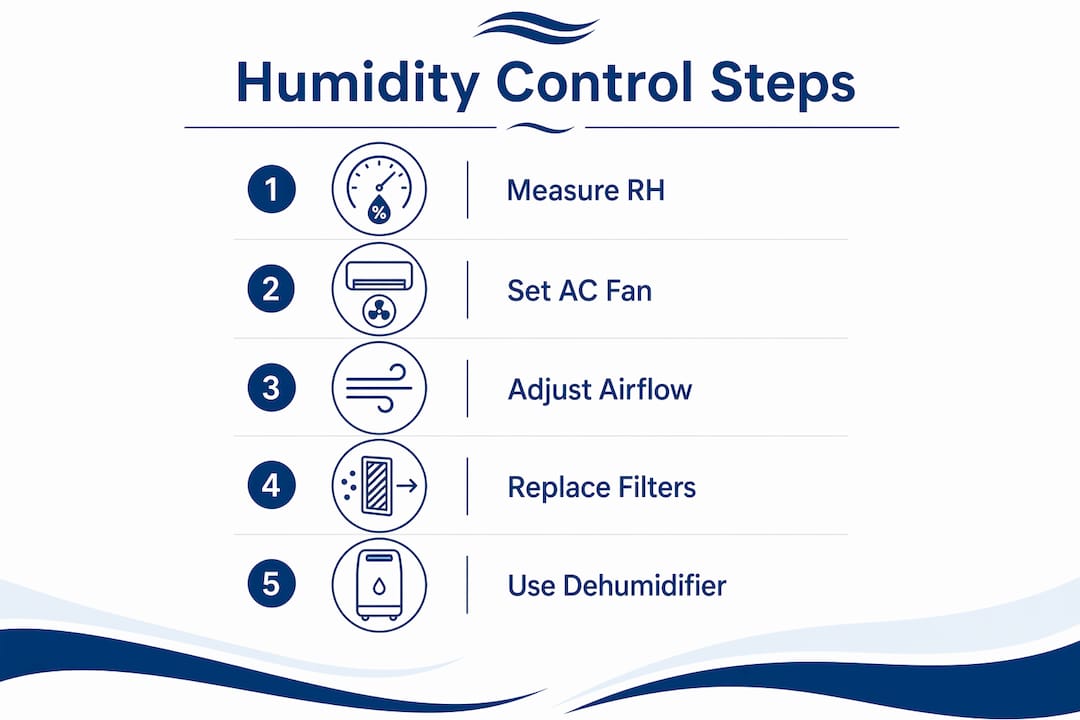
Pro Tip: Buy a basic digital hygrometer (under $20 at most hardware stores) and place it in your main living area. If RH sits above 55% while the AC is running, your system needs attention before summer peaks.
What ventilation strategies help manage indoor moisture?
Ventilation is the second layer of humidity control, and it is where many homes have hidden problems that quietly raise indoor moisture levels.
- Run exhaust fans during and after moisture-generating activities. Showers, cooking, and boiling water push large amounts of vapour into the air. Bathroom fans can remove up to 4 gallons of water vapour per hour during a shower. Run the fan for at least 20 minutes after you finish.
- Verify fans vent outside, not into the roof cavity. Exhaust fans that terminate in the attic dump moisture directly into the building structure. This is one of the most common hidden problems in Australian homes. Pull down the manhole cover and check where the duct goes.
- Consider an Energy Recovery Ventilator (ERV) for tightly sealed homes. An ERV brings in fresh air while transferring moisture between incoming and outgoing air streams, which limits how much outdoor humidity enters the home. ERVs reduce the latent moisture load from ventilation but do not replace a dehumidifier in very humid conditions.
- Balance your airflow. Poorly sealed ducting creates pressure imbalances that pull humid outdoor air through wall cavities and gaps. Have your duct system pressure-tested if you suspect leaks.
Pro Tip: If your bathroom exhaust fan is more than 10 years old, test it with a single sheet of toilet paper held near the grille. If the paper barely moves, the fan is not shifting enough air and needs replacing.
Ventilation alone rarely solves humidity problems in climates like Darwin or Cairns. It reduces the load on your AC and dehumidifier, but it works best as part of a layered system.
How does building maintenance reduce moisture intrusion?
Your home’s structure either keeps moisture out or lets it in. These maintenance steps address the most common entry points.
- Seal crawlspace soil with a vapour barrier. Ground moisture rises through bare soil and enters living spaces via the stack effect. A vapour barrier under the floor cuts this pathway and lowers indoor humidity measurably.
- Redirect downspouts and grade soil away from the foundation. Water pooling against the base of your home seeps through the slab and walls. Extending downspouts at least 1.5 metres from the building and sloping the soil away from the foundation reduces water infiltration and lowers mould risk.
- Check window and door seals. Failed weatherstripping lets humid air seep in continuously. Run your hand around frames on a humid day and feel for airflow. Replace any weatherstripping that is cracked, compressed, or missing.
- Inspect attic ventilation. Attics need airflow to prevent heat and moisture buildup, but ridge vents and soffit vents must not allow humid air to infiltrate the living space below. Check that insulation is not blocking soffit vents.
- Confirm bathroom exhaust ducts terminate outside. This point appears in both ventilation and maintenance because it is that commonly wrong. A duct that ends in the roof space is a structural moisture problem, not just a ventilation issue.
Structural fixes take more effort than adjusting a thermostat, but they address moisture at its source. Homes that skip this layer often find their dehumidifiers running constantly because they are fighting an uncontrolled supply of incoming moisture.
When should you use a supplemental dehumidifier?
When AC and ventilation cannot keep RH below 55–60%, a dedicated dehumidifier is the right next step. This threshold matters because whole-home dehumidifiers are designed specifically for situations where the AC system reaches its moisture-removal limit.
| Feature | Portable dehumidifier | Whole-home dehumidifier |
|---|---|---|
| Capacity | 20–50 pints per day | 60–90 pints per day |
| Coverage | Single room | Whole house via ductwork |
| Installation | None required | Professional installation |
| Running cost | Lower upfront, higher per litre | Higher upfront, lower per litre |
| Best for | Renters, single problem rooms | Persistent whole-home humidity |
Choosing the right unit comes down to the scale of the problem. A portable unit suits a single damp bedroom or a rental where you cannot modify the building. A whole-home unit suits owners with persistent RH above 60% throughout the house.
- Size correctly. An undersized unit runs continuously without reaching your target RH. Match the unit’s pint-per-day rating to your floor area and climate severity.
- Use humidistat controls. Set the target to 50% RH. Units with built-in humidistats cycle on and off automatically, which saves energy and prevents over-drying.
- Plan drainage properly. Emptying a collection tank manually is fine for occasional use, but a continuous drain line to a floor drain or laundry tub is far more practical for humid climates where the unit runs daily.
- Clean the filter monthly. A blocked filter reduces airflow and drops the unit’s effective capacity. Rinse it under cold water and let it dry fully before reinstalling.
- Position for airflow. Place portable units away from walls and furniture. Blocked air intake reduces performance significantly.
For homeowners managing allergens alongside humidity, keeping RH at 50% also suppresses dust mite reproduction, which requires humidity above 50% to thrive.
Key takeaways
Controlling indoor humidity in a humid climate requires a layered approach: AC optimisation, proper ventilation, structural moisture barriers, and supplemental dehumidification working together.
| Point | Details |
|---|---|
| Target 40–50% RH | Levels above 60% trigger mould and dust mite growth; use a hygrometer to monitor. |
| Switch AC fan to AUTO | This single change can cut indoor humidity by up to 20% at no extra cost. |
| Verify exhaust fan routing | Fans venting into the roof cavity are a hidden moisture source; confirm outdoor termination. |
| Seal moisture entry points | Vapour barriers, downspout redirection, and weatherstripping stop moisture before it enters. |
| Add a dehumidifier when needed | When RH stays above 55–60% despite AC, a dedicated unit with humidistat control is the solution. |
What I have learned from humid-climate homes
The most common mistake I see is homeowners buying a dehumidifier before fixing the basics. A portable unit running in a room with a bathroom fan venting into the attic is like bailing a boat with the plug still out. The dehumidifier works hard, the electricity bill climbs, and the RH barely moves.
The second most common mistake is AC oversizing. Builders and installers often size systems conservatively large to avoid complaints about cooling. But a unit that short-cycles every eight minutes never dehumidifies properly. If your home feels cool but clammy, that is almost certainly the cause. Variable-speed systems solve this, and in humid Australian climates, the comfort improvement justifies the cost difference.
The shortcut I recommend to every homeowner in a humid climate: buy a $15 digital hygrometer, put it in the room where you spend the most time, and check it for a week before spending anything else. That reading tells you exactly how serious the problem is and which layer of the system needs attention first. Most people are surprised to find their RH sitting at 65–70% even with the AC running. That number makes the solution obvious.
Routine service checks matter too. A clogged AC drain line raises indoor humidity without any other obvious sign. An annual HVAC service that includes checking the drain pan and coil condition is one of the highest-value maintenance tasks for humid-climate homes.
— Lucas
Pureair-au solutions for humid-climate homes
Persistent indoor humidity calls for the right equipment, not just the right settings.
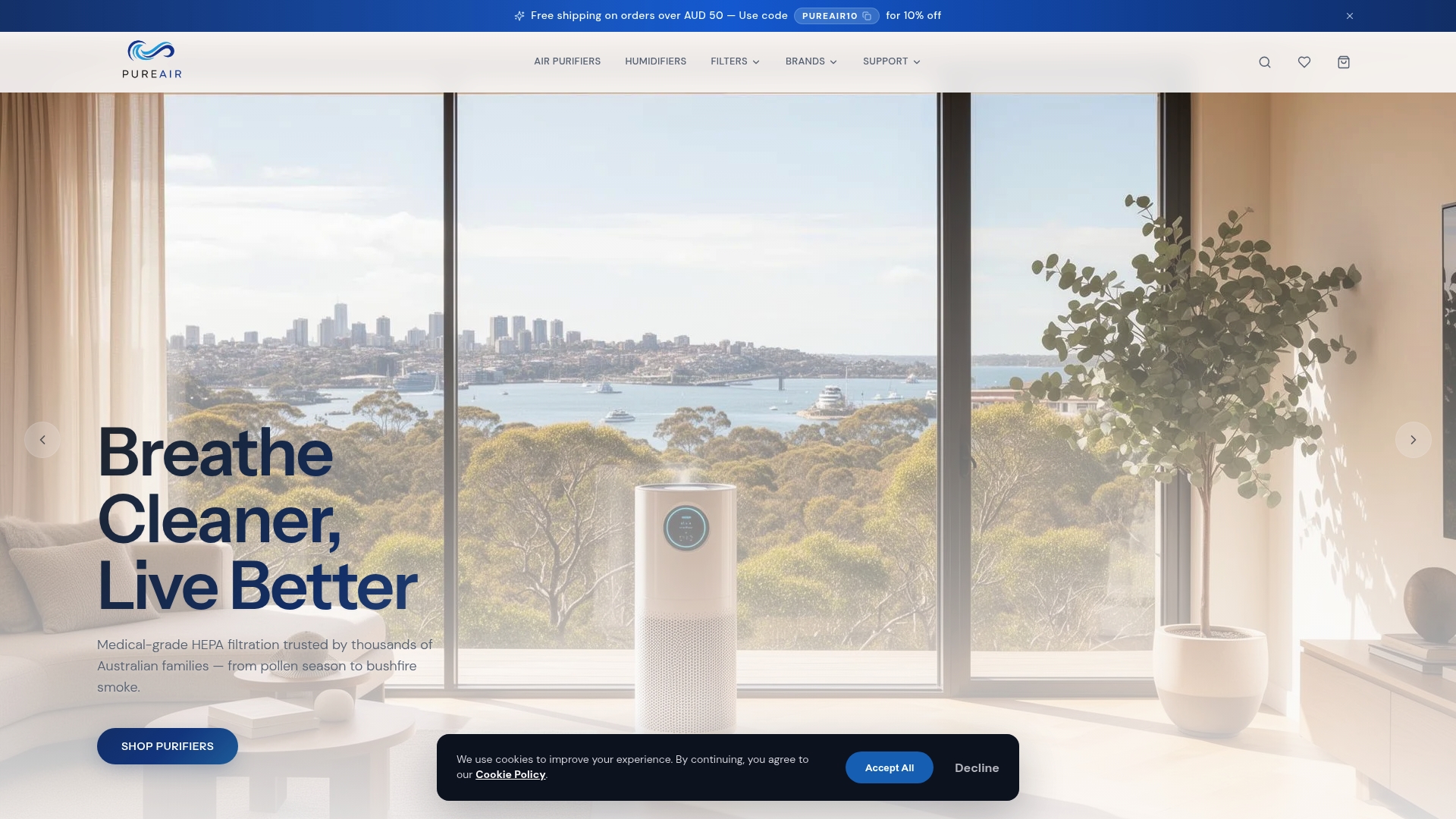
Pureair-au stocks a full range of dehumidifiers, air purifiers, and filters selected specifically for Australian conditions, from coastal Queensland to humid Sydney summers. Every product in the range is AHAM verified, so the capacity ratings you see are the ones you get. The Smart Finder tool on the Pureair-au website matches you to the right unit based on your room size, climate, and specific concern, whether that is mould, dust mites, or general air quality. For homeowners ready to move beyond portable units, the site includes detailed guidance on whole-home dehumidification options and how they integrate with existing ducted systems.
FAQ
What is the ideal indoor humidity level for health?
The recommended indoor RH range is 40–50%. Levels above 60% accelerate mould growth and dust mite reproduction.
Does air conditioning remove humidity from the air?
Yes, but only when the fan is set to “AUTO” and the system is correctly sized. An oversized unit that short-cycles removes very little moisture despite cooling the air.
How do I know if I need a dehumidifier or just better AC settings?
Check your RH with a hygrometer while the AC is running. If it stays above 55–60%, your AC has reached its dehumidification limit and a supplemental dehumidifier is needed.
Can an ERV replace a dehumidifier in a humid climate?
No. An ERV moderates humidity from incoming ventilation air but cannot reduce whole-home RH on its own. In humid climates, ERVs work alongside dehumidifiers, not instead of them.
How often should I service my AC to maintain humidity control?
Annual servicing is the minimum for humid climates. A service should include checking the drain pan, cleaning the evaporator coil, and verifying the refrigerant charge, all of which directly affect moisture removal.