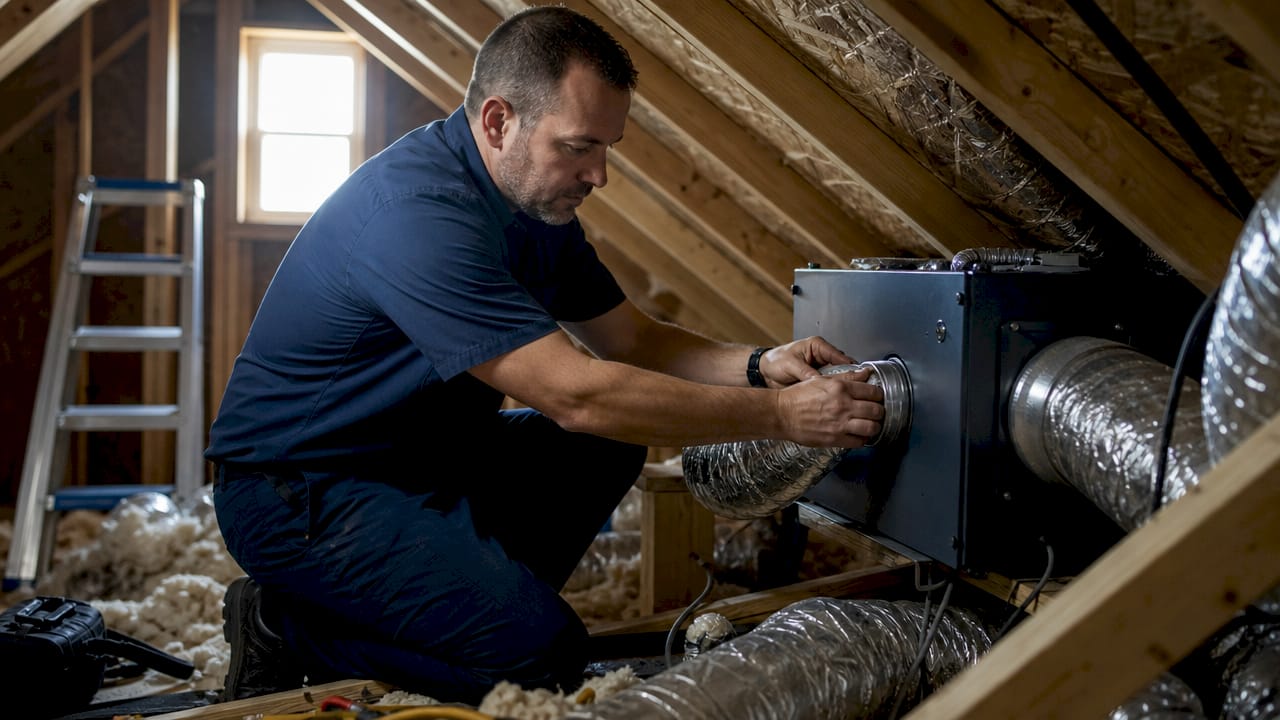
Whole home dehumidification is a centralised system that removes excess moisture from the entire indoor air volume of a house, maintaining consistent humidity levels throughout every room. Unlike a portable unit that tackles one space at a time, a whole house dehumidifier integrates with your home’s ductwork or runs as a standalone ducted system to treat air across 2,000 to over 5,000 square feet. Professional guidance recommends keeping indoor relative humidity between 45% and 55% to inhibit mould growth, dust mite activity, and musty odours. Hitting that target consistently is something a portable unit simply cannot do on its own.
What is whole home dehumidification and how does it differ from portable units?
The dehumidification process explained simply: warm, humid air from your home is drawn into the unit, cooled or passed through a sorbent material to extract moisture, and then returned to your living spaces as drier air. A whole home system does this continuously and automatically across your entire house. A portable unit does the same job, but only in the room where it sits, and you have to empty its water tank manually every day or two.
The capacity difference is significant. Whole home systems remove between 65 and 205 pints of moisture per day. A standard portable unit typically manages 30 to 50 pints per day in a single room. That gap matters in a large Australian home where humidity migrates freely between rooms, hallways, and roof spaces.
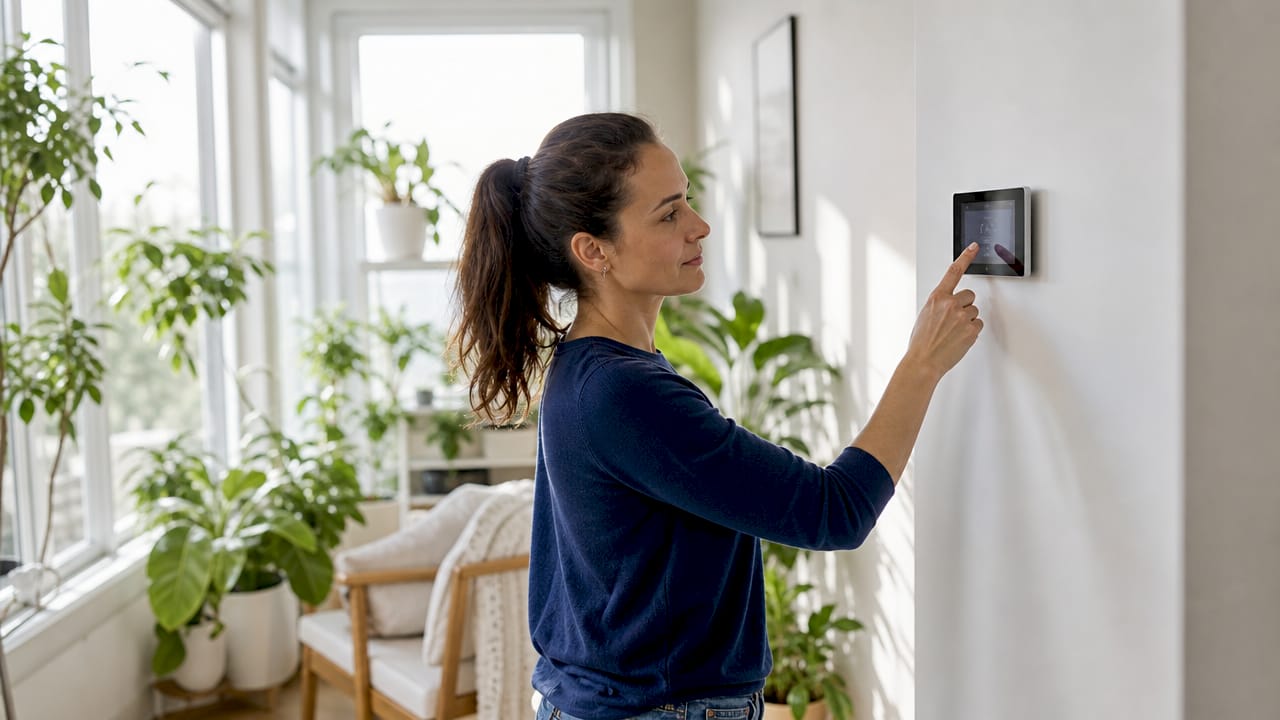
Whole home systems also connect directly to plumbing or use condensate pumps for automatic drainage, eliminating the daily chore of emptying a bucket. Control is handled by a dedicated humidistat, which monitors moisture levels and switches the system on and off automatically to hold your target range. You set it once and the system manages itself.
Key operational advantages over portable units:
- Coverage: treats the whole house, not just one room
- Capacity: removes far more moisture per day
- Drainage: automatic, no manual emptying required
- Control: humidistat maintains your target humidity without daily input
- Noise: installed away from living areas, so it runs quietly in the background
Pro Tip: Set your humidistat to 50% relative humidity as a starting point. This sits in the middle of the recommended 45–55% range and gives the system room to respond to sudden humidity spikes without overcooling your home.
What technologies do whole home dehumidifiers use?
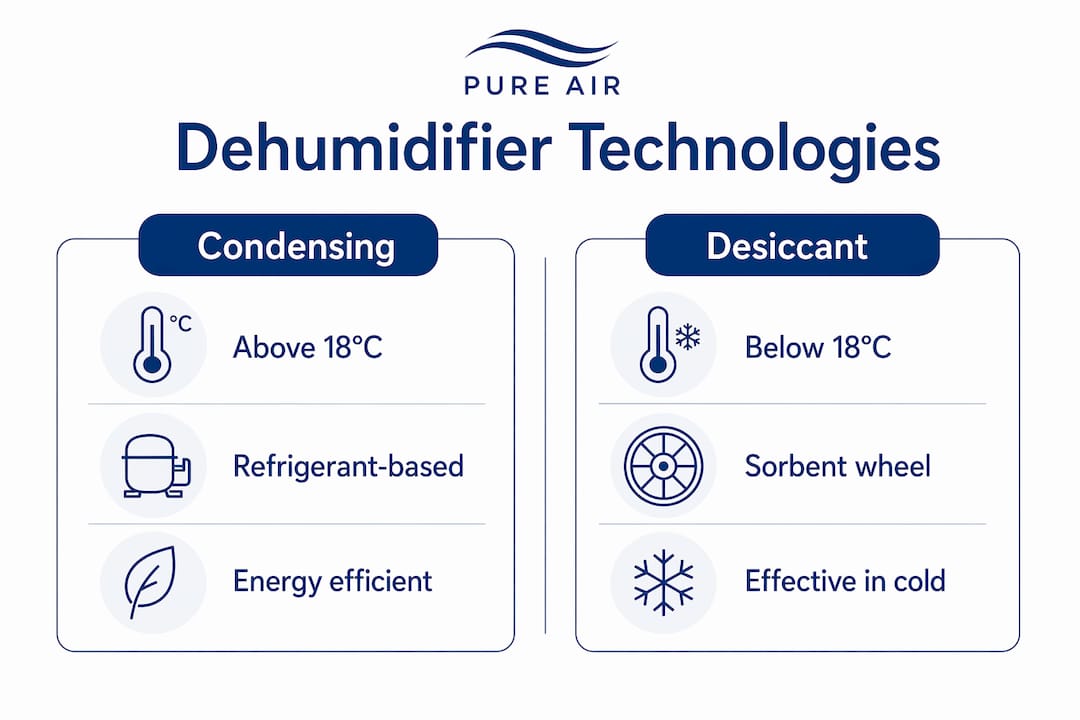
Two primary technologies power whole home dehumidification: condensing (refrigerant based) and desiccant systems. Choosing the right one depends largely on your local climate.
Condensing dehumidifiers
Condensing units work by cooling incoming air below its dew point. Moisture condenses on cold coils and drains away, while the dried air returns to your rooms. These systems are most efficient above 18–20°C, making them well suited to the warm, humid climates found across coastal Queensland, New South Wales, and the Northern Territory. Most Australian homes in these regions will perform well with a condensing whole house dehumidifier.
Desiccant dehumidifiers
Desiccant units pass air through a sorbent wheel made of hygroscopic material, which absorbs moisture directly without needing to cool the air. Desiccant systems maintain effectiveness in cooler conditions where refrigerant cycles lose efficiency, making them a better fit for cooler climates like Tasmania or alpine Victoria. One trade-off: the regeneration cycle uses heated air exhaust, which can affect your home’s heating and cooling load differently to a compression unit.
| Feature | Condensing | Desiccant |
|---|---|---|
| Best temperature range | Above 18–20°C | Below 18°C |
| Energy use | Lower in warm climates | Higher due to heated regeneration |
| Ideal Australian regions | Coastal QLD, NSW, NT | Tasmania, alpine VIC |
| Effect on room temperature | Slight warming | More noticeable warming |
Pro Tip: If you live in a mixed climate zone that gets cold winters and humid summers, a condensing unit is usually the better year-round choice. Pair it with a portable desiccant unit for any particularly cold or enclosed spaces like a garage or cellar.
What should you consider when installing a whole home system?
Installation is where many homeowners make costly mistakes. Getting it right from the start saves money and prevents water damage down the track.
-
Size to moisture load, not floor area. Correct sizing uses a detailed moisture load calculation, similar to a Manual J assessment, that accounts for your home’s volume, air infiltration rate, local climate, and internal moisture sources like cooking and bathing. Sizing based on floor area alone leads to undersized units that run constantly or oversized units that short-cycle and wear out compressors prematurely.
-
Plan drainage before installation day. Drainage design is critical. Drain lines must slope correctly toward a floor drain or condensate pump, with no low points where water can pool. A poorly pitched drain line is one of the most common causes of water damage in DIY installations.
-
Decide on ducted or standalone. If your home has existing ductwork, a ducted whole home dehumidifier integrates directly and treats all zones through the same air distribution system. Homes without ductwork can use a standalone unit installed in a central location, such as a ceiling void or utility room, with short duct runs to key areas.
-
Avoid DIY electrical and refrigerant work. Whole home systems involve high-voltage wiring and, in the case of condensing units, refrigerant handling. Both require licensed tradespeople in Australia. Attempting either yourself voids warranties and creates safety risks.
-
Plan for annual maintenance. Under normal use, whole home systems need an annual air filter change and a check of the drain line and condensate pump. This is far less maintenance than emptying a portable unit daily, but skipping it reduces efficiency and shortens the system’s life.
What are the benefits of whole home dehumidification?
The benefits of whole home dehumidification go well beyond comfort. They affect your health, your home’s structure, and your energy bills.
Controlling humidity to the recommended 45–55% range directly reduces conditions that allow mould colonies to establish. Mould needs moisture to grow, and a consistent whole home system removes that moisture before it can accumulate on walls, ceilings, and inside wall cavities. For homeowners dealing with allergen control, this is one of the most effective structural interventions available.
Dust mites thrive above 50% relative humidity. Keeping your home consistently below that threshold reduces dust mite populations, which is a meaningful benefit for anyone with asthma or allergic rhinitis. Musty odours, which are a sign of microbial activity, also disappear when moisture is removed at the source rather than masked.
Air conditioning is not a substitute for dedicated humidity control. Air conditioners remove incidental moisture as a side effect of cooling, but they cannot manage humidity independently without overcooling the space. A whole home dehumidifier handles humidity control separately, which means your air conditioner runs more efficiently and does not have to work as hard to make the air feel comfortable.
Structural benefits are real and often underestimated:
- Timber floors and joinery are less likely to warp or swell
- Paint and plaster last longer without moisture cycling
- Books, artwork, and electronics are protected from humidity damage
- Roof spaces and subfloors stay drier, reducing the risk of structural rot
Pairing a whole home dehumidifier with air quality improvements like HEPA filtration gives you a complete indoor environment that is genuinely healthier to live in, not just more comfortable.
Key takeaways
Whole home dehumidification is the most reliable method for maintaining healthy indoor humidity across an entire house, protecting both occupants and the building itself.
| Point | Details |
|---|---|
| Target humidity range | Keep indoor relative humidity between 45% and 55% to inhibit mould and dust mites. |
| System capacity | Whole home units remove 65–205 pints of moisture per day, far exceeding portable units. |
| Technology choice | Use condensing systems in warm climates and desiccant systems in cooler regions. |
| Correct sizing matters | Size to moisture load using volume, climate, and infiltration data, not floor area alone. |
| Maintenance is minimal | An annual filter change and drain check keep whole home systems running reliably. |
Why I think most Australians underestimate this technology
Most homeowners I speak with assume their ducted air conditioning handles humidity. It does not. Air conditioning removes moisture as a byproduct of cooling, but the moment you switch it off on a mild autumn evening, humidity climbs straight back. That is exactly when mould starts its work, quietly, inside wall cavities and under floors where you cannot see it.
The set-and-forget nature of a whole home system is what genuinely surprises people once they install one. You set the humidistat, and the system runs when it needs to and stops when it does not. There is no daily emptying, no forgetting to turn it on, and no single room that gets treated while the rest of the house stays damp.
My honest advice: match the technology to your climate before you buy. A condensing unit in coastal Queensland is a sound investment. The same unit in a cold Tasmanian home will underperform in winter. Get that decision right first, and the rest follows.
The upfront cost is real, but so is the long-term saving on mould remediation, structural repairs, and medical costs for allergy sufferers. Combine a whole home dehumidifier with a quality air purifier and you have addressed the two biggest drivers of poor indoor air quality in Australian homes.
— Lucas
Pureair-au’s range of air quality solutions for Australian homes
Pureair-au offers a curated range of air purifiers, humidifiers, and dehumidifiers selected for Australian conditions, from coastal humidity to bushfire smoke season.
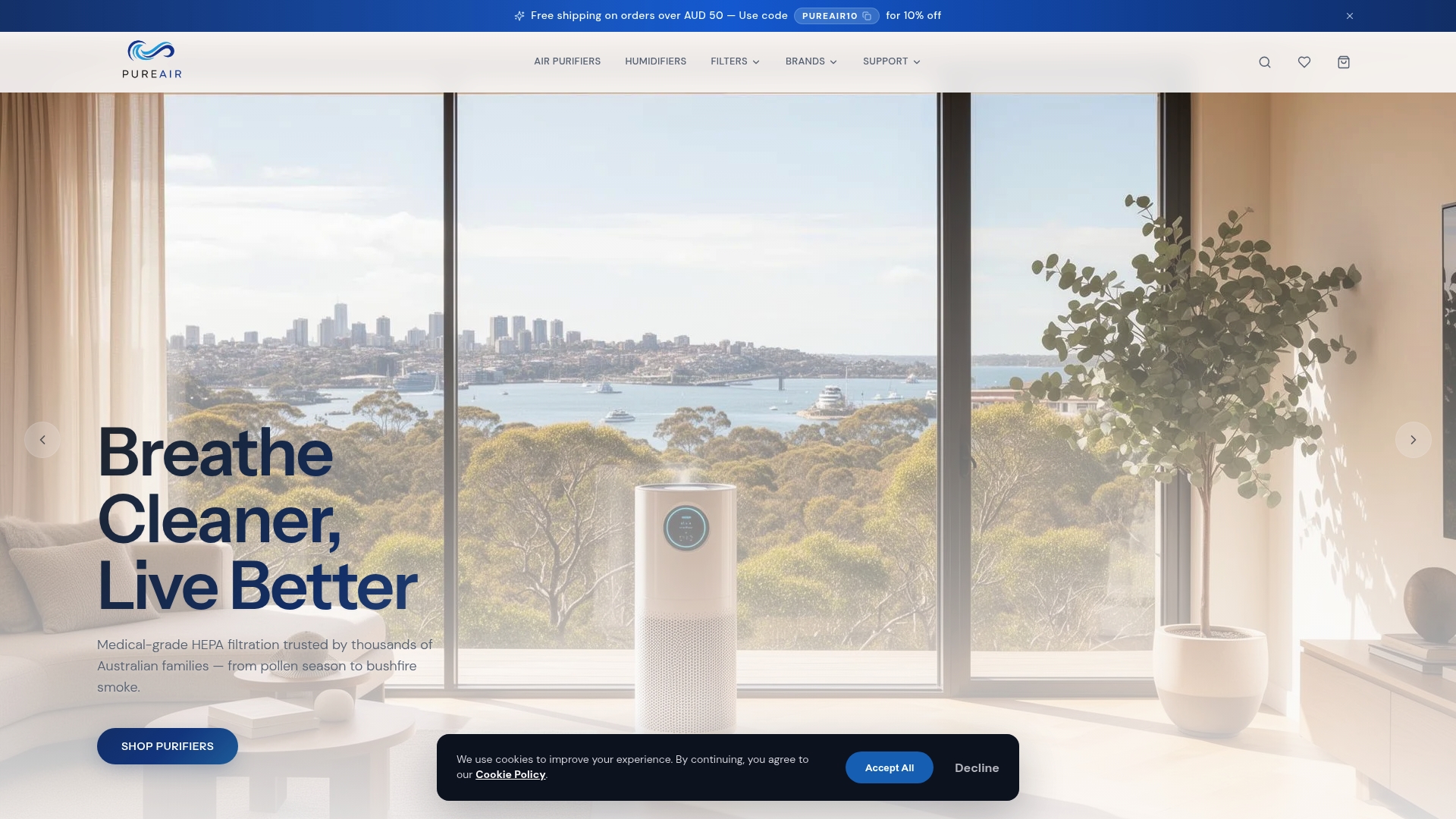
Every product in the Pureair-au range is AHAM verified, meaning the performance claims are independently tested, not just marketing copy. The Smart Finder tool on the website helps you identify the right unit based on your specific concern, whether that is mould, allergies, or general humidity control. Australian-based support means you get advice that reflects local climate realities, not generic northern hemisphere guidance. Browse the full air quality product range to find a dehumidifier or purifier suited to your home’s needs.
FAQ
What is the ideal indoor humidity level for an Australian home?
Professional guidance recommends maintaining indoor relative humidity between 45% and 55%. This range inhibits mould growth, reduces dust mite activity, and prevents musty odours.
Can my air conditioner replace a whole home dehumidifier?
No. Air conditioners remove moisture as a side effect of cooling but cannot control humidity independently without overcooling your home. A dedicated whole house dehumidifier manages humidity separately and more reliably.
How often does a whole home dehumidifier need servicing?
Under normal use, whole home systems require an annual air filter change and a check of the drain line and condensate pump. This is the primary maintenance task for most installations.
What size whole home dehumidifier do I need?
Sizing is based on a moisture load assessment that factors in your home’s volume, air infiltration rate, local climate, and internal moisture sources. Floor area alone is not a reliable guide and leads to under or oversized units.
Is a desiccant or condensing dehumidifier better for Australian conditions?
Condensing units are better suited to warm, humid regions like coastal Queensland and New South Wales. Desiccant units perform better in cooler climates such as Tasmania or alpine Victoria, where refrigerant systems lose efficiency below 18–20°C.
Recommended
- Premium Air Purifiers, Humidifiers & HEPA Filters | Pure & Co
- Choosing Between Humidifier & Dehumidifier: Vital 100S Role | Pure & Co
- Buy Xiaomi Xiaomi Smart Dehumidifier Lite in Australia | Best Price $180.00 | Pure & Co
- Buy Blueair 2-in-1 Purify + Humidify DH3i in Australia | Best Price $492.00 | Pure & Co