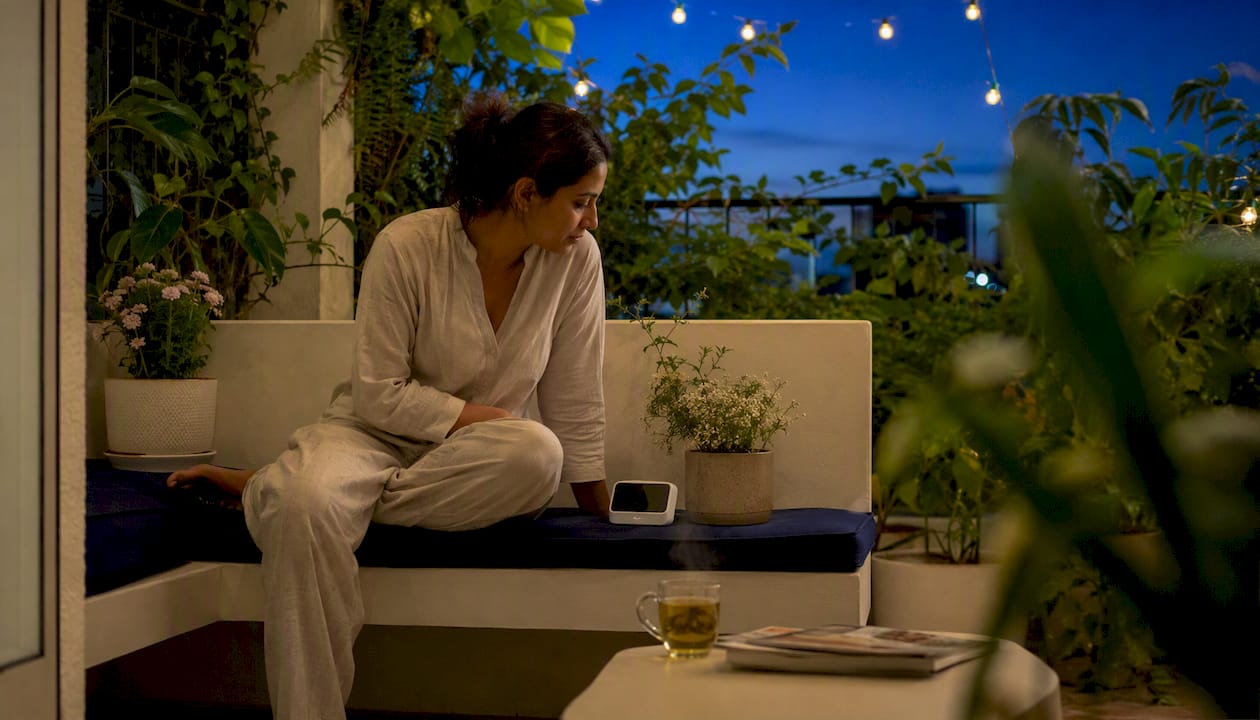
Yes, air quality measurably changes how you sleep, not just how you feel when you wake up. Research across large population samples consistently links exposure to particulate matter, nitrogen dioxide, and elevated CO2 to reduced deep sleep, more frequent awakenings, and worse sleep efficiency. A randomised crossover trial found that running a HEPA purifier in the bedroom added an average of 12 minutes to total sleep time. That sounds modest, but it compounds every night.
- The core finding: PM2.5, PM10, and NO2 are each independently associated with a higher risk of sleep quality deterioration, with NO2 exposure linked to a notably higher risk per 10 μg/m³ increment.
- Tonight’s action: If you have a HEPA purifier, run it in your bedroom on a low, quiet setting before you go to sleep. If you don’t, crack a window slightly (unless there’s a smoke event outside) to prevent CO2 from building up overnight.
- What this article covers: which pollutants matter and why, the biological pathways that disrupt sleep, how to measure what’s actually in your bedroom air, and a prioritised action plan with Australian cost ranges.
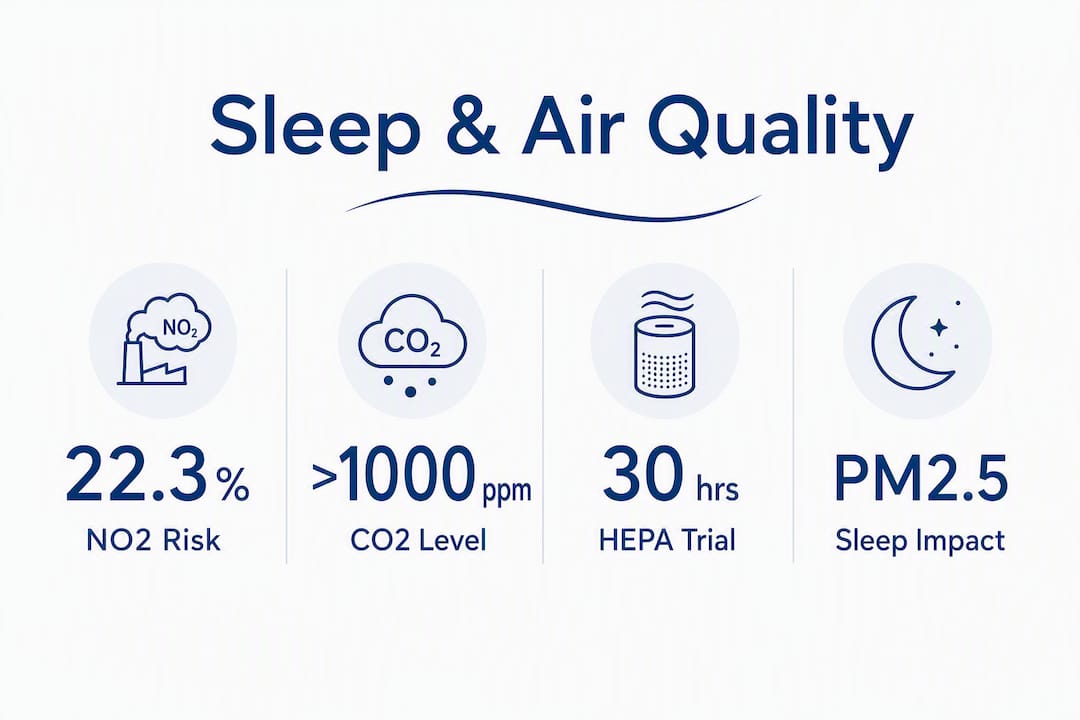
Pro Tip: CO2 can climb well above 1,000 ppm in a closed bedroom with two people sleeping in it, even without any obvious pollution source. Elevated CO2 is linked to lighter sleep and more awakenings, yet most people never think to measure it.
Table of Contents
- What does the research actually show about air pollution and sleep?
- Which pollutants are most likely disrupting your sleep?
- How does air pollution actually disrupt sleep biology?
- Where does your bedroom’s night-time pollution actually come from?
- How do you measure air quality and sleep at home?
- What steps can you take to improve bedroom air for better sleep?
- Do HEPA purifiers and ventilation actually improve sleep? What the trials show
- How long before you notice improvements, and what will it cost in Australia?
- Key takeaways
- The part most guides get wrong about bedroom air
- How Pureair-au can help you sleep in cleaner air
- Useful sources and further reading
What does the research actually show about air pollution and sleep?
The evidence base here is stronger than most people realise. A comprehensive systematic review drawing on studies covering more than 133,000 subjects found consistent associations between ambient particulate matter, NO2, and poor sleep quality across multiple populations and measurement methods. This isn’t a handful of small studies pointing in the same direction — it’s a pattern that holds across different countries, age groups, and sleep measurement tools.
Objective sleep studies add granularity. Polysomnography research has found that bedroom PM2.5 and PM10 concentrations correlate with reduced NREM (non-rapid eye movement) sleep stages and higher snoring indices, while elevated CO2 and CO raise heart rate during sleep. Formaldehyde, which off-gasses from new furniture and flooring, specifically increases REM latency, meaning you take longer to reach your first REM cycle. These are not subjective complaints — they show up on the EEG traces and physiological recordings used in clinical sleep labs.
A field study of 183 young adults found that higher bedroom PM2.5 concentrations were significantly associated with a reduced proportion of deep sleep and worse next-day physical performance. Critically, high bedroom CO2 (recorded at approximately 3,961 ppm in that study) amplified the negative association between PM2.5 and performance, suggesting the two pollutants interact rather than act independently.
On the intervention side, the HEPA purifier crossover trial mentioned above is the most directly actionable finding: 30 healthy adults, randomised double-blind design, two weeks per condition. The active purifier condition produced roughly 12 minutes more total sleep time and 19 minutes more total time in bed compared to the placebo filter. Some wake-after-sleep-onset measures were slightly higher in the purifier arm, which the researchers attributed to an acclimatisation effect; the sample was small. Still, the direction of effect is consistent with the epidemiological evidence.
The bottom line from the evidence: long-term outdoor pollution exposure raises your statistical risk of sleep problems; short-term indoor exposure during the night directly alters sleep architecture. Both matter, and the bedroom is where you can actually do something about it.
Which pollutants are most likely disrupting your sleep?
Not all airborne substances affect sleep the same way. The mechanisms differ, the sleep stages affected differ, and the sources differ. Here’s what the evidence points to for each major category.
PM2.5 (fine particulate matter, under 2.5 micrometres)
The most studied pollutant for sleep. Long-term PM2.5 exposure carries a hazard ratio of 1.14 for sleep quality deterioration. In bedroom studies, higher PM2.5 concentrations are linked to reduced deep (N3) sleep and worse next-day performance. Sources include bushfire smoke, traffic exhaust, cooking fumes, candles, and tobacco smoke.
PM10 (coarser particles, 2.5–10 micrometres)
Associated with a hazard ratio of 1.13 for sleep deterioration in the same large-scale analysis. PM10 tends to settle faster than PM2.5 but can still be inhaled and trigger airway irritation, contributing to coughing, wheezing, and throat irritation that cause awakenings. Common sources: dust, pollen, pet dander, mould spores.
NO2 (nitrogen dioxide)
The strongest statistical association in the epidemiological data, with a 22.3% higher risk of sleep quality deterioration per 10 μg/m³ increment. NO2 comes primarily from traffic and gas cooking appliances. It’s an airway irritant and pro-inflammatory agent, and it penetrates indoors readily, particularly in homes near busy roads.
CO2 (carbon dioxide)
Not a pollutant in the traditional sense, but a significant sleep disruptor. CO2 builds up overnight in closed bedrooms, and the polysomnography research found elevated CO2 raises heart rate during sleep and interacts with PM2.5 to worsen outcomes. The effect on sleep architecture is primarily on lighter sleep stages and arousal frequency.
VOCs and formaldehyde
Volatile organic compounds off-gas from paints, adhesives, new furniture, and synthetic flooring. Formaldehyde specifically has been linked to increased REM latency in polysomnographic studies, meaning it delays the onset of your first REM cycle. This is a commonly overlooked source because the smell fades long before the off-gassing stops.
Bushfire smoke
A uniquely Australian concern. Smoke events combine very high PM2.5 with a complex mix of VOCs and combustion by-products. During major smoke events (Sydney in 2019–2020 saw AQI readings above 2,000 on some days), indoor PM2.5 can spike dramatically even with windows closed, because smoke infiltrates through gaps in building envelopes.
Allergens (pollen, mould spores, pet dander, dust mite particles)
These trigger nasal inflammation and obstruction, which disrupts breathing during sleep and raises the risk of snoring and sleep-disordered breathing. The allergy-air quality connection is particularly relevant in spring, when pollen counts peak across most Australian cities.
Pro Tip: New furniture and freshly painted rooms can off-gas formaldehyde for weeks or months. If you’ve recently renovated your bedroom or bought new flat-pack furniture, ventilate aggressively for the first few weeks and consider a purifier with an activated carbon filter alongside HEPA.
How does air pollution actually disrupt sleep biology?
Pollutants don’t just make you cough at night. They interfere with sleep through several distinct biological pathways, which is why different people exposed to the same air can experience different symptoms — one person wakes repeatedly, another gets less deep sleep, a third feels unrested despite a full night in bed.
Inflammation and oxidative stress
PM2.5 and NO2 trigger systemic inflammatory responses. Elevated inflammatory markers (including cytokines like IL-6 and TNF-α) are known to fragment sleep architecture, reduce slow-wave sleep, and increase the arousal index. This pathway explains why people living near high-traffic roads often report worse sleep quality even when they’re not consciously aware of any smell or irritation.
Autonomic nervous system dysregulation
Pollutant exposure shifts the balance between sympathetic and parasympathetic nervous system activity. The polysomnography research found elevated CO and CO2 raised heart rate during sleep, a marker of sympathetic activation. Higher sympathetic tone during sleep means lighter, more fragmented sleep and less restorative slow-wave activity.
Nasal obstruction and allergic inflammation
Allergens and irritant gases cause nasal mucosal swelling, which forces mouth breathing, reduces airway diameter, and increases the likelihood of snoring and obstructive events. This pathway is particularly relevant for people with existing allergic rhinitis or asthma, where even moderate allergen exposure can significantly worsen sleep-disordered breathing.
Hypoxia and impaired oxygen exchange
At very high PM2.5 concentrations (during severe bushfire events, for example), gas exchange efficiency can be reduced enough to affect overnight oxygenation. This is most clinically significant for people with pre-existing respiratory conditions, but even in healthy adults, sustained exposure to combustion by-products during sleep affects respiratory rate and depth.
The key insight is that these pathways overlap. Someone exposed to high bedroom PM2.5 and elevated CO2 simultaneously is dealing with inflammatory, autonomic, and ventilatory stressors at once, which explains why the field study found CO2 amplified PM2.5’s negative effects rather than simply adding to them.
Where does your bedroom’s night-time pollution actually come from?
Most people assume outdoor air is the problem. The reality is that bedroom air quality is shaped by a combination of outdoor infiltration and indoor generation, and the bedroom microenvironment, with its stagnant air and closed door, concentrates whatever gets in.
Indoor sources
- Candles and incense: — Significant PM2.5 emitters. A single scented candle in a small room can push PM2.5 well above WHO guideline values within minutes.
Outdoor sources that penetrate bedrooms
Traffic exhaust, woodsmoke from neighbours’ fireplaces, and bushfire smoke all infiltrate through windows, gaps around doors, and ventilation systems. The infiltration rate depends on building tightness, wind direction, and how long windows have been open.
Quick bedroom source audit
Walk through this before bed tonight:
- Any candles, incense, or oil diffusers burning in the last two hours?
- Gas heater or cooker used recently with the bedroom door closed?
- New furniture or recently painted surfaces in the room?
- Pets sleeping on the bed or in the room?
- Visible mould near windows, in the wardrobe, or in an adjacent bathroom?
- Mattress and pillows more than two years old without regular washing?
Pro Tip: In Australia, bushfire smoke season now overlaps with spring pollen season across much of the south-east. During October to February, check the AQI on the NSW Department of Planning and Environment’s AirWatch or the EPA Victoria’s AirWatch before deciding whether to ventilate or keep windows closed. On high-smoke days, a HEPA purifier with windows shut is almost always the better call.
How do you measure air quality and sleep at home?
Measuring your bedroom air gives you a baseline and tells you whether your interventions are working. The challenge is that consumer sensors vary enormously in accuracy, and sleep trackers have real limitations compared to clinical tools.
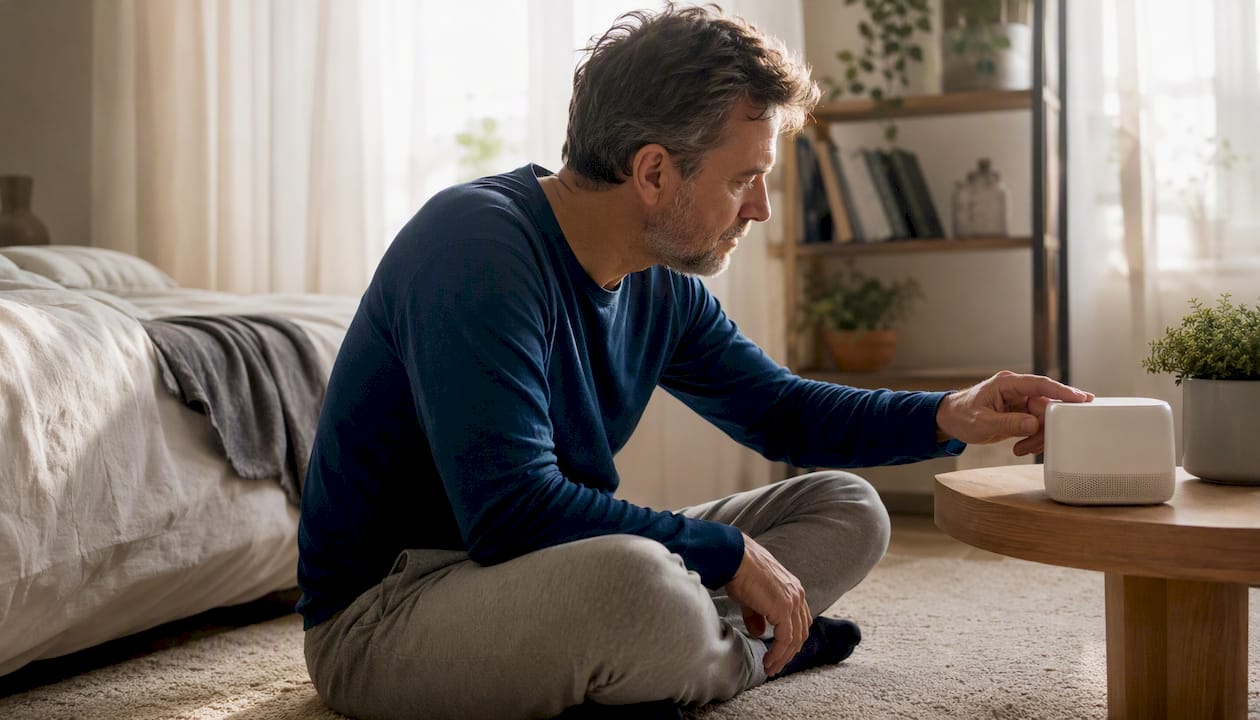
Air quality sensors worth using
| Sensor type | What it measures reliably | Bedroom use case | Key spec to look for |
|---|---|---|---|
| Laser particle counter (PM2.5/PM10) | Fine and coarse particulate matter | Baseline monitoring, smoke events | ±15% accuracy or better |
| NDIR CO2 sensor | Carbon dioxide concentration | Overnight CO2 build-up | NDIR (non-dispersive infrared) technology; avoid electrochemical CO2 sensors |
| Electrochemical VOC sensor | Total VOC index (not individual compounds) | Detecting off-gassing events | Useful as a relative indicator only; cannot identify specific VOCs |
| Combination monitor | PM2.5, CO2, temperature, humidity | All-in-one bedroom monitoring | Look for NDIR CO2 and laser PM; avoid units with only estimated CO2 |
The WHO 2021 guideline for annual mean PM2.5 is 5 μg/m³. Bedroom monitoring studies have found that only one in ten bedrooms in some samples met this threshold, which means most people are sleeping in air that exceeds the guideline without knowing it.
For CO2, readings below 800 ppm are generally considered good for a bedroom. Above 1,200 ppm, cognitive effects and sleep disruption become more likely. A closed bedroom with two adults can reach 1,500 ppm or higher by morning.
Sleep tracking: what consumer devices can and can’t tell you
Consumer wearables (smartwatches, fitness bands) and bedside sleep trackers use actigraphy (movement detection) and heart rate variability to estimate sleep stages. They’re useful for tracking trends over time and noticing whether an intervention seems to help, but they cannot reliably distinguish N2 from N3 sleep, and their REM detection varies by device and individual. Polysomnography, the clinical gold standard, requires a sleep lab or a home sleep study ordered by a GP.
For most people, the practical approach is: use a consumer tracker to monitor trends before and after an intervention, and use air quality monitors to confirm that the intervention is actually changing the air.
Pro Tip: Place your air quality monitor at breathing height (roughly 1 metre from the floor) near the head of the bed, not on a high shelf or near a window. That’s the air you’re actually breathing for eight hours. Run it for a week before making any changes to get a true baseline.
What steps can you take to improve bedroom air for better sleep?
Work through these in order. The quick fixes cost nothing and often produce noticeable results within a few nights. The upgrades take more investment but have trial evidence behind them.
Step-by-step bedroom air improvement plan
-
Remove or reduce indoor sources first. Stop burning candles or incense in the bedroom. Move pets out of the sleeping space. Wash pillows and bedding in hot water (60°C kills dust mites) every two weeks. Vacuum the mattress and use a dust-mite-proof mattress protector.
-
Ventilate strategically. On days when outdoor AQI is below 50 (good), open the bedroom window for 15–30 minutes before sleep to flush CO2 and dilute indoor pollutants. On smoke or high-pollen days, keep windows closed and rely on filtration instead.
-
Add a correctly sized HEPA purifier. Match the purifier’s CADR (Clean Air Delivery Rate) to your room volume. A rough rule: for a standard Australian bedroom of around 15–20 m² with 2.4 m ceilings, you need a CADR of at least 150–200 m³/hour to achieve four to five air changes per hour. The air purifier placement guide covers room sizing in detail. Position the unit away from walls and near the centre of the room or close to the bed, not tucked in a corner.
-
Control humidity. The target range for bedrooms is 40–60% relative humidity. Below 40%, nasal passages dry out and become more vulnerable to irritants. Above 60%, mould and dust mites thrive. A humidifier helps in dry climates (inland Australia in winter) and a dehumidifier helps in humid coastal regions or during summer.
-
Address mould at the source. Wipe down window frames and sills regularly. Fix any leaks. Improve bathroom ventilation so moisture doesn’t migrate into the bedroom. A dehumidifier in a chronically damp room is more effective than any purifier at preventing mould growth.
-
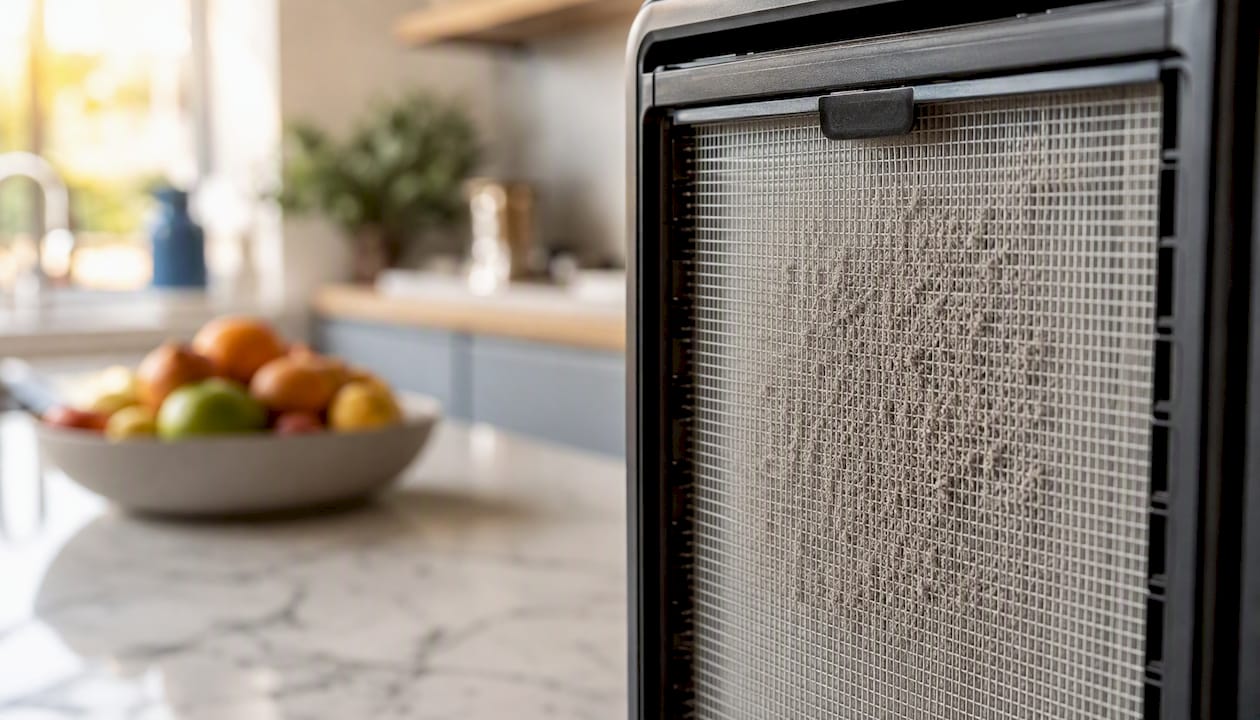
Maintain your purifier. A clogged HEPA filter doesn’t just stop working — it can restrict airflow and reduce the unit’s effectiveness significantly. Follow the manufacturer’s replacement schedule, typically every 6–12 months depending on usage and local air quality.
For allergy and asthma sufferers
The child bedroom air quality checklist covers family-specific steps, but the core principle applies to adults too: layer your defences. HEPA filtration handles airborne particles, allergen-proof covers handle the mattress and pillow reservoir, and humidity control handles the mould and dust mite environment. No single intervention covers all three.
- Avoid synthetic fragrances and air fresheners, which add VOCs without any air quality benefit.
- If you share a small apartment, coordinate cooking times so the bedroom door is closed during and after gas cooking.
- In dorms or shared dwellings, a small portable purifier on your bedside table provides a localised clean-air zone even if you can’t control the whole room.
Pro Tip: Most purifiers have a sleep or night mode that reduces fan speed and dims indicator lights. Use it. The noise from a purifier running on high can itself disrupt sleep, particularly for light sleepers. Run it on high for 30 minutes before bed to clear the air, then drop to the lowest quiet setting.
Do HEPA purifiers and ventilation actually improve sleep? What the trials show
The intervention evidence is promising but not yet definitive. Here’s an honest assessment by intervention type.
HEPA air purification: moderate evidence
The randomised crossover trial remains the most directly applicable study: 30 healthy adults, double-blind design, two weeks per condition. The active HEPA condition produced approximately 12 minutes more total sleep time and 19 minutes more total time in bed. The limitation is sample size and duration. Larger, longer trials are needed, but the direction of effect is consistent with the epidemiological associations.
Ventilation improvements: moderate evidence
Field intervention studies that increased ventilation rates showed reductions in both CO2 and PM2.5, with associated objective sleep improvements in small samples. The mechanism is plausible and well-supported: lower CO2 reduces autonomic arousal, and lower PM2.5 reduces inflammatory load during sleep.
Humidity control: limited direct trial evidence
The evidence for humidity control on sleep specifically is indirect. What’s established is that high humidity promotes mould and dust mite growth, both of which worsen allergic rhinitis and sleep-disordered breathing. Maintaining 40–60% RH is a reasonable, low-risk intervention with a strong mechanistic rationale even without dedicated sleep-outcome RCTs.
Source removal and cleaning: limited but logical
No large RCTs specifically test bedroom cleaning protocols on sleep outcomes, but the evidence linking allergen burden to sleep-disordered breathing is strong enough that source removal is consistently recommended in clinical allergy guidelines.
One important caveat applies across all interventions: expect a short acclimatisation period. When you introduce a purifier or change your ventilation pattern, your body and sleep architecture may take a week or two to settle. The crossover trial noted some transient changes in wake-after-sleep-onset during the early purifier period before longer-term gains in total sleep time appeared.
How long before you notice improvements, and what will it cost in Australia?
Timeline expectations
- Immediate (same night): Source removal (candles, pets, smoking) and ventilation on a clean-air night can reduce PM2.5 and CO2 within an hour. Some people notice lighter breathing and fewer awakenings within the first few nights.
- Short term (days to 2 weeks): A HEPA purifier running nightly typically shows measurable air quality improvements within 24–48 hours. Sleep improvements, based on the trial evidence, tend to emerge over 1–2 weeks as acclimatisation occurs.
- Medium term (2–8 weeks): Allergen control measures (mattress protectors, regular washing, humidity management) take longer because you’re reducing the reservoir of allergens in bedding and soft furnishings, not just the airborne fraction.
- Longer term (months): Mould remediation and structural ventilation improvements (exhaust fans, whole-house ventilation) address root causes and produce sustained air quality gains.
Typical Australian cost ranges
| Intervention | Typical cost range (AUD) | Ongoing costs |
|---|---|---|
| Allergen-proof mattress and pillow covers | $40–$150 | Nil (wash with bedding) |
| Entry-level bedroom HEPA purifier | $150–$300 | Filter replacement $50/year |
| Mid-range bedroom HEPA purifier | $300 | Filter replacement $75/year |
| Combination PM2.5/CO2 monitor | $80–$200 | Nil (no consumables) |
| Portable humidifier | $80–$200 | Nil (distilled water recommended) |
| Portable dehumidifier | $180–$300 | Minimal electricity |
| Bathroom exhaust fan upgrade | $150–$300 installed | Minimal electricity |
| Whole-house ventilation system | $2,000–$3,000 installed | Filter service annually |
Pro Tip: Before spending $300 or more on a purifier, buy or borrow a PM2.5/CO2 monitor for a week. If your bedroom PM2.5 is already below 10 μg/m³ and CO2 stays under 900 ppm overnight, your biggest gains will come from allergen control and humidity management, not filtration. Measure first, then spend.
If you’re concerned about more serious air quality hazards in an older home, such as asbestos disturbance during renovation, professional air monitoring guidance covers the specialised testing required for those situations.
Key takeaways
Poor indoor air quality measurably reduces deep sleep and increases awakenings, and a correctly sized HEPA purifier combined with overnight CO2 management is the most evidence-backed bedroom intervention available.
| Point | Details |
|---|---|
| PM2.5 and NO2 raise sleep disorder risk | NO2 exposure is linked to a 22.3% higher risk of sleep quality deterioration per 10 μg/m³ increment, PM2.5 to a hazard ratio of 1.14 and PM10 to a hazard ratio of 1.13. |
| CO2 amplifies particulate effects | High bedroom CO2 worsens the negative association between PM2.5 and sleep; keep overnight CO2 below 1,000 ppm. |
| HEPA purifiers add measurable sleep time | A randomised crossover trial found some additional total sleep time with an active HEPA purifier versus a placebo filter. |
| Measure before you spend | Most bedrooms exceed WHO PM2.5 guidelines; a monitor tells you whether filtration or allergen control should be your priority. |
| Pureair-au for Australian bedrooms | Pureair-au’s HEPA purifiers, humidifiers, and dehumidifiers are sized and verified for Australian conditions, with a Smart Finder tool to match the right unit to your specific concern. |
The part most guides get wrong about bedroom air
There’s a tendency in this space to treat air quality as a single dial you turn up or down. Buy a purifier, breathe better, sleep better. The research tells a more complicated story, and I think it’s worth being direct about it.
Filtration and ventilation are not interchangeable. A HEPA purifier running in a sealed bedroom will reduce PM2.5 effectively, sometimes dramatically, but it does nothing for CO2. By morning in a closed room, CO2 can be sitting at 1,500 ppm or higher, and the field study evidence suggests that’s enough to amplify whatever particulate burden remains. You need both: filtration to handle particles, and some form of ventilation or CO2 monitoring to manage the gas-phase problem.
The other thing most guides underplay is the allergen reservoir. Airborne allergen levels in a bedroom are partly determined by what’s embedded in the mattress, pillows, and carpet, not just what’s floating in the air. A purifier captures what’s airborne, but it can’t reach what’s sitting in your pillow. That’s why the combination of HEPA filtration, allergen-proof covers, and regular hot washing produces better outcomes than filtration alone, particularly for anyone with allergic rhinitis or asthma.
For most Australian households, the practical starting point is a correctly sized HEPA purifier, a CO2 monitor, and allergen-proof mattress and pillow covers. That combination addresses the three most common bedroom air problems at a cost most households can manage. If you have severe sleep-disordered breathing, persistent insomnia, or a diagnosed respiratory condition, air quality improvements are worth pursuing alongside, not instead of, a clinical assessment from your GP or a sleep physician.
How Pureair-au can help you sleep in cleaner air
The interventions this article covers, HEPA filtration, humidity control, and air quality monitoring, map directly to what Pureair-au stocks and has verified for Australian conditions.
For most bedrooms, the starting point is a quiet, correctly sized HEPA purifier. The Honeywell Air Touch P1 suits smaller rooms at $246.00, while the Honeywell Air Touch P2 handles larger spaces at $295.00. If you want filtration and humidity management in one unit, the Blueair 2-in-1 DH3i combines both at $492.00, which is particularly useful in dry inland climates where overnight humidity drops below the 40% threshold. For coastal or humid-climate households dealing with mould and dust mites, the Xiaomi Smart Dehumidifier Lite at $180.00 is a practical entry point.
All products are AHAM verified and selected for Australian environmental conditions, including bushfire smoke season. Use the Smart Finder tool on the Pureair-au site to identify the right unit for your specific concern, whether that’s smoke, allergies, mould, or general sleep air quality. Browse the full range at the Pureair-au catalogue and find the unit that fits your bedroom and budget.
Useful sources and further reading
The studies and resources below are the primary evidence base for this article. They’re worth reading directly if you want to dig into the methodology or regional data.
-
Air pollution exposure and adverse sleep health across the life course — A broad review of the epidemiological evidence linking ambient air pollution to sleep outcomes across age groups. Useful for understanding how the associations hold across the lifespan.
-
Long-term pollutant exposure and sleep disorder risk (PLOS ONE) — The source for the PM2.5, PM10, and NO2 hazard ratios cited in this article. Provides the most specific quantitative estimates for pollutant-specific sleep disorder risk.
-
HEPA purifier randomised crossover trial (Journal of Sleep Research) — The 30-adult double-blind trial reporting 12 minutes of additional total sleep time with active HEPA filtration. Read this for the methodology and the caveats around acclimatisation.
-
Bedroom PM2.5, CO2, and sleep quality field study (Scientific Reports) — The 183-participant field study linking bedroom PM2.5 to reduced deep sleep and demonstrating the CO2 interaction effect. Directly relevant to anyone monitoring their bedroom air.
-
Polysomnographic evaluation of indoor air quality and sleep (ScienceDirect) — The exploratory polysomnography study linking specific IAQ parameters (formaldehyde, CO2, PM, bioburden) to sleep architecture changes. The most granular mechanistic evidence available.
-
Comprehensive review of ambient air pollution and sleep quality (ScienceDirect) — The systematic review covering more than 133,000 subjects. Use this to understand the breadth of the epidemiological evidence base.
-
Air quality and health — Johns Hopkins Medicine — Accessible clinical summary of how air quality affects respiratory and systemic health, including the symptoms most likely to cause sleep disturbance.
-
WHO: Air pollution — The WHO’s primary resource on air pollution health effects and guideline values, including the 2021 PM2.5 annual mean guideline of 5 μg/m³ referenced in this article.
For Australian-specific air quality data, the NSW EPA’s AirWatch and EPA Victoria’s AirWatch portals provide real-time AQI readings by suburb, which are particularly useful for deciding whether to ventilate or keep windows closed on any given night.
This article provides general health and environmental information. It is not a substitute for medical advice. If you have a diagnosed sleep disorder, respiratory condition, or severe allergy, consult your GP or a relevant specialist before relying on environmental interventions alone.