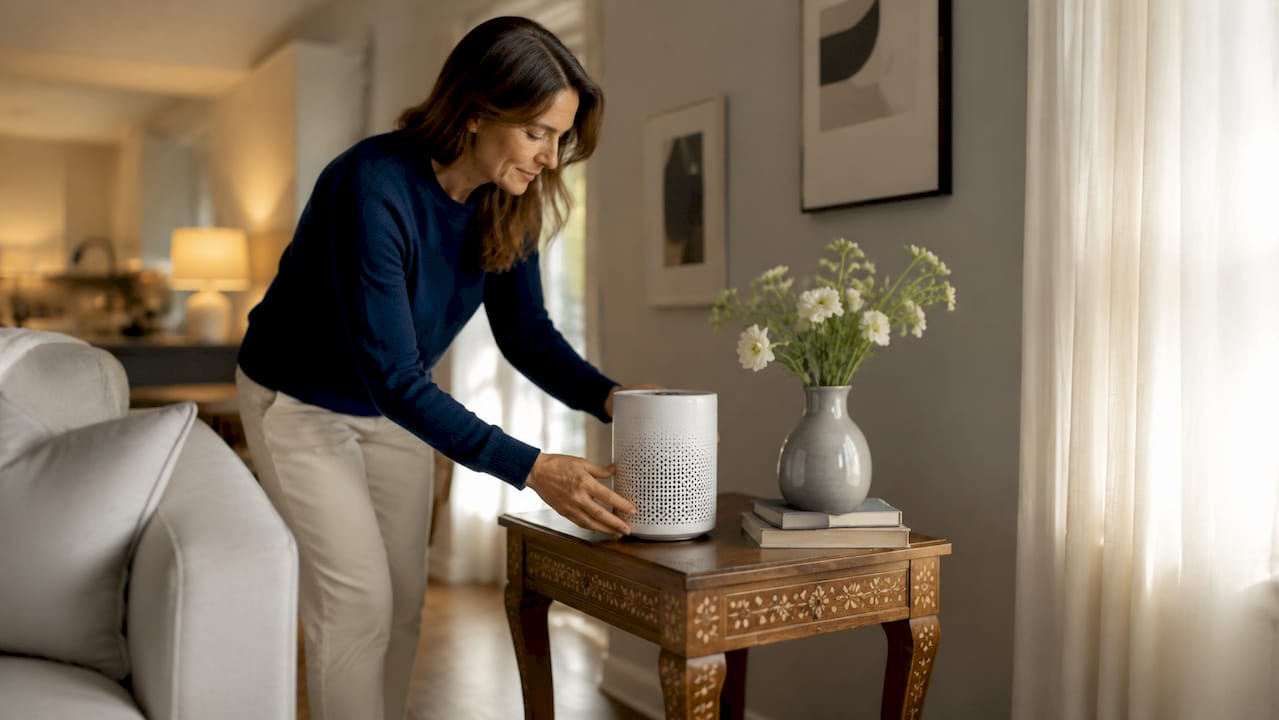
Air purifiers reduce eczema symptoms by removing the airborne triggers that inflame sensitive skin, including dust mite allergens, pollen, pet dander, and mould spores. The role of air purifiers in eczema relief is not a marketing claim. High-quality HEPA air purifiers reduce indoor PM2.5 concentrations by 25–56% and improve allergy and eczema symptom scores by 25–60%. That is a clinically meaningful reduction for anyone managing chronic skin inflammation. The American College of Allergy, Asthma and Immunology recognises indoor allergen reduction as a core component of eczema management. True HEPA filtration, the standard used by Pureair-au and other verified suppliers, captures 99.97% of airborne particles down to 0.3 microns. Understanding which technology works, which to avoid, and how to use a purifier correctly is what separates genuine relief from wasted money.
What does the evidence say about air purifiers and eczema?
The science on air purifiers and eczema is clear and consistent. HEPA purifiers significantly lower indoor particulate matter and symptom days in people with allergic rhinitis and asthma, conditions that share the same immune pathway as eczema. Studies published in JAMA Internal Medicine and reviewed by the American Academy of Allergy, Asthma and Immunology (AAAAI) report 25–60% symptom improvement in allergy sufferers. That cross-applicability to eczema is well supported.
Indoor air quality is a direct eczema trigger. Children exposed to indoor smoke from wood or coal fuels show higher rates of eczema and severe asthma symptoms. This confirms that airborne particulate matter does not just irritate airways. It aggravates skin barrier dysfunction too. The role of air quality in eczema in children is particularly significant because their skin barriers are thinner and more reactive to environmental insults.
The table below summarises the key evidence connecting air purification to eczema symptom reduction.
| Study focus | Finding | Implication for eczema |
|---|---|---|
| PM2.5 reduction by HEPA filters | 25–56% reduction in indoor PM2.5 | Fewer airborne particles reaching skin and airways |
| Allergy symptom improvement | 25–60% improvement in symptom scores | Reduced frequency and severity of flare-ups |
| Indoor smoke exposure in children | Higher eczema prevalence with poor air quality | Air purification directly lowers a confirmed trigger |
| HEPA particle capture rate | 99.97% of particles at 0.3 microns | Dust mite allergens, pollen, and mould spores removed |
“Environmental control is one of the most underutilised strategies in eczema management. Reducing the allergen load in the air a person breathes and sleeps in can meaningfully reduce how often their skin reacts.” — American Academy of Allergy, Asthma and Immunology position on indoor allergen management.
The evidence does not suggest air purifiers cure eczema. They reduce the frequency and intensity of triggers. That distinction matters when setting realistic expectations.
Which air purifier technologies help eczema and which cause harm?
Not all air purifiers are equal. The technology inside the unit determines whether it helps or worsens eczema symptoms.
True HEPA filtration: the only recommended standard
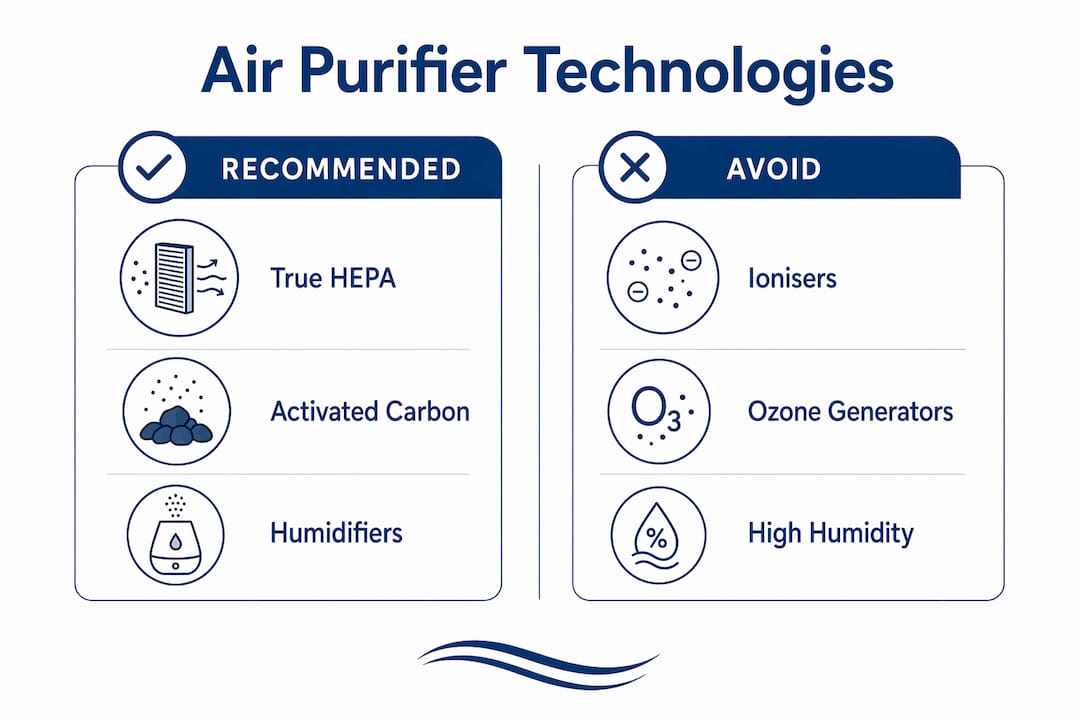
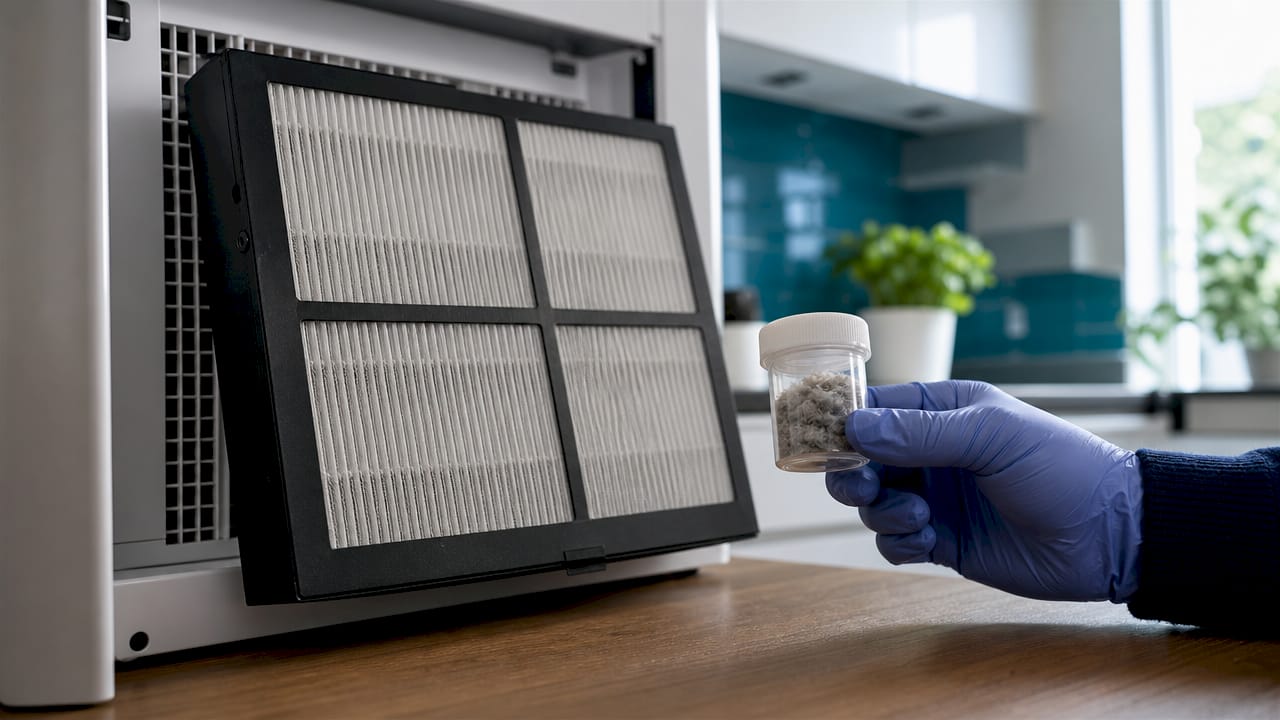
True HEPA filters capture 99.97% of airborne particles down to 0.3 microns. That includes dust mite allergens, pollen, pet dander, and mould spores. These are the four most common airborne eczema triggers in Australian homes. True HEPA is the filtration standard used in medical settings and is the benchmark Pureair-au applies to its product range.
Ionisers and ozone generators: avoid these entirely
Ionisers and ozone generators release irritants that worsen eczema symptoms. Ozone is a powerful skin and lung irritant. It degrades the natural oils in your skin barrier, which is already compromised in eczema. Expert consensus does not recommend these technologies for people with skin conditions or respiratory sensitivities. Many budget air purifiers include an ioniser function that is switched on by default. Check the product specifications before purchasing.
Pro Tip: Before buying any air purifier, search the model name alongside “ozone output” or “ioniser.” If the manufacturer does not publish ozone emission data, treat that as a red flag and choose a unit with a verified True HEPA filter instead.
Activated carbon filters and complementary technologies
Activated carbon filters remove volatile organic compounds (VOCs), including formaldehyde from furniture, cleaning products, and paints. VOCs are a known eczema irritant. A purifier combining True HEPA with an activated carbon layer addresses both particulate and chemical triggers. This combination is the most practical choice for Australian homes, particularly those near bushfire smoke zones or with new renovations.
Humidifiers are a useful complement to air purifiers for eczema relief, but they carry a specific risk. Humidity above 50% promotes dust mite and mould growth, which worsens symptoms. The optimal indoor humidity range for eczema management is 30–50%. Use a hygrometer to monitor levels before adding a humidifier to your routine.
How to use air purifiers properly for eczema relief at home
Buying the right purifier is only half the job. Placement, sizing, and daily habits determine how much benefit you actually get.
-
Match the purifier to your room size. Effectiveness depends on the Clean Air Delivery Rate (CADR) relative to room volume. A unit rated for 20 square metres will not adequately clean a 40 square metre open-plan living area. Check the CADR rating on the product label and match it to the room where you spend the most time, typically the bedroom.
-
Place the unit where you sleep. Eczema flare-ups are often worst at night because dust mite allergens concentrate in bedding. Running a correctly sized HEPA purifier in your bedroom provides the longest continuous period of clean air exposure each day.
-
Ventilate daily for 10–15 minutes. Ventilation prevents pollutant build-up that filters alone cannot address. Open windows in the morning when outdoor pollen counts are lower, then close them and run the purifier. This combination removes accumulated indoor pollutants without importing fresh outdoor allergens.
-
Keep humidity in the 30–50% range. Monitor indoor humidity with a hygrometer. If your home is dry, a humidifier set within this range supports skin hydration without creating conditions for dust mite or mould growth.
-
Replace filters on schedule. A clogged HEPA filter loses efficiency and can recirculate trapped allergens. Most manufacturers recommend replacement every 6–12 months depending on usage. Check the HEPA filter replacement guide from Pureair-au for model-specific schedules.
-
Reduce contact allergens alongside air purification. Wash bedding weekly in hot water above 60°C. Use allergen-proof mattress and pillow covers. Vacuum with a HEPA-filtered vacuum cleaner. Allergens in upholstery accumulate quickly on sofas and carpets, so regular cleaning reduces the total allergen load that your purifier has to manage.
Pro Tip: Run your air purifier on its highest setting for 30 minutes before you go to bed, then drop it to a lower, quieter setting overnight. This clears the room quickly and maintains clean air without disturbing your sleep.
How do air purifiers fit into a broader eczema management plan?
Air purifiers are a trigger reduction tool. They are not a treatment. Eczema is multifactorial, and environmental control is one component among several that need to work together.
Dermatologists consistently recommend the “soak and seal” method as the foundation of eczema skin care. This involves bathing in lukewarm water for 10–15 minutes, then applying a fragrance-free moisturiser within three minutes of patting skin dry. This method repairs the skin barrier directly. An air purifier reduces the airborne triggers that challenge that barrier, but it cannot substitute for the barrier repair itself.
Eczema treatment success depends on combining air purification with skin hydration and allergen avoidance. Relying on a purifier alone while neglecting moisturising routines or continuing to use fragranced cleaning products will produce limited results. Clinical patch testing identifies contact allergens specific to your skin, which may include nickel, fragrances, or preservatives that no air purifier can address.
A complete eczema management plan includes all of the following:
- HEPA air purification to reduce airborne allergens and particulate matter
- Daily moisturising using fragrance-free emollients, applied immediately after bathing
- Trigger identification through a dermatologist-supervised patch test
- Bedding hygiene with weekly hot washes and allergen-proof covers
- Humidity control maintained between 30–50% using a monitored humidifier or dehumidifier
- Chemical irritant reduction by switching to fragrance-free cleaning and laundry products
- Regular ventilation combined with purifier use to prevent indoor pollutant accumulation
The steps to improve room air quality published by Pureair-au cover several of these environmental controls in practical detail. Treating air purification as one layer in this plan, rather than the whole solution, produces the best outcomes.
Key takeaways
Air purifiers reduce eczema flare-ups by lowering airborne allergen exposure, but they work best as part of a complete management plan that includes skin hydration, trigger identification, and humidity control.
| Point | Details |
|---|---|
| HEPA is the only safe standard | True HEPA captures 99.97% of particles; avoid ionisers and ozone generators entirely. |
| Correct sizing is non-negotiable | Match CADR to room volume or the purifier will not reduce allergen load effectively. |
| Humidity must stay at 30–50% | Above 50% promotes dust mites and mould, which worsen eczema symptoms. |
| Air purifiers complement, not replace, skin care | The “soak and seal” method and patch testing address triggers no purifier can remove. |
| Ventilation and purification work together | Open windows briefly daily, then run the purifier to clear remaining indoor pollutants. |
Why I think most people misuse their air purifier for eczema
Most people who buy an air purifier for eczema place it in the lounge room, run it occasionally, and wonder why their skin is still flaring. The bedroom is where the real work happens. You spend 7–8 hours there every night, breathing air that is dense with dust mite allergens from your mattress and pillow. That is the environment that needs the most attention.
The second mistake I see constantly is buying a unit with an ioniser because it sounds more advanced. Ozone output from ionisers degrades your skin’s natural lipid barrier. For someone with eczema, whose skin barrier is already compromised, that is the opposite of helpful. True HEPA filtration is not glamorous, but it is the only technology with a consistent evidence base behind it.
The third issue is expecting the purifier to carry the whole load. I have spoken with people who run a quality HEPA unit religiously but still use fragranced laundry powder and sleep on unwashed bedding. The purifier cannot compensate for contact allergens. It reduces airborne load. The rest of the management plan has to do its part too.
If you are in Australia and dealing with seasonal pollen, bushfire smoke, or high humidity conditions that drive mould growth, the environmental challenge is real and specific. A well-sized, True HEPA purifier from a verified supplier like Pureair-au, combined with consistent skin care and humidity monitoring, is the most practical combination available to you right now.
— Lucas
Find the right air purifier for eczema relief with Pureair-au
Pureair-au supplies HEPA-verified air purifiers, humidifiers, and dehumidifiers designed for Australian home conditions, including bushfire smoke, high pollen seasons, and coastal humidity. Every unit in the range is AHAM verified for performance.
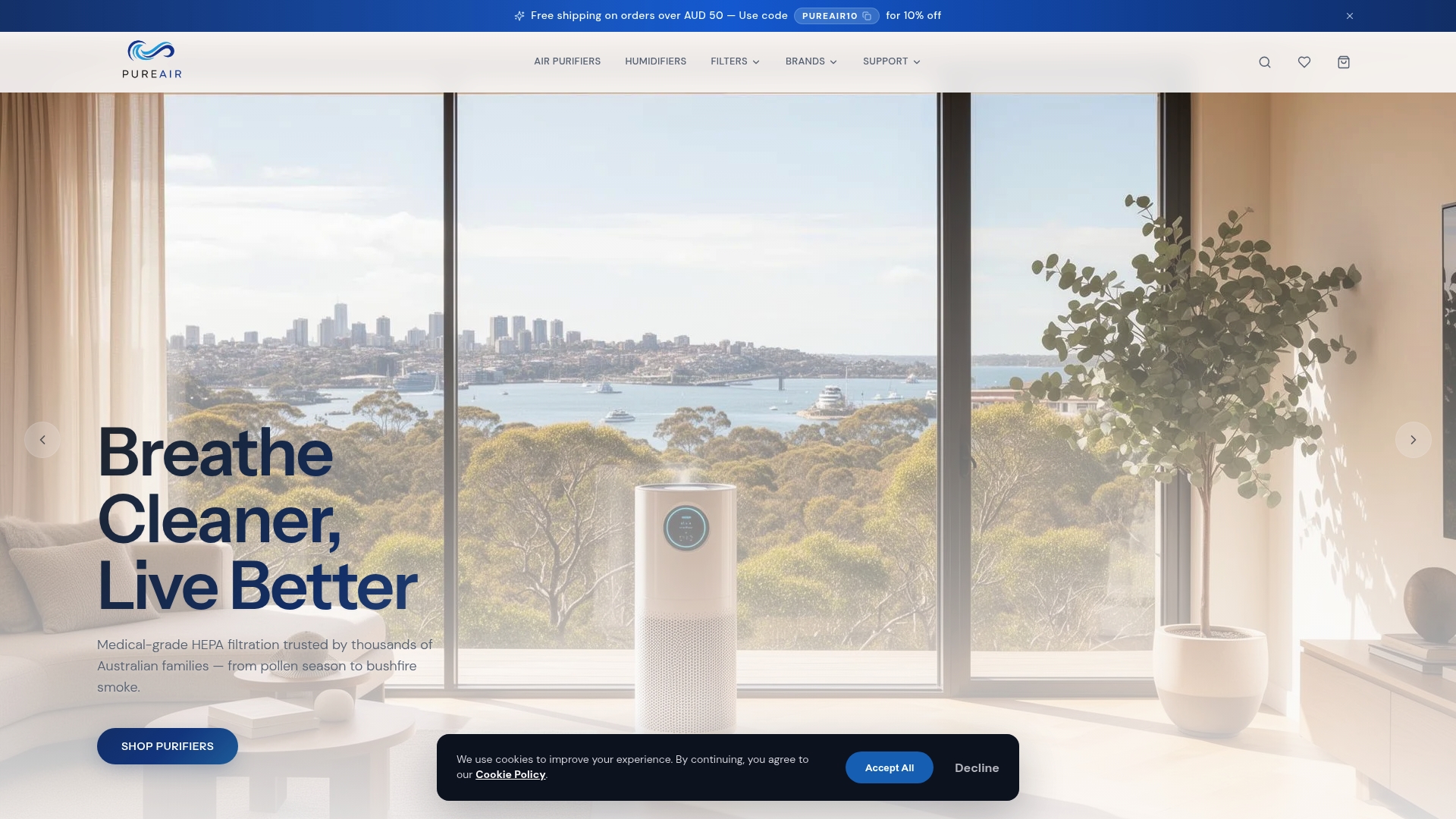
If you are managing eczema and want to reduce airborne triggers at home, the Pureair-au product catalogue covers purifiers suited to bedrooms, open-plan living areas, and children’s rooms. The range includes the Blueair 2-in-1 Purify + Humidify DH3i for combined purification and humidity control, and the Honeywell Air Touch P2 for high-performance bedroom filtration. Replacement HEPA filters are also stocked to keep your unit running at full efficiency year-round.
FAQ
Do air purifiers actually help with eczema?
Yes. HEPA air purifiers reduce indoor PM2.5 by 25–56% and improve allergy and eczema symptom scores by 25–60% in clinical studies. They work by removing the airborne allergens that trigger skin inflammation.
What type of air purifier is best for eczema?
True HEPA filtration is the only technology recommended for eczema sufferers. Avoid ionisers and ozone generators, which release irritants that damage the skin barrier.
Where should I put my air purifier for eczema relief?
Place it in your bedroom. Dust mite allergens concentrate in bedding, and you spend more continuous time in that room than anywhere else in the home.
Can a humidifier help eczema alongside an air purifier?
Yes, but only if humidity stays within the 30–50% range. Humidity above 50% promotes dust mite and mould growth, which worsens eczema. Use a hygrometer to monitor levels.
Are air purifiers enough to manage eczema on their own?
No. Air purifiers reduce allergic load but do not replace topical skin care or allergen identification. Combine purification with daily moisturising, fragrance-free products, and clinical patch testing for best results.