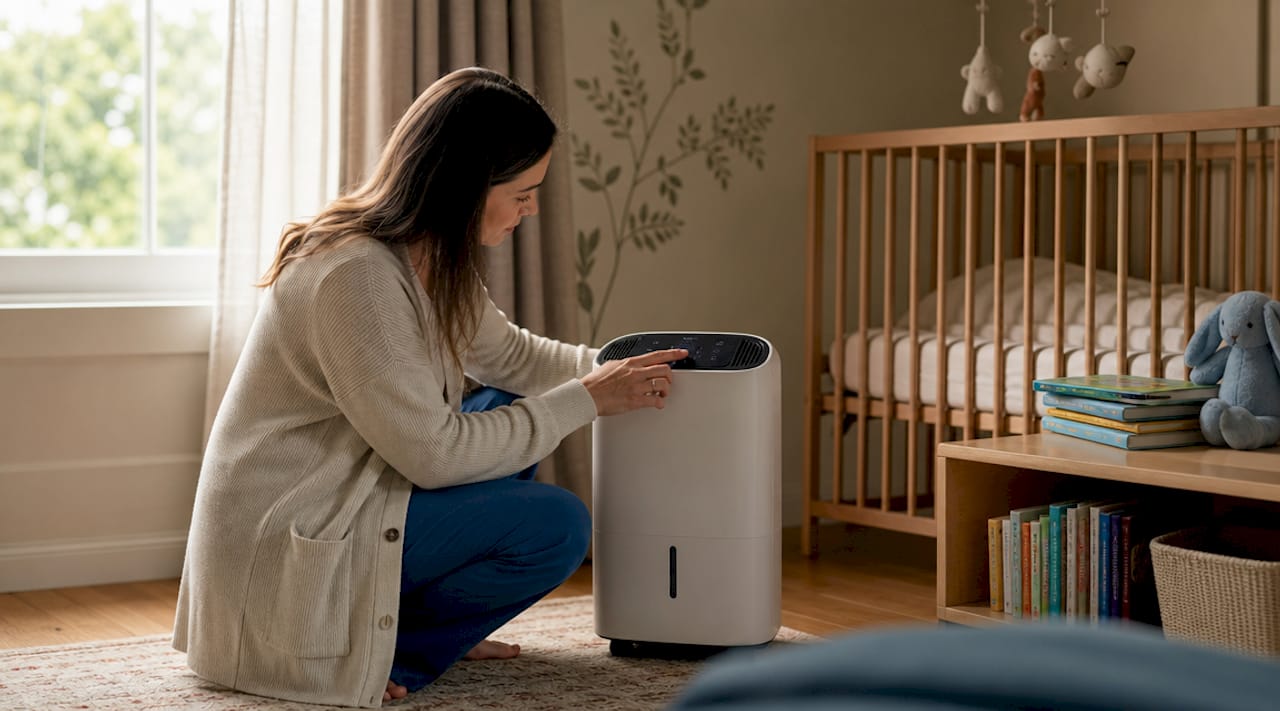
Dehumidifiers are defined as appliances that extract excess moisture from indoor air, and their role in preventing child illness is direct: by keeping relative humidity between 40–50%, they inhibit the mould, dust mites, and bacteria that trigger respiratory illness in children. A 2026 longitudinal cohort study found that children sleeping in mouldy rooms aged 3–5 had a 70% higher wheezing incidence and double the risk of allergic rhinitis by age 7–11. The EPA and Mayo Clinic both recommend maintaining indoor humidity within the 40–50% range to protect respiratory health. For Australian families dealing with humid summers, coastal climates, and poorly ventilated homes, a dehumidifier is one of the most practical tools available.
How do dehumidifiers prevent mould and allergens that harm children’s respiratory health?
Humidity above 50–60% creates the conditions mould, dust mites, and airborne bacteria need to thrive. Each of these is a recognised trigger for respiratory illness in children, and humidity consistently above 50% fosters pathogen growth that causes wheezing, coughing, and allergy flare-ups. Keeping humidity stable between 40–50% removes the conditions these pathogens depend on.
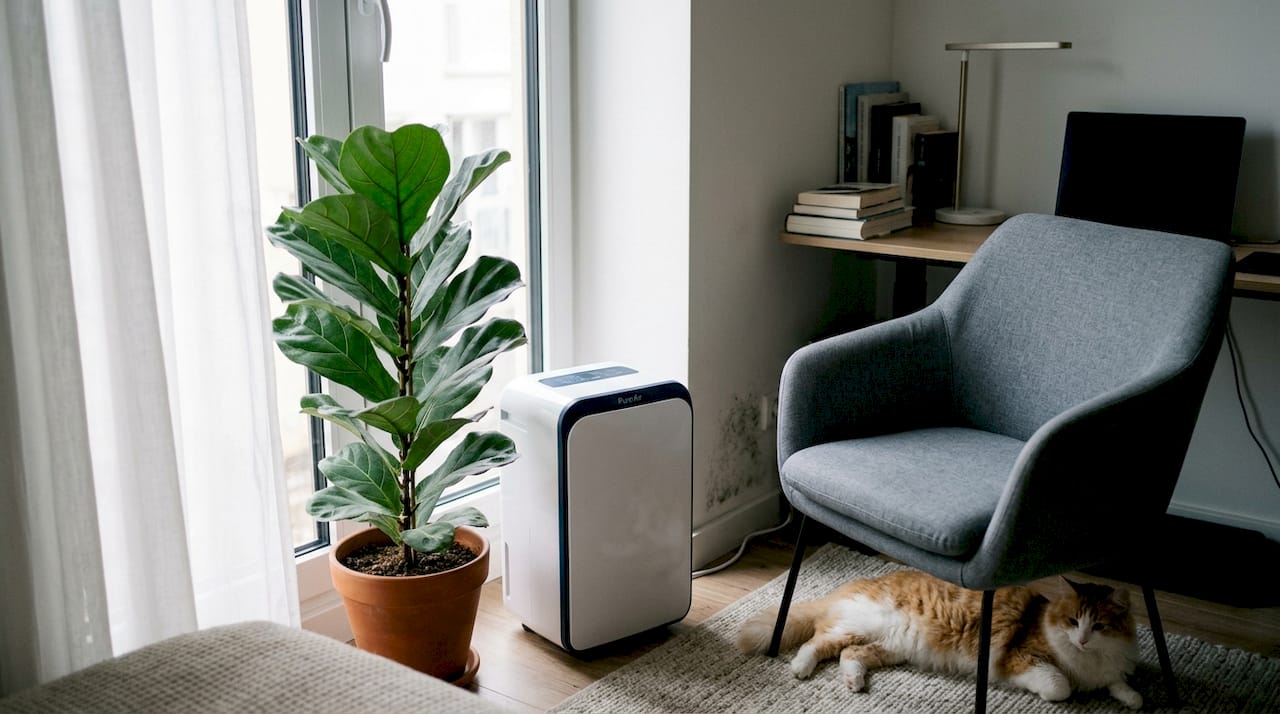
The biological mechanism is straightforward. Mould spores are always present in indoor air. They only colonise surfaces when moisture is available. Dust mites similarly require humidity above 50% to survive and reproduce. When a dehumidifier holds the room below that threshold, mould cannot establish itself and dust mite populations collapse within weeks.
The health consequences of ignoring this are significant. The same 2026 Bradford cohort study found the NHS spends £895 million annually treating health conditions linked to damp housing. That figure reflects the scale of a preventable problem. Mould exposure in children’s bedrooms shows strong correlations with wheeze and allergy development, and mould in children’s bedrooms should be treated as a public health priority, not a cosmetic issue.
The table below shows how humidity levels affect common indoor health hazards:
| Humidity level | Effect on indoor environment |
|---|---|
| Below 30% | Air too dry; skin and airway irritation likely |
| 40–50% | Optimal range; mould, dust mites, and bacteria suppressed |
| 50–60% | Mould and dust mite growth begins |
| Above 60% | Active mould colonisation; bacteria and allergen levels rise sharply |
Three key allergen sources respond directly to humidity control:
- Mould spores: Colonise walls, ceilings, and soft furnishings when moisture is sustained above 50%.
- Dust mites: Reproduce rapidly in humid bedding and carpet; populations drop significantly below 50% relative humidity.
- Airborne bacteria: Thrive in damp environments and contribute to respiratory infections in young children.
When and how should parents use dehumidifiers in children’s rooms?
The first step is measurement, not purchase. Use a hygrometer to measure your child’s room before choosing any device. If humidity sits consistently above 55%, a dehumidifier is the right tool. If the air is already dry, adding a dehumidifier will worsen the problem.
Once you confirm high humidity, device selection matters. Look for these features when choosing a unit for a child’s room:
- Noise level under 30 dB: Noise above 30 dB disrupts infant sleep. Many units offer a dedicated sleep mode that drops fan speed and noise output.
- Auto shut-off: Prevents the unit from running when the tank is full, avoiding overflow and water hazards near children.
- Capacity matched to room size: An undersized unit will run constantly without reaching the target humidity. Check the manufacturer’s rated coverage area.
- Continuous drainage option: Removes the need to empty a tank daily, which parents often forget during busy weeks.
Placement is as important as the unit itself. Place the dehumidifier at least three feet from walls and well away from the cot or bed. This protects airflow around the unit and keeps the appliance out of reach of curious children. Never place it on carpet, as restricted airflow reduces efficiency and creates a fire risk.
Pro Tip: Set your dehumidifier to maintain 45% relative humidity rather than running it at maximum extraction. This keeps the room in the optimal 40–50% range without the risk of over-drying.
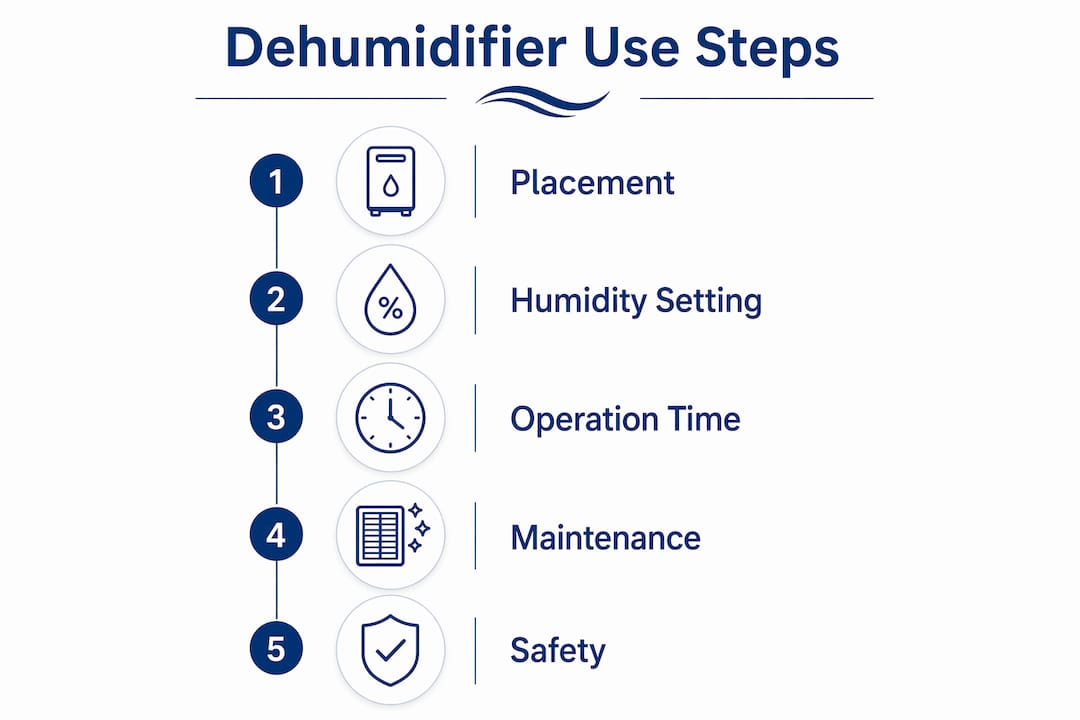
Running the unit on maximum settings is a common mistake. Over-drying air causes skin irritation, dry nasal passages, and worsened respiratory symptoms, the opposite of what parents intend. A stable 45% is the target, not the lowest humidity the machine can achieve.
What are common misconceptions about humidifiers and dehumidifiers for child health?
Parents frequently confuse humidifiers and dehumidifiers, and the distinction matters. A humidifier adds moisture to dry air. A dehumidifier removes moisture from damp air. Using the wrong device in the wrong conditions makes the problem worse. A child in a dry inland climate during winter may benefit from a humidifier. A child in a humid coastal home needs a dehumidifier. The child bedroom air quality checklist from Pureair-au helps parents identify which condition applies before buying anything.
A separate and serious risk involves DIY steaming methods. Shriners Children’s Boston reported a spike in paediatric burn injuries linked to parents using boiling water or improvised steam devices in children’s bedrooms. Medical experts are unambiguous: DIY steaming causes severe burns and provides no proven respiratory benefit. Store-bought cool-mist humidifiers are the only safe option when added moisture is genuinely needed.
Common misconceptions that put children at risk:
- “A dehumidifier alone solves allergies.” Dehumidifiers remove moisture but do not filter airborne particles like pollen or pet dander. Allergies require both humidity control and particle filtration.
- “Running it on maximum is better.” Maximum extraction over-dries the air and causes irritation. The 40–50% range is the target, not the lowest possible reading.
- “Any steam near a sick child helps.” DIY steam methods cause burns. Cool-mist devices from reputable manufacturers are the safe alternative.
Pro Tip: Pair your dehumidifier with a HEPA air purifier for complete allergen control. Dehumidifiers address moisture-driven triggers; HEPA filters capture the particles that remain in the air regardless of humidity.
How can parents build a broader strategy to improve indoor air quality?
Humidity control is the foundation, but it works best as part of a wider approach to indoor air quality. A dehumidifier that holds humidity at 45% will suppress mould growth, but it cannot remove the spores already present in the air. That is where HEPA filtration becomes critical. Combining dehumidifiers with HEPA purifiers provides comprehensive allergen control because HEPA filters capture particles down to 0.3 microns, including mould spores, pollen, and pet dander that dehumidifiers leave untouched.
Ventilation is the second pillar. Opening windows during dry weather, using exhaust fans in bathrooms and kitchens, and avoiding drying laundry indoors all reduce the moisture load a dehumidifier must manage. Less moisture entering the room means the dehumidifier reaches and holds the target humidity more easily.
Routine inspection rounds out the strategy. Check behind furniture, under beds, and around window frames monthly for early mould signs. Catching mould early means remediation is simple. Ignoring it means the problem spreads into wall cavities and flooring, where a dehumidifier alone cannot reach it.
The table below compares the contribution of each strategy to overall indoor air quality for children:
| Strategy | Primary benefit | Limitation |
|---|---|---|
| Dehumidifier | Suppresses mould, dust mites, bacteria | Does not remove airborne particles |
| HEPA air purifier | Captures pollen, spores, pet dander | Does not control humidity |
| Ventilation | Reduces moisture and stale air | Ineffective in high outdoor humidity |
| Mould remediation | Removes existing colonies | Requires professional help for large areas |
| Regular cleaning | Reduces dust and surface allergens | Labour-intensive; must be consistent |
Seasonal awareness matters in Australia. Humid months in coastal cities like Sydney and Brisbane create sustained high-humidity conditions that demand consistent dehumidifier use. Drier inland winters may require the opposite approach. Checking humidity with a hygrometer each season and adjusting accordingly is the most reliable method.
Key takeaways
Dehumidifiers protect children’s respiratory health by maintaining indoor humidity at 40–50%, which directly suppresses mould, dust mites, and bacteria that cause wheezing and allergic illness.
| Point | Details |
|---|---|
| Target humidity range | Keep indoor humidity at 40–50% to suppress mould, dust mites, and bacteria. |
| Measure before you buy | Use a hygrometer to confirm high humidity before purchasing a dehumidifier. |
| Choose a quiet unit | Select a dehumidifier rated under 30 dB with auto shut-off for safe nursery use. |
| Combine with HEPA filtration | Pair your dehumidifier with a HEPA purifier to capture airborne particles it cannot remove. |
| Avoid over-drying | Running a dehumidifier at maximum settings causes irritation; stable 45% is the goal. |
What I’ve learned from watching parents get this wrong
Parents come to humidity control after a child has already been sick for months. That delay is understandable, but it is also avoidable. The research is clear: mould exposure in early childhood has consequences that stretch into the school years, and the window for prevention is the nursery stage, not the GP’s waiting room.
The mistake I see most often is buying a device without measuring first. A parent in a dry climate buys a dehumidifier because they read it helps with allergies, then wonders why their child’s symptoms worsen. The device was correct in concept but wrong for the conditions. A $20 hygrometer would have told them the room needed a humidifier, not a dehumidifier.
The second mistake is treating the dehumidifier as a complete solution. Humidity control suppresses the conditions mould needs to grow. It does not remove the spores already circulating in the air. A HEPA purifier handles that. Using both together is not excessive. It is the minimum effective approach for a child with diagnosed allergies or asthma.
My honest advice: check your child’s room humidity today. If it is above 55%, act on it. If you are unsure which device suits your home, consult a paediatrician and use a dehumidifier selection guide from a reputable source before spending money. The evidence for humidity control in children’s health is strong. The tools are affordable. The barrier is usually just knowing where to start.
— Lucas
Pureair-au’s range for healthier children’s rooms
Pureair-au stocks a curated range of dehumidifiers, HEPA air purifiers, and humidifiers selected for Australian home conditions. Every product in the range is AHAM verified, meaning performance claims are independently tested, not just manufacturer estimates. Units suited to nurseries and children’s rooms are quiet, compact, and include the auto shut-off and humidity control features that safe use requires.
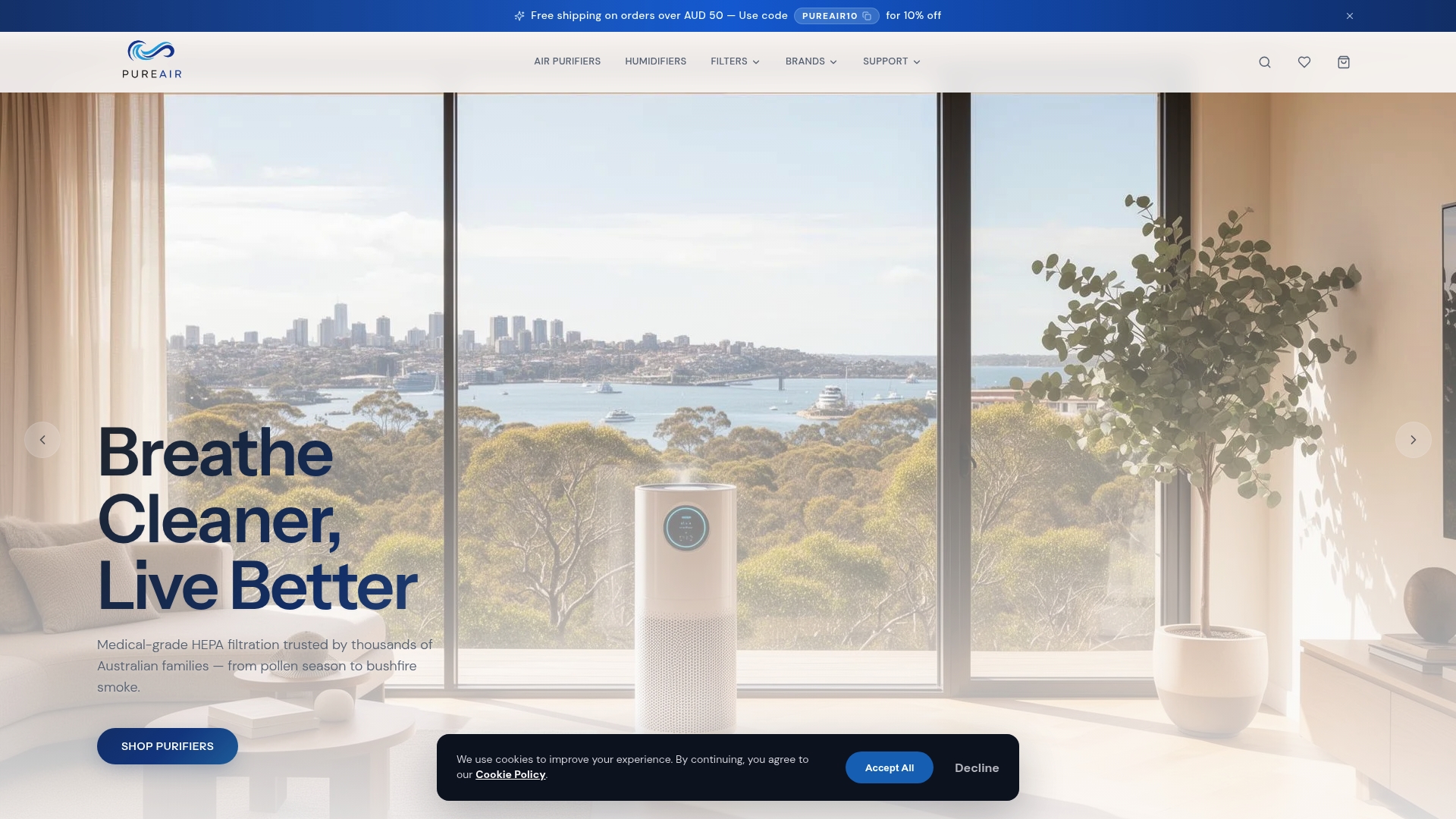
The Pureair-au Smart Finder tool matches parents to the right device based on room size, humidity levels, and specific concerns like mould or asthma. If you are ready to act on your child’s indoor air quality, the full product catalogue includes dehumidifiers, HEPA purifiers, and combination units with pricing in Australian dollars and local customer support. Getting the right device for your child’s room does not require guesswork when the right tools are available.
FAQ
What humidity level is safe for a child’s bedroom?
The recommended indoor relative humidity for children’s rooms is 40–50%. Levels consistently above 50% promote mould and dust mite growth, which are leading triggers of respiratory illness in children.
Can a dehumidifier help a child with asthma?
A dehumidifier reduces the moisture that mould and dust mites need to survive, both of which are common asthma triggers. For best results, pair it with a HEPA air purifier to capture airborne particles the dehumidifier cannot remove.
How is a dehumidifier different from a humidifier for children?
A dehumidifier removes excess moisture from damp air, while a humidifier adds moisture to dry air. Using the wrong device for your conditions worsens symptoms. Measure room humidity with a hygrometer before choosing either device.
Where should I place a dehumidifier in my child’s room?
Place the unit at least three feet from walls and well away from the cot or bed. This allows proper airflow around the machine and keeps it out of reach of children.
Is it safe to run a dehumidifier overnight in a nursery?
A quiet unit rated under 30 dB with auto shut-off is safe for overnight use in a nursery. Set it to maintain 45% humidity rather than running at maximum extraction, which can over-dry the air and cause irritation.