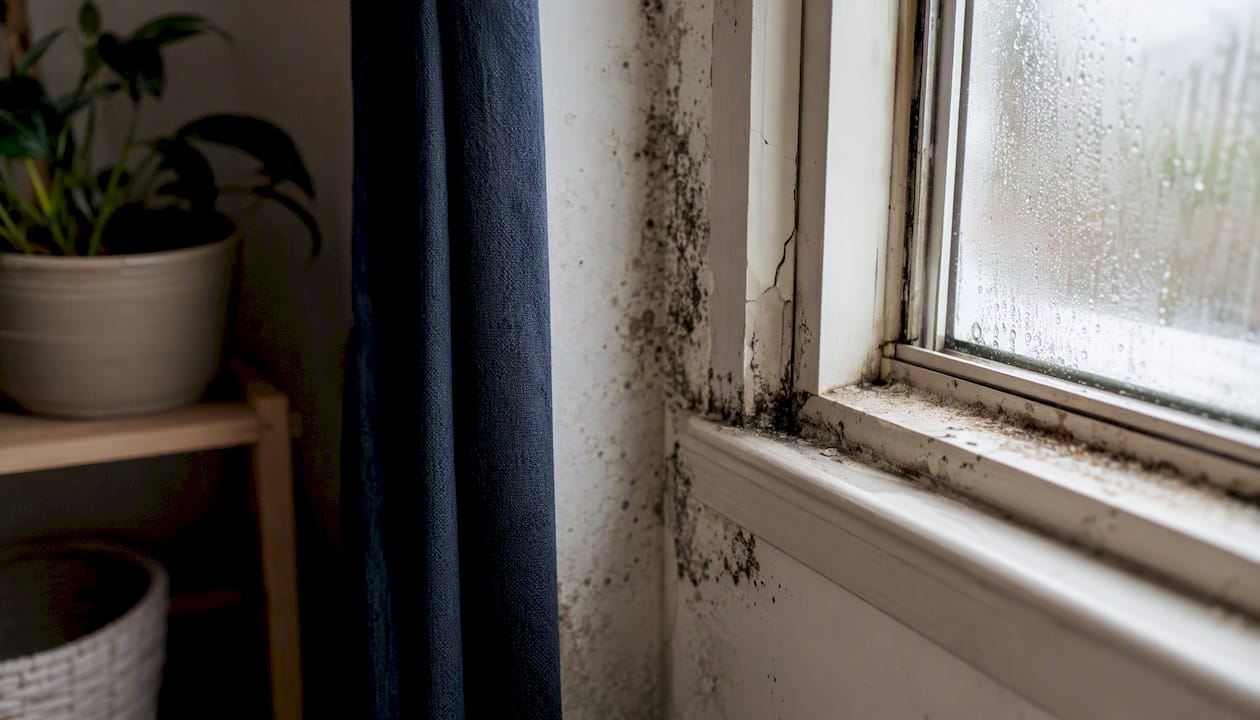
The most reliable signs of poor indoor air quality are recurring headaches or dizziness, persistent coughing or worsening allergy symptoms, a musty or chemical odour that returns after airing the room, visible mould or condensation on windows, and symptoms that ease noticeably when you leave the house. If you notice any of these, open windows where outdoor air is safe, switch on exhaust fans, step outside to compare how you feel, and check your carbon monoxide alarm immediately.
Quick checklist to run right now:
- Recurring headaches, fatigue, or eye and throat irritation indoors
- Symptoms that improve outside and return when you come back in
- Musty, chemical, or smoky odour that persists after ventilating
- Visible mould patches, dark streaks, or condensation on windows
- Soot marks near appliances or heavy dust on surfaces
- Carbon monoxide alarm not tested or battery not replaced recently
The American Lung Association specifically identifies the symptom-on-return pattern and sudden severe headache or nausea as key indicators that warrant immediate action.
Key takeaways
Poor indoor air quality is most reliably identified by the combination of location-specific health symptoms, visible moisture or mould, and persistent odours that return after ventilating.
| Point | Details |
|---|---|
| Watch the symptom pattern | Symptoms that ease outdoors and return indoors point to an indoor source, not an unrelated illness. |
| Treat CO as an emergency | A sounding CO alarm or sudden severe headache, nausea, and dizziness means evacuate immediately and call 000. |
| Control humidity first | Indoor humidity consistently above 50% drives mould growth and dust mite activity; use a dehumidifier or improve ventilation. |
| Start with free checks | The step-outside test, smell test, and vent inspection cost nothing and often identify the source before any equipment is needed. |
| Pureair-au for filtration solutions | Use the Smart Finder at pureair-au.com to match a HEPA purifier, dehumidifier, or humidifier to your specific concern and room size. |
Table of Contents
- What are the common health symptoms of poor indoor air quality?
- What visible signs in your home suggest an air quality problem?
- What causes poor indoor air quality in Australian homes?
- When does poor air quality become an emergency?
- How can you check your home’s air quality yourself?
- What can you do right now to improve indoor air quality?
- What are the long-term health effects of sustained poor indoor air?
- Overlooked signs and common misconceptions about indoor air quality
- Why catching these signs early is worth the effort
- How Pureair-au can help you address what you have found
- Sources
What are the common health symptoms of poor indoor air quality?
Cleveland Clinic lists eye, nose and throat irritation, headaches, dizziness, and fatigue as the most common short-term effects of indoor air problems. These symptoms are easy to dismiss as a cold or seasonal allergy, which is exactly why they get ignored for months.
The pattern that matters most: symptoms that appear at home, ease when you leave for work or a walk, and return when you come back. That cycle is a strong signal the source is inside your house, not your immune system.
Worsening asthma or allergy symptoms without an obvious seasonal trigger is another clue. So is unexplained fatigue that lifts on weekends away. Children and older adults tend to show symptoms earlier than healthy adults, so watch them closely if air quality is in question. Johns Hopkins Medicine notes that children, older people, and those with heart or lung disease are especially vulnerable to particulate pollution, including from bushfire smoke.
The Lung Association’s guidance is clear: if symptoms consistently improve after leaving a building and return on re-entry, treat the building itself as the likely cause and investigate the indoor environment rather than seeking only medical treatment.
Pro Tip: Keep a simple symptom log for one week. Note the time symptoms appear, what you were doing (cooking, cleaning, sleeping in a freshly painted room), and whether they ease outdoors. That log will help you and any professional pinpoint the source far faster than memory alone. Parents can use the child bedroom air quality checklist to track room-specific patterns.
What visible signs in your home suggest an air quality problem?
Some of the clearest indicators are right in front of you, not in your lungs.
Mould and moisture are the most obvious. Black or green patches on walls, ceilings, grout, or around window frames point to excess humidity and biological contamination. Dark streaks along the top of walls or behind furniture often go unnoticed for years.
Condensation on windows most mornings, water stains on ceilings, or peeling paint and wallpaper all suggest indoor humidity is consistently too high.
Persistent odours that return within hours of airing a room are a reliable indicator. A musty smell suggests mould or damp. A chemical smell that intensifies after new furniture or a renovation points to volatile organic compounds (VOCs) off-gassing from materials. Cooking smoke that lingers for hours means ventilation is inadequate.
Soot and dust accumulation tell their own story. Soot marks around gas appliances, fireplaces, or candle holders indicate incomplete combustion. Thick dust layers that rebuild quickly after cleaning, especially on vents and ceiling fans, suggest poor filtration or high particle loads. For practical steps on managing dust, the guide to reducing dust buildup indoors covers the most effective maintenance routines.
| Visible sign | What it suggests | Priority |
|---|---|---|
| Mould patches or dark streaks | Excess moisture, biological contamination | High |
| Condensation on windows daily | Humidity consistently above safe levels | High |
| Soot marks near appliances | Incomplete combustion, CO risk possible | High |
| Peeling paint or water stains | Moisture ingress or condensation damage | Medium |
| Heavy dust on vents and surfaces | Poor filtration or high particle load | Medium |
| Persistent odour after ventilating | VOCs, mould, or combustion residue | Medium |
What causes poor indoor air quality in Australian homes?
The US EPA identifies indoor pollutant sources and inadequate ventilation as the two primary drivers of indoor air problems. In Australian homes, those sources tend to cluster around a few specific triggers.
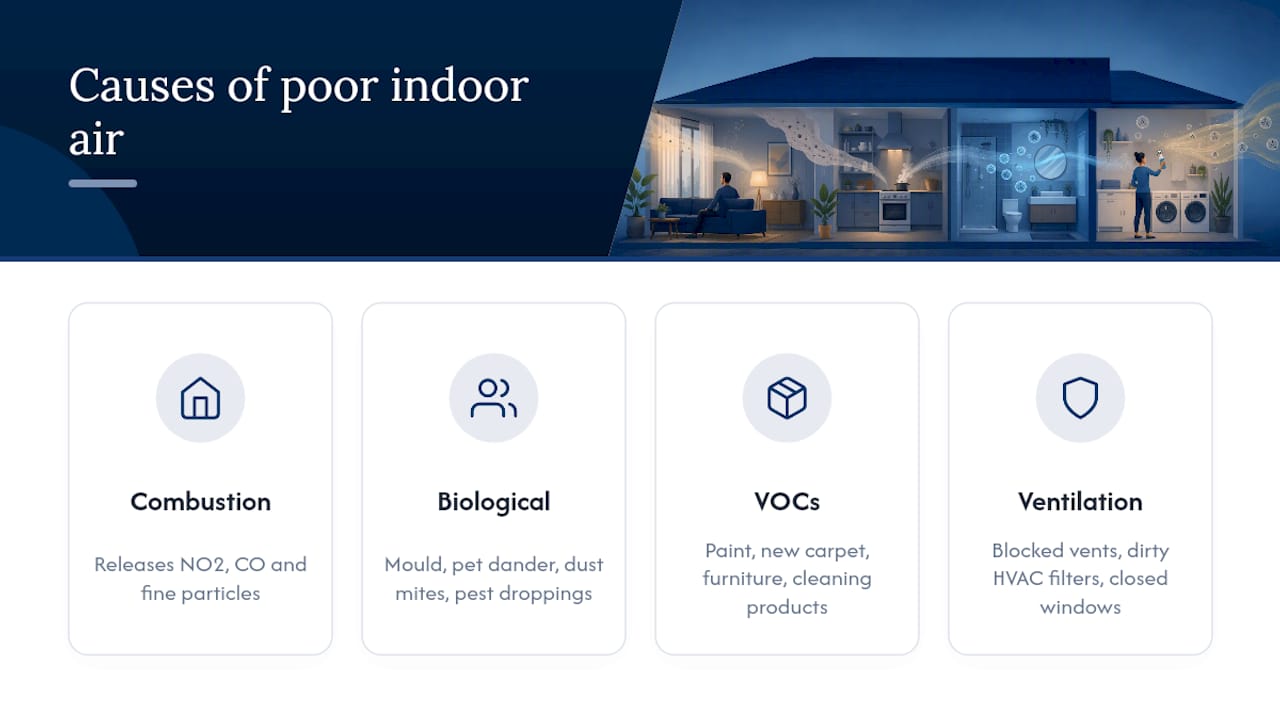
Combustion appliances are a major contributor. Gas cooktops, unflued gas heaters, wood fires, and candles all release nitrogen dioxide, carbon monoxide, and fine particles. Smoking indoors compounds this significantly.
Biological sources include mould from leaks or condensation, pet dander, dust mites in bedding and carpet, and pest droppings. These are particularly common in humid coastal climates and poorly ventilated older homes.
VOC-emitting materials cover a wide range: fresh paint, new carpet, flat-pack furniture, cleaning products, and solvents stored indoors. Off-gassing is highest in the first weeks after installation or use.
Ventilation failures are often invisible. Blocked exhaust vents, dirty HVAC filters, and windows kept permanently shut in air-conditioned homes all allow pollutants to accumulate. Australian Government guidance via YourHome emphasises that building design and occupant behaviour together determine indoor air quality, and that small behaviour changes often reduce risk significantly. Understanding the role of ventilation in air quality is one of the most practical steps any homeowner can take.
Outdoor contributors specific to Australia include bushfire smoke, high pollen seasons, and vehicle exhaust near air intake points. During smoke events, the Bureau of Meteorology issues air pollution warnings that households should monitor to decide when to keep windows closed and run filtration instead.
Trigger events worth watching: recent renovations, new furniture or carpet, seasonal shifts when windows stay closed for weeks, and moving into an older home. Symptoms that appear or worsen after any of these events are worth investigating promptly.
When does poor air quality become an emergency?
Carbon monoxide is the situation where you do not wait to see if symptoms pass.
CO is colourless and odourless. The symptoms, sudden severe headache, nausea, dizziness, confusion, or fainting, can be mistaken for flu. If multiple people or pets in the same space feel unwell simultaneously, that is a strong indicator of CO or another toxic exposure rather than individual illness.
Immediate actions if CO is suspected or your alarm sounds:
- Evacuate everyone, including pets, immediately.
- Call 000 from outside.
- Do not re-enter for any reason until emergency services clear the building.
- Leave doors open as you exit if it is safe to do so.
Severe breathing difficulty, chest tightness, or a sudden asthma attack that does not respond to a reliever inhaler also warrants calling 000 rather than waiting.
For CO alarms specifically: check the battery and the expiry date on the unit itself. Most CO alarms have a sensor lifespan of 5–7 years regardless of battery condition. If yours is older than that or has no date marked, replace it.
How can you check your home’s air quality yourself?
Start with the free checks before spending anything.
- Step outside for 10 minutes, then re-enter. If you notice an odour or feel symptoms on re-entry that you had stopped noticing, your home is likely saturated with pollutants you have adapted to. This is one of the most reliable low-cost tests available.
- Check all exhaust vents and HVAC intakes. Hold a tissue near bathroom and kitchen vents while they run. Weak airflow or no movement indicates blockage or fan failure.
- Inspect for mould and moisture. Check behind furniture against external walls, under sinks, around window frames, and in roof spaces if accessible.
- Smell test after a closed night. Open your bedroom door first thing in the morning before ventilating. A stale, musty, or chemical smell that dissipates quickly after opening windows suggests overnight pollutant build-up.
- Check your CO alarm. Press the test button. If it does not sound, replace the battery or the unit.
Tools worth using:
- Hygrometer: measures indoor humidity. Readings consistently above 50% raise mould and dust mite risk; above 60% is a clear problem.
- CO alarm: non-negotiable for any home with gas appliances or an attached garage.
- PM2.5 monitor: useful during bushfire season to track fine particle levels even when smoke is not visible. Elevated PM2.5 warrants action even without symptoms, particularly for children and older adults.
- VOC detector: helpful after renovations or new furniture installation to confirm off-gassing levels.
A CO alarm trigger is an immediate emergency, not a “check it later” situation. Elevated PM2.5 during a smoke event means close windows and run filtration, consistent with BOM air pollution warnings.
When to call a professional: persistent symptoms after reasonable fixes, suspected asbestos disturbance in a pre-1990 home (get licensed asbestos testing before any further work), lead paint concerns during renovation, or radon testing if recommended for your region.
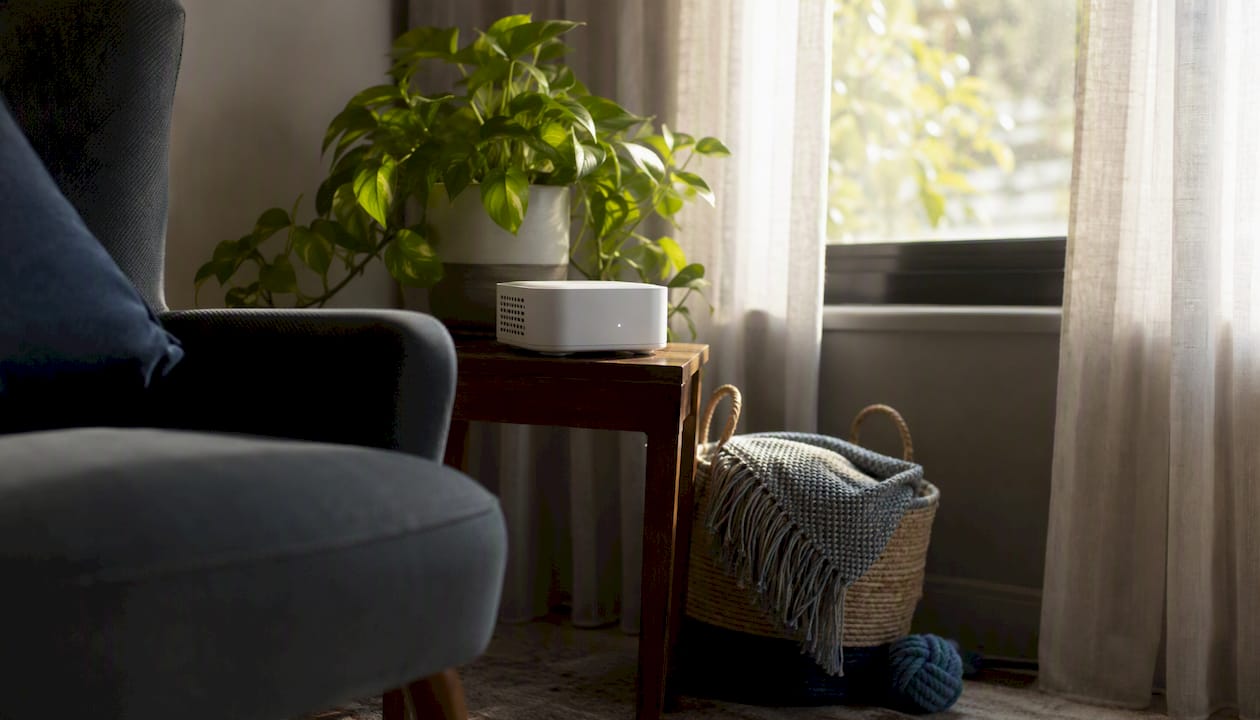
Pro Tip: Log your monitoring readings alongside activities for two weeks: cooking times, cleaning products used, HVAC operation, and any outdoor smoke events. Patterns in that log will tell you more than a single snapshot reading.
What can you do right now to improve indoor air quality?
Most of the highest-impact fixes cost nothing or very little.
- Increase ventilation when outdoor air is safe. Open windows on opposite sides of the house to create cross-ventilation. During bushfire smoke events, keep windows closed and check how to ventilate safely when outdoor air is poor.
- Use kitchen and bathroom exhausts every time. Run the range hood while cooking and leave the bathroom exhaust on for 20 minutes after a shower.
- Remove or isolate pollutant sources. Store paints, solvents, and cleaning chemicals in a shed or outside cupboard. Stop indoor smoking entirely. Limit candles and incense, particularly in poorly ventilated rooms.
- Run a HEPA air purifier in affected rooms. HEPA filtration captures particles down to 0.3 microns, covering dust, pollen, mould spores, pet dander, and fine smoke particles. For guidance on choosing and placing units, see how to filter indoor air pollution particles at home.
- Control humidity. Use a dehumidifier in bathrooms, laundries, and basements where humidity consistently exceeds 50%. In very dry climates or during winter heating, a humidifier prevents the dry air that irritates airways and increases dust suspension.
- Replace HVAC and purifier filters on schedule. A clogged filter recirculates what it was meant to capture.
- Vacuum with a HEPA-capable vacuum and wash bedding weekly in hot water to reduce dust mite loads.
Avoid these common mistakes: air fresheners mask odours but add VOCs. DIY ozone generators are not recommended for occupied spaces as ozone itself is a respiratory irritant.
Pro Tip: After a bushfire smoke event or a renovation, run your air purifier on its highest setting for 2–3 hours with windows closed, then check whether symptoms ease. That response tells you whether filtration is addressing the source.
What are the long-term health effects of sustained poor indoor air?
Short-term symptoms are the warning. Ignoring them long enough creates a different category of problem.
Prolonged exposure to indoor pollutants is associated with worsening respiratory conditions including chronic bronchitis and asthma, reduced lung function over time, and increased cardiovascular risk from fine particulate exposure. Cleveland Clinic links prolonged exposure to deteriorating respiratory health, particularly in people who already have lung or heart conditions.
Children exposed to mould and damp environments show higher rates of respiratory illness and are more likely to develop asthma. Older adults face compounded risk because their lung function is already reduced and their immune response to irritants is slower.
VOC exposure over months or years from off-gassing materials, cleaning products, and combustion residue has been associated with neurological symptoms including persistent headaches and difficulty concentrating, though individual sensitivity varies considerably.
The practical point: the signs described earlier in this article are not just discomfort indicators. They are early warnings of a cumulative process. Addressing them when they first appear is substantially cheaper and less disruptive than managing a chronic health condition or a serious mould remediation job later.
Overlooked signs and common misconceptions about indoor air quality
The most common misconception is that a home that looks clean and smells neutral has good air quality. It does not. Carbon monoxide has no smell. Fine particles from bushfire smoke are invisible. VOCs from new furniture off-gas without any detectable odour to most people.
Less obvious signs homeowners regularly miss:
- Condensation on internal walls (not just windows) suggests moisture is migrating through the structure, not just surface humidity.
- Pets behaving unusually or showing respiratory symptoms. Animals, particularly birds, are more sensitive to airborne toxins than humans and can show distress before people notice symptoms.
- Symptoms that appear only in one room. A bedroom that consistently causes morning headaches but a living room that does not points to a localised source: a gas heater, new mattress, or mould behind a wall.
- Increased static electricity and dry skin in winter can indicate very low humidity from heating, which increases dust suspension and airway irritation.
- Symptoms that started after a specific event and never fully resolved: a new couch, a repaint, a new carpet, or moving into a recently renovated home. Off-gassing from these materials can persist for weeks to months.
Another overlooked point: many people attribute indoor air symptoms to stress or ageing rather than environment. If a symptom pattern is consistent, location-specific, and eases outdoors, the environment is worth investigating before assuming a medical cause.
Why catching these signs early is worth the effort
Most indoor air problems are caught late, not because the signs were absent, but because they were gradual. A slight musty smell becomes background noise. A morning cough gets attributed to the weather. A child’s persistent runny nose gets treated as allergies without anyone checking whether the bedroom has mould behind the wardrobe.
The evidence is consistent: early identification reduces both health impact and remediation cost. A dehumidifier and better bathroom ventilation costs a fraction of mould remediation. Replacing a dirty HVAC filter costs almost nothing compared to the medical bills from a respiratory condition that developed over two years of breathing recirculated particulate matter.
There is also a tendency to over-invest in solutions before identifying the source. An air purifier is genuinely useful, but it will not fix a gas heater that is venting combustion products into a living room, or a roof leak that is feeding mould inside a wall cavity. The checks in this article are designed to help you identify what you are actually dealing with before spending money on the fix.
How Pureair-au can help you address what you have found
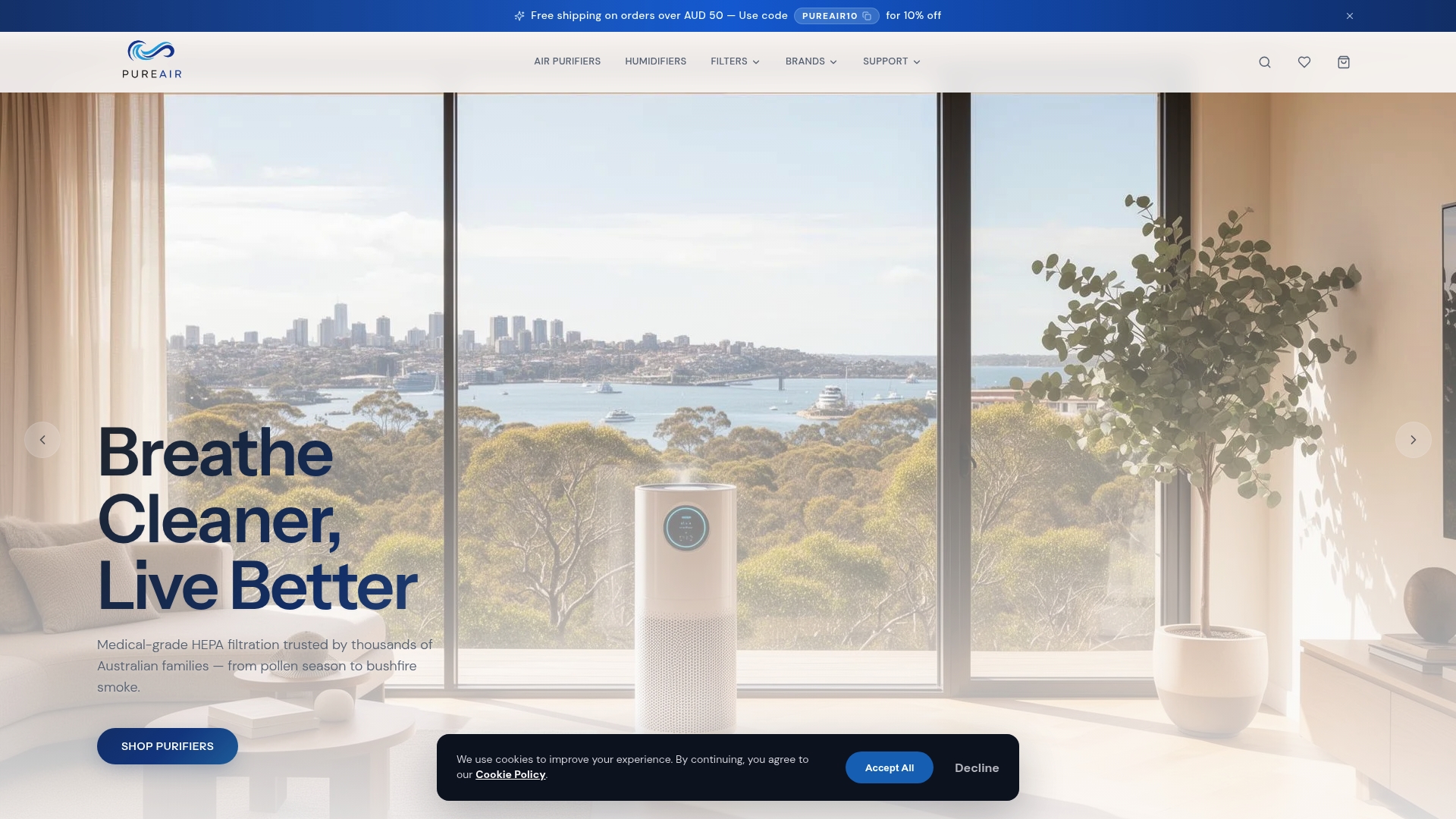
Once you have identified the signs, the next step is matching the right solution to the specific problem. A properly sized HEPA air purifier addresses fine particles, pollen, pet dander, mould spores, and bushfire smoke. A dehumidifier resolves the moisture conditions that allow mould to grow. A humidifier corrects the dry air that irritates airways during winter heating. Getting the sizing and type right matters as much as the product itself.
Pureair-au’s Smart Finder tool and full product catalogue let you match a unit to your room size and specific concern, whether that is bushfire smoke, allergies, mould, or general air quality. All products are AHAM verified for performance. For readers who want to start with low-cost fixes first. That is the right call. For suspected asbestos or carbon monoxide, call a licensed professional before anything else. When you are ready for a filtration or humidity solution, browse the Pureair-au range to find the right fit for your home.
Sources
These are the primary sources used in this article and the most reliable places to verify the guidance given.
- The Inside Story: A Guide to Indoor Air Quality | US EPA
- Signs of Unhealthy Indoor Air | American Lung Association
- Indoor air quality | YourHome (Australian Government)
- Air pollution warnings | Bureau of Meteorology (BOM)
For medical symptoms that persist after addressing indoor air sources, consult your GP or local health service. For structural issues, asbestos, or suspected lead paint, engage a licensed professional rather than attempting DIY assessment.
This article is general information, not a substitute for advice from a qualified doctor. Consult a qualified healthcare professional about your own circumstances before acting on anything here.