
Indoor air quality (IAQ) is defined as the condition of the air inside a building as it relates to the health and comfort of the people and animals living there. In pet homes, IAQ is rarely straightforward. The EPA identifies pet dander as a primary biological contaminant alongside mould spores, combustion byproducts, and outdoor pollutants that enter through doors, windows, and on your pet’s coat. Understanding why air quality testing matters in pet homes starts with accepting that the air your dog or cat breathes every day may carry multiple overlapping threats, and that guessing which one is causing the problem wastes time and money.
What are the main indoor air pollutants in pet homes?
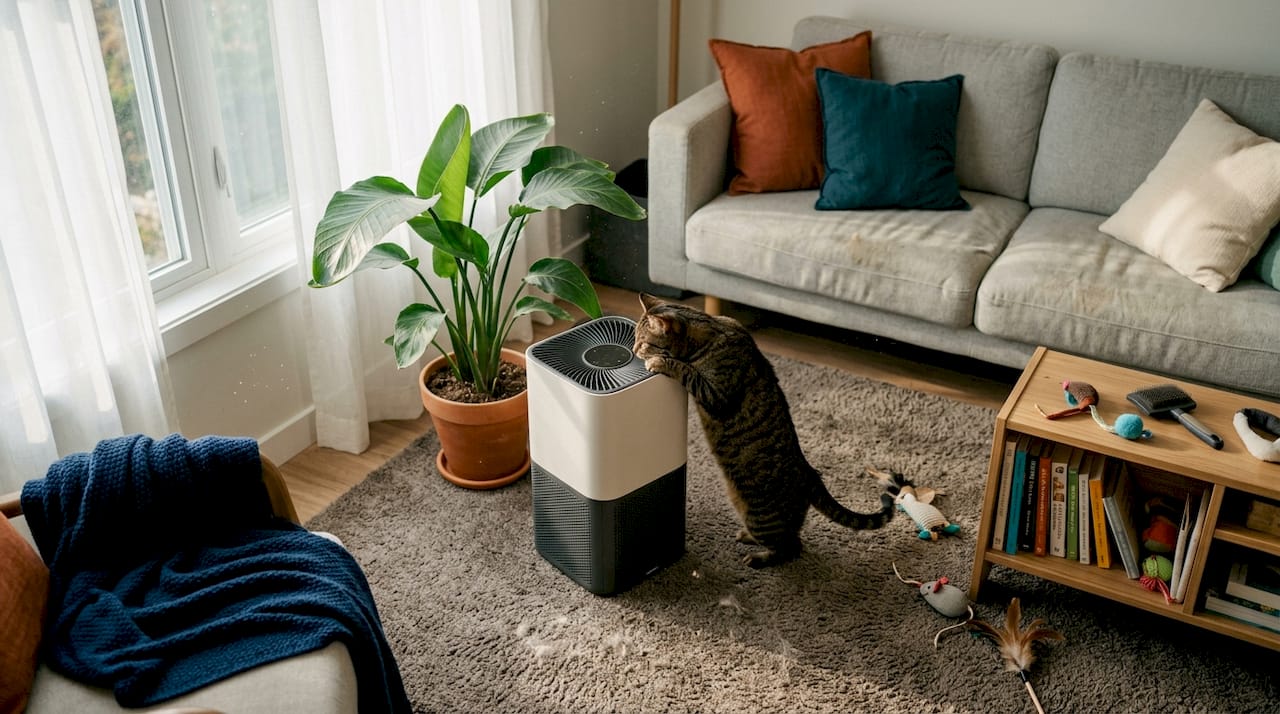
Pet homes carry a distinct mix of biological and chemical contaminants that standard homes do not. The EPA’s multi-factor risk model makes clear that pet-home IAQ is a combination of dander, moisture, ventilation gaps, and other pollutants. No single fix addresses all of them.
The most common contaminants found in homes with pets include:
- Pet dander. Microscopic skin flakes shed by cats, dogs, and other animals. Dander is light enough to remain airborne for hours and settles into carpets, upholstery, and bedding where it is re-released during activity.
- Mould spores. Moisture from pet water bowls, aquariums, or damp fur creates conditions where mould colonises quickly. Spores become airborne and circulate through the home’s ventilation system.
- Ammonia from litter boxes. Cat urine releases ammonia gas, which irritates the respiratory tract of both pets and people. In poorly ventilated rooms, concentrations build quickly.
- Outdoor allergens carried indoors. Pets act as carriers for pollen, mould, and dust from outside. Each time your dog comes in from the garden, outdoor pollutants enter and add to the existing indoor load.
- Combustion byproducts. Cooking, candles, and gas heating all produce fine particles. Pet activity stirs settled particles back into the air, increasing the concentration your pet inhales at floor level.
Poor ventilation compounds every one of these sources. When air exchange is low, contaminants accumulate rather than disperse. This is why a home that smells clean can still have dangerously high allergen levels.
How does air quality testing work in a pet home?
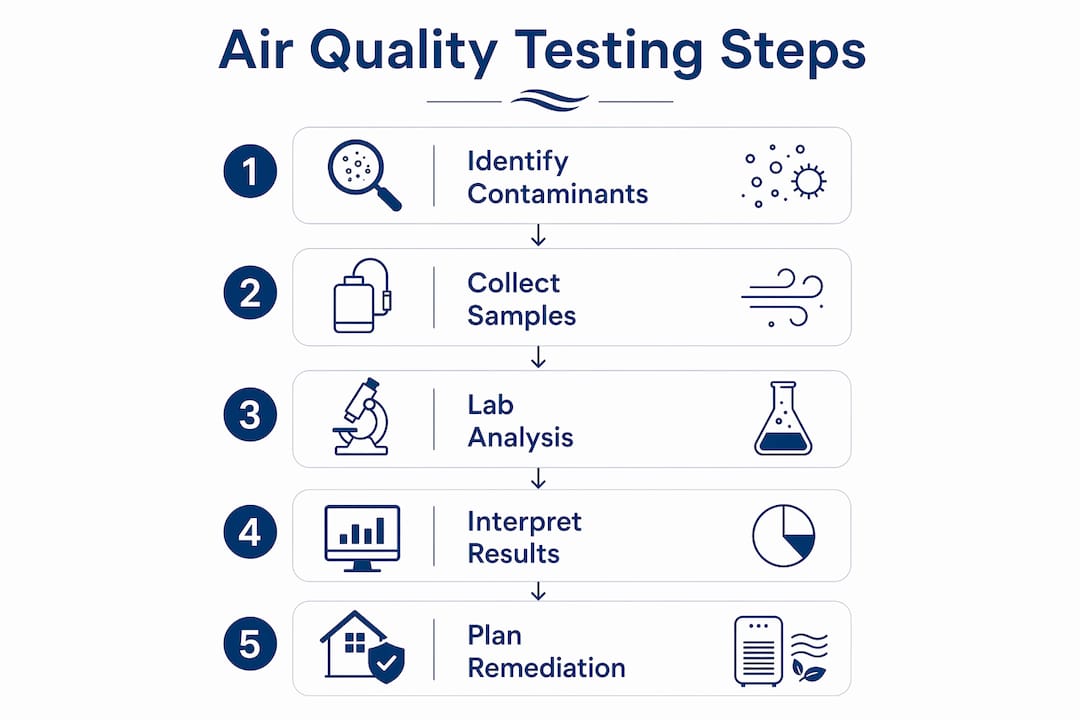
Air quality testing in a pet home is not a single test. It is a structured inspection that combines visual assessment, airborne sampling, and settled dust analysis to build a complete picture of what is actually in the air.
- Visual inspection. A trained inspector checks for visible mould growth, moisture damage, blocked vents, and areas of heavy pet activity. This step identifies where sampling should be concentrated.
- Air sampling for allergens. Allergen-specific sampling collects airborne particles and sends them to a laboratory for protein analysis. Allergen sampling detects cat and dog dander proteins specifically, which means results point to the exact source rather than a general “dust” reading.
- Mould spore sampling. Mould testing uses different laboratory methods from allergen testing, even though both are collected in the field using air pumps and cassettes. The two tests answer different questions and should not be substituted for each other.
- Settled dust analysis. Dust samples from surfaces reveal what has accumulated over time. This is particularly useful for detecting residual pet allergens that persist in fibres and dust long after an animal has left the home.
- Results interpretation. Laboratory reports identify which contaminants are present and at what levels. This is where testing earns its value. A result showing elevated cat dander but normal mould counts tells you to focus on filtration and cleaning, not mould remediation.
The distinction between allergen and mould testing matters because the interventions are completely different. Treating a mould problem with an air purifier alone, or treating a dander problem with bleach, wastes resources and leaves the real issue unresolved.
How does poor air quality affect pet health, and how does testing help?
Pets are not passive bystanders in a polluted home. They breathe the same air, often at floor level where particle concentrations are highest, and they spend far more time indoors than most people do.
Common health problems linked to poor indoor air quality in pets include chronic coughing, wheezing, eye discharge, skin irritation, and lethargy. Cats are particularly sensitive to airborne irritants because of their grooming behaviour, which deposits inhaled particles directly onto mucous membranes. Dogs with flat faces carry the greatest risk.
Brachycephalic breeds such as Bulldogs, Pugs, and Persian cats have narrow airways that make them significantly more vulnerable to airborne pollutants. Even moderate increases in dander or particulate matter can trigger severe respiratory distress in these animals.
Clinical evidence supports the direct link between air quality and respiratory health. A 2026 randomised controlled trial found that HEPA H14 air purifiers measurably lowered PM2.5 concentrations indoors and improved asthma outcomes in participants. That finding applies directly to pet homes, where PM2.5 levels are consistently elevated by dander, fur, and tracked-in particulates.
Testing helps because it removes the guesswork. Owners often confuse mould-related symptoms with general allergen reactions, which leads to misdirected remediation efforts that cost money without solving the problem. A confirmed test result tells you whether you need a HEPA purifier, a dehumidifier, a duct clean, or all three. Without that information, you are treating symptoms rather than causes.
Pro Tip: If your pet develops recurring respiratory symptoms and your vet finds no underlying illness, request an indoor air quality test before spending money on medications. The trigger may be environmental, not medical.
What practical steps should pet owners take after testing?
Test results are only useful if they lead to action. The specific steps depend on what the test reveals, but most pet homes benefit from the same core interventions.
- Install a HEPA air purifier. HEPA filtration captures 99.97% of airborne particles, including pet dander and mould spores. Place units in the rooms where your pets spend the most time. Pureair-au’s range of AHAM-verified air purifiers is designed specifically for the allergen loads common in Australian pet homes.
- Vacuum with a sealed HEPA filter. Standard vacuums redistribute fine particles back into the air. A vacuum with a sealed HEPA filter traps dander and dust rather than recirculating it.
- Replace HVAC filters on schedule. In pet homes, HVAC filters need checking monthly and replacing every 30–60 days. Clogged filters allow allergens to bypass the system entirely and recirculate through every room.
- Control humidity. Mould requires moisture to grow. Keeping indoor humidity between 40% and 60% limits mould colonisation. A dehumidifier in high-moisture areas such as laundries and bathrooms makes a measurable difference.
- Improve ventilation. Open windows when outdoor air quality permits, and use exhaust fans in kitchens and bathrooms. Fresh air exchange dilutes indoor contaminant concentrations.
- Schedule professional duct cleaning. Ducts accumulate years of pet dander, dust, and debris. A professional clean every three to five years prevents the HVAC system from acting as a contaminant reservoir.
Pro Tip: After testing confirms elevated dander levels, wash your pet’s bedding weekly in hot water and keep them off upholstered furniture where possible. These two steps reduce the settled allergen load faster than any single appliance.
Maintaining your filtration equipment is as important as installing it. HEPA filter maintenance determines whether your purifier continues to perform at the level the test results require.
How often should pet owners test their indoor air quality?
Routine testing on a fixed schedule rarely produces useful results. Testing is most valuable when it is triggered by a specific event or persistent symptom, not by a calendar date.
Test when your pet or a family member develops unexplained respiratory symptoms that persist for more than two weeks. Test after any water intrusion event such as a flood, roof leak, or burst pipe, because moisture creates rapid mould growth that is not always visible. Test when you move into a new home with a history of pets, since airborne pet allergens persist in dust and fibres for months after an animal has left. Test after completing mould remediation to confirm the work was effective.
Avoid testing driven purely by marketing cycles. A test with no clear trigger rarely changes what you do next. The value of testing lies in its ability to confirm or rule out a specific concern, not in generating a report for its own sake.
Pro Tip: Keep a simple log of your pet’s symptoms, including dates and severity. If symptoms cluster around specific seasons or activities, that pattern gives a tester a clear starting point and produces more targeted results.
Key takeaways
Air quality testing in pet homes works because it identifies the specific contaminants causing symptoms, allowing targeted interventions rather than expensive trial and error.
| Point | Details |
|---|---|
| Testing identifies specific threats | Allergen and mould tests use different methods and reveal different problems requiring different solutions. |
| Pets face elevated exposure | Animals breathe at floor level where particle concentrations are highest, making air quality a direct health issue. |
| HEPA filtration has clinical backing | A 2026 randomised controlled trial confirmed HEPA H14 purifiers lower PM2.5 and improve respiratory outcomes. |
| HVAC maintenance is non-negotiable | Pet homes require monthly filter checks and replacement every 30–60 days to prevent allergen bypass. |
| Test on triggers, not schedules | Testing after symptoms, water intrusion, or moving into a former pet home produces the most useful results. |
What I’ve learned from years of watching pet owners guess wrong
The most common mistake I see is pet owners buying an air purifier, noticing their pet still sneezes, and concluding that filtration does not work. In almost every case, the real problem is that they never confirmed what they were filtering for. They bought a solution before they understood the problem.
Testing changes that dynamic completely. When a result comes back showing high mould spore counts rather than elevated dander, the intervention shifts from filtration to moisture control. That is a fundamentally different fix, and no amount of air purifier use addresses it adequately.
The other thing I have observed is that owners of brachycephalic breeds often wait too long. A Persian cat or a Bulldog showing mild respiratory symptoms is already under stress. By the time symptoms are obvious, the indoor air load has usually been elevated for weeks or months. Testing early, at the first sign of recurring symptoms, gives you the information to act before the situation becomes a vet bill.
My honest recommendation is to treat air quality testing the same way you treat a blood test for your pet. You do not run one every month for no reason. But when something is off, you run it before you start treating. The test tells you what you are dealing with. Everything after that becomes straightforward.
— Lucas
Cleaner air for your pets starts with the right equipment
Pet homes carry a heavier air quality burden than most, and the evidence is clear that targeted filtration makes a measurable difference. Pureair-au stocks a full range of AHAM-verified air purifiers, humidifiers, and dehumidifiers designed for Australian conditions, including the allergen and humidity challenges that come with keeping pets indoors.
Every product in the Pureair-au range is selected for real-world performance in Australian homes. The Smart Finder tool on the website helps you match the right unit to your specific concern, whether that is pet dander, mould, or bushfire smoke. If your test results have confirmed an allergen or particulate problem, the right filtration unit is the next logical step.
FAQ
What does indoor air quality testing detect in pet homes?
Air quality testing in pet homes detects specific allergens such as cat and dog dander proteins, mould spore counts, and particulate matter levels. Results identify which contaminants are present and at what concentrations, allowing targeted intervention.
Should you test air quality if your pet seems healthy?
Testing is most useful when triggered by symptoms, water intrusion, or moving into a home with a history of pets. Routine testing without a specific trigger rarely changes what actions you take next.
How does air quality affect pets differently from humans?
Pets spend more time indoors and breathe at floor level where particle concentrations are highest. Brachycephalic breeds such as Bulldogs and Persian cats face severe respiratory distress even from moderate increases in airborne pollutants.
Can HEPA filtration replace air quality testing?
HEPA filtration reduces airborne particles but does not identify what those particles are. Testing confirms the specific contaminants present so filtration can be applied where it will have the most effect.
How long do pet allergens stay in a home after a pet leaves?
Pet allergens persist in dust and fibres for months after an animal has left the home. Testing a property with a history of pets confirms whether residual allergen levels pose a risk to new occupants or allergy-prone individuals.