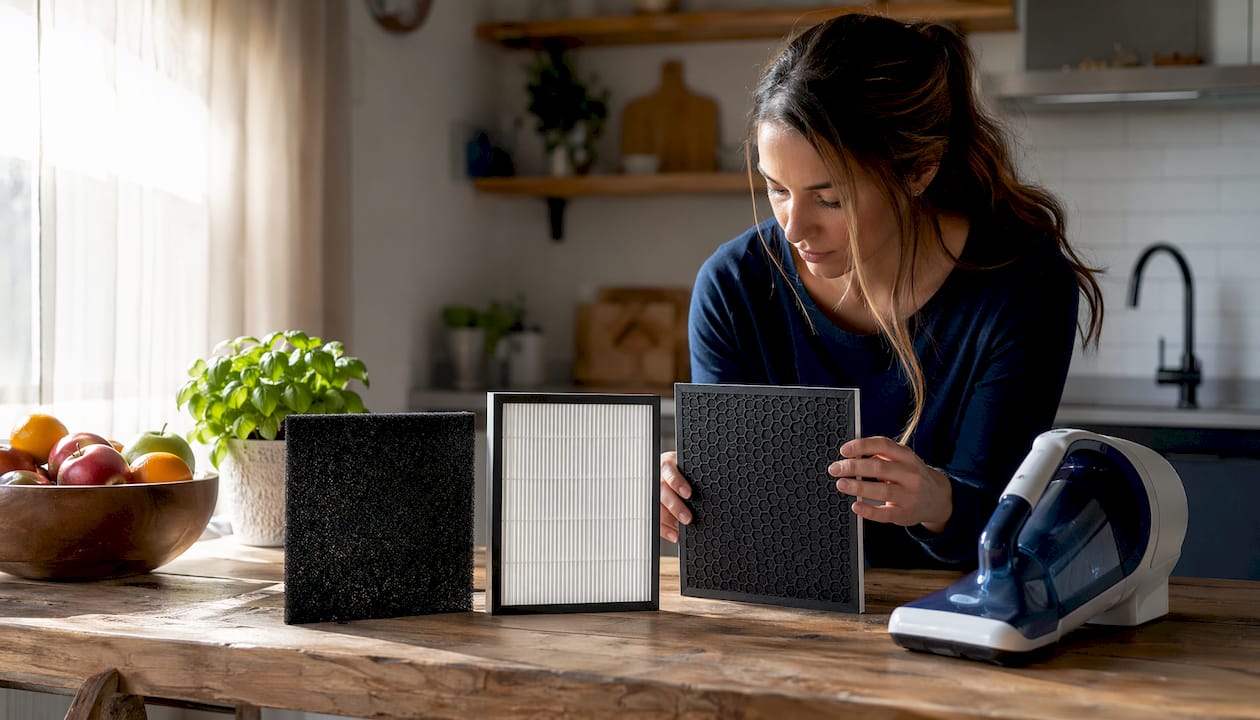
Pet hair filtration is defined as the multi-stage process of removing visible fur, microscopic dander, and airborne allergens from indoor air using specialised filter media. For Australian pet owners, getting this right matters more than most realise. The Fel d 1 cat allergen measures just 0.3 microns, which means standard filters simply cannot catch it. The types of filters capturing pet hair that actually work combine a pre-filter, a certified True HEPA H13 filter, and an activated carbon layer. Each stage targets a different problem, and skipping any one of them leaves a gap.
1. Why multi-stage filtration is the only reliable approach
Single-filter systems fail pet owners because pet pollution comes in three distinct forms: large visible hair strands, microscopic dander particles, and airborne odour molecules. No single filter type addresses all three effectively. A multi-stage filtration system assigns each problem to the right filter medium, which is why the three-stage approach has become the 2026 industry standard for pet homes.
The three stages work as follows:
- Pre-filter: A mesh or foam screen that catches large, visible pet hair before it reaches the main filter. Without this stage, hair clogs the HEPA layer quickly and shortens its lifespan.
- True HEPA H13 filter: The core filtration stage. True HEPA H13 captures 99.97% of particles down to 0.3 microns, including dander, pollen, and dust mite fragments. Non-certified “HEPA-like” filters capture only 50–70% of the same particles. That gap is the difference between symptom relief and continued sneezing.
- Activated carbon layer: Targets odour molecules that HEPA media cannot trap. Ammonia from cat litter and the wet-dog smell after rain are both neutralised at this stage.
Pro Tip: Airflow capacity and filter density must be balanced. A denser filter with a higher rating will restrict airflow and strain the motor if the unit is not designed to handle it, which reduces overall cleaning performance.
2. Pre-filters: the first line of defence for visible fur
Pre-filters are mesh or foam screens positioned at the air intake of a purifier or vacuum. Their job is simple: stop large hair strands from reaching the main filter. Without a pre-filter, a True HEPA layer clogs within weeks in a high-shedding household, which drives up running costs and reduces airflow.
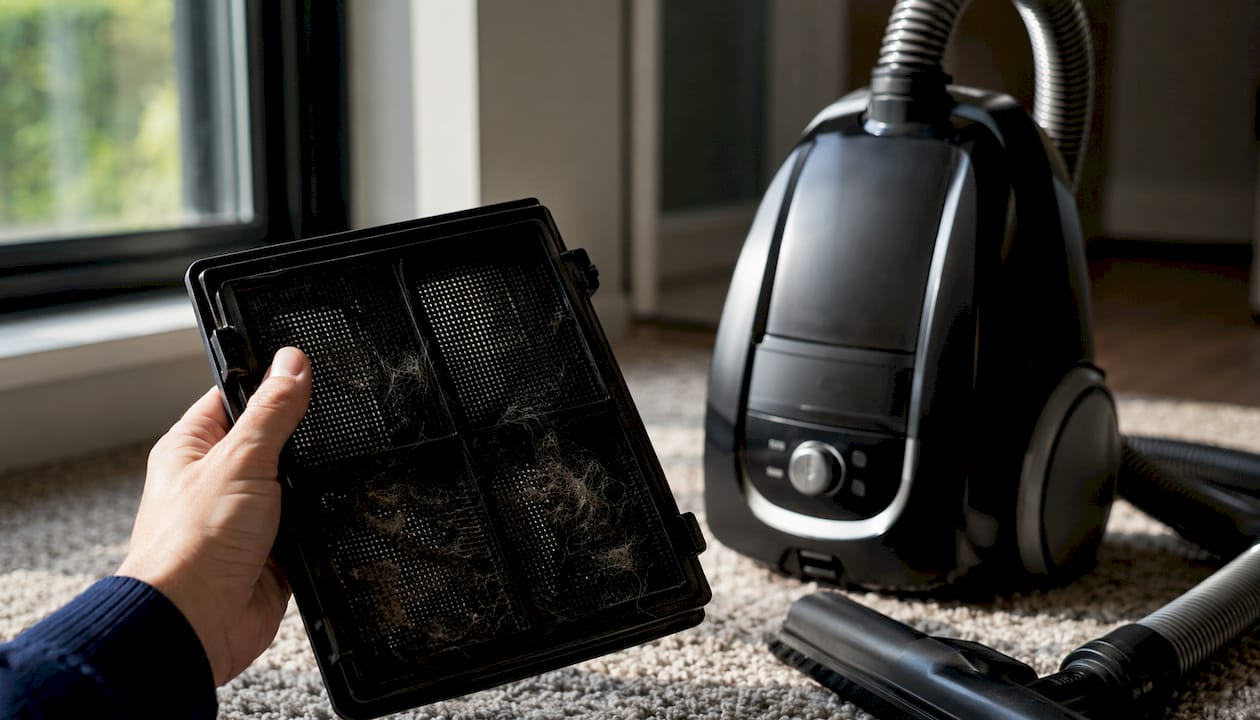
Most pre-filters are washable, which makes them the most cost-effective component in any pet filtration setup. Rinsing a pre-filter every two to four weeks in a home with a heavy shedder preserves the HEPA filter’s lifespan significantly. Pet owners often overlook this step and then wonder why their purifier stops performing after a few months.
3. True HEPA H13 filters: the non-negotiable standard
True HEPA H13 is the filter standard that separates effective pet air purifiers from marketing claims. HEPA-type or HEPA-like filters capture only 50–70% of 0.3-micron particles, while True HEPA H13 captures 99.97%. That distinction matters enormously for allergy sufferers because the Fel d 1 cat allergen sits right at the 0.3-micron threshold.
Certified True HEPA H13 filters carry independent laboratory verification. Any filter labelled “HEPA-style,” “HEPA-grade,” or “HEPA-type” without a certification number has not met this standard. For Australian pet owners managing asthma or rhinitis, choosing an uncertified filter is a false economy.
Pro Tip: Check the product packaging for the H13 classification specifically. “HEPA” alone does not guarantee H13-level performance. The classification number is the only reliable indicator.
4. Activated carbon filters: solving the odour problem HEPA cannot
Activated carbon filters work through adsorption, a process where odour molecules bond to the porous surface of the carbon granules. HEPA media physically traps particles but cannot capture gas-phase molecules like ammonia, hydrogen sulphide, or the volatile organic compounds that create pet smells. Carbon handles what HEPA cannot.
The effectiveness of a carbon filter depends on the weight and quality of the carbon bed. Thin carbon pre-filter sheets, which are common in budget units, provide minimal odour control. Thicker, granular activated carbon beds deliver meaningful results for households with multiple pets or large breeds. If odour is a primary concern, prioritise units with a substantial carbon stage rather than a token carbon coating on the pre-filter.
5. MERV-rated pleated filters for HVAC systems
MERV (Minimum Efficiency Reporting Value) ratings apply to filters used in ducted HVAC systems rather than standalone air purifiers. MERV 11 pleated filters are the recommended choice for most pet households. They capture dander effectively while maintaining enough airflow to avoid straining the HVAC motor.
MERV 13 filters offer finer particle capture and suit households where a family member has active pet allergies or asthma. The trade-off is reduced airflow, which can cause the system to work harder and increase energy costs. Baseline MERV 8 filters allow fine dander to pass through freely and are not suitable for pet homes. Matching the MERV rating to the system’s airflow capacity is the critical step most homeowners skip.
6. Sealed vacuum filtration systems: why the filter alone is not enough
A HEPA filter inside a vacuum means nothing if the vacuum body leaks. The entire vacuum system must be sealed to prevent dirty air from bypassing the filter media entirely. Cracked seals, loose bin connections, and poor body design all allow dander-laden air to re-enter the room through gaps rather than passing through the filter.
A proper sealed multi-stage vacuum system for pet homes includes:
- Pre-motor foam filter: Captures large debris and hair before it reaches the motor.
- Cyclonic separation stage: Uses centrifugal force to spin hair and debris into the bin, reducing filter load.
- Post-motor True HEPA filter: Captures fine dander from the exhaust air before it returns to the room.
Suction power also matters for pet fur. Recommended minimum suction is 15,000 Pa, with 20,000–25,000 Pa being the target range for heavy shedders. A bin capacity of at least 0.7 litres prevents constant emptying during cleaning sessions. The sealed system architecture is what determines whether the vacuum actually cleans the air or simply moves dander around.
Pro Tip: When emptying the vacuum bin, do it outside or into a sealed bag. Improper emptying stirs captured dander back into the air, which undoes the filtration work entirely.
7. What air purifiers cannot do: setting realistic expectations
Air purifiers capture airborne hair and dander but cannot remove fur that has already settled on floors, sofas, or bedding. This is one of the most common misunderstandings among pet owners investing in filtration. An air purifier works on what is suspended in the air at any given moment. Once hair lands on a surface, only vacuuming or wiping removes it.
The practical implication is that air purification and physical cleaning are not interchangeable. They work together. Running a True HEPA air purifier continuously reduces the airborne load, which means less dander settles on surfaces over time. Regular vacuuming with a sealed HEPA system removes what does settle. Neither approach alone is sufficient for a genuinely clean pet home.
8. Choosing the right filter type for your specific situation
The right filter combination depends on your pet type, household size, and whether anyone in the home has allergies. These are the clearest guidelines:
- Standard pet household (one or two dogs or cats, no allergies): MERV 11 in the HVAC system, a three-stage air purifier with True HEPA H13, and a sealed HEPA vacuum.
- Allergy or asthma household: Upgrade the HVAC filter to MERV 13 and prioritise True HEPA H13 certification in the air purifier. Check the filter replacement guide for pet home maintenance schedules to keep performance consistent.
- Multiple pets or large breeds: Add a substantial activated carbon stage for odour control. Clean the pre-filter every two weeks rather than monthly.
- High-shedding periods (seasonal moulting): Increase pre-filter cleaning frequency to weekly. A clogged pre-filter forces the HEPA layer to work harder and shortens its life.
The most common mistake is choosing the highest-rated filter without checking whether the unit’s airflow capacity can handle it. Higher-rated filters that impede airflow cause motor strain and reduce cleaning efficiency despite the better particle capture rating. Always match filter density to the unit’s design specifications. Pet owners often make this and other common air purifier mistakes that quietly undermine their investment.
Key takeaways
Effective pet hair filtration requires a certified True HEPA H13 filter, a washable pre-filter, and an activated carbon layer working together as a sealed multi-stage system.
| Point | Details |
|---|---|
| True HEPA H13 is non-negotiable | Only H13-certified filters capture 99.97% of 0.3-micron dander particles; HEPA-like filters capture only 50–70%. |
| Pre-filters protect HEPA lifespan | Washing the pre-filter every 2–4 weeks prevents premature HEPA clogging in high-shedding homes. |
| Sealed vacuum systems matter | A HEPA filter alone does not prevent dander leakage; the entire vacuum body must be sealed. |
| Match MERV rating to airflow | MERV 11 suits most pet homes; MERV 13 suits allergy households, but only if the HVAC system can handle the reduced airflow. |
| Air purifiers complement cleaning | Purifiers reduce airborne dander load; vacuuming removes settled fur. Both are required for meaningful results. |
What I have learned about pet filtration after years of watching owners get it wrong
The single biggest mistake I see Australian pet owners make is buying a premium air purifier and then running it on the lowest fan speed to reduce noise. A True HEPA H13 unit running quietly in the corner of a room is not turning over enough air volume to make a measurable difference. The filter rating only matters if the unit is actually processing the room’s air at an adequate rate.
The second mistake is treating the air purifier as a substitute for vacuuming. I have spoken with pet owners who stopped vacuuming regularly because they assumed the purifier was handling everything. It is not. The purifier handles what is airborne. The vacuum handles what has landed. Skipping either half of that equation means the dander load in the home stays high regardless of how good the filter is.
My honest recommendation for Australian homes, particularly in warmer months when pets shed heavily, is to run a three-stage air purifier on a medium setting continuously, vacuum with a sealed HEPA system twice a week, and clean the pre-filter on a fixed schedule rather than waiting until it looks dirty. That combination, applied consistently, produces results that no single filter type can match on its own. The types of air filtration systems available in 2026 are genuinely effective. The gap between good results and poor results is almost always maintenance and usage habits, not the filter itself.
— Lucas
Pureair-au’s range for pet owners
Pureair-au stocks a curated selection of True HEPA H13 air purifiers and multi-stage filtration units suited to Australian pet homes, from compact bedroom units to whole-room systems for open-plan living. Every product in the range is AHAM verified, which means the performance claims are independently confirmed rather than self-reported.
The Honeywell Air Touch P2 is a strong choice for pet owners needing True HEPA and activated carbon in a single unit. For pet owners who want to browse the full range and filter by room size or concern type, the Pureair-au catalogue includes detailed specifications for every unit, along with guidance on which filter combination suits your household.
FAQ
What is the best filter type for pet hair and dander?
A certified True HEPA H13 filter is the most effective option for capturing microscopic dander, including the Fel d 1 cat allergen at 0.3 microns. Pair it with a pre-filter and activated carbon layer for complete pet hair filtration.
Are HEPA-like filters good enough for pet homes?
No. HEPA-like or HEPA-type filters capture only 50–70% of 0.3-micron particles, compared to 99.97% for certified True HEPA H13. For allergy-sensitive households, the difference is clinically significant.
What MERV rating do I need for a pet household?
MERV 11 is the recommended rating for most pet homes, balancing dander capture with adequate airflow. Households with active allergies or asthma should use MERV 13, provided the HVAC system’s airflow capacity supports it.
Does a HEPA vacuum filter guarantee clean exhaust air?
No. The vacuum body must be fully sealed to prevent dander bypass. A HEPA filter inside a leaking vacuum body allows dirty air to re-enter the room through gaps, negating the filter’s performance.
How often should I clean or replace pet home filters?
Pre-filters in high-shedding homes need cleaning every 2–4 weeks. True HEPA filters typically require replacement every 6–12 months, though this varies by usage. A dedicated pet home filter guide provides schedules based on pet type and household size.