
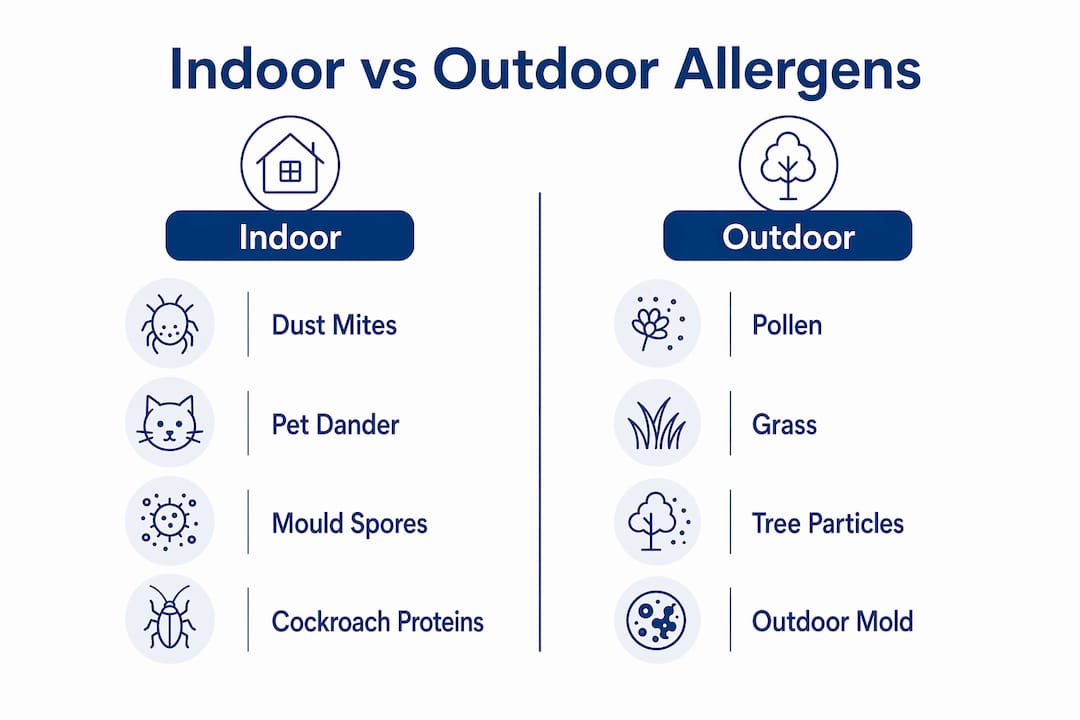
Indoor allergens are defined as airborne or surface-bound particles found inside homes that trigger immune responses, and they cause worse symptoms than outdoor allergens because enclosed spaces trap and concentrate them at levels that persist year-round. Dust mites, pet dander, mould spores, and cockroach proteins accumulate in carpets, furniture, and bedding without the dispersal that wind and open air provide outdoors. Unlike pollen, which clears from the air within hours, these indoor allergy triggers stay embedded in your home environment continuously. Pureair-au works specifically with Australian families on this problem, because local homes face a combination of high humidity, year-round warmth, and limited cross-ventilation that makes indoor allergen accumulation particularly severe.
Why indoor allergens are worse than outdoor: the environment trap
The core reason indoor allergens cause more harm is containment. Outdoors, a breeze disperses pollen within minutes. Indoors, allergens settle into soft surfaces and recirculate every time someone walks across a carpet or sits on a sofa.
Carpets, upholstered furniture, mattresses, and curtains all act as reservoirs. These materials hold allergen particles close to breathing height and release them back into the air with any disturbance. A bedroom carpet can harbour dust mite waste at concentrations that would be impossible to reach in an open field.
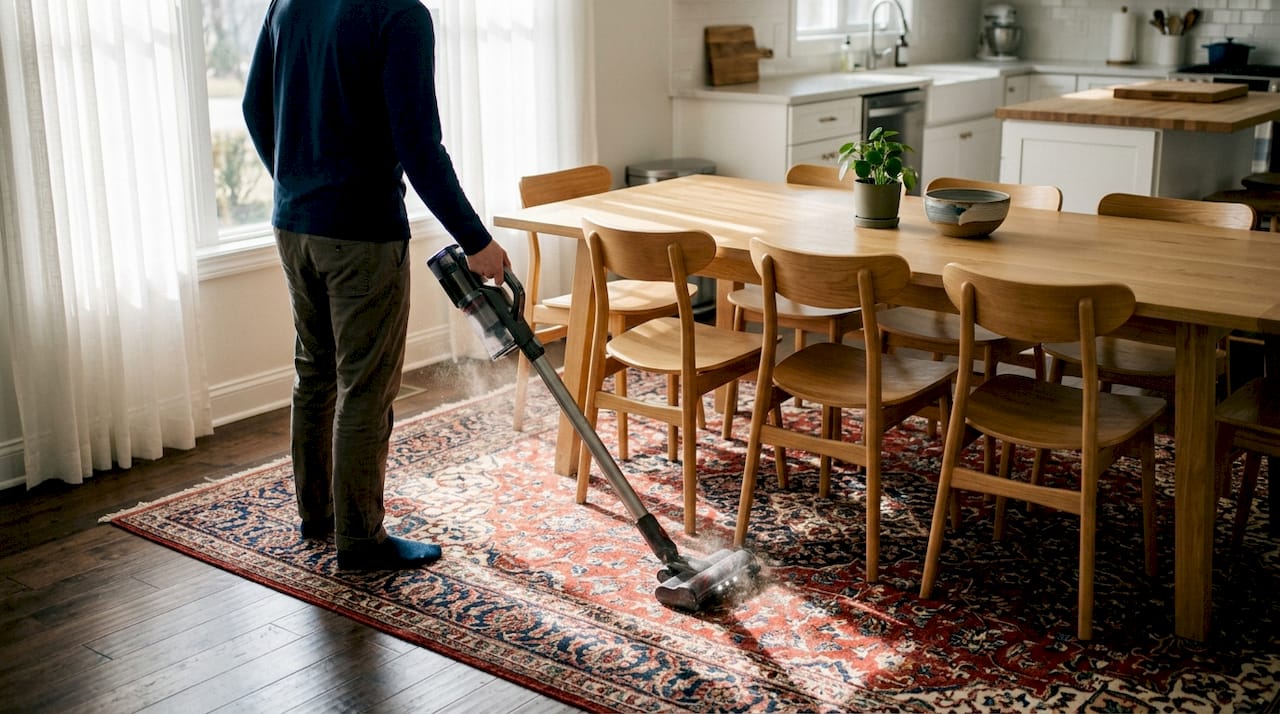
Poor ventilation compounds this by allowing stagnant air to hold particles suspended longer. Homes sealed for air conditioning, which is common across Queensland and Western Australia, exchange far less fresh air than older, draughtier buildings. The result is a slow build-up of allergen concentration that never fully resets.
Humidity plays a direct role as well. Warm, humid indoor air promotes both dust mite reproduction and mould growth. Australian coastal homes regularly sit above the humidity thresholds that allow these allergens to thrive, making the indoor environment a year-round breeding ground rather than a seasonal one.
- Carpets and rugs trap allergen particles at floor level, where children and pets spend most of their time.
- Mattresses and pillows accumulate dust mite waste over months without regular hot washing.
- Curtains and soft furnishings collect pet dander and mould spores that resist standard vacuuming.
- HVAC ducts, if unmaintained, recirculate allergens throughout the entire home.
Pro Tip: Replace HVAC filters every three months and have ducts professionally cleaned annually. A dirty filter does not just fail to clean the air. It actively blows stored allergens back into every room.
How do specific indoor allergens behave differently from outdoor ones?
The difference between indoor and outdoor allergens is not just location. Each major indoor allergen has physical properties that make it particularly difficult to remove from a home environment.
Dust mites
Dust mites thrive in warm, humid indoor conditions and produce waste particles that are heavy enough to settle quickly into bedding and carpet fibres. Dust mites cannot survive below 50% relative humidity, which means humidity control is one of the most direct tools available. Outdoors, mites cannot establish colonies at all. Indoors, a single mattress can support millions.
Pet dander
Pet dander behaves very differently from pollen. The cat allergen Fel d 1 is lightweight, sticky, and persists for months after a cat is removed from a home. It attaches to clothing and textiles, meaning it spreads to rooms, cars, and workplaces that have never housed a pet. Outdoor pollen disperses and degrades within days. Fel d 1 does not.
Mould spores
Mould spores grow in hidden indoor reservoirs: behind bathroom tiles, inside wall cavities, and under kitchen sinks. Outdoor mould spores exist seasonally and at lower concentrations. Indoor mould grows continuously wherever moisture is present, releasing spores directly into the breathing zone of the home’s occupants.
Cockroach proteins
Cockroach proteins are a significant urban indoor allergen, particularly in older apartment buildings across Sydney and Melbourne. These proteins settle into dust and are disturbed by foot traffic. There is no outdoor equivalent exposure at comparable concentrations.
| Allergen | Indoor behaviour | Outdoor equivalent |
|---|---|---|
| Dust mites | Persist year-round in bedding and carpet | No outdoor colony possible |
| Pet dander (Fel d 1) | Sticky, airborne for months, spreads on clothing | Disperses rapidly in open air |
| Mould spores | Grows in hidden damp areas, continuous release | Seasonal, lower concentration |
| Cockroach proteins | Settles in dust, disturbed by movement | No comparable outdoor exposure |
| Pollen | Enters via windows, settles quickly | Disperses within hours outdoors |
Why does continuous indoor exposure cause more severe symptoms?
Outdoor allergen exposure is episodic. You walk through a park during spring, inhale grass pollen, and then leave. Indoor exposure is continuous. You sleep in your bedroom for seven to nine hours surrounded by dust mite allergens, then spend your waking hours in the same building.
Continuous indoor exposure drives chronic conditions like asthma and allergic rhinitis in ways that intermittent outdoor exposure does not. Johns Hopkins research confirms the link between relentless indoor allergen load and ongoing respiratory morbidity. The immune system never gets a break to reset its response threshold.
The bedroom is the highest-risk zone. Most people spend more consecutive hours in their bedroom than anywhere else, and bedding is one of the densest reservoirs of dust mite allergen in any home. Waking with nasal congestion, a scratchy throat, or an asthma flare is a direct signal that the sleep environment is the exposure source.
Symptom patterns from indoor allergens also differ from outdoor ones. Outdoor pollen causes acute, seasonal reactions. Indoor allergens cause:
- Persistent nasal congestion that does not clear between seasons.
- Chronic coughing, particularly at night or first thing in the morning.
- Asthma exacerbations triggered by vacuuming, making a bed, or disturbing soft furnishings.
- Eye irritation and skin reactions that recur without an obvious seasonal pattern.
Pro Tip: If your symptoms are worse at home than outside, or worse in the morning than the afternoon, the problem is almost certainly your indoor environment. Ask your GP for a skin prick test or specific IgE blood test to identify exactly which allergen is driving your reactions before spending money on interventions.
What are the most effective ways to reduce indoor allergens?
Single interventions rarely produce meaningful symptom relief. Buying one air purifier without addressing bedding, humidity, and HVAC maintenance leaves the majority of the allergen load untouched. Effective management requires a coordinated set of measures matched to your confirmed sensitivities.
-
Get tested first. A skin prick test or specific IgE blood test identifies which allergens are driving your symptoms. Targeting dust mites when your primary sensitivity is mould wastes time and money.
-
Control humidity. Maintaining indoor humidity between 40–50% suppresses dust mite reproduction and prevents mould growth simultaneously. A quality dehumidifier is the most direct tool for this in humid Australian climates. Pureair-au’s dehumidifier and allergen control guide covers how to select the right unit for your room size.
-
Use allergen-proof encasements. Mattress and pillow encasements with a pore size below 10 microns physically block dust mite allergens from reaching the sleeper. This is the single highest-impact intervention for dust mite sensitivity.
-
Wash bedding weekly in hot water. Water at 60°C or above kills dust mites. Cold washing leaves them alive and active.
-
Use HEPA filtration. HEPA filters capture 99.97% of airborne particles at 0.3 microns, including pet dander and mould spores. HEPA vacuuming combined with encasements and humidity control produces consistent symptom benefit. A HEPA air purifier in the bedroom addresses airborne allergens that bedding encasements cannot reach. Pureair-au’s guide on filtering indoor air pollution explains which filter grades suit different allergen types.
-
Maintain your HVAC system. Unmaintained HVAC ducts serve as allergen reservoirs that actively worsen air quality. Replace filters every three months and schedule duct cleaning annually.
-
Restrict pet access to bedrooms. Even with a HEPA purifier running, allowing a cat or dog into the bedroom continuously reseeds the highest-exposure zone with dander.
Pro Tip: Treat your home as a system, not a collection of individual rooms. Allergens move between spaces on clothing, air currents, and foot traffic. A clean bedroom means little if the living room carpet is a dense reservoir that feeds the whole house.
Key takeaways
Indoor allergens cause more severe and persistent symptoms than outdoor allergens because enclosed home environments trap, concentrate, and continuously re-expose occupants to dust mites, pet dander, mould, and cockroach proteins without the dispersal that outdoor air provides.
| Point | Details |
|---|---|
| Containment drives severity | Indoor spaces trap allergens in carpets, bedding, and furniture, creating concentrations impossible outdoors. |
| Allergen behaviour differs | Pet dander persists for months after removal; dust mites cannot survive outdoors at all. |
| Continuous exposure causes chronic illness | Year-round indoor exposure links directly to asthma and allergic rhinitis, unlike episodic outdoor contact. |
| Test before you treat | Skin prick or IgE testing identifies your specific allergen so interventions target the actual cause. |
| Multi-component management works | Combining humidity control, encasements, hot washing, and HEPA filtration produces consistent relief. |
What I’ve learned from years of watching people manage indoor allergens badly
The most common mistake I see is purchasing an air purifier as the first and only step. People buy a unit, place it in the living room, and wonder why their symptoms persist. The answer is almost always that the bedroom, which is the highest-exposure zone by a wide margin, has not been addressed at all.
The second mistake is skipping the allergy test. Buying devices without a confirmed diagnosis is genuinely wasteful. I have spoken with families who spent hundreds of dollars on products targeting dust mites when their child’s primary sensitivity was mould. The mould was growing behind the bathroom wall, completely untouched by any of their interventions.
The third mistake is treating allergen management as a one-off project. A freshly cleaned home with new encasements and a working HEPA purifier will drift back toward high allergen loads within weeks if the maintenance routine stops. Humidity creeps back up. HVAC filters clog. Bedding goes unwashed. The home is a living system, and allergen control requires ongoing attention, not a single purchase.
What actually works is a realistic, tested, and maintained multi-component approach. Work with an allergist to confirm your sensitivities. Use Pureair-au’s room air quality guide to map your home’s specific risk zones. Then build a maintenance routine you can sustain for months, not just days.
— Lucas
Pureair-au’s range for targeted indoor allergen control
Australian homes face a specific combination of humidity, warmth, and sealed living spaces that makes indoor allergen management more demanding than in cooler, drier climates. Pureair-au’s product range addresses this directly.
Pureair-au stocks AHAM-verified HEPA air purifiers, dehumidifiers, and humidifiers selected for Australian conditions. The Honeywell Air Touch P2 captures airborne pet dander and mould spores with medical-grade HEPA filtration. The Xiaomi Smart Dehumidifier Lite maintains the 40–50% humidity range that suppresses dust mite reproduction. For a full view of available units matched to specific allergen concerns, the Pureair-au product catalogue includes filter options, purifiers, and humidity control devices at Australian prices. Use the Smart Finder tool on the site to match a unit to your confirmed allergen sensitivity and room size.
FAQ
Why are indoor allergens worse than outdoor allergens?
Indoor allergens accumulate in enclosed spaces without the dispersal that wind and open air provide outdoors. Carpets, bedding, and furniture act as reservoirs that continuously re-release allergens into the breathing zone.
What are the most common indoor allergy triggers in Australian homes?
Dust mites, pet dander, mould spores, and cockroach proteins are the primary indoor allergens in Australian homes. Warm, humid conditions across coastal regions allow dust mites and mould to thrive year-round.
How long does pet dander stay in a home after a pet is removed?
Cat allergen Fel d 1 can persist for months after a cat leaves a home, even with regular cleaning. Aggressive HEPA vacuuming and air filtration are required to reduce it to non-reactive levels.
Does humidity control really reduce indoor allergens?
Maintaining indoor humidity between 40–50% prevents dust mite reproduction and suppresses mould growth, addressing two major allergen sources at once. A dehumidifier is the most direct tool for achieving this in humid Australian climates.
Is one air purifier enough to manage indoor allergens?
A single air purifier is rarely sufficient on its own. Effective allergen management requires combining HEPA filtration with humidity control, allergen-proof encasements, hot washing of bedding, and regular HVAC maintenance.